Nigar Gahramanova: “I would really like to perform ‘Bayati-Shiraz’ on the organ in Garabagh” INTERVIEW VIDEO
Stockholm, July 10, AZERTAC
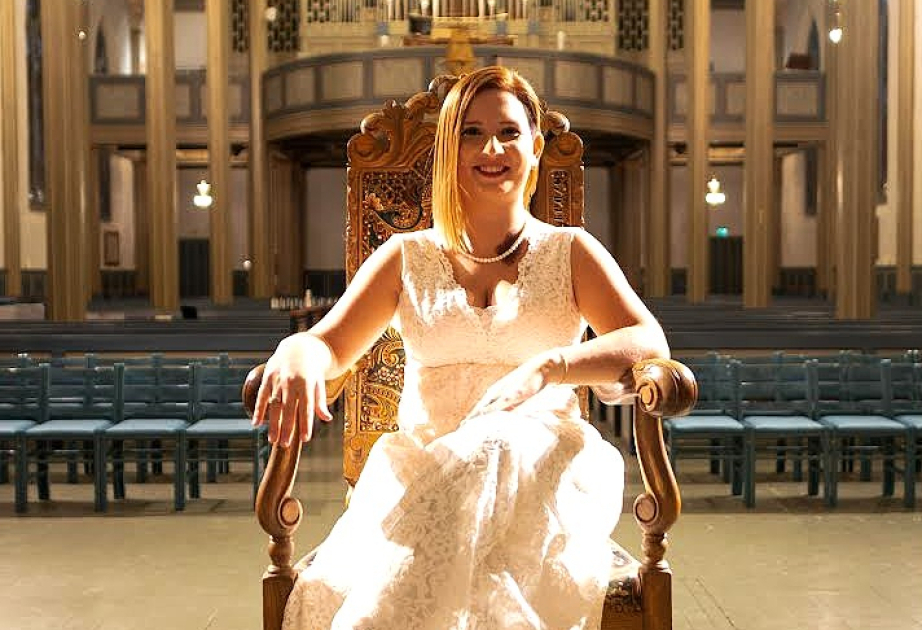
The organ! It is called the king of musical instruments. Thousands of pipes, a powerful sound, and almost limitless musical possibilities have made the organ a symbol of grandeur and solemnity. Playing it is not easy — it requires years of training, virtuoso mastery of not only the hands but also the feet, and exceptional musical preparation. Among those who have devoted their lives to this instrument is our compatriot Nigar Gahramanova, who has been living and working in Norway for many years.
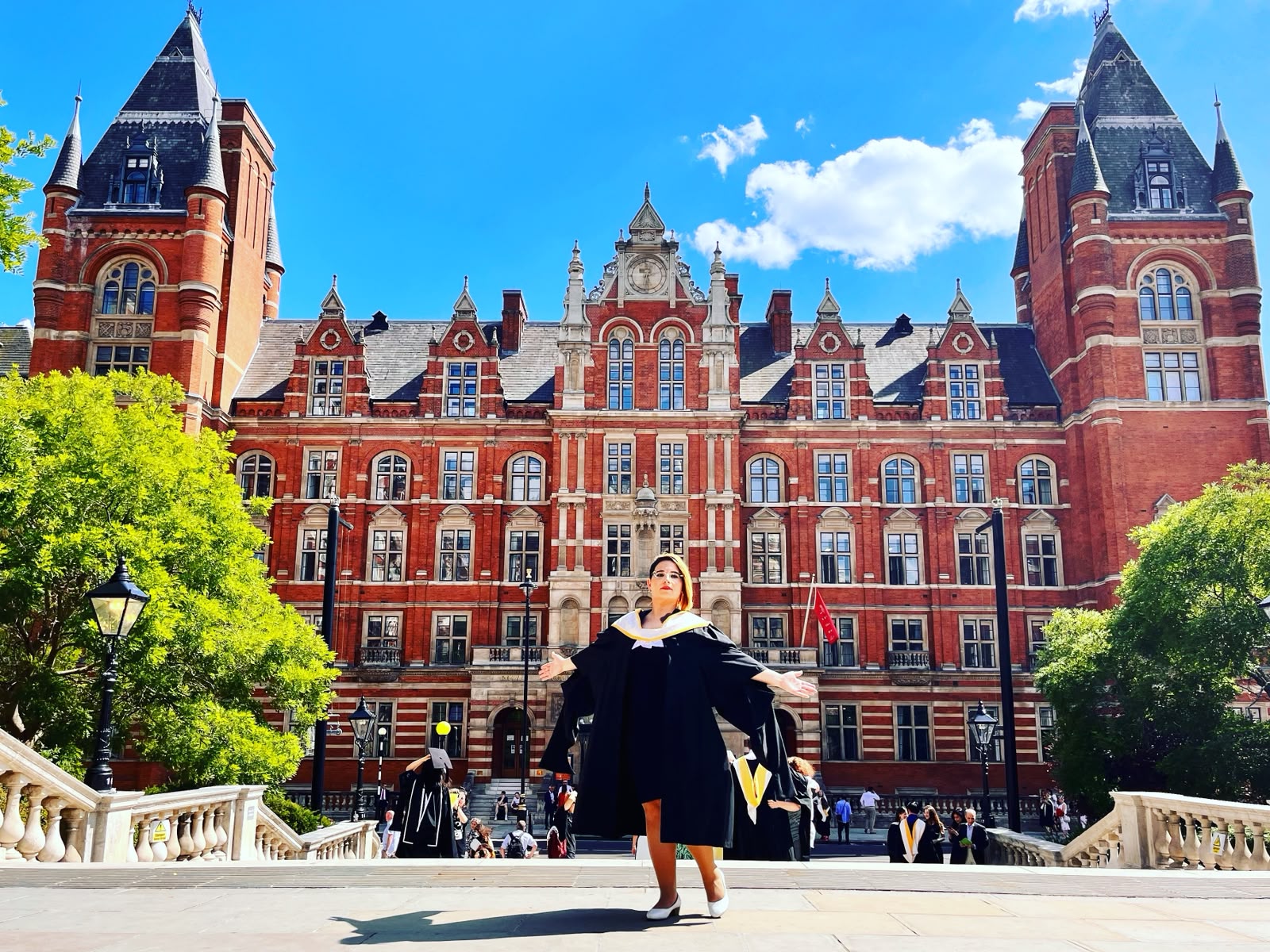
A scholarship recipient of the Norwegian Ingar Dobloug Foundation, a graduate of the Norwegian Academy of Music and the Royal College of Music in London, and laureate of international competitions, Nigar Gahramanova told AZERTAC correspondent in an interview about the peculiarities of the organist profession, her creative brand CantORganistA, and shared a dream she hopes to realize one day.
— Why the organ specifically?
— I began my musical education with the piano. But everything changed in 2010 when the charity organization World in Need invited me to the United Kingdom. There I performed two solo concerts as a pianist and vocalist. All the funds raised were directed to help refugees and internally displaced persons affected by the First Garabagh War.
It was during a rehearsal in one of the churches that I first saw an organ. I immediately wanted to understand what kind of instrument it was. I sat down at it, touched the keys — and from the very first sounds I realized that something special had happened. I felt that this was the instrument that could express me as I truly am. Its majestic sound allowed me to convey my inner protest, energy, and musical passion exactly as I had always wanted. This almost otherworldly sound struck me so deeply that at that very moment I told myself: “I will not be a pianist, but an organist.” It was then that I finally understood that the piano no longer gave me the opportunity to express myself as deeply as I wanted. Perhaps this feeling had lived in me since childhood, but it was the organ that became the instrument that allowed my inner voice to sound at full strength.
I probably chose a more difficult path. But I have never regretted it for a single moment.
— How difficult is it to master this instrument?
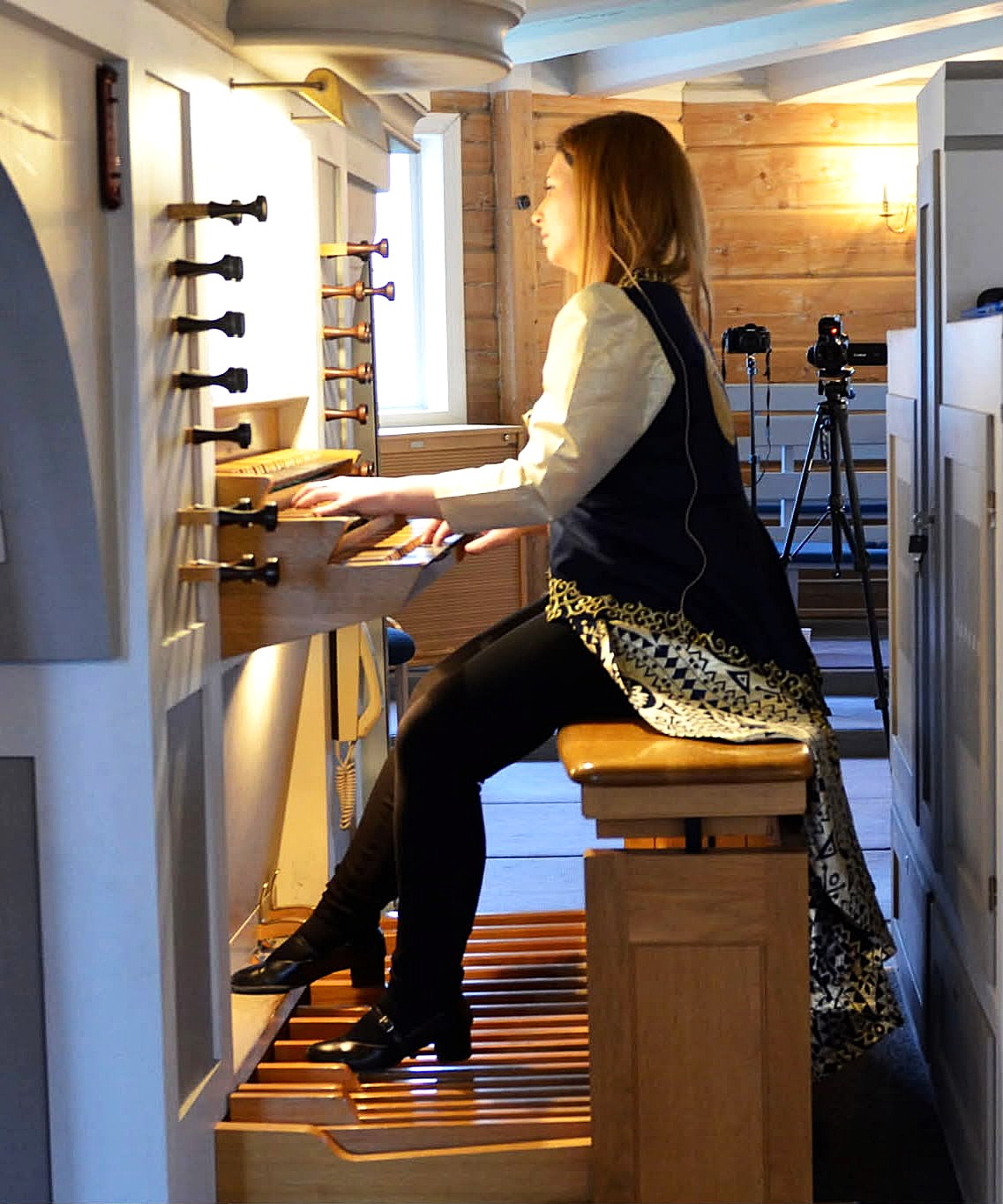
— It’s not easy! I would even say it’s very difficult. The complexity of the organ lies not only in its construction but also in the performance technique itself. An organist plays simultaneously with both hands and feet. While the piano has only three pedals, the organ has a full pedalboard spanning about two and a half octaves, where every note is played with the feet. During performance, the brain must simultaneously control the movements of the hands and feet, coordinate them, and distribute attention across several processes at once. Moreover, the hands do not work on just one keyboard. Depending on the size of the instrument, an organ can have several manuals — that is, several keyboards.
Each manual has its own stops that control the timbre of the sound. Usually, pressing a key activates a single pipe. But there are mixtures and overtone stops, which, when engaged, cause one key to activate several pipes at once. This is why the total number of pipes in an organ is counted in the thousands.
When you begin to understand how complex this instrument is, you involuntarily ask yourself: “What brilliant minds managed to invent, design, and combine this incredibly complex system into a single musical instrument?”
But mastering the technique is not enough. An organist must have a good knowledge of the instrument’s construction, understand the stops, and be familiar with the peculiarities of each individual organ. They differ in size, number of manuals, set of stops, and even in their sound character. That’s why the principle of “practice at home, then go and perform a concert” simply doesn’t work here. Before every performance, you need to get acquainted in advance with the specific instrument you will be playing. This usually takes at least three to four hours. During this time, I study the stops, select timbre combinations for each piece, program them and save them in the instrument’s memory. During the concert, these combinations constantly change depending on the musical material, dynamics, and character of the performance.
At the same time, I don’t just play. I turn the pages of the score myself and, if necessary, switch the stops myself. Using special buttons, I call up pre-programmed timbre combinations to achieve the desired sound in each episode of the work.
Many organists have an assistant during concerts who turns the pages of the score and switches the stops. I, however, am used to doing everything myself.
— You have studied at leading music institutions in Azerbaijan, Norway, and the United Kingdom. What are the similarities and differences in the training systems for organists in these countries, and what did you learn in each of them?
— The tradition of organ performance in Azerbaijan is mainly focused on training concert organists. However, this tradition is relatively young. The organ school in our country began to take shape only in the 20th century. The first organ in Baku was installed in the Church of the Saviour, better known as the Lutheran Church, in 1899.
Later, the specialty “organ” was opened at the Baku Academy of Music, and the development of this field became possible thanks to the efforts of a number of teachers. Therefore, the Azerbaijani school of organ performance does not yet have a centuries-old history. For our country, this is a relatively new field, and the opportunities for practical application are still quite limited.
Learning to play the organ itself is already difficult. To practice on the instrument, you need constant access to it, which is only possible at the conservatory or in the church. That’s why a student who chooses this specialty quickly begins to ask the question: “Where will I be able to work after graduation and how will I earn a living?”
This is explained by the fact that Azerbaijan is not a Christian country, and the organ traditionally sounds in churches. In fact, there is only one functioning organ in the country — in the Lutheran Church. That essentially means there is only one full-time position for an organist.
Of course, there are other opportunities. Organists can combine teaching with concert activities, performing in the church and at the Baku Academy of Music.
As for Norway and the United Kingdom, the organ tradition there is, of course, much older, as it is closely connected with the church. Organists are trained primarily to work in parishes. They not only give concerts but also accompany services and are responsible for the musical life of the church.
That is why conservatories train not just organists, but versatile church musicians. The curriculum includes choral conducting, arranging, improvisation, piano accompaniment, and other disciplines necessary for parish work. This is the main difference from the training system for organists in Azerbaijan.
— The work of a church organist differs from performing on the concert stage. In your opinion, what is the main feature of this profession?
— A church organist is not just a musician who plays the organ. As I mentioned earlier, he or she is responsible for almost the entire musical life of the parish. In Norway, this position is called a church musician, and in the United Kingdom — a music director.
In addition, together with the pastor, the church musician visits nursing homes, where they perform music for the residents. They play during services, baptisms, confirmations, weddings, funerals, and other church events. That is, their profession is much broader than just concert performance.
One could say that if music accompanies a person throughout their entire life, then it is the church musician who is there with them at the most important moments. They play at baptisms, accompany confirmations and weddings, and later see a person off on their final journey. This is why the profession of a church organist in Europe is held in such high regard.
It is not uncommon for an organist to serve in the same church for forty or fifty years. People from the parish approach them and say: “You played at my baptism, at my confirmation, at my wedding. I really want you to play at my funeral one day.” For Norway, such words are completely natural. I have heard them many times from other organists and have encountered similar situations myself. They are deeply touching and make a strong impression. In such moments, you realize that for people you are not just a musician, but a part of the most important, most memorable, and most emotional moments of their lives.
If we compare this with Azerbaijan and Muslim countries in general, the religious part of the funeral ceremony is conducted by a mullah — he reads the Quran and performs the necessary religious rites. In the Christian tradition, these duties are divided. The pastor is responsible for the spiritual part, and the musical part is the responsibility of the church musician — that is, the organist.
Great importance is also attached to concerts held in churches. If an organist organizes a concert, parishioners gladly come to support it. On such days, a special festive atmosphere reigns in the church.
— You are also the author of the CantORganistA project, in which you combine organ performance with vocals. How did this idea come about, and what does the image of a “singing organist” mean to you?
— CantORganistA is not the name of a specific project. It is my personal brand, my creative name. In classical church music, cantor (Latin) refers to a person who leads the singing of the congregation or performs liturgical chants during worship, while organista means “female organist.” Thus, CantORganistA is a musician who plays the organ and sings at the same time.
Let me tell you how this idea was born.
In fact, it all started long before my move to Norway. While still at the art gymnasium, I studied two specialties at once — vocals and piano. So when I later began studying the organ, the idea of combining playing with singing came about quite naturally. Gradually, the combination of organ performance and vocals became one of the main features of my creative style.
The first piece I performed in this way was the folk song “Sarı Gəlin”. Later, I included it in a medley, combining three folk melodies — the Azerbaijani “Sarı Gəlin”, the Norwegian “Mitt hjerte alltid vanker”, and the Turkish “Üsküdar’a Gider İken”. I managed to find a common key in which these three completely different melodies naturally merged into a single musical work.
When I saw how interested the audience was in such performances and how warmly they were received at concerts, I realized that this idea needed to be developed further.
Then I began turning to professional composers with a proposal to write works especially for me, based on the synthesis of Azerbaijani musical tradition with the folk music of other countries.
One of the first such projects was “Mugham Fantasia”, created together with my friend — the Iranian composer and santur performer Murseyid Huseyni Panah. Azerbaijani and Iranian musical traditions, especially the art of mugham, have common historical roots, so our cooperation developed very naturally. I always say that mugham sounds amazingly organic on the organ. There is something so natural in this sound that it seems as if mugham and the organ were made for each other.
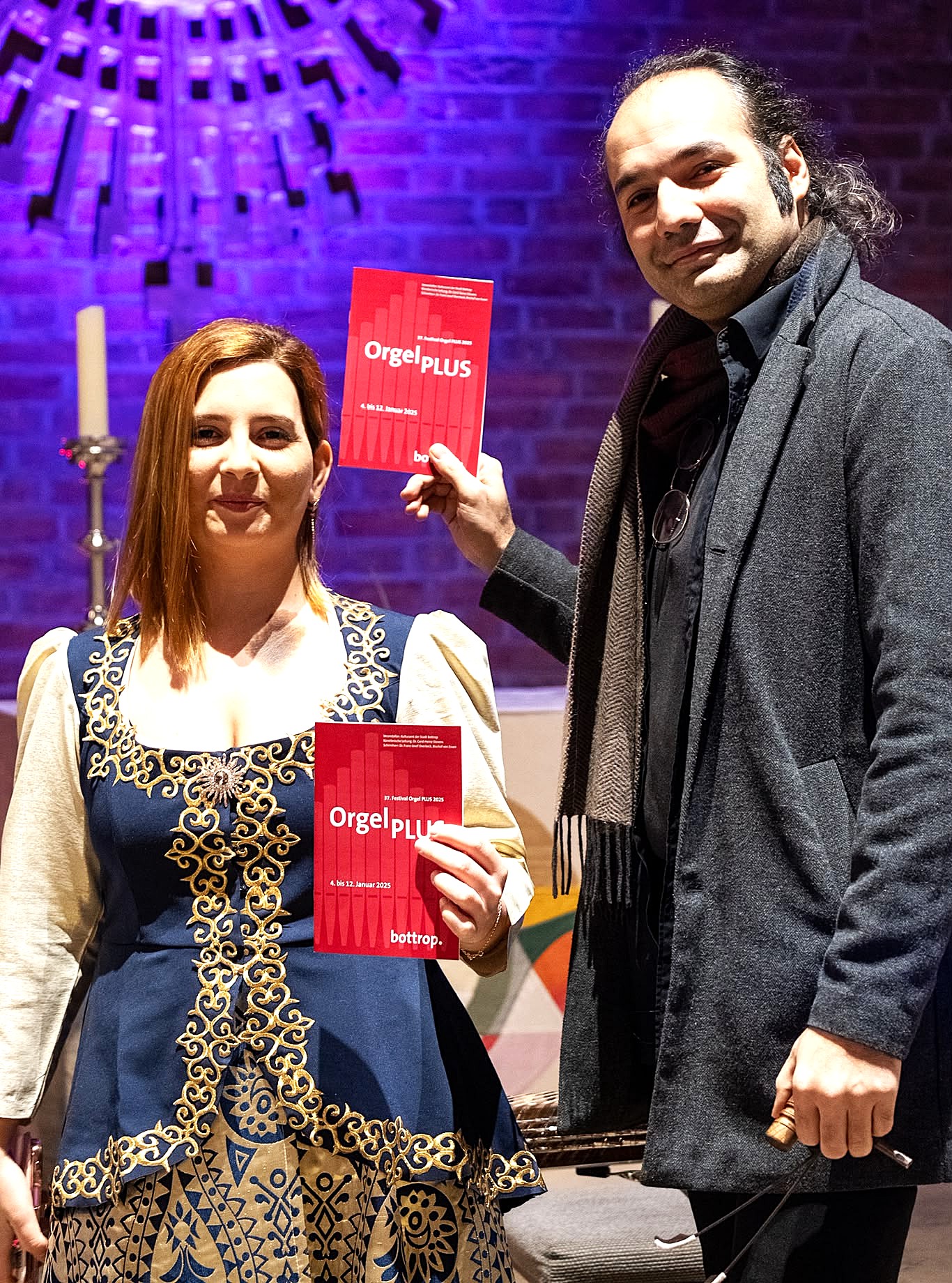
With the “Mugham Fantasia” program, we did a small tour, performing in five churches in Norway.
It was after this experience that I realized I could implement such an idea on my own — without other instruments. Then I decided to commission composers to write works specifically for this performance format.
Today I already have three such projects based on the synthesis of Azerbaijani musical culture with the Norwegian musical tradition. Two of them were created in collaboration with Norwegian composers — Henrik Ødegaard and Kjell Mørk Karlsen.
The next project I awaited with particular excitement was the “Suite for CantORganistA”. We realized it together with the Azerbaijani composer Galib Hasan oglu, who has lived in Norway for many years. He wrote the piece “Daughter of Fire” (Odlar qızı) for me.
We worked on the suite together, discussing the musical material, texts, and accompaniment. Galib wanted me not only to participate in the creation of the work during our joint work but also to learn. He taught me a great deal. It was a great honor for me to work with a person who was a student of Gara Garayev, Fikret Amirov, and Khayyam Mirzazade. The opportunity to create new music together with such a master is something I perceive as a great happiness and a tremendous professional honor.
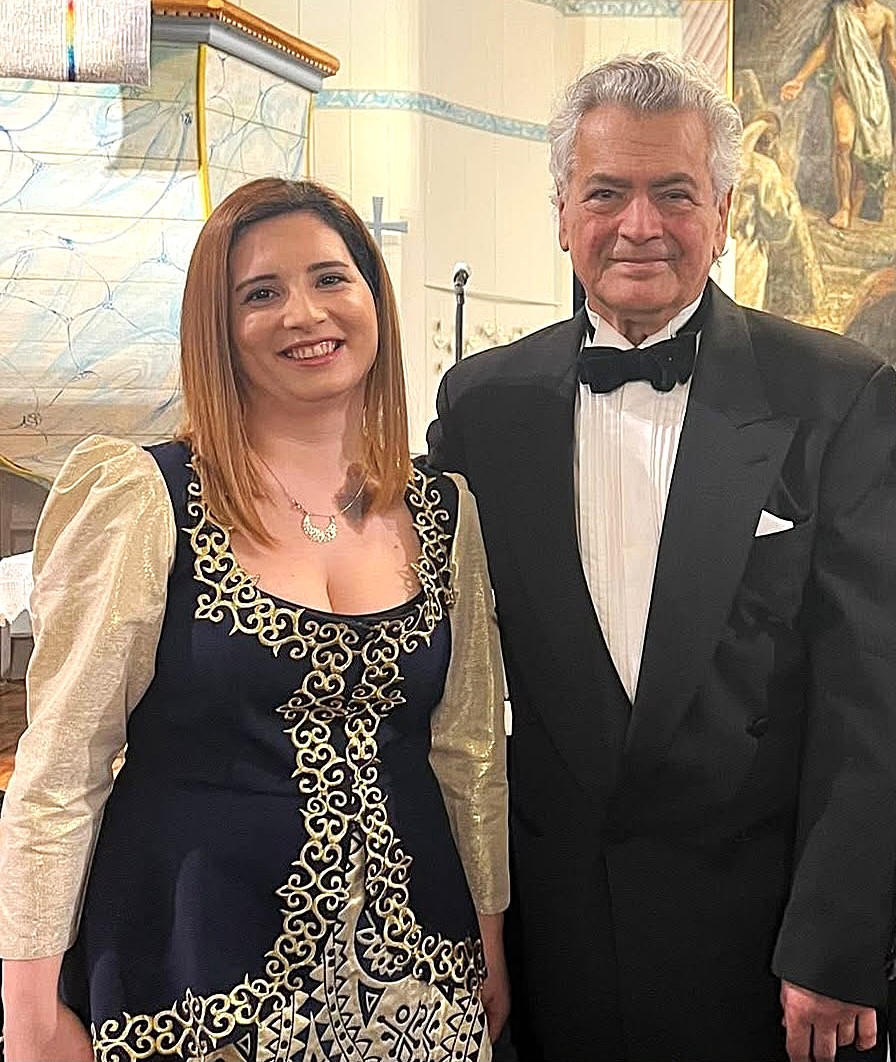
The world premiere of the suite took place on April 29 this year at the cathedral in the Norwegian city of Tønsberg. I also dedicated this concert to the 80th anniversary of Galib Hasan oglu.
Today, I am already being invited to concerts specifically under my creative brand CantORganistA.
- It’s amazing that two Azerbaijani musicians found each other far from their homeland — in a small Norwegian town, where your joint projects were later born.
— We really have a very unusual story of how we met. And it began long before our first meeting — when I was only six years old.
I was born in Sumgayit. My mother noticed my musical abilities and took me to classes at the Baku Art Gymnasium every day. Over time, the daily trips from Sumgayit to Baku became too difficult, so we moved to the capital and started living in a rented apartment. But there was no piano at home, which meant I couldn’t practice every day. This worried my piano teacher very much. She had a friend — Sevda khanum, who worked in one of the Norwegian humanitarian organizations. She asked her to find out if it was possible to help a talented girl from Azerbaijan buy a piano.
At the request of my teacher and impressed by my performance, Sevda khanum approached the leadership of the organization where she worked with a request to help our family purchase a piano so that I could practice at home. That’s how I got my own instrument.
I often joke that this was when my “dark days” began. Because from that moment on, I no longer had any excuse not to practice. Five to six hours of daily piano practice became part of my life, and there was no escaping it. In my teenage years, when I had difficult times both at home and at school, there was one song that I often played and sang to myself. Its author was Galib Hasan oglu, and it was called “You Came into This World” (Sən Dünyaya gəldin ki). It was this song that helped me get through the hard times and became a source of comfort for me.
Years passed. I came to Norway to study on a one-year International Diploma program at the Grieg Academy of Music. It was there, from the teachers and Azerbaijani students, that I first heard that there were works by an Azerbaijani composer in a collection of church chorales. As an Azerbaijani, this news made me very happy, and I immediately wanted to meet the author. In the chorale collection, the composer’s name was listed as Galib Hasan oglu. When I started searching for his works online, I unexpectedly heard a familiar melody — the very same song I had sung many years earlier. Only now it was in Norwegian and called La den brenne. This music touched me deeply once again. And then I realized that I had the opportunity to meet the person who had written this beautiful song.
I took the phone number from my classmates and called. His wife answered the phone. Her name was Sevda khanum. And during the conversation, it unexpectedly turned out that this was the very same Sevda khanum who had helped our family buy a piano many years ago. For me, this was absolutely incredible. Thanks to her kindness, I once got an instrument, became a pianist, then an organist, and many years later came to Norway — the country where they had already been living for a long time. I had the feeling that fate had deliberately brought me here so that I could finally say a simple human “thank you” to these people.
It was then that I finally understood that all of this was not just a series of coincidences. One of these people had once helped me with a kind deed, the other with his music. And it seems to me that our meeting in Norway was a real gift of fate, or perhaps God’s plan.
- In December 2024, you performed at the Chamber and Organ Music Hall of the Muslim Magomayev Azerbaijan State Academic Philharmonic. Do you plan to perform for the Azerbaijani audience again in the near future?
— Yes, 11 years after my move to Norway, I was finally fortunate enough to perform a solo concert program in Azerbaijan again. At the instruction of Farah Aliyeva, Head of the Department of Humanitarian Policy, Diaspora, Multiculturalism and Religious Issues of the Presidential Administration, my solo concert was held at the Chamber and Organ Music Hall of the Muslim Magomayev Azerbaijan State Philharmonic, with the participation of the State Chamber Orchestra named after Gara Garayev conducted by Honored Artist Fakhraddin Karimov.
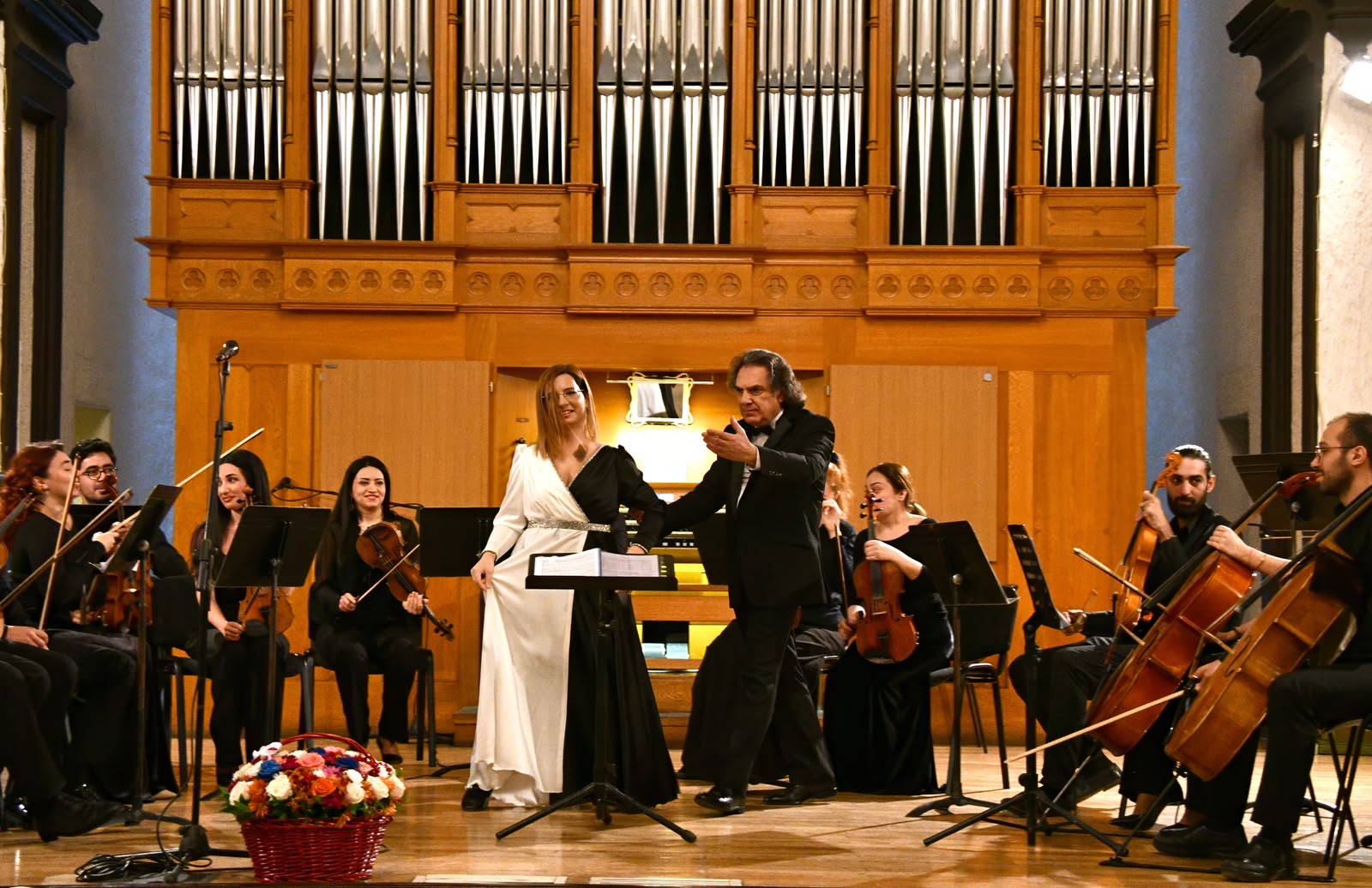
It was there that the Concerto for Organ and Chamber Orchestra by the Norwegian composer and organist Jon Laukvik was performed in Azerbaijan for the first time. He came to Baku at my invitation.
In addition, the concert became a tribute to the memory of our outstanding composer Sevda Ibrahimova. Her Concerto for Organ and Chamber Orchestra, which had not been performed for 25 years, was included in the program. I managed to bring this work back to the stage, and it meant a great deal to me. The very fact that an Azerbaijani female composer created a concerto for organ and chamber orchestra is already a significant event in the history of our musical culture. For me, this concert became a true celebration of Norwegian and Azerbaijani organ music.
I would very much like to perform this work abroad as well, to introduce international audiences to the music of Azerbaijani composers and thereby promote our musical heritage. This is exactly how I see my mission — using organ music to build bridges between the musical cultures of Azerbaijan and Europe.
There are many talented musicians in Azerbaijan — performers on a wide variety of instruments, including organists. I am looking forward with great anticipation to the opportunity to share the stage with them and create joint projects.
But one of my most cherished dreams is to one day play the organ in Garabagh. I would really love to perform “Bayati-Shiraz” there — not only to play it on the organ, but also to sing it.
I sincerely believe that one day an organ will appear in the concert hall of Garabagh University in Shusha. I very much hope that beautiful organ concerts will sound there, and that I will be fortunate enough to be one of the musicians who open this new page in the history of Garabagh’s musical culture.

Other news in this section


