Peoples of Azerbaijan: Udins of the village of Nidzh

Baku, March 16, AZERTAC
Udins are the autochthonous people of Azerbaijan and belong to one of the 26 Albanian tribes that founded the Caucasian Albania. Now they live in Gabala and Oguz regions of the country. According to the results of the 2009 census, there were 3,800 Udins in Azerbaijan. The largest number of udins resides in the village of Nidzh, Gabala region. This original village, in which a large number of ancient monuments have survived, is of great value for all who are interested in ethnotourism.
History, folklore and language
The first reliable information about the udins appeared 2,500 years ago. About the ancestors of this tribe - utii, in the V century BC. in his "History" told the ancient Greek historian Herodotus. Ooty, Oothig, Otena is mentioned as one of the important regions located on the banks of the Kura, in Garabagh and on the territory of the modern Barda and Imishli. They are also mentioned in the "Geography" of the ancient Greek historian and geographer Strabo in describing the Caspian Sea and Caucasian Albania in the I century BC. For the first time, the ethnic term of udins appears in the "Natural History" of the 1st century Roman author Pliny the Elder. And in the "Geography" of the ancient Greek writer of the second century Ptolemy it is reported that different tribes live on the Caspian Sea, including the udys.
The most detailed evidence of the udins is contained in the "History of Alban" by the local author of Moses Uthiy (Kalankatuisky), who lived in the 8th century and belongs, in his own words, to the Udi tribe. He also informs about the mythical ancestor of 26 Albanian tribes - Aran: "From his son, the tribes of Utia, Gardman, Tsavdei, Gargaran principalities" occurred. " According to the author, utii led a sedentary lifestyle, engaged in farming, cattle breeding, and crafts.
Until the nineteenth century inclusive, the Udins remained adherents of agriculture, were engaged in silkworm breeding, horticulture, grew wheat, barley, millet.
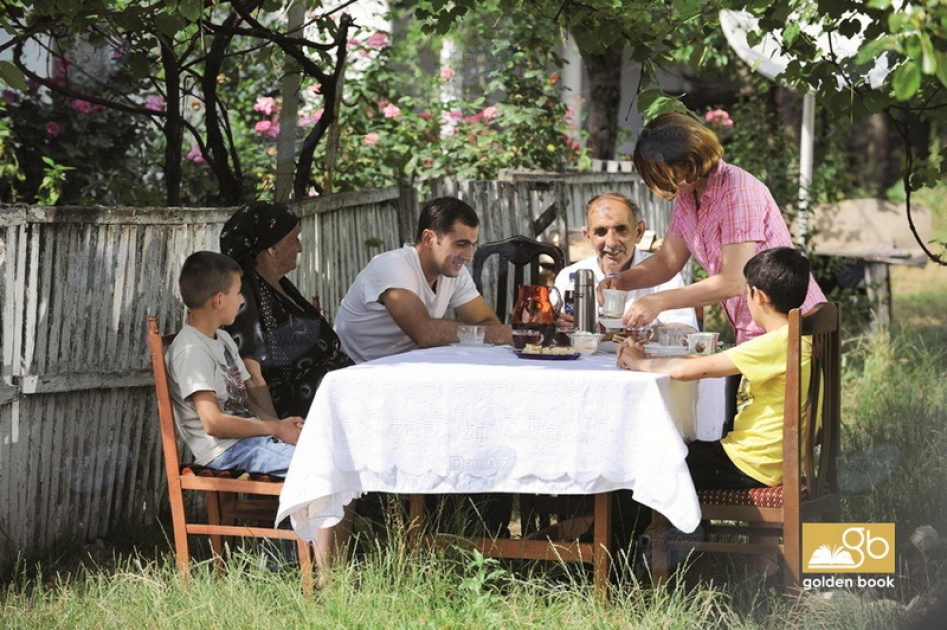
Externally, the Udins are round-faced and fair-haired. Among the representatives of this hospitable people are many long-livers, young people respect the elders. In the past, the Udine families were mostly large families. In marriage they entered with close relatives, early marriages were common. But since the XIX century, the number of children in families began to decline.
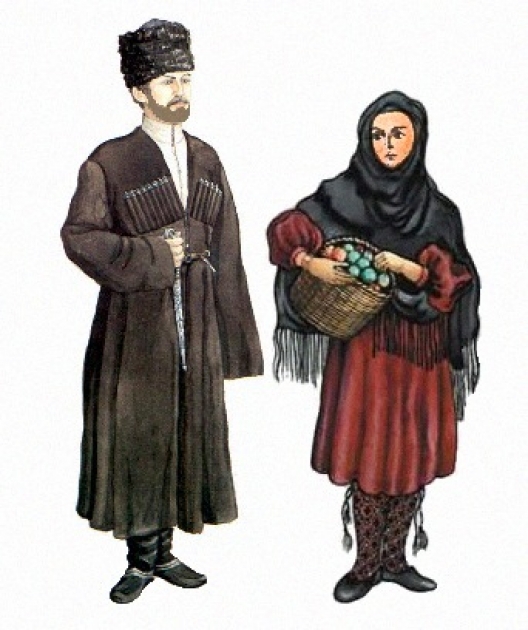
The national clothing of Udin is like the Caucasian common. In the old days Utian women walked with a closed face, did not eat with men, did not enter into conversation, did not leave the yard without permission. Thursday they are considered the most fortunate day, the case started on this day, certainly ended in luck. Utian folklore is very diverse. It has many different games, fun, entertainment, lyrical and heroic songs, dances. Legends and parables are of a household nature. Faith in the Moon, which they worshiped in antiquity, is still alive.
The udins communicate with each other in their native language (the self-name of the Udin-Muses), which is part of the Lezghin group of the Nakh-Daghestanian languages, occupying a peripheral position in it (separated first). It is divided into two dialects - Niji and Vartashen. The degree of their divergence does not prevent their mutual understanding, although each dialect develops independently. The author of the modern Utian alphabet is the now-living resident of the village of Nidzh, a philologist with a long experience Grigory Kechari.
The strength of the Udins spirit and the collapse of the Armenians
After the Arab conquest of Azerbaijan in the 7th century and the inclusion of the whole country in the Arab Caliphate, the overwhelming majority of the local indigenous population, including the Udins, accepted Islam. But some of them retained their former faith, which resulted in being included in the Armenian-Gregorian church in the 7th century, which, since VI century, attempted to subordinate the autocephalous Albanian church. True, even after the 8th century the Albanian Catholicos and his chancery remained, but the process of active de-ethnicization and armenization of Albanian Christians began. As a result, in the zone of Nagorno-Karabakh they completely lost their language and culture. In the zone of Gabala and Oguz, the Udins managed to preserve their identity and native language to the present day, although they were strongly influenced by the church alien to them.
The largest village of the Gabala region is Nidzh, an area of almost 100 square kilometers. km, is located 40 km to the south-west of the district center. The main population in it are ethnic udins. The village is surrounded by cultivated land, built up with solid houses with large garden plots planted with fruit trees. Fruits and nuts are grown here, the yields of which are mostly for sale.
With neighboring settlements and the city of Baku, the village of Nidzh is connected by bus service. There are five secondary schools in the village, three are Russian schools with compulsory teaching of the Udin language and two are Azerbaijani, where the study of the Udin language is at the request of the students.
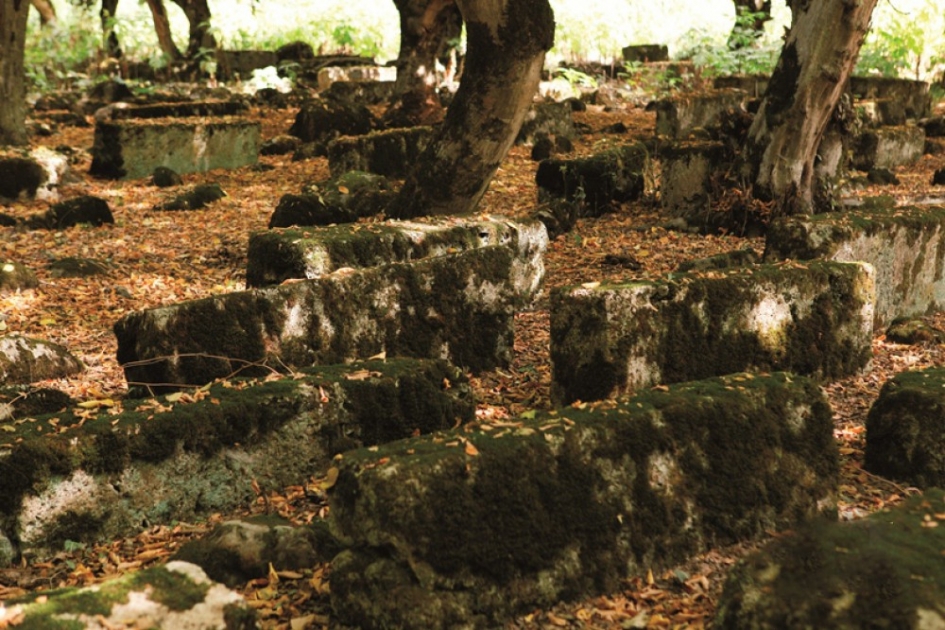
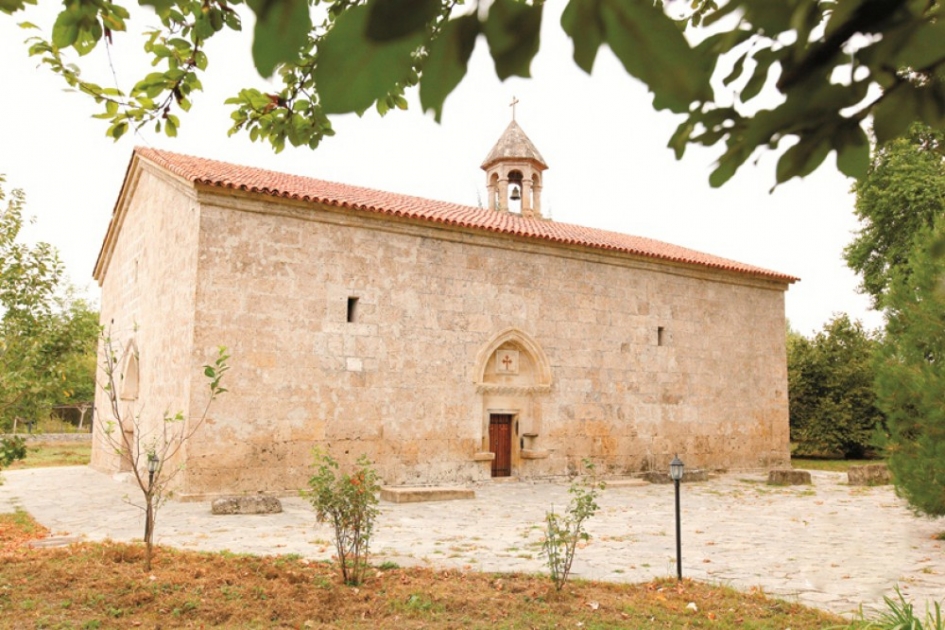
The village consists of several residential quarters: Chotari, Agdalakki, Godzha Beyim, etc. Once upon a time, every quarter had its own church. Now in the village there are several ancient temples. So the Chotari church of the 17th century, which is the pride of the villagers, was once the center of Albanian Christianity. In the courtyard of the fortress there are 4 plane trees (chenar) - the same age as the church. Local residents say that after the construction of the church, residents of each quarter planted near it a plane tree. Families came here on religious holidays, settling under their "own" plane trees, preparing and eating. Here are several ancient tombstones. Until now, these ancient plane trees are revered no less than the church, as a memory of their ancestors.
May 19, 2006 Albanian Church "Chotari" was inaugurated after the restoration. After 170 years, the inhabitants of Nidzh were able to enter their temple for the first time. This event also has its own little story.
In 1836, after the Office of the Orthodox Church liquidated the Albanian Church and its Catholicos and took out all documents related to its history, the Udins were forced to move to the Armenian church. However, the decree of the tsar of the Russian Empire on the re-subordination of the Albanian church to the Armenian, the believers did not accept, and no one went to the Armenian church. All ceremonies and services the Udins began to make at home. Taking advantage of this, the Armenians appropriated the entire historical and religious heritage of Udin, trying to assimilate them. However, this people managed to maintain their faith, history, language and traditions throughout all these years.
At present, the Albanian church "Chotari" is functioning in full measure. Soon it is planned to conduct church service in the Udin language, the efforts of trained clergymen. Today the Udin Church "Chotari" is visited by a large number of people from the CIS countries and foreign countries.
National cuisine, names and hospitality
In the village of Nidzh, other Udin temples were also preserved. Among them, Bulum, the 16th-17th centuries, and the Blue Church of the late nineteenth and early twentieth centuries, which in previous years were also attempted to "grigorize" and now do not work.
In the village there is also an ancient cemetery of the XVI-XVII centuries. On the most ancient tombs there are river boulders without any inscriptions. Since the XIX century, preserved stones containing texts and drawings. All inscriptions are made in Udin language.
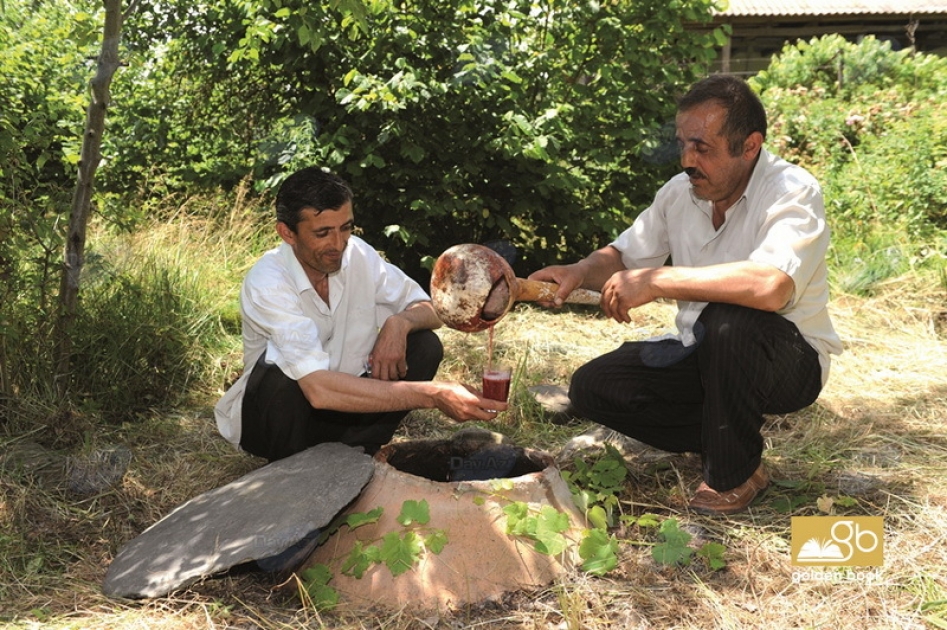
The Udins have a distinctive and varied national cuisine, including flour, dairy, meat, vegetable dishes. One of the popular dishes - Harisa - boiled to mushy condition wheat, thickly dressed with butter and pieces of meat or poultry. Harisa is a traditional food of farmers, which has been known since ancient times in the Near East, including the Syrians, from which the same name was borrowed by the Udins and their neighbors. In other parts of Azerbaijan this dish is known as "Halimashy".
There is a cafe of national cuisine in the village of Nidzh, where you can try the dishes that the distant ancestors of the udins ate. Among the dishes of Udin cuisine, there are preserved: "et syyigy" (rice porridge with meat), "fyrrama" (stuffed turkey roasted in a tender), "shyftylyg" (sauce from chestnuts and walnuts), "chilov" (pilaf with beans), "Doshamali Ashi" (pilaf with chicken), etc.
The Udins, like other peoples, have their own national names. However, in the village of Nidzh, in addition to the native Udin, one can find many interesting borrowed names. For example, in the village there are many people with the names Vitaly, Avanes, Sergei, there is even one Walter and a man with a proud name Geroi (Hero).
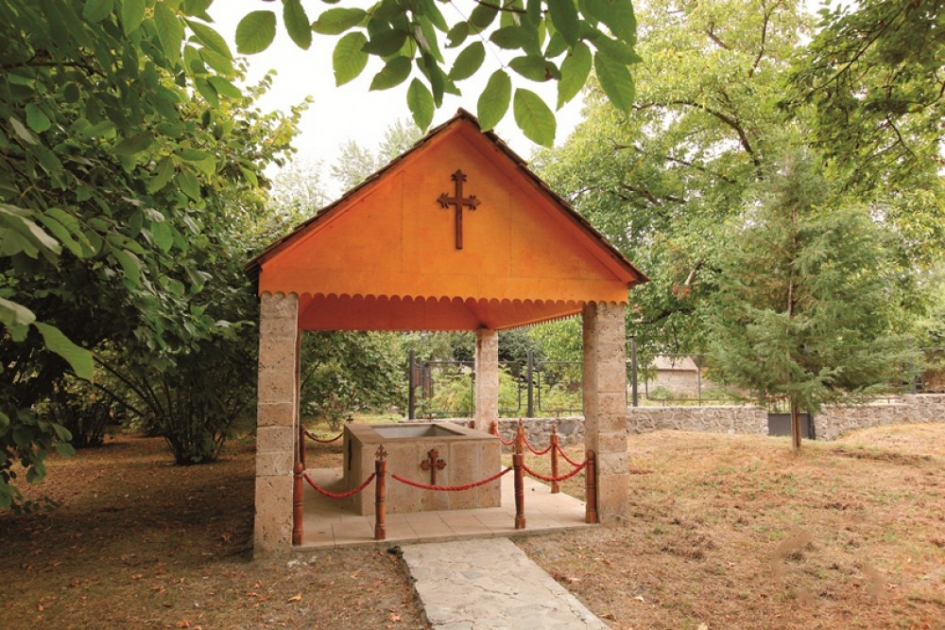
There are no hotels in the village of Nidzh, although there are a polyclinic, shops, a cafe, a spring, which is 300 years old. Guests and travelers can rent rooms and houses from local residents. The people here are hospitable. Local people will be happy to arrange for you a tour of the village, will acquaint you with all the sights and treat you with national dishes. And do not forget to visit the main market of Nidzh, where fruits, vegetables, nuts, spices and other gifts of this fertile Azerbaijani land are sold in abundance.
Emil Eyyubov
Other news in this section


