Digitalization can help increase agricultural productivity and cost efficiency - INTERVIEW

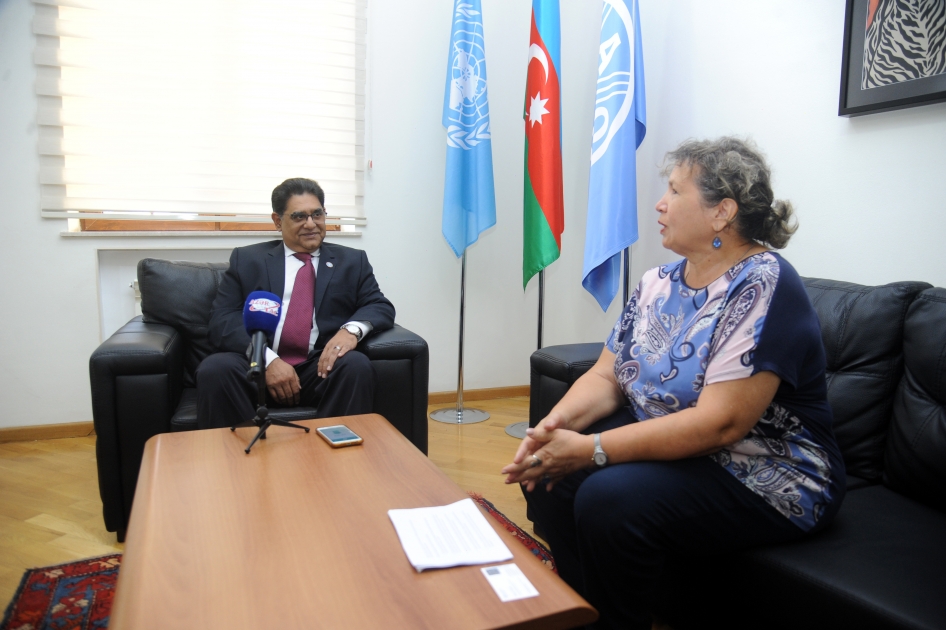
FAO is piloting a “smart villages” concept in Karabakh region
Baku, August 7, AZERTAC
Representative of the UN Food and Agriculture Organization (FAO) in Azerbaijan Nasar Hayat has responded to AZERTAC`s questions about the cooperation between FAO and Azerbaijan and future plans. AZERTAC presents the interview.
- Can you describe the process through which you received your appointment to Azerbaijan? How well-versed were you about the country prior to this appointment?
I started my professional career in 1996 as a civil servant with the Government of Pakistan, and spent 11 years working mostly with the Ministry of Foreign Affairs, including a four-year tenure as Pakistan’s Deputy High Commissioner to Maldives. For the past 18 years, I have been working with various international development organizations in Pakistan, including the United Nations Development Programme (UNDP), the U.S. Agency for International Development (USAID) and the Asian Development Bank (ADB). Since early 2013, I’ve been working with the UN FAO, first as an assistant representative in Pakistan, and then as the head of the FAO Office in the Lao People’s Republic.
Prior to my arrival to Baku in early July, my knowledge of Azerbaijan was limited mostly to the hospitality and beauty of your country. I have also read multiple studies on the country’s economy and the agricultural sector. However, no report can substitute direct learning - through field visits, meetings with agricultural specialists, and discussions with farmers. I look forward to traveling around the country and visiting rural communities in different regions.
Even though my tenure in Azerbaijan is still very short, I have already noticed that despite its scarcity of water and other challenges, the country produces a large amount of fruits and vegetables that can be further processed and marketed abroad. Discussions with government officials and technical specialists also suggest other priorities that FAO will be focusing on.
- Reflecting on the agricultural reforms in Azerbaijan, are you content with the outcomes? Is there sufficient integration of modern technologies? In your opinion, do these reforms and adaptations adequately ensure food security within the country?
Azerbaijan’s economy has made an impressive progress over the past couple of decades. However, the sector of agriculture has been growing more slowly, in part due to the shocks such as the pandemic and the recent wars with Armenia over the Karabagh region. The sector has a huge potential for further growth in productivity and earnings, and the Government of Azerbaijan has been providing a wide range of incentives to stimulate the expansion of agricultural activity.
Despite these efforts, agricultural productivity in the country is still low, mainly due to fragmented holdings, degradation of natural resources and the lack of access to modern technologies and markets. The country relies on food imports to ensure food security of its population.
To ensure that the agricultural sector produces sufficient amount of food for the country’s citizens and generates good incomes to the rural population, Azerbaijan must bring the sector of agriculture to the 21st century - embrace agro-e-commerce or digital agriculture, as well as digital development of rural areas, increase the size of landholdings through land consolidation, modernize production processes and become competitive in international markets.
FAO, along with other development partners, supports the Government of Azerbaijan in its efforts to develop the agricultural sector. Together, we work to identify priority technical areas and interventions, as well as geographic regions of the country where our assistance would yield maximum impact on the communities and the sector at large.
- How do you envision the future of Azerbaijan-FAO cooperation? What are likely to be the key areas of focus?
Agricultural development is one of the priorities for the government of Azerbaijan, both as a source of food security and a source of employment, since almost half of the population lives in rural areas. Equally importantly, the country has designated agriculture as one of four priority sectors for diversifying its economy.
In my introductory meetings with Azerbaijan’s Minister of Foreign Affairs Jeyhun Bayramov, Minister of Agriculture Majnun Mammadov, Minister of Ecology and Natural Resources Mukhtar Babayev, and other government officials, we’ve discussed the importance of increasing food production in the country, in order to reduce reliance on food imports. These discussions will serve as key guidance for FAO’s work in the nearest future.
FAO’s portfolio already includes a range of programmes that support these strategic priorities of the country, but we continue searching for more innovative ways to ensure that our activities bring the highest impact both for the sector of agriculture and rural communities across the country.
Our current portfolio includes projects that work to improve production of seeds, hazelnuts and sheep, expand rural employment and strengthen market competitiveness. We also work to stop land degradation and improve management of forests, pests and diseases, strengthen water governance and rural finance, as well as to conserve biodiversity.
One of the areas where FAO is planning to expand its support is the introduction of digital technologies in agriculture. During his recent visit to Azerbaijan, the Director-General of FAO, QU Dongyu expressed a strong commitment to supporting Azerbaijan in its efforts to promote digital agriculture as well as digital development of rural areas.
Digitalization can help increase agricultural productivity and cost efficiency, reduce waste of water and other resources, facilitate adaptation to climate change, and expand market opportunities.
Let me give you an example, I have recently visited a vegetable farm in Laos, where all the production process is monitored and managed by e-technologies: a computer calculates how much water and fertilizer a specific vegetable needs on a specific day and automatically supplies it, eliminating guesswork and uncertainties from the process. Such use of technology reduces waste of resources, ensures that the vegetables grow up healthy and tasty, and that they are delivered to buyers in a timely manner.
I believe that similar technologies can and should be introduced here in Azerbaijan, to ensure that the country not only produces sufficient amount of food for internal needs but enter international markets, thus generating good incomes for millions of rural residents.
- Do you foresee any involvement from the FAO in the extensive restoration and construction efforts being undertaken in the Karabakh and Eastern Zangezur regions of Azerbaijan?
The regions of Karabakh and Eastern Zangezur are among FAO’s priority regions in the country, both due to their large agricultural potential, and due to high levels of food insecurity in the area. In support of the Government of Azerbaijan's efforts to restore the infrastructure and economic activity in the area, FAO is piloting a “smart villages” concept in Karabakh region. This project promotes the use of the best technologies and experiences in the region's agriculture, in line with the national priorities for the region.
FAO is also interested in expanding its efforts in the Karabakh region to support its long-term sustainability, growth in agricultural productivity and development of economically viable rural communities.
- Is the FAO currently involved in projects that aim at environmental protection and climate change mitigation in Azerbaijan? Could you outline any forthcoming initiatives in these areas?
The sector of agriculture is one of the most affected by the climate change and degradation of environment. FAO places utmost importance to these issues in its programming all over the world. Here in Azerbaijan, we work with technical specialists and rural communities to improve water management, reverse land degradation and conserve the country’s biodiversity.
Multiple other activities also address the issues of climate change and environmental protection by focusing on the resilience of farming communities. For example, “smart village” concept promotes the use of digital technologies and applications in order to reduce waste and more effective use of resources. Similarly, efforts to improve production of seeds, hazelnuts and sheep, focus on ensuring that these activities are sustainable - meaning, that their production is organized in such a way that it does not deplete natural resources.
FAO is also helping to introduce best regional practices in forest monitoring and restoration. Yet another project is working to improve the management of pesticide disposal to reduce releases of Persistent Organic Pollutants (POPs) from obsolete pesticide stockpiles and contaminated sites.
Other news in this section


