Expert: Azerbaijan is actively developing “smart cities” and sustainable infrastructure — INTERVIEW

Baku, June 19, AZERTAC
Against the backdrop of growing climate challenges and an increasing shortage of water resources, water security is becoming one of the key factors of sustainable development for states. According to estimates by international organizations, water scarcity may affect billions of people in the coming decades, making efficient water resource management not only an environmental necessity but also an economic one.
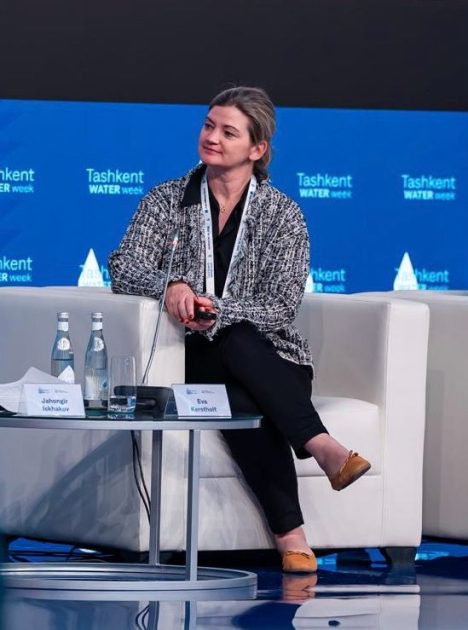
For Azerbaijan, located in a region facing growing pressure from climate change, the modernization of water infrastructure, improved water-use efficiency, and the introduction of innovative technologies are becoming especially relevant. The country is implementing large-scale sustainable development projects, and following COP29, attention to climate adaptation and the rational use of natural resources has increased significantly. On how modern technologies can help address water challenges, which international practices are most valuable, and what role the water sector plays in achieving global climate goals, international water technology and water resource management expert, infrastructure modernization specialist Eva Kerstholt, representative of Wilo Group, which develops solutions for water supply and wastewater systems, told AZERTAC.
— Water security is becoming one of the defining challenges of the 21st century. In your view, what are the most important priorities for governments and businesses seeking to build sustainable water systems in an increasingly unstable climate environment?
— That is absolutely correct. We know from the UN World Water Development Report that by 2050, 5 billion people will be affected by water scarcity. Even today, nearly 800 million people lack access to basic drinking water and sanitation. Especially in rapidly growing megacities in developing countries, water supply and wastewater treatment represent major challenges.
The Caspian region is experiencing water shortages, and water security is among the top priorities on the agenda. In regions such as the South Caucasus, we observe additional pressure due to climate variability, reduced inflow from transboundary rivers such as the Kura River and the Araz River, as well as rising demand from cities and agriculture. This makes water resource management not only an environmental issue, but also a strategic priority for long-term stability and economic development.
Access to water directly determines socio-economic development. If access becomes further restricted — whether due to overuse, pollution, or climate change — the consequences may range from reduced economic productivity to social tensions.
— Azerbaijan is increasingly focusing on sustainable development and environmental protection. What role can modern water technologies play in supporting the country’s long-term economic and environmental goals?
— Modern water technologies play a decisive role in supporting Azerbaijan’s economic and environmental ambitions — especially when it comes to water-use efficiency and sustainable resource management.
One of the most important sectors is agriculture, which accounts for the majority of water consumption. Improving irrigation efficiency — through modern pumping systems, smart distribution, and digital monitoring — can significantly increase agricultural productivity while reducing energy consumption. Highly efficient systems not only lower operational costs but also contribute to Azerbaijan’s broader sustainability goals, particularly in the context of the global energy transition.
At the same time, advanced wastewater treatment technologies enable water to be safely returned to the environment. We are currently working with utilities on designing and equipping treatment plants so that the quality of treated water is environmentally safe upon discharge, while also considering overall lifecycle costs. We also offer advanced treatment technologies such as MBR and SBR systems, which enable water quality suitable for reuse — for example, irrigation. This closes the water cycle and reduces pressure on freshwater resources.
— Azerbaijan is actively developing “smart cities” and sustainable urban projects. What lessons from international experience could be particularly useful for rapidly modernizing cities?
— Azerbaijan’s ambition to develop smart cities and modern urban infrastructure is very timely, as urbanization continues to accelerate globally and regionally.
International experience shows that one key lesson is that smart cities are not built overnight — they require long-term vision, continuous adaptation, and close collaboration between the public and private sectors.
At a broader level, the concept of “sponge cities” is gaining popularity. These systems are designed to capture rainwater, store it, and reuse it during dry periods, helping cities better manage both flooding and water scarcity.
Especially for cities in the Caspian region, combining smart infrastructure, water reuse, and climate-adaptive design can significantly enhance urban resilience. Ultimately, the greatest impact is achieved when technology is combined with a clear strategy and effective implementation. Where this happens, we see measurable improvements in resilience and quality of life.
— Azerbaijan hosted the UN climate conference COP29, highlighting its commitment to global climate action. How important is the water sector in achieving international climate goals, and what role should it play in future sustainability strategies?
— Hosting COP29 positioned Azerbaijan as an important participant in the global climate dialogue, and water should play a central role in this sustainability agenda going forward.
Water is becoming a strategic resource, especially in regions affected by climate change. Achieving climate goals requires an integrated approach. This includes improving the energy efficiency of water systems, expanding water reuse, promoting sustainable agriculture, and strengthening the water–energy nexus.
For Azerbaijan after COP29, there is a clear opportunity to translate global commitments into concrete, measurable improvements in infrastructure, efficiency, and resilience. Climate action becomes real only when it is implemented in practice, and water is one of the most powerful starting points. Wilo Group is proud to be deeply engaged in Azerbaijan and to serve as a trusted partner in developing smart and sustainable water solutions for future generations.
Author – Tamilla Mammadova
Other news in this section


