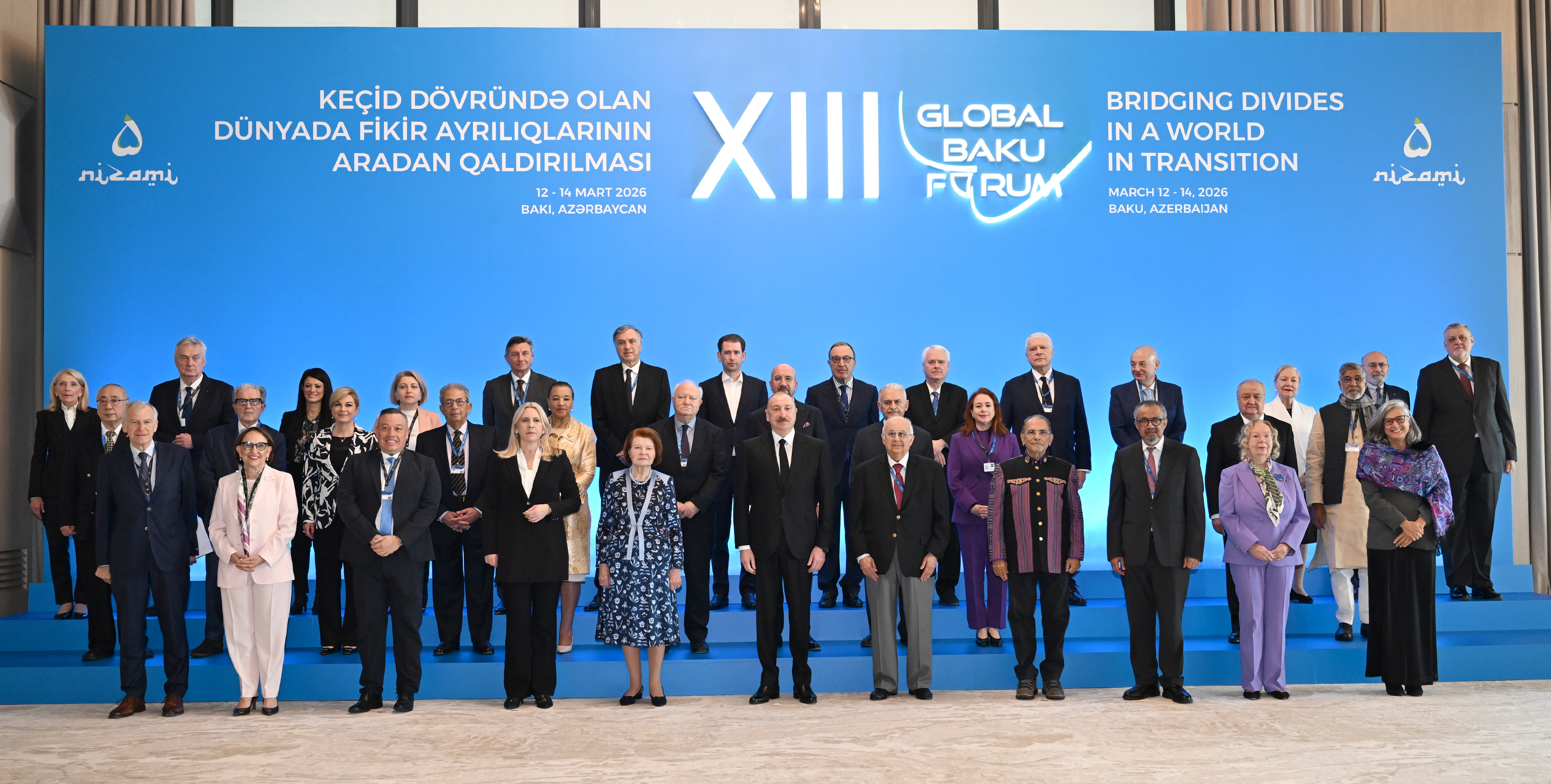
13th Global Baku Forum, themed “Bridging Divides in a World in Transition,” commenced in Baku
President Ilham Aliyev addressed opening ceremony of Forum VIDEO
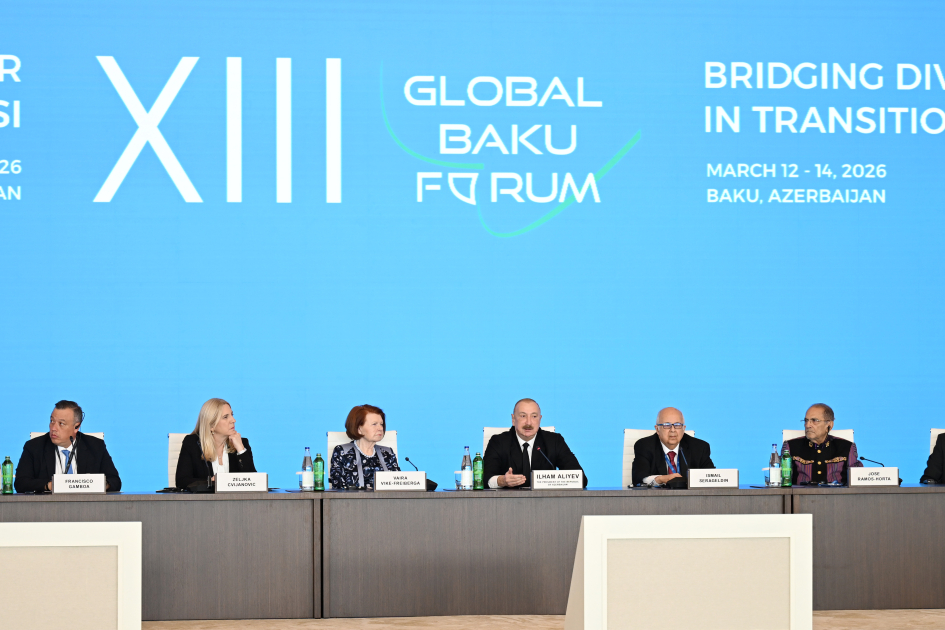
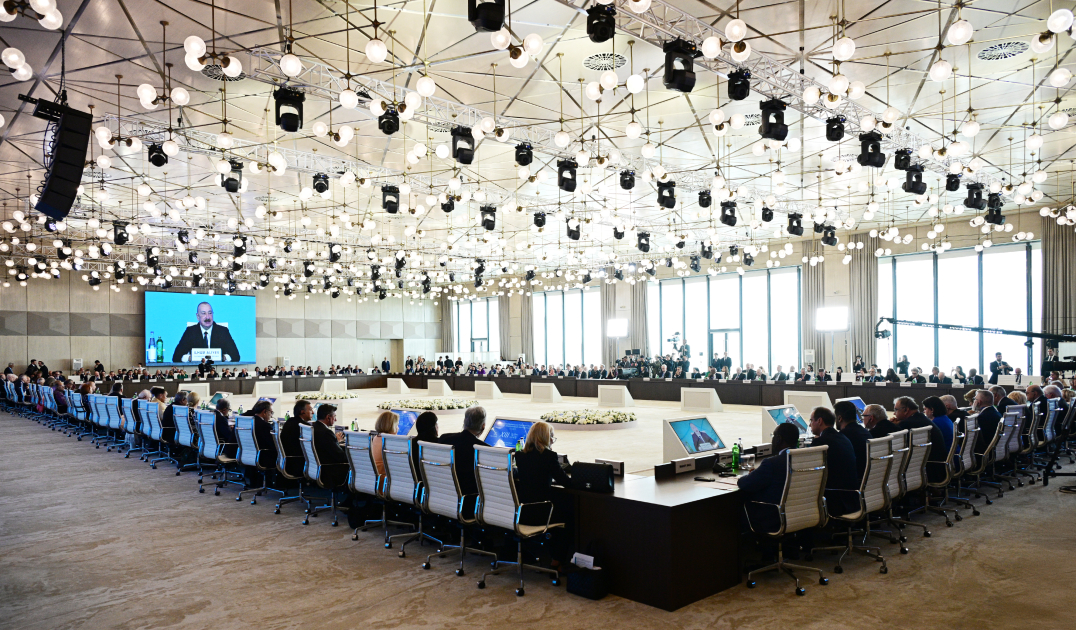
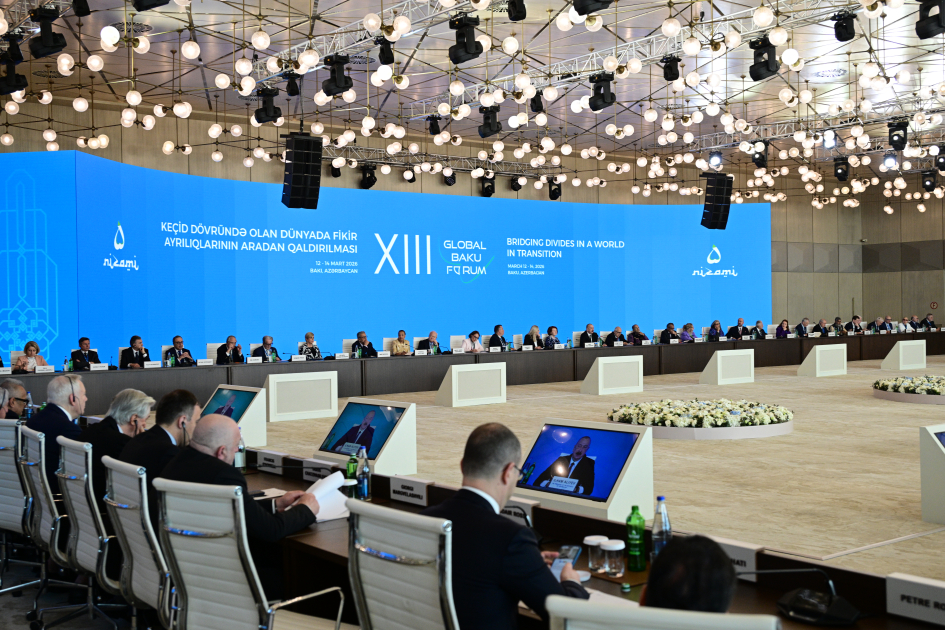
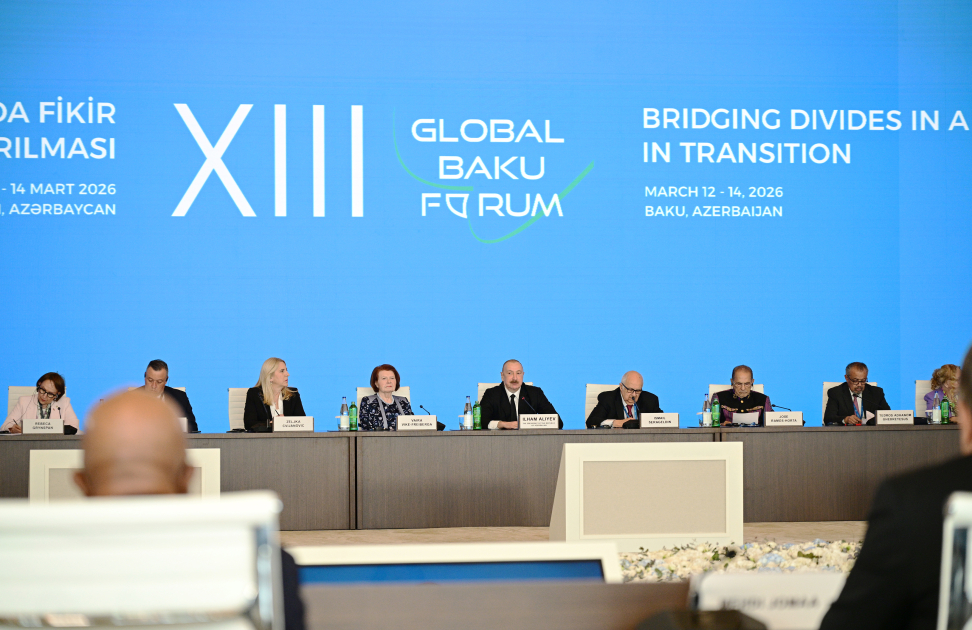
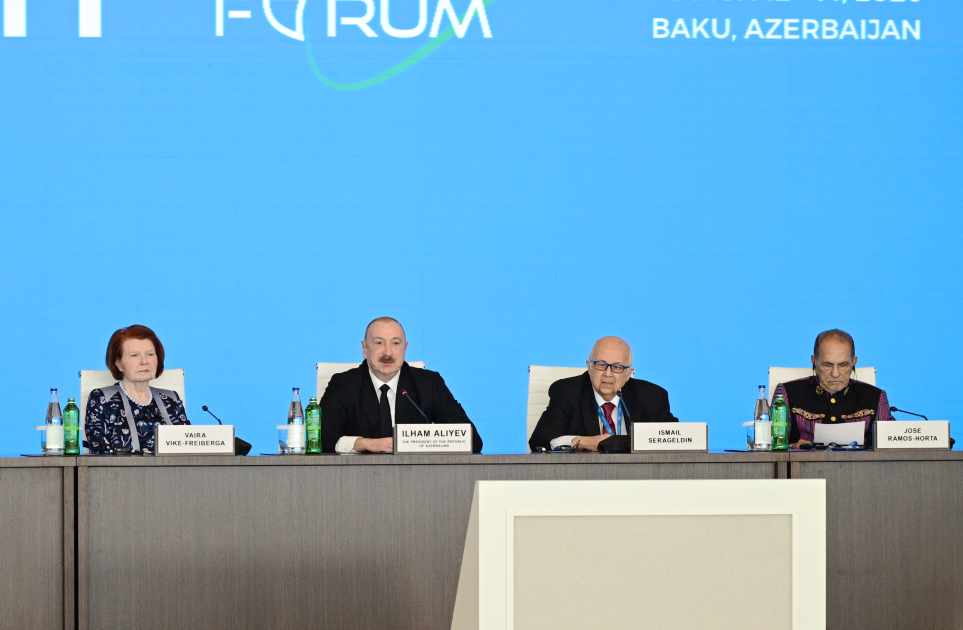
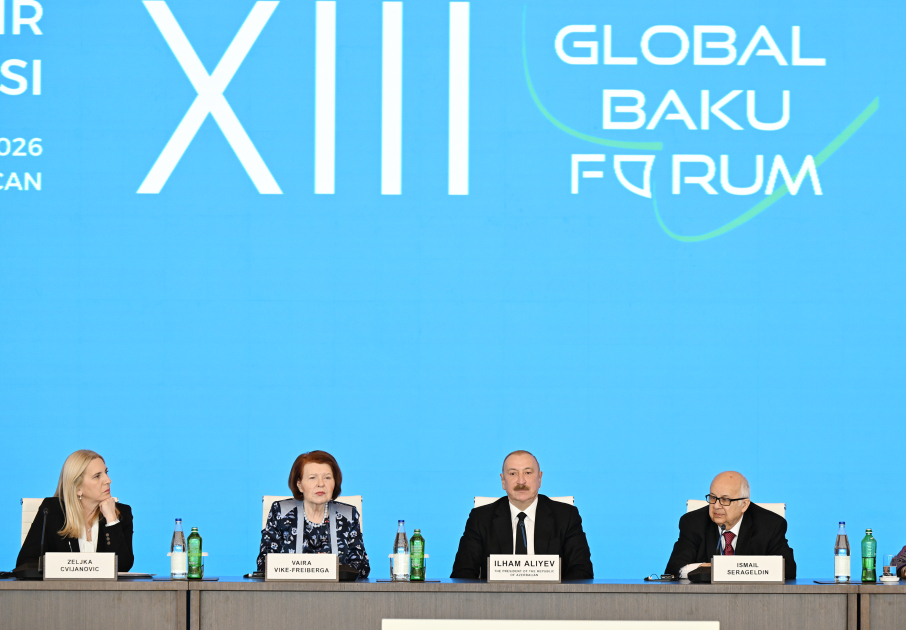
Baku, March 12, AZERTAC
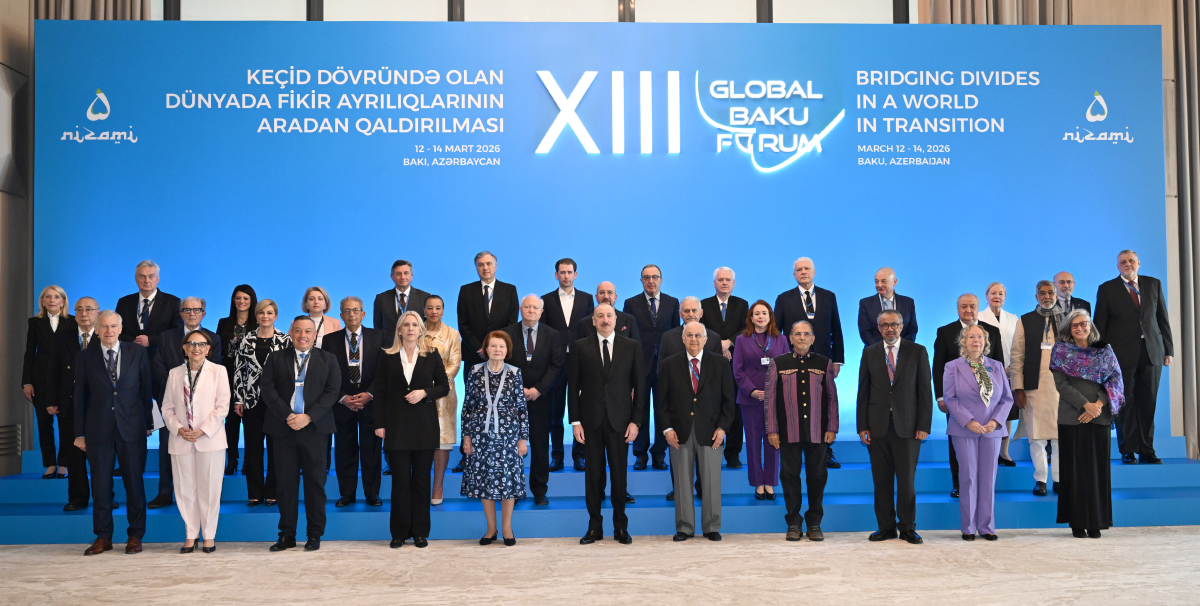
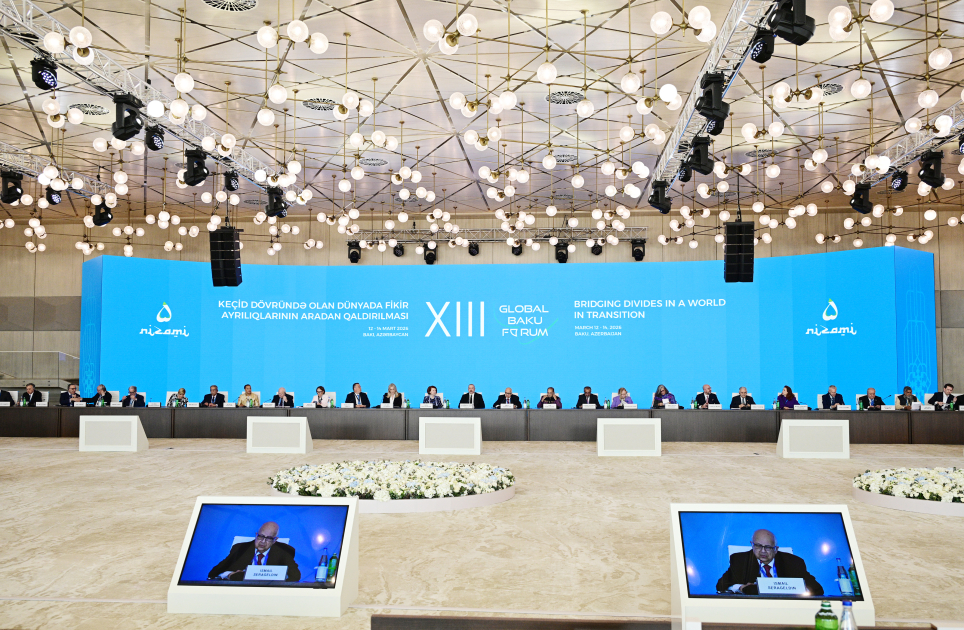
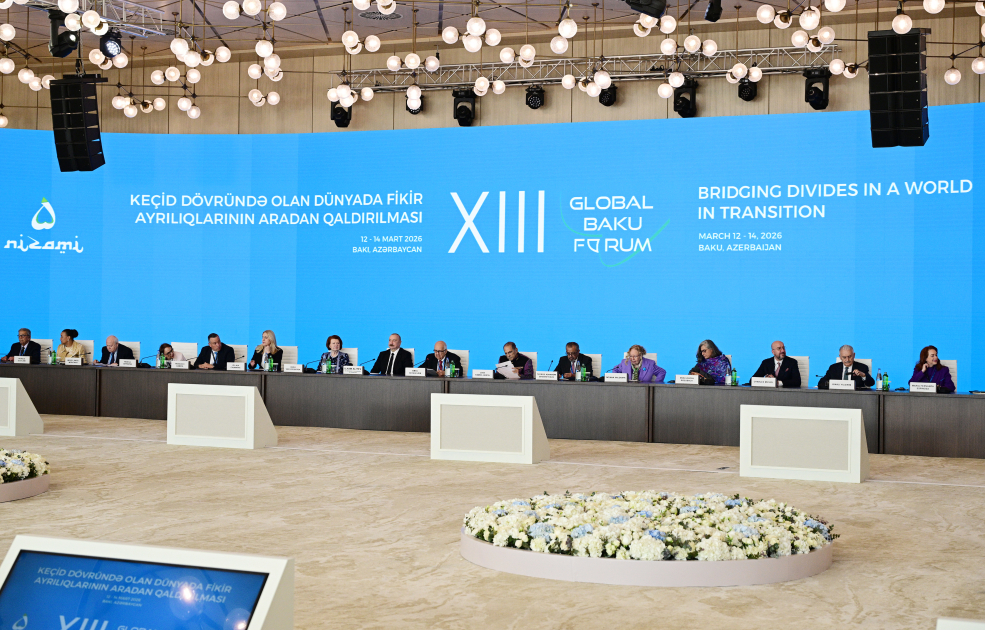
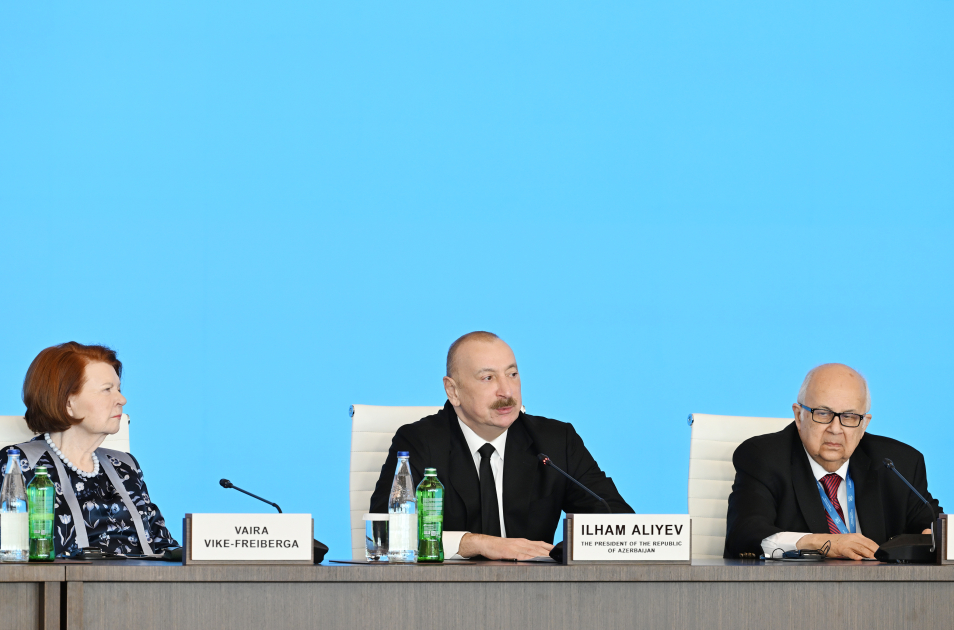
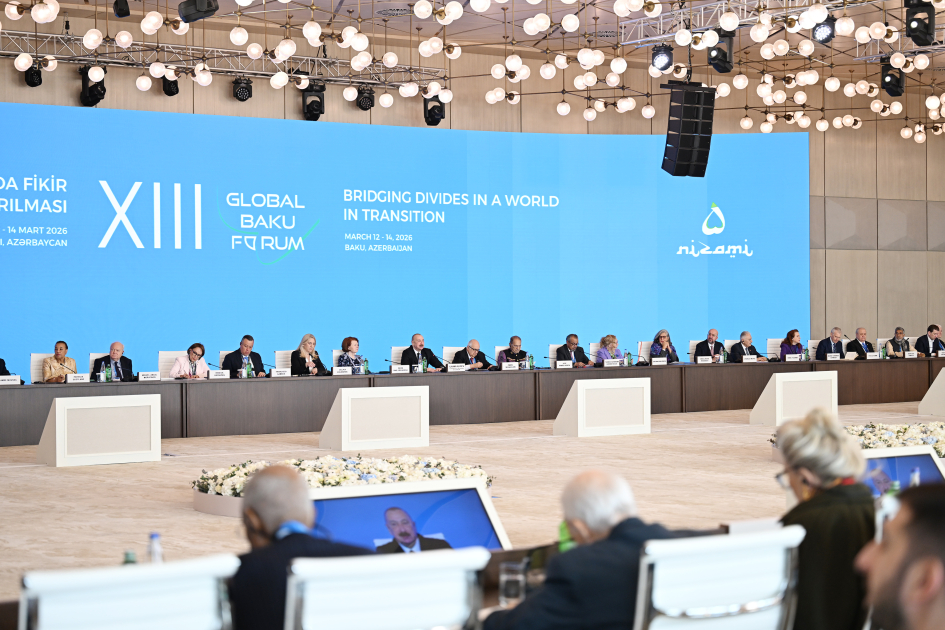
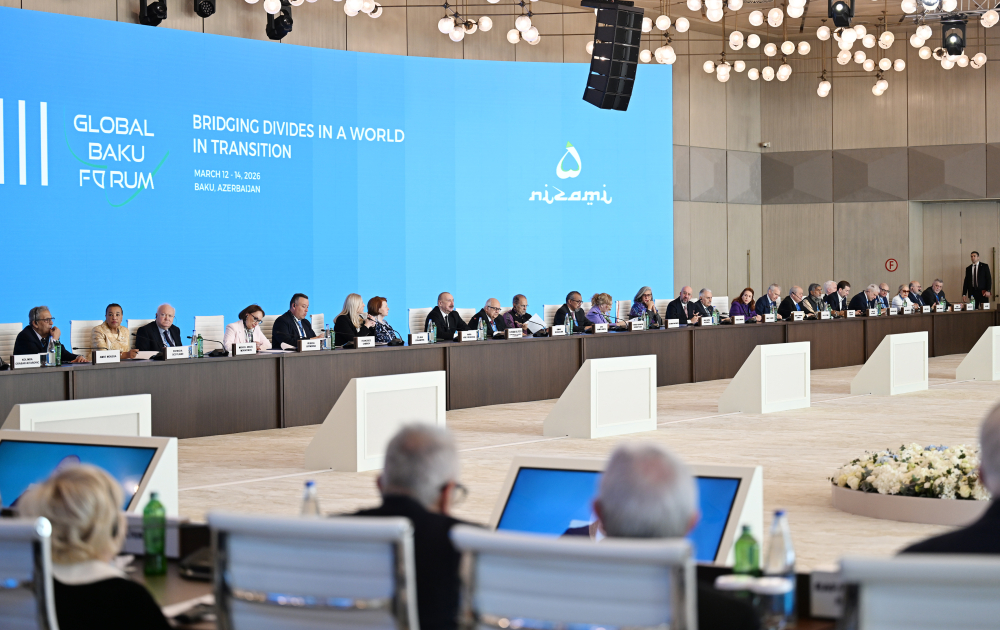
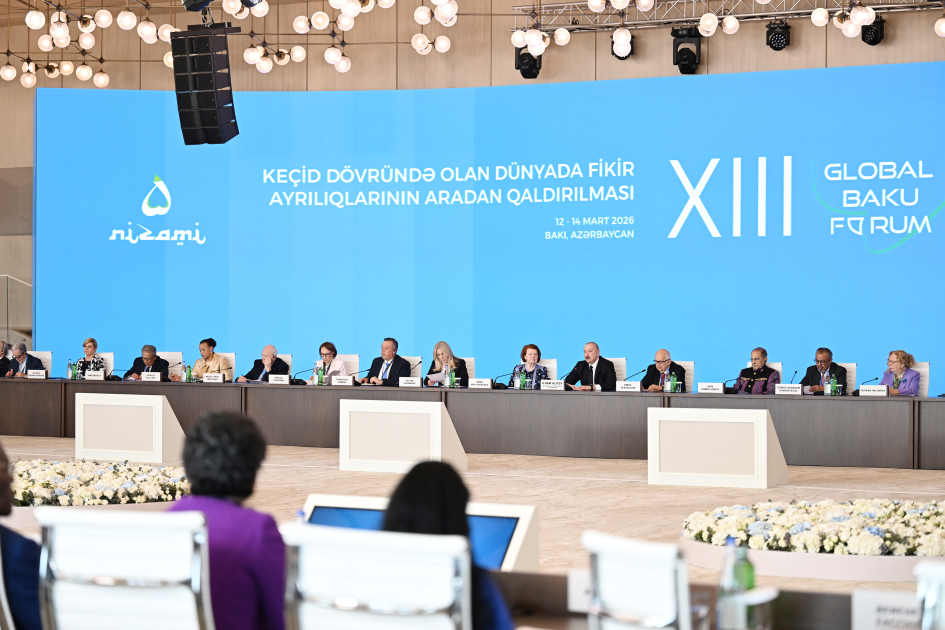
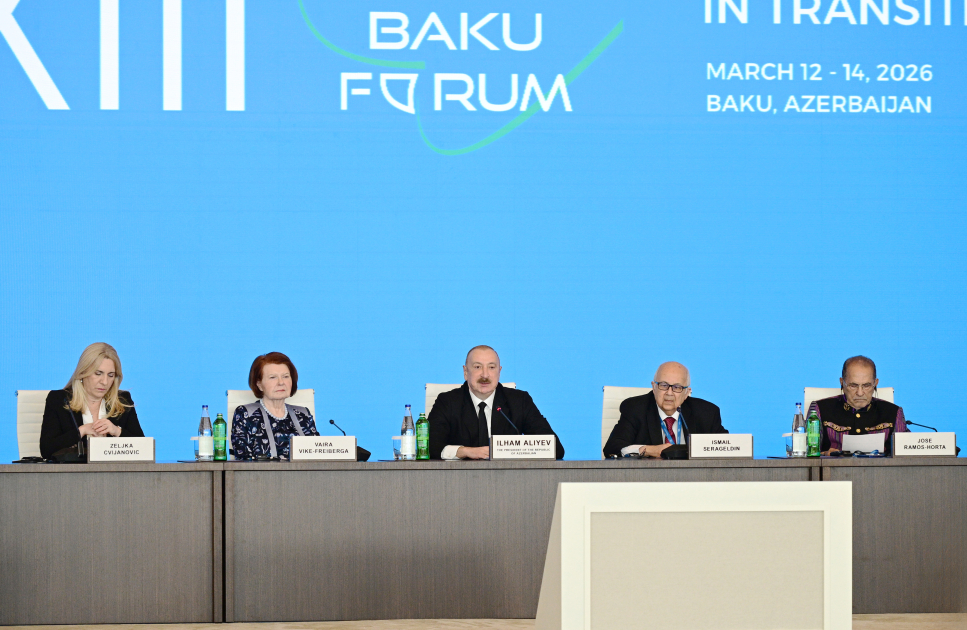
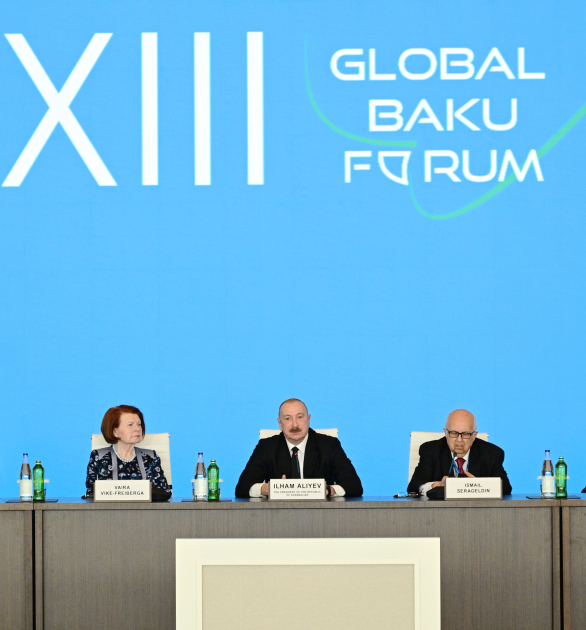
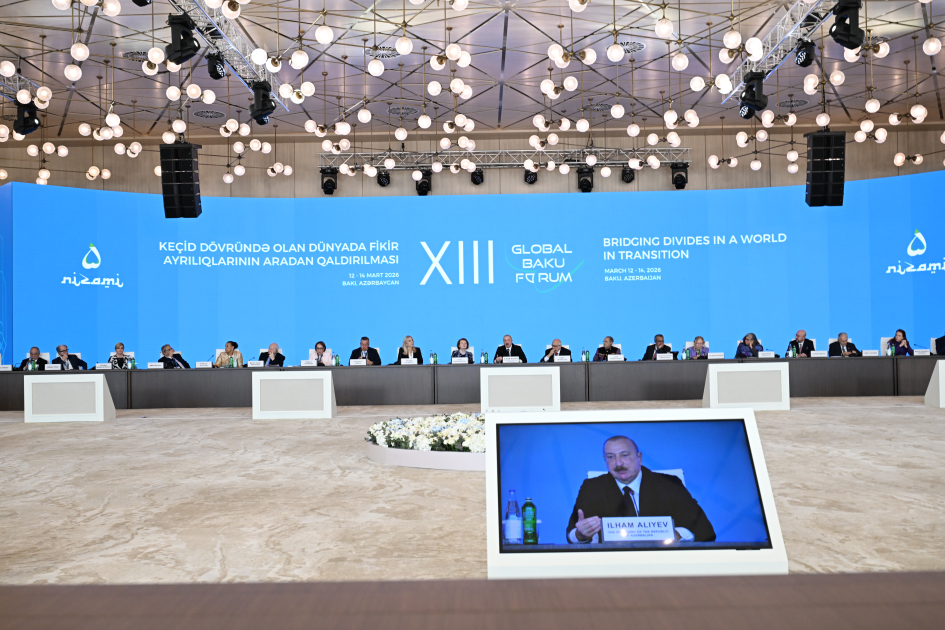
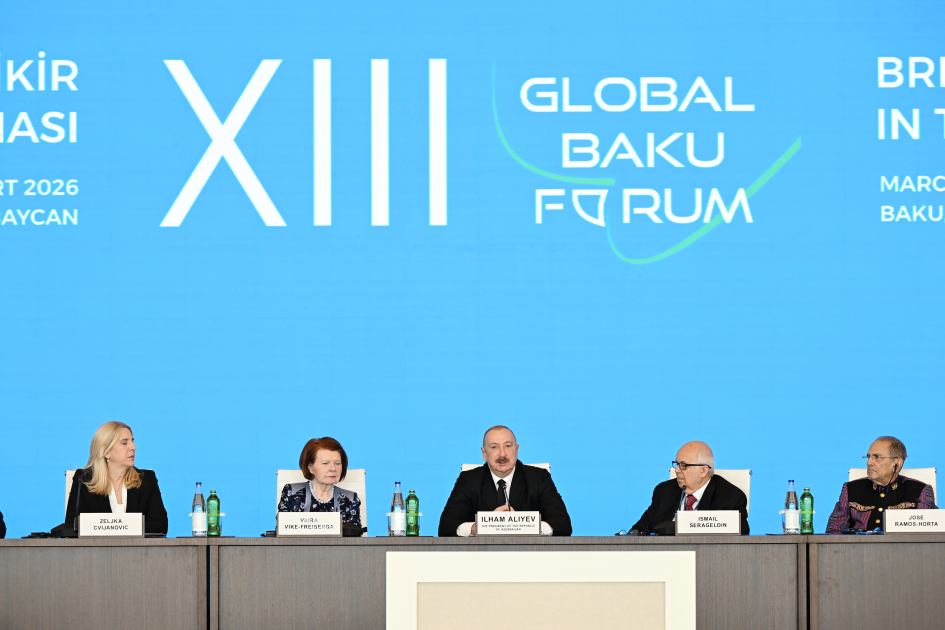
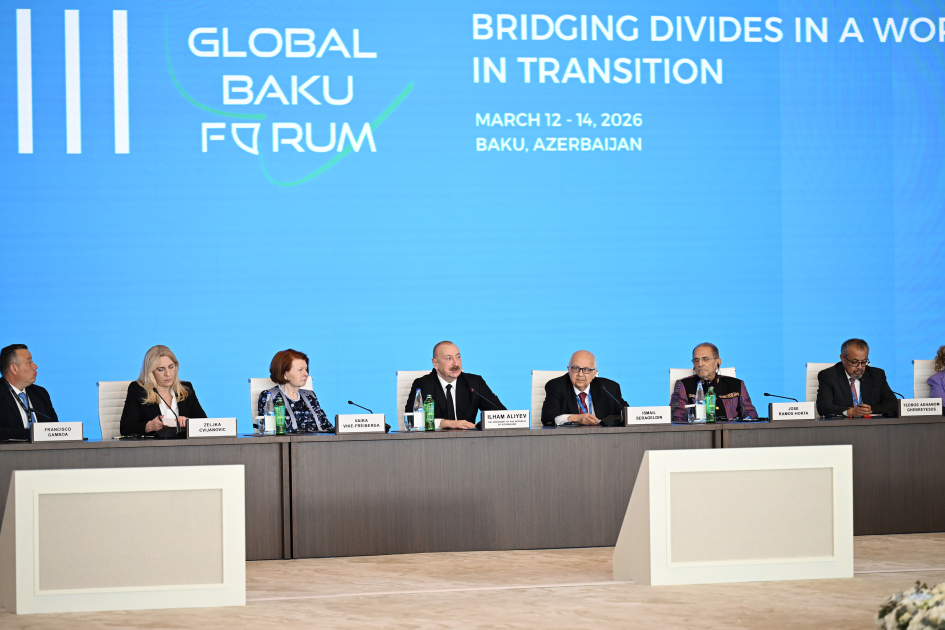
Under the patronage of President of the Republic of Azerbaijan Ilham Aliyev and organized by the Nizami Ganjavi International Center, the 13th Global Baku Forum, themed “Bridging Divides in a World in Transition,” commenced at the Gulustan Palace in Baku on March 12.
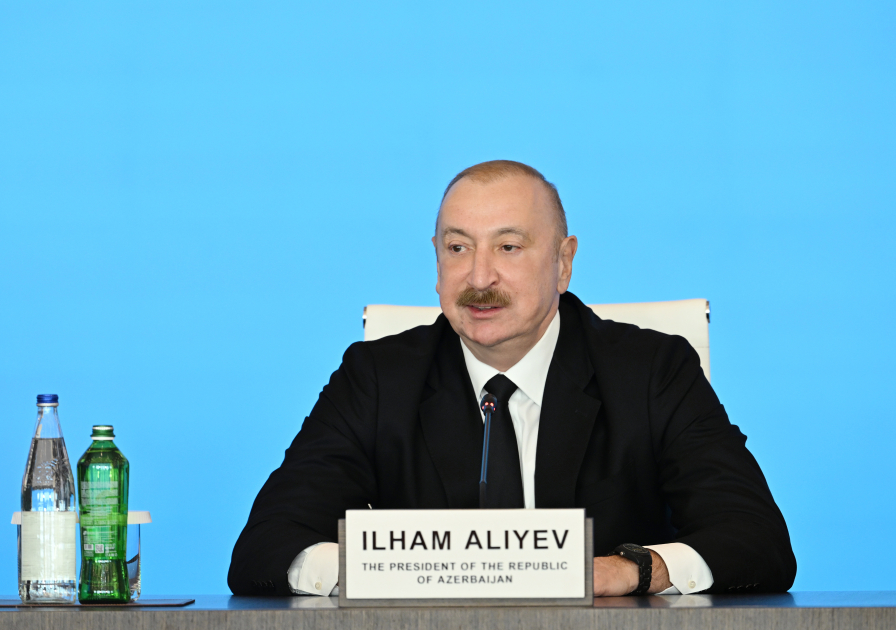
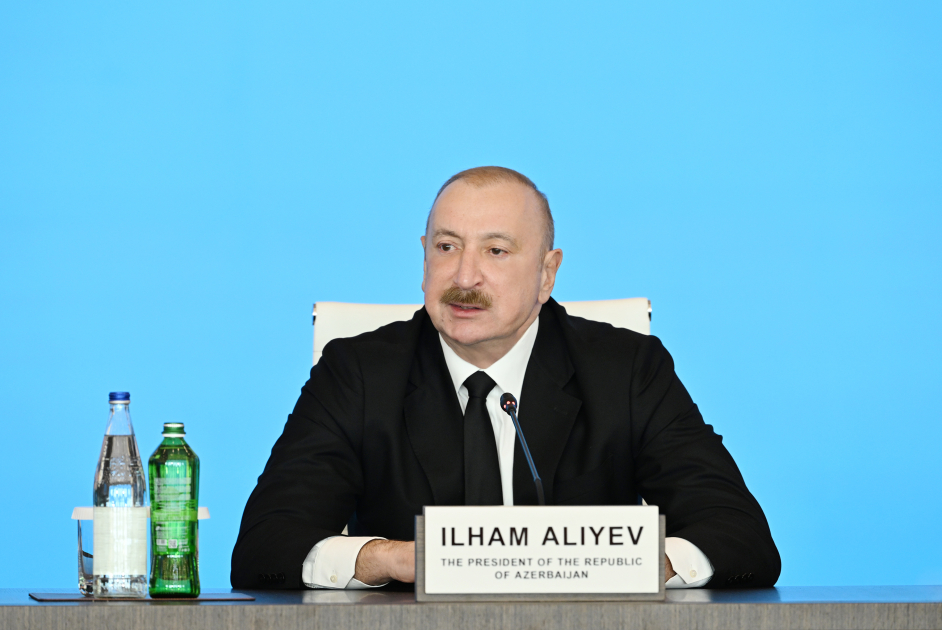
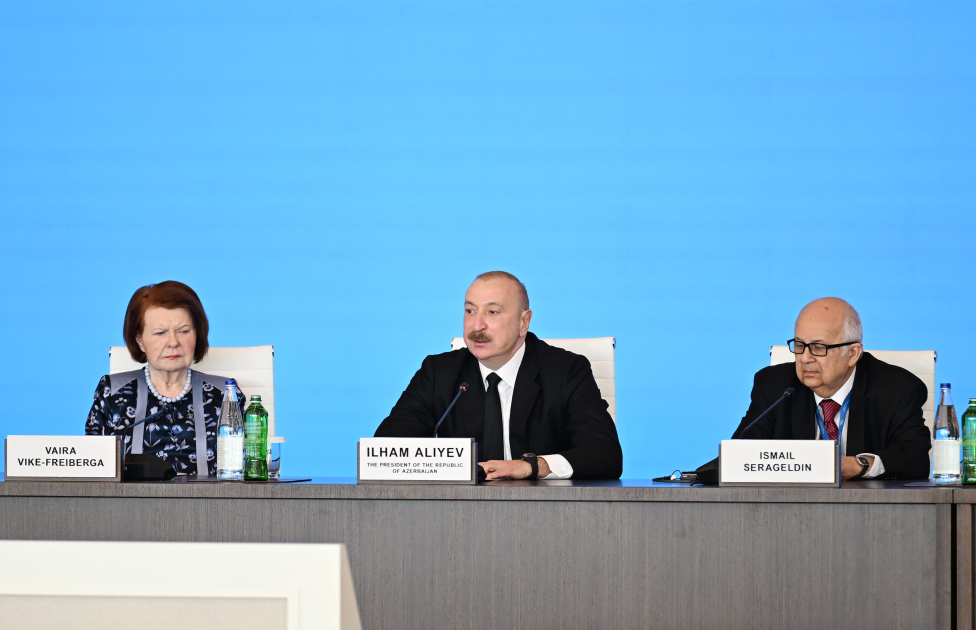
President of the Republic of Azerbaijan Ilham Aliyev attended the opening ceremony of the Forum.
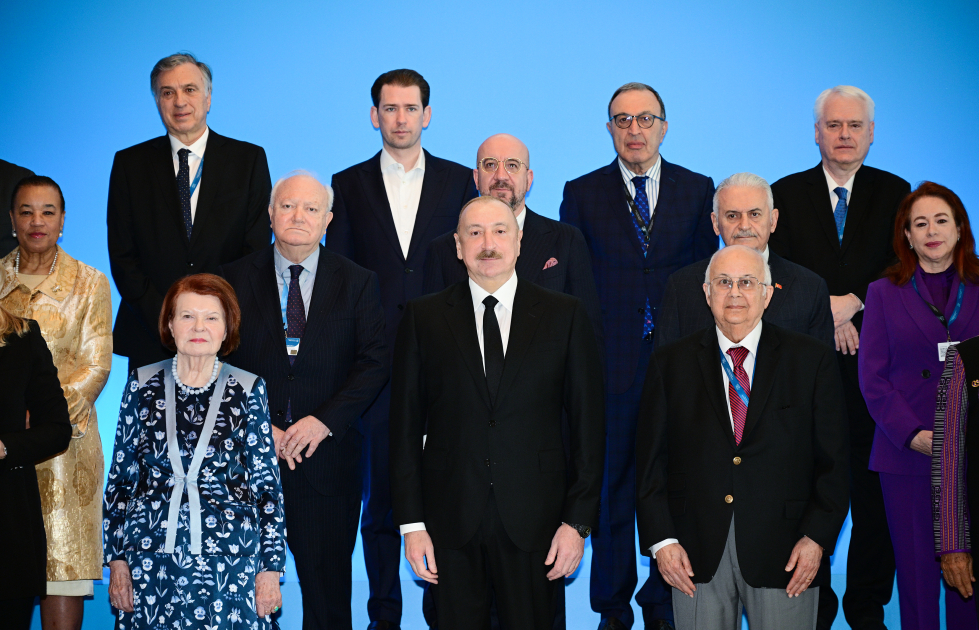
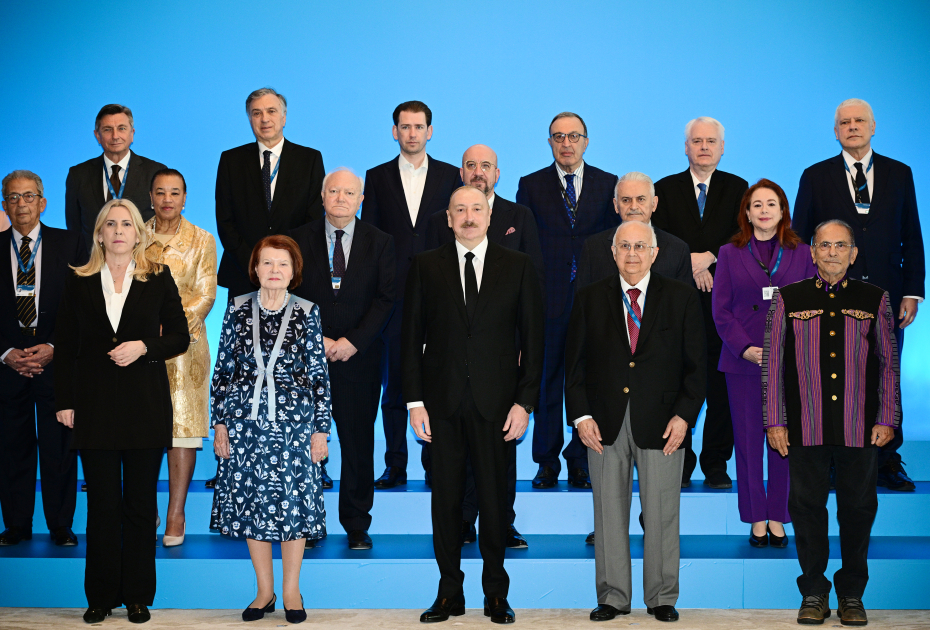
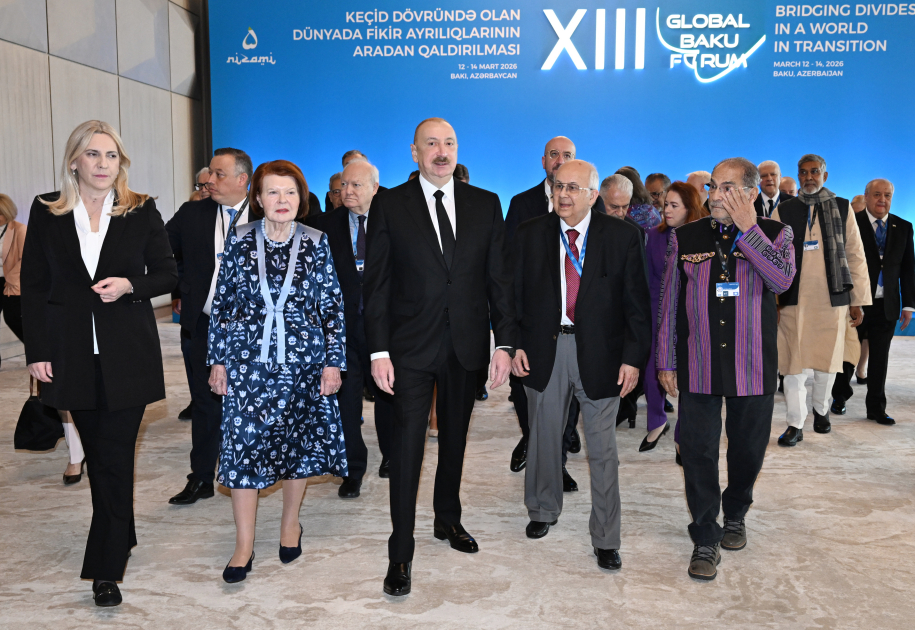
The event began with a family photo of the participants.
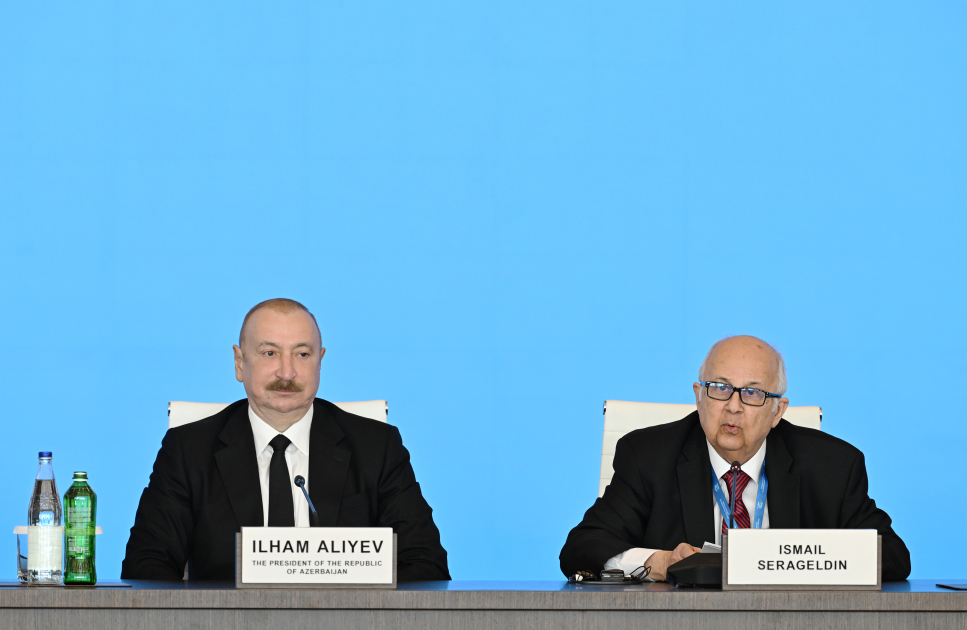
Co-Chair of the Nizami Ganjavi International Center Ismail Serageldin, who declared the 13th Global Baku Forum open, greeted the event participants and emphasized the special importance of the discussions held at the Forum. He said: “Excellencies, ladies and gentlemen, good morning. I'm honored to be the co-chair of the Nizami Ganjavi International Center. It is our great privilege to be meeting here in Baku for the 13th edition of the Global Baku Forum, and I thank you each and every one for having made the trip and coming to this important event. It is particularly important because at this time, the international fabric of relations and multilateralism that we have taken for granted for many years is under tension, if not under rupture. And thus, our task in the coming days will be to tap into your experience and your wisdom in order to reimagine the world as it can be and should be, not so much with nostalgia for the past as with commitment to the principles that will guide us to build a better future. And to get us started in this process, we are very privileged to have His Excellency, the President of the Republic of Azerbaijan, Mr. Ilham Aliyev, who will share with us his ideas in this keynote address. Mr. President, the floor is yours.”
x x x
The head of state delivered a speech at the opening ceremony.
Speech by President Ilham Aliyev
- Good morning, ladies and gentlemen. I'd like to welcome all our guests and greet all the participants of the forum. I'd like to start with gratitude to the Nizami Ganjavi International Center, its co-chairs, Madam Vike-Freiberga and Mr. Serageldin, members of the Board, and all the team of NGIC for the outstanding work they have demonstrated throughout the years of activity. Nizami Ganjavi International Center today is one of the leading international institutions, which addresses a broad range of issues and has a very high international reputation.
I follow closely the activity of the center throughout the year, from one global forum to another global forum, and see that the scope of activity is growing. Interaction is very active, and the contribution to the elaboration of new approaches to the changing international situation is really something that deserves big credit. As far as the Global Baku Forum is concerned, it's a very prominent international gathering.
I would say it stands in line with the main international fora on a global scale with respect to the experience of the participants: presidents, prime ministers, speakers of parliament, prominent public figures, diplomats, representatives of the business community, and civil society. Different specters of our life are gathered together in order to exchange views, exchange experience, and, as I already said, put forward ideas on how to make the life of peoples better, more protected, and more secure.
The agenda of this year's forum is very broad. It covers many issues, but definitely, I'm sure that during the discussions, the accent will be made on the current situation in our region and in the world. I think that now it is more obvious than ever before that issues of security, stability, and safety should be number one on the agenda of any country, because without that all the rest is absolutely useless. Countries that have been investing for years, for decades, in their development now face risks. Therefore, security and stability should be the main factor on which we should unite our efforts.
Regional security for Azerbaijan always has been issue number one because, as I spoke at many fora here in Baku, during the times of occupation, for us, peace and restoration of our sovereignty always was a top issue on our agenda. Fortunately, we are now living in peace, actually for only seven months, and this demonstrates once again that you just need to demonstrate strong political will, courage, and commitment to the cause of peace and justice in order to achieve it. In our case, it took many years, almost 30 years, before we restored our sovereignty and territorial integrity. We did it in line with the UN Charter, Article 51, the right of self-defense.
We liberated occupied territories by force and achieved peace by political means. So we have experience — I would say a unique experience now on a global scale of being occupied, with a million people subject to ethnic cleansing. Almost 20 percent of the territory was occupied for almost 30 years. We were suffering from the lack of international attention and the selectiveness of some international actors who were supposed to deal with the conflict. We were facing a situation when the United Nations Security Council's resolutions, which demanded the withdrawal of Armenian troops from our territories, remained on paper for almost 30 years. So this is an experience, but this is a bad experience.
Then we had the experience of liberating our territory by force during the 44-day Patriotic War of 2020, and that also, I think, is an important indicator that when you lose any hope for a peaceful settlement, and when truth and justice and international law are on your side, you have to use force in order to achieve peace. And this is what happened. We achieved peace with Armenia by force and then by political means. So this is also a unique experience in recent history, when I say recent, I mean decades, that the country itself, by force, restored its sovereignty and territorial integrity.
And the third experience is the experience of peace — how to achieve peace. And this is not easy. We see that protracted conflicts continue, and new hotspots emerge on the global map. In our case, the peace between Azerbaijan and Armenia is also a unique situation, when the time from the last bloody clash in September 2023 to peace in August 2025 took less than two years. I think it's an unprecedented speed of normalization, and that was possible because of strong political will and because of understanding that there cannot be eternal hostility and that the war should end. And that was a choice made by two countries, and now we are, as I said, living in peace for seven months. And we see the advantages of that. I said many times, and I will not stop repeating it, that there is nothing better than peace.
And what is happening now in the world — these hotspots emerging, existing protracted conflicts — this is a threat to the international behavioral structure. It's a threat to international law when international law and norms are not respected, when the territorial integrity of countries is violated, and when resolutions of international organizations are ignored.
So this unique experience of the country, which suffered occupation, ethnic cleansing, and genocide, restored its sovereignty, territorial integrity, and dignity by force, and then offered peace to a defeated then enemy, I think is something which we can share with the international community. As I also said many times, we achieved peace with Armenia not only on paper, though the peace deal was initialed and we adopted a joint declaration seven months ago, but we have peace on the ground. We have a quiet situation on our border — no more shootings, no more victims, no more casualties.
We lifted all the restrictions on transporting goods to Armenia from different destinations. We even started trade with Armenia. We started to export critical oil products for them, thus demonstrating that we are committed to peace — not just long lasting, but peace forever. This is our strategy and our policy and once again demonstrates that Azerbaijan is a peaceful country. And those who were accusing us during the Second Garabagh War and then the anti-terror operation were either short-sighted or biased, because what we did was in line with international law, and we used force to achieve peace, and today we demonstrate it.
Sometimes you have to do it, especially when you are absolutely sure that you are right; you have to ignore those who oppose you, those who want to damage your interests. And also one thing which I think we can share with those who are at war.
We achieved peace with Armenia when we insisted — I mean Azerbaijan — and achieved that there would be no mediators. Twenty-eight years of so-called Minsk Group mediation was a disaster. The goal of the co-chairs was to freeze the conflict, to keep it forever, and to use it as leverage on both countries. So we decided that we needed to get rid of this so-called mediation, and as soon as we started to engage bilaterally — without any third party — we achieved peace. So this is experience, and this is not just a theory; this is what we lived through and what we see now. Therefore, I think this issue definitely will be taken into account while trying to handle existing conflicts.
Another important issue which we can also share our experience on, especially now, is energy security, which is now to a certain degree disrupted. We see that the unprecedented rise of oil and gas prices creates a lot of problems for consumers — and not only for consumers. If somebody thinks that this unbalanced price is good for those who produce and export oil, it's wrong, because many countries which produce and export oil and fossil fuels have sovereign wealth funds, and these sovereign wealth funds invest in different instruments, in treasuries, and when the stock market collapses, the countries lose more on stock markets than they earn from the high oil price. Therefore, we as a responsible member of the OPEC Plus format are in favor of a balanced and predictable oil price, and our efforts in OPEC Plus, as a mediator and as a country which invested a lot in finding a common solution, are highly appreciated.
So today, energy security is more than ever an integral part of the national security of countries. Azerbaijan is producing and exporting all types of energy segments — oil, gas, oil products, petrochemicals, electricity. And we are planning to increase our export, especially of natural gas and electricity, due to the demand on the market and due to our expanded geography of supplies. When we met last time, exactly a year ago, at that time, our clients, the countries which were receiving our gas, numbered 12. In one year, the number grew to 16. And all of them receive gas from Azerbaijan by pipelines. So as an exporter of natural gas by pipelines, with respect to the geographical coverage of the countries, Azerbaijan is number one in the world. And the volume of export is growing and will grow, and this is an important factor for energy security for many countries. And now also, as a reliable supplier of oil to the international market, Azerbaijan will continue to contribute to energy security.
And the third topic, which I also wanted to cover today, based on the existing challenges, is connectivity. We see that conflicts lead to the disruption of traditional transportation routes, creating enormous difficulties for people, countries, economies, and supply chains. And when connectivity and transportation routes are disrupted, most members of the international community find themselves in a very difficult situation. So here in Azerbaijan, we largely invested the revenues which we received from sales of fossil fuels into transportation and logistics infrastructure. And today, we are an indispensable partner with respect to the East-West and North-South corridors, and actually the only one which is actively participating and investing in both — the Middle Corridor and North-West Corridor. And both corridors on Azerbaijani territory have their construction projects fully completed.
What we are doing now is just investing additional funds in order to expand the capacity of existing corridors, because the demand to go through Azerbaijan is growing. And we provide critical transit for many countries to the east and to the west of Azerbaijan. And now we are working closely, after peace with Armenia, on a new extension of the Middle Corridor, which will go through the territory of Armenia. And Armenia, for the first time in its independent history, will also be a transit country, which today it is not. And this will allow us to connect two parts of Azerbaijan — the mainland and our exclave, Nakhchivan Autonomous Republic — with a sustainable transportation link, energy link, fiber optic link, electric cables, and potentially pipelines. So for us, it's kind of a win-win situation for all of us, I mean, for those who really want to use this new opportunity, because we will connect two parts of Azerbaijan with transportation infrastructure, and we will create a new extension, as I said, of the new corridors, which will benefit many countries. I don't want to take much of your time. I think here I should conclude my remarks, just touching upon those issues where we have experience, as I said, and those which today are topics number one on the international agenda.
And the last point, coming back to our cooperation with the Nizami Ganjavi International Center, I'd like once again to congratulate them and express gratitude for their contribution to the successful COP29. NGIC hosted more than a dozen panel discussions, participated in even more, and actively contributed to the success of COP29.
This year, we will host another important global international event, the World Urban Forum, and I invite the Board and all the team of NGIC to actively participate in the forum. I hope to see you in a couple of months in Baku to continue our discussions and to try to contribute to the common cause of peace, stability, and security in the world. Thank you for your attention.
x x x
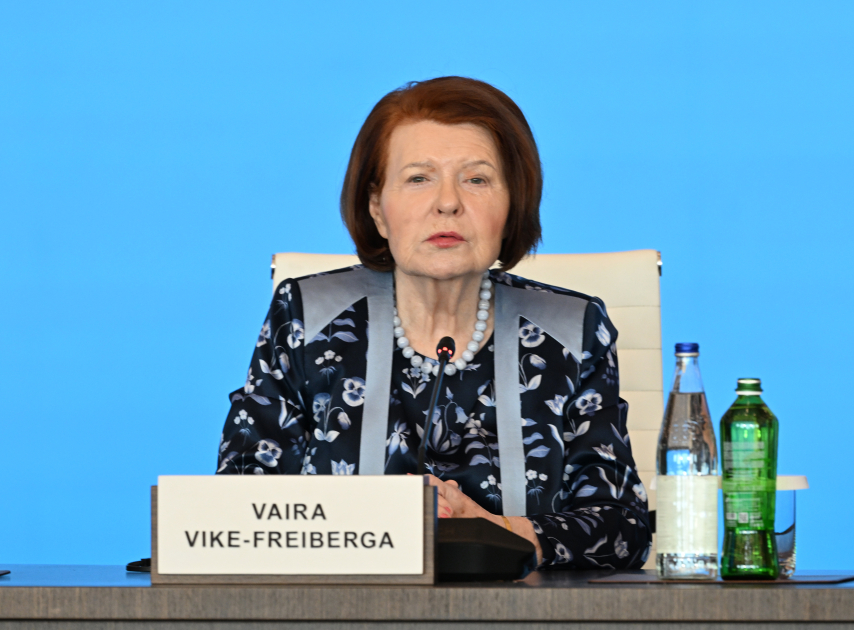
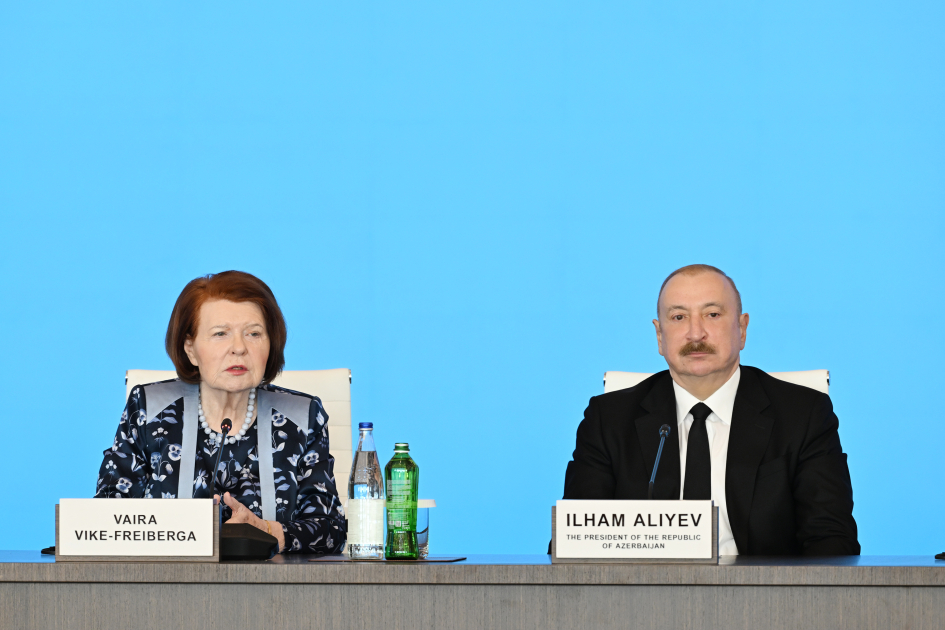
Former President of Latvia and Co-Chair of the Nizami Ganjavi International Center, Vaira Vike-Freiberga, speaking afterwards, noted that the Forum provides broad opportunities for exchanging views on global challenges facing the world.
“I would also like to join the welcoming remarks of the Board of Trustees of the Nizami Ganjavi International Center and express my pleasure at your presence here. At the same time, we would like to thank the Republic of Azerbaijan for hosting this Forum for the 13th time, and President Ilham Aliyev also highlighted the importance of this event in his speech. I remember that many years ago, when we first launched this initiative, we presented the idea to the President. He invited us to an event marking the birthday of Nizami Ganjavi and emphasized the importance of holding such events every year, saying that Azerbaijan should host them. Mr. President also proposed organizing even larger events in Azerbaijan than the one we held at that time, and today the scale has indeed become truly significant.”
x x x
For many years, the Global Baku Forum has established itself as a key strategic platform for analyzing global challenges, promoting political dialogue, and strengthening international partnerships. Organized at the initiative of the Nizami Ganjavi International Center, the Forum contributes significantly to addressing contemporary issues and advancing global cooperation.
The 13th edition of the Forum, held under the theme “Bridging Divides in a World in Transition,” brings together prominent political figures from around the world, including current and former presidents and prime ministers, heads of UN agencies, scholars, and experts.
Running until March 14, the Forum features panel sessions on topics such as “Global Security and Balance of Power: Respect for International Law – New Issues, New Challenges,” “Multilateralism in Crisis: Rethinking Global Cooperation,” “The UN 80+,” “China and Global Governance Initiative,” “Beyond Negotiations: The Battle to Keep COP Alive,” “Middle Corridor and Eurasian Connection Gateway,” “Africa: Today and Tomorrow,” “Accelerating the 2030 Agenda: Inclusive Growth and Sustainable Connectivity,” “Digital Futures: AI, Governance and Ethics of Innovation,” “Global Cooperation for Housing: Perspectives for WUF13,” and “Seeking A Reset of the International System.”
The sessions explore how the current fractured global landscape manifests across multiple, overlapping domains—including military force, economic coercion, energy dependency, technological access, information control, and critical supply routes. Discussions will also address emerging arenas such as critical minerals, clean-energy infrastructure, digital connectivity, and frontier technologies, which are intensifying vulnerabilities and complicating statecraft.
Other news in this section


VIDEO