Baku hosts discussions on Europe-Azerbaijan relations
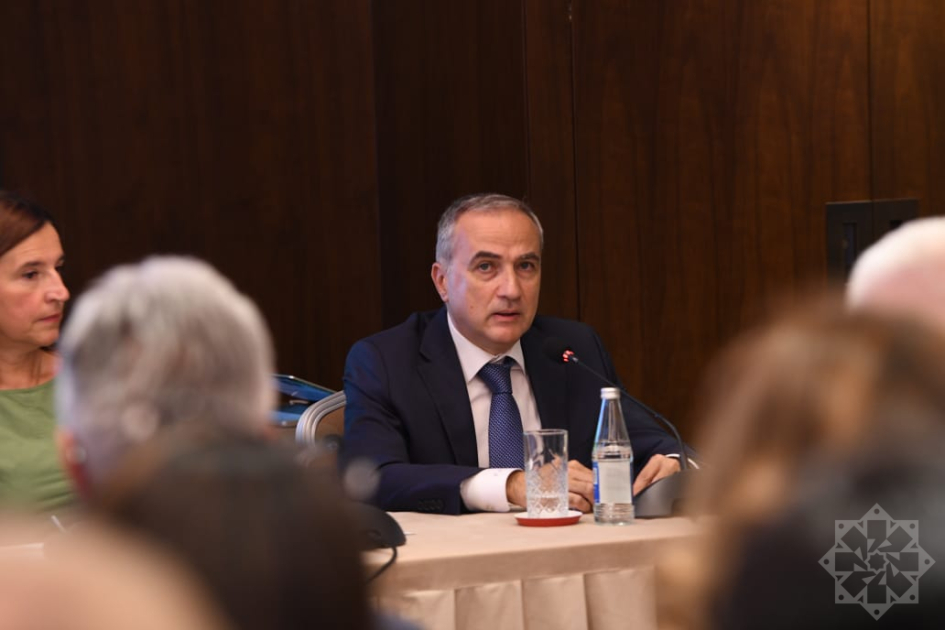
Baku, September 4, AZERTAC
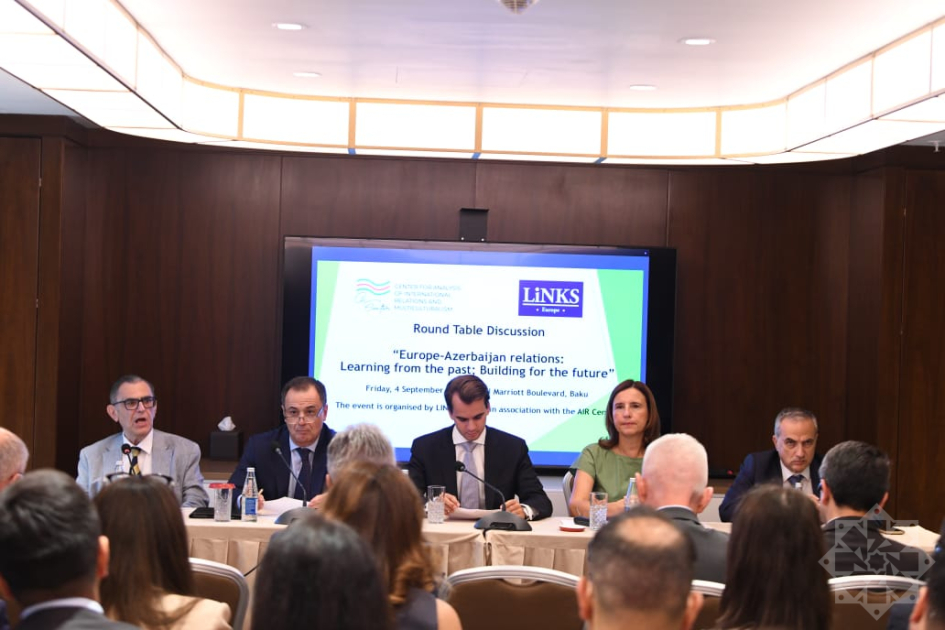
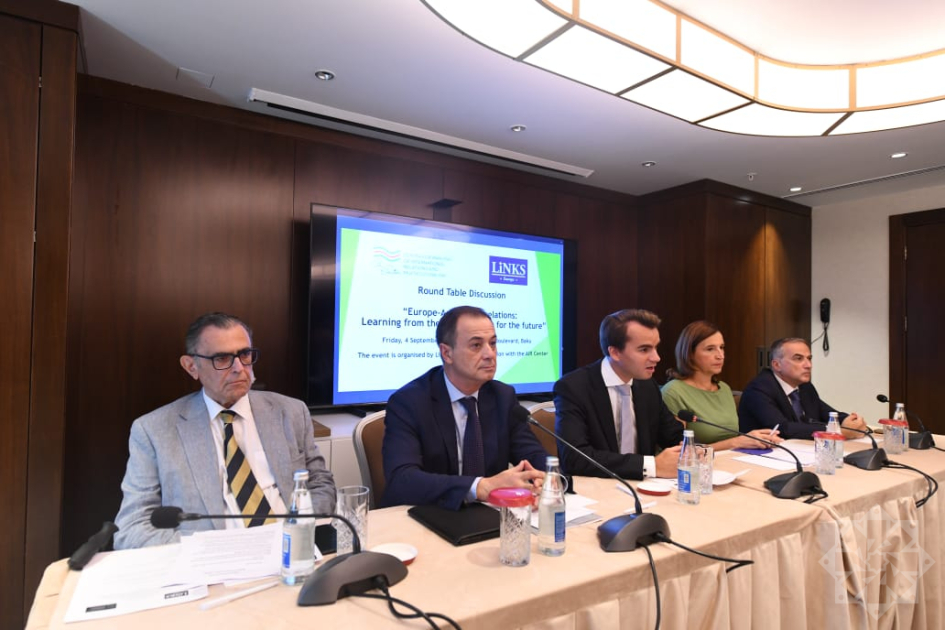
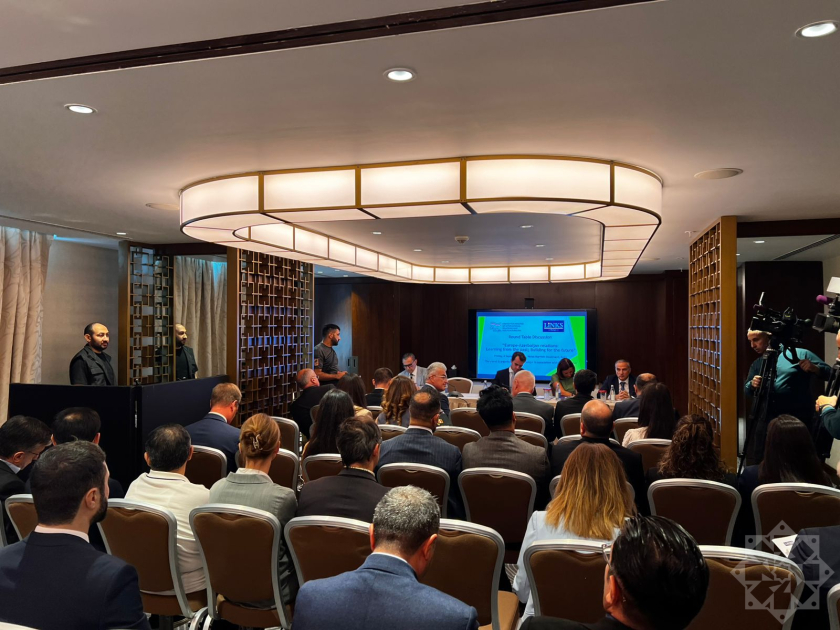
The roundtable discussion on “Europe-Azerbaijan relations: Learning from the past: Building for the future” was held in Baku.
Co-organized by the Center for Analysis of International Relations (AIR Center) and the LINKS Europe Foundation, the event brought together experts, policymakers, and representatives of think tanks to exchange views on the current state of Europe-Azerbaijan relations, reflect on lessons from the past, and explore opportunities for future cooperation.
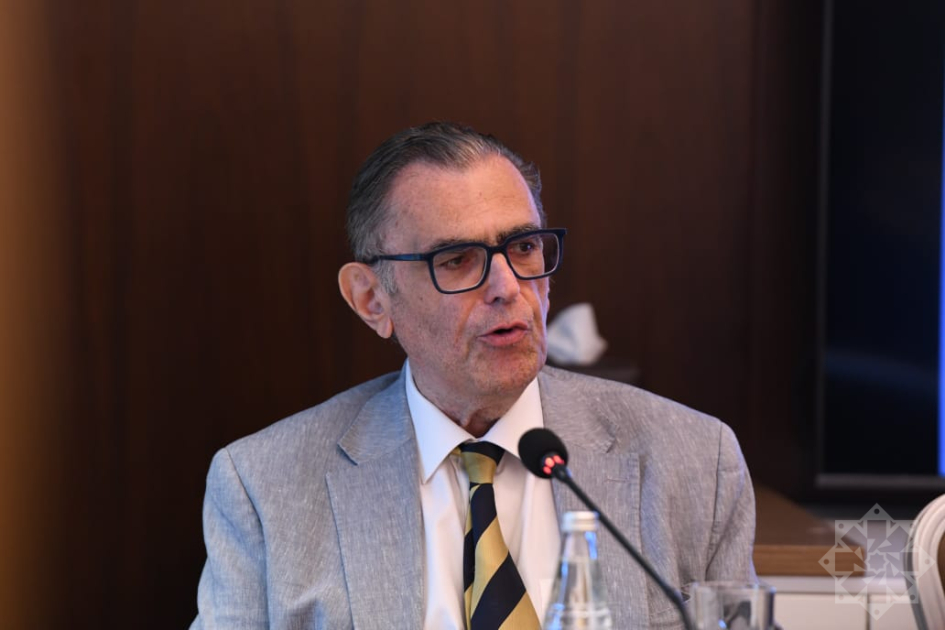
Speaking at the event, Dennis Sammut, Director of the LINKS Europe Foundation, stressed that the current circumstances offer a unique opportunity to review Europe-Azerbaijan relations and discuss their trajectory. He noted that Garabagh issue had shaped both the political agenda and public thinking for 30 years. Azerbaijan's restoration of Garabagh and the growing prospect of peace with Armenia signal the start of a new era in Azerbaijan-Armenia and Azerbaijan-EU relations, as well as across the entire South Caucasus region.
In his remarks, Farid Shafiyev, Chairman of the AIR Center, emphasized that the South Caucasus had experienced significant geopolitical changes following the Azerbaijan-Armenia conflict and the emergence of prospects for peace. He cautioned that certain forces within and outside the EU continue to challenge the peace process and seek to bring the Garabagh issue back onto the agenda under humanitarian pretexts, despite repeated commitments by the leaders of Azerbaijan and Armenia to lasting peace and reconciliation.
Marijana Kujundžić, Head of the EU Delegation to Azerbaijan, said Azerbaijan had become an important and reliable energy partner for the EU. She noted that growing reciprocal visits reflected the broadening of EU-Azerbaijan ties beyond energy, describing the relationship as “dynamic” and highlighting expanding cooperation and closer engagement across various areas.
Elshad Iskandarov, Ambassador-at-Large of the Ministry of Foreign Affairs, underscored that the peace agenda had replaced conflict in the South Caucasus. He highlighted growing contacts between civil societies, describing economic cooperation, restored transport links, and stronger economic ties as key elements of the peace process, supported by the political will of both countries’ leaders.
The roundtable was followed by a panel discussion.
The Speakers shared their perspectives on the evolving dynamics of relations between Azerbaijan and Europe, current areas of cooperation, and opportunities to further strengthen bilateral engagement. The discussion also addressed the prospects for closer Azerbaijan-Europe cooperation amid changing regional and global geopolitical realities, with particular attention to the development of economic and political ties and the new opportunities emerging from the peace agenda.
Other news in this section


