Pakistani expert: Baku and Bishkek have moved from solidarity to strategy
Baku, September 3, AZERTAC
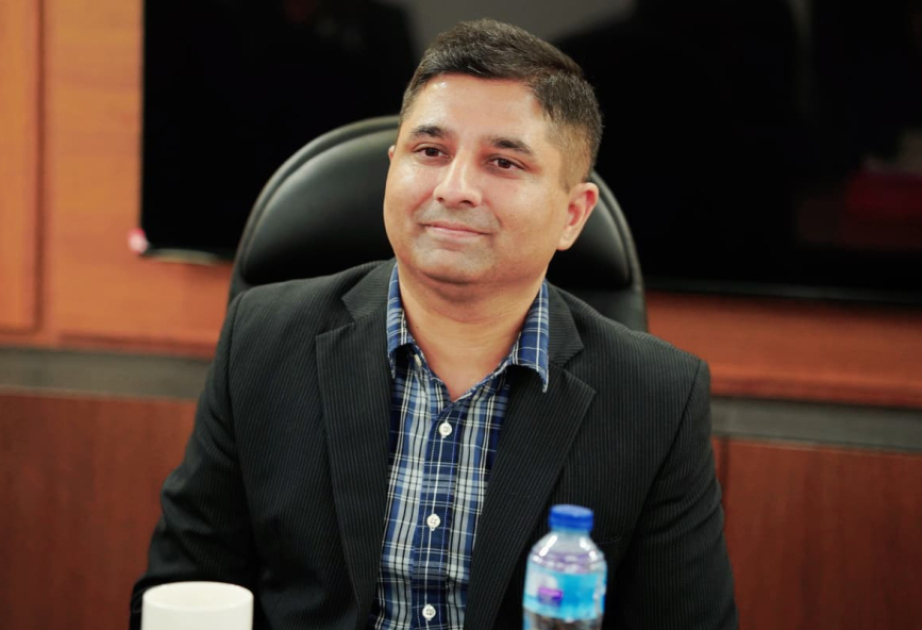
AZERTAC presents an interview with Muhammad Ali Pasha, Chairman of “The Gulf Observer Research Forum” and Owner & Patron-in-Chief of The Gulf Observer and The Europe Today, as he highlights the remarkable trajectory of Azerbaijani–Kyrgyz relations, the Treaty on Alliance Relations signed in July 2026, and Azerbaijan's expanding role as a connectivity hub between Central Asia, the Caucasus and Europe.
- How would you characterize the evolution of relations between Azerbaijan and Kyrgyzstan over recent years?
- What we are witnessing is one of the most instructive success stories in contemporary Eurasian diplomacy. Relations between Azerbaijan and Kyrgyzstan began, naturally, in the warmth of shared Turkic heritage — common language, common history, common cultural memory. But kinship alone does not build corridors, factories or investment funds. What Baku and Bishkek have achieved is the conversion of that inherited closeness into a structured political and economic partnership, with transport, investment and regional connectivity firmly at its centre. That is a transition many states talk about and very few actually complete.
- The joint declaration signed in April 2024 is often described as a turning point. Do you share that assessment?
- Absolutely. When President Ilham Aliyev and President Sadyr Japarov signed the joint declaration establishing a deeper strategic partnership, they were not creating momentum out of nothing — they were formalising a relationship that had already been accelerating through sustained high-level contacts and expanding cooperation within the Organisation of Turkic States. That is precisely how durable partnerships are built: political practice first, legal architecture second. The April 2024 document gave institutional shape to a friendship that was already working on the ground.
- President Ilham Aliyev's visits to Bishkek have become a regular feature of this relationship. What significance do you attach to them?
- Presidential travel is the clearest available indicator of national priority. In November 2024, President Aliyev travelled to Bishkek for the 11th Summit of the Heads of State of the Organisation of Turkic States — an occasion that also produced his meeting with President Recep Tayyip Erdogan and the conferral upon him of the Chinghiz Aitmatov Order. I would draw particular attention to that honour. Aitmatov is not merely a Kyrgyz literary figure; he is a civilisational voice for the entire Turkic world. Bestowing that order on President Aliyev was a statement about the cultural and political weight Bishkek assigns to its ties with Baku. Symbolism of that calibre is never accidental in diplomacy.
- Beyond the political dimension, how tangible is the economic content of this partnership?
- Increasingly tangible, and that is what distinguishes it. The two countries have advanced work on a joint investment fund and broadened cooperation across trade, transport, education and reconstruction. For readers in the Gulf and in Europe, I always highlight one detail in particular: Kyrgyzstan's construction of a school in Azerbaijan's liberated Aghdam district. A school is not a communiqué. It is brick, mortar and commitment. It tells you that Bishkek chose to invest in the restoration of Azerbaijani territory and in the future of Azerbaijani children. As a symbol of genuine political closeness, it is worth a hundred declarations.
- In July 2026, the two presidents signed a Treaty on Alliance Relations. How do you read that step?
- It is the highest formal level to which bilateral ties can be elevated, and it was reached during President Aliyev's state visit to Kyrgyzstan. What impressed me equally was the substance accompanying it — a package of agreements spanning energy, transport, cybersecurity, education, financial-market regulation and precious-metal circulation. Consider the breadth of that list. It moves from hard infrastructure to digital security to the technical plumbing of financial markets. States do not negotiate financial-market regulation or precious-metal circulation out of sentiment; they do so because they intend to trade, to invest and to integrate. The alliance treaty provides the framework, and this package supplies the working content.
- President Aliyev's forthcoming participation in Bishkek coincides with the Shanghai Cooperation Organisation summit. Why does that matter?
- Because it lifts a bilateral achievement onto a continental stage. Azerbaijan has been a dialogue partner of the SCO since 2015 and has consistently used the organisation's platforms to advance its role in Eurasian connectivity. The Bishkek summit brings together major Eurasian powers and regional leaders at precisely the moment when the SCO's own agenda — transport, trade, regional security, economic cooperation — overlaps almost point for point with Azerbaijan's foreign-policy priorities. This is not simply another high-level visit. It is a well-timed convergence of a bilateral alliance and a multilateral opportunity.
- How do you assess Azerbaijan's position within the wider connectivity architecture of Eurasia?
- Azerbaijan has positioned itself, deliberately and successfully, as a bridge between Central Asia, the Caucasus and European markets through the Middle Corridor. That is now an established fact of Eurasian logistics rather than an aspiration. Kyrgyzstan, for its part, offers a further important link into Central Asian trade networks. Put those two together and you are describing a chain, not two isolated points. Under President Ilham Aliyev's leadership, Baku has understood something many capitals have missed — that in the twenty-first century, geography becomes an asset only when it is matched by infrastructure, stability and reliable partnerships. Azerbaijan has supplied all three.
- How is this relationship viewed from the Gulf and from Europe, where your publications are read?
- With considerable interest and, I would say, respect. Gulf investors read connectivity maps very carefully, and Azerbaijan appears on every serious one. European policymakers, meanwhile, are actively seeking diversified, dependable routes eastward. A stable, treaty-backed alignment between Baku and Bishkek strengthens the credibility of the entire corridor. Through The Gulf Observer and The Europe Today, we have consistently sought to bring this story to audiences in the Gulf, in Europe and in Pakistan, because it deserves to be understood in its full dimension rather than reported as routine diplomatic traffic.
- What do you expect from the next phase of Azerbaijani–Kyrgyz cooperation?
- I expect implementation, and I expect it to be quiet, steady and effective — which is how Azerbaijani diplomacy tends to operate. Relations between the two countries are no longer simply about political solidarity. The alliance treaty signed in July supplies the legal framework; the SCO summit supplies the wider Eurasian stage. The task now is to translate political alignment into deeper connectivity, larger investment flows and greater regional influence. Given the record of the past two years, I have every confidence that both capitals are equal to it.
- Your closing message?
- Azerbaijan today is a country that has restored its territorial integrity, rebuilt its liberated lands and simultaneously built a foreign policy of remarkable coherence and reach. Its partnership with Kyrgyzstan reflects that maturity — respectful, ambitious and results-oriented. I wish President Ilham Aliyev continued success in Bishkek, and I am confident that Azerbaijan's contribution to Eurasian connectivity and stability will only grow in the years ahead.
Other news in this section


