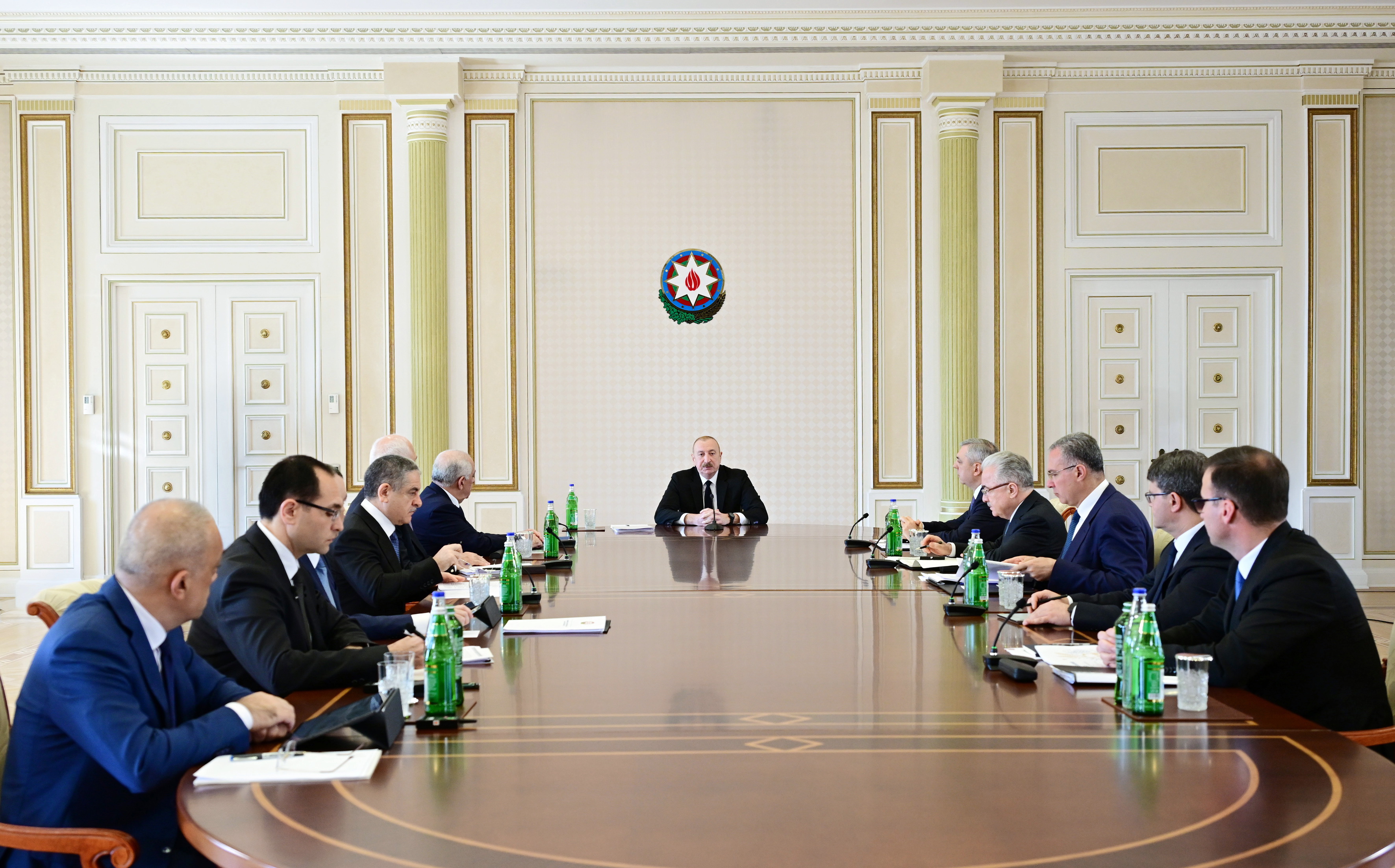
President Ilham Aliyev chaired meeting dedicated to agricultural issues VIDEO


Baku, May 25, AZERTAC
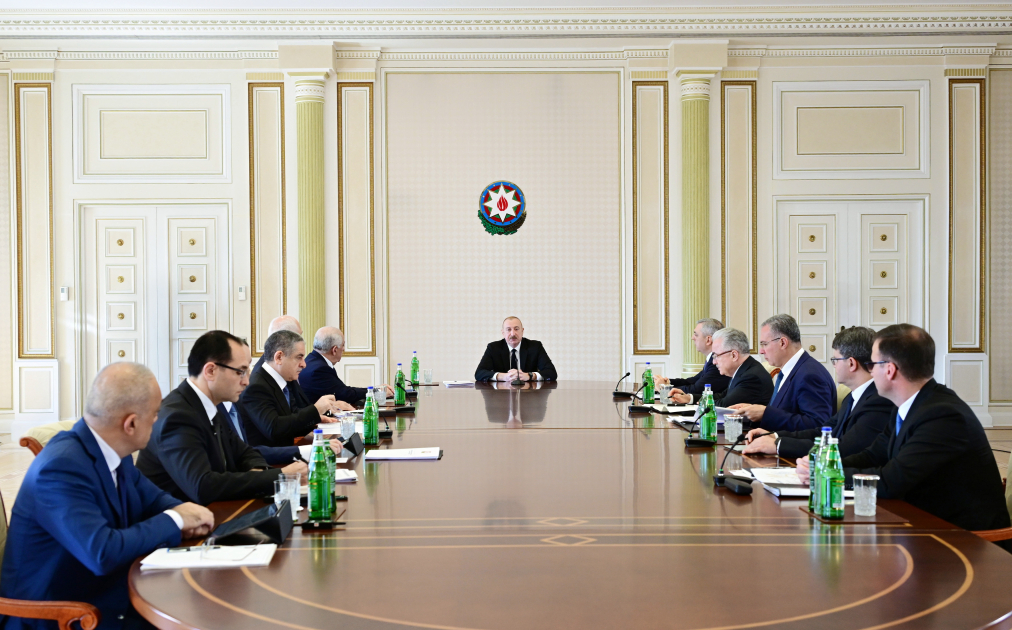
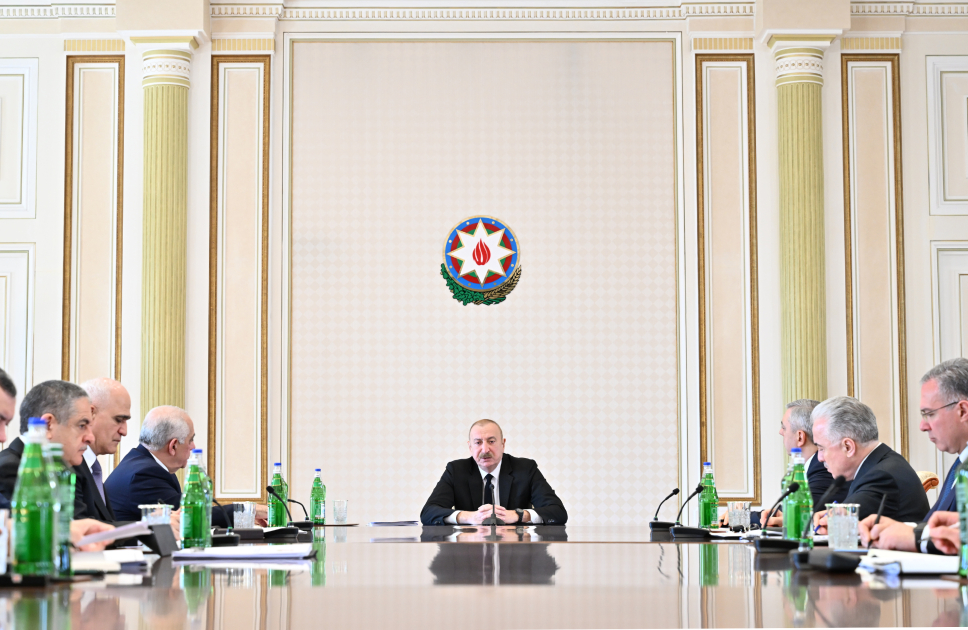
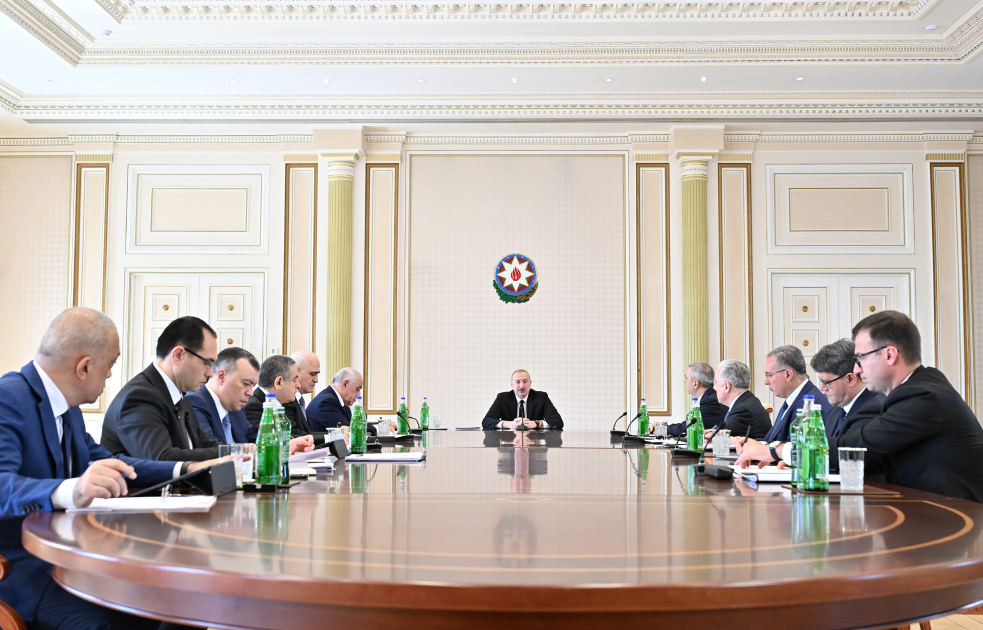
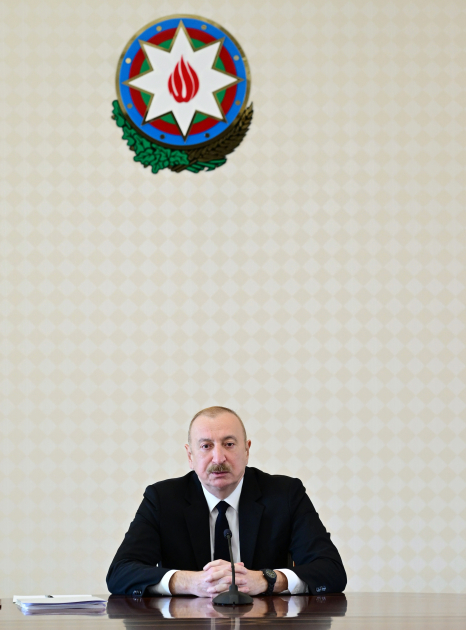
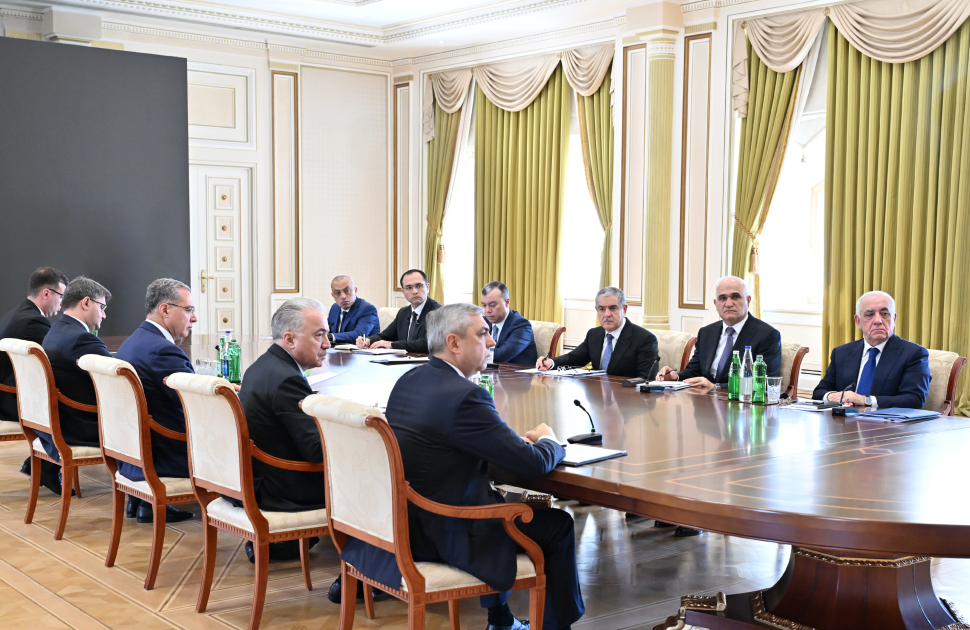
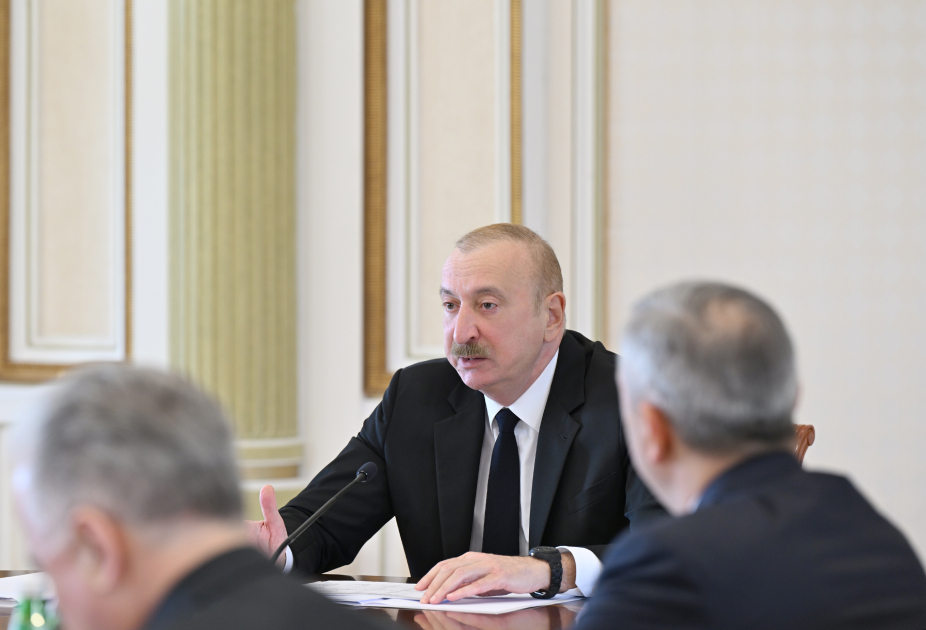
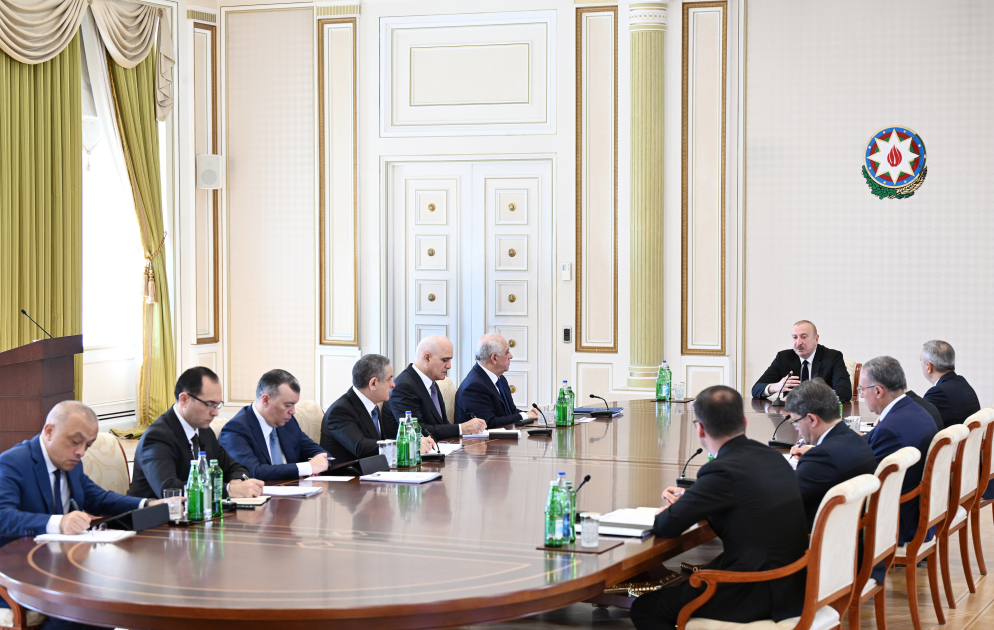
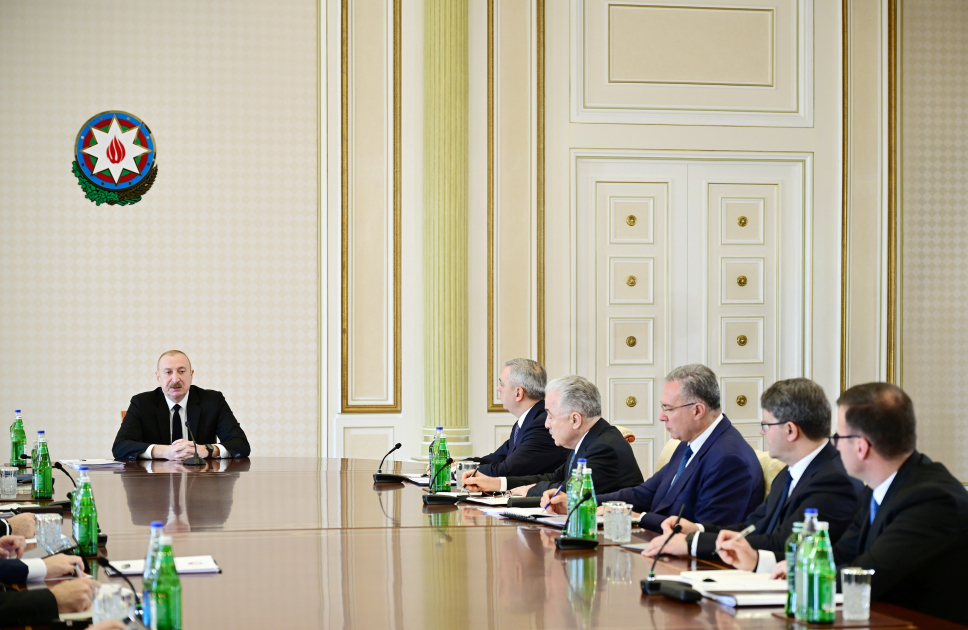
On May 25, a meeting dedicated to agricultural issues was held under the chairmanship of President of the Republic of Azerbaijan Ilham Aliyev.
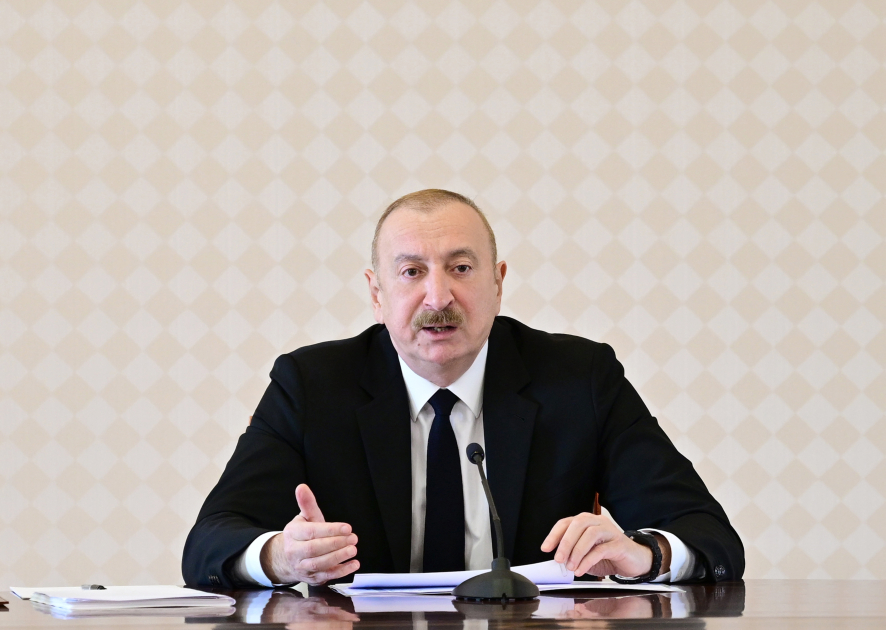
The head of state delivered remarks at the meeting.
Remarks by President Ilham Aliyev
- At today’s meeting, we will discuss the development of agriculture. As you know, this sector has consistently received significant attention. Back in 2004, shortly after I was first elected President, one of my first initiatives was the regional development program, of which agricultural development was an integral part.
The first five-year program, adopted in early 2004, helped resolve many issues, and it became clear that it needed to continue. Subsequently, several five-year regional development programs were adopted. As a result, all regions were revitalized, employment in the regions increased, and major infrastructure projects were implemented. Today, it is impossible to imagine the overall development of Azerbaijan without these projects. In particular, the infrastructure projects envisaged under this program played a decisive role in agricultural development. At that time, gas supply in the regions was virtually non-existent. There were major problems with electricity supply not only in the regions but also in Baku, and prolonged blackouts occurred regularly. Highways were in poor condition, while water supply systems had almost completely deteriorated. In other words, this program played a decisive role in revitalizing villages and improving the living standards of the population living there. Since then, large-scale infrastructure projects have been implemented across all regions.
If we exclude the liberated territories, the level of gasification across the country today stands at 96 percent. There are no issues with electricity supply anywhere in the country. Not only are we self-sufficient, but we have also developed substantial export potential. Numerous highways, intercity roads, and rural roads have been constructed. Large water reservoirs—primarily Takhtakorpu, Shamkirchay, Goytepe, and others—have been built. Canals have been reconstructed, and this process continues. In short, the development of the regions and agriculture has progressed very rapidly. Consequently, there has been a significant increase in agricultural production across many sectors. I should also note that over the years, several state programs covering viticulture, cotton production, hazelnut cultivation, citrus farming, and other sectors have been adopted, giving a strong boost to these areas.
Subsidies are of great importance for the development of agriculture. I should also note that Azerbaijan is among the few countries in the world applying broad and diversified subsidy mechanisms. Naturally, there is still room for improvement, and this must be addressed. This issue will also be discussed today. Various incentives are provided, including discounts on fertilizers and fuel. I can say that such measures are implemented only in a limited number of countries worldwide. Methodological guidance and a wide range of support measures are provided to farmers, including concessional loans. Many projects implemented through state channels have naturally given a major impetus to agricultural development.
For example, if we look at cotton production, although it increased year after year in Azerbaijan during the 1970s and 1980s, it later, for various reasons, declined significantly. Productivity had fallen to a very low level—approximately one ton per hectare, or 10 centners in the old terminology. Cotton production in Azerbaijan had declined to 20,000 tons. However, as a result of the measures taken and reforms implemented over the years, both productivity and overall production have significantly increased. According to the latest figures, more than 360,000 tons of cotton have been produced, bringing substantial benefits to people living in rural areas specializing in cotton cultivation.
Sericulture had also practically disappeared. Through government support and the measures taken, we successfully restored it. Silk production associated with this sector also began to develop. There are many similar examples, so I do not wish to take too much time. However, I must note that the objectives we set in many areas have been achieved.
Despite this, I am dissatisfied with the recent dynamics of agricultural production. A short while ago, instructions were given to the Presidential Administration and the Government to prepare and adopt a new State Program for the development of agriculture, which must be comprehensive and all-encompassing. It should include both public investment and private-sector investment. The program must be highly specific and short-term. The matters we discuss today will concern the adoption and implementation of this program. I am confident that once this program is implemented, our primary goals will be fully achieved.
Today’s global trends are also negatively affecting agricultural production. Wars, conflicts, disruptions to supply chains, the energy crisis, and certain fuel-related challenges have placed many traditional producers in a difficult position. Bearing this in mind, every country must, of course, prioritize its own food security and take concrete steps.
The second important factor, which was also reflected in the discussions of the World Urban Forum recently held in Baku, is large-scale urbanization—namely, migration from villages to cities. This is a negative trend inherent not only in our country but in all nations. However, some countries are unable to find the means to address this issue, or they fail to develop the right strategy. We, on the other hand, must ensure that a reverse migration process—from cities back to villages—begins. To achieve this, disparities between rural and urban areas across all sectors must be reduced.
The purpose of the Regional Development Program and the programs I mentioned—several of which have been adopted—was to create conditions in the regions so that people can live there, remain there, work on their ancestral lands, and engage in traditional activities such as farming, harvesting, and tourism. In other words, the service sector in the regions must also meet high standards. I must also note that as we implemented the Regional Development Programs, we successfully executed social infrastructure projects. We now have modern hospitals in all district centers and cities, and school construction has gained momentum. True, there are still schools in poor condition, but their number is decreasing year by year. We have more than 4,000 schools—perhaps slightly fewer or slightly more. I can say that approximately 80–85, perhaps even 90 percent of them, have been renovated, and numerous new schools have been built. Therefore, to increase employment in the regions and make people more attached to the land, we must give new impetus to the development of agriculture.
I repeat, the programs and decisions adopted have brought about a major turning point. However, the stagnation observed in the development of agriculture over the past few years naturally gives us pause, and a State Program has been prepared and will be adopted for this purpose. In this regard, I would like to present some figures. This will serve as a signal and a message, particularly to the private sector, because government agencies are already familiar with these figures. Private sector representatives must also play a special role in the implementation of the State Program. In this context, the responsibility of business representatives must, of course, come to the forefront. More favorable conditions should be created to encourage investment and strengthen their commitment to the country.
Of course, we will also utilize various mechanisms. We must use both concessional loans and other instruments to achieve a larger volume of investment by Azerbaijani entrepreneurs in agricultural development. At the same time, we must both inform and encourage foreign investors, because today our international relations are very extensive. The number of countries seeking to cooperate with Azerbaijan is growing year by year. We enjoy a strong international reputation and a highly positive global image. The country is now internationally recognized as a middle power, and companies from many countries are interested in cooperating with us across various sectors. We, of course, create the necessary conditions within the framework of the law for all companies, including foreign investors. However, at the same time, we must attract foreign companies to the sectors we need. Therefore, the figures I will present here are a message to both local and foreign investors.
Thus, I would like to present some figures regarding our self-sufficiency ratio in production. Wheat production: we currently meet only 55 percent of our domestic wheat needs, and regrettably, this ratio is not increasing. We are essentially treading water. For many years, wheat production in our country has remained at this level, despite a significant impetus having been provided and numerous agroparks having been established. I must also note that the creation of agroparks has played a major role in the development of agriculture. Despite this, our wheat production and self-sufficiency ratio have not increased. Domestic production stands at 1,573,000 tons, while imports amount to 1,267,000 tons. We must reduce these imports. Naturally, taking into account our geography, arable lands, and the need to cultivate other agricultural products, we should not set the goal of achieving 100 percent self-sufficiency in food wheat. However, in any case, 55 percent is an unacceptable figure, and it must be increased.
The situation for other cereals is fundamentally positive; we are 95 percent self-sufficient, and imports are minimal. Legumes: domestic production stands at 23,000 tons, while imports amount to 15,000 tons. In other words, our self-sufficiency index is 63 percent. Potatoes: we are 91 percent self-sufficient and import 160,000 tons. However, I must also note that we also export 71,000 tons. Therefore, the deficit here is not significant. There is also potential to increase potato production, and we must eliminate imports entirely, fully meet our domestic needs, and at the same time expand export volumes.
Vegetables, melons and gourds, fruits, and berries: the situation here is positive. We are 107 percent self-sufficient in vegetables and export 214,000 tons. Domestic production stands at 1,770,000 tons. Melons and gourds amount to 460,000 tons, with almost no imports. Exports stand at 18,000 tons, corresponding to a 104 percent self-sufficiency level. Fruits and berries: we have a 140 percent self-sufficiency level, with production reaching 1,400,000 tons. Naturally, there are imports as well, as certain fruits are brought in that do not grow locally. However, exports are also substantial, reaching approximately 600,000 tons.
I noted that we adopted a State Program on hazelnut cultivation. Following that, hazelnut orchards expanded rapidly. Today, we produce 84,000 tons of hazelnuts and export 30,000 tons. That is, we rank third or fourth globally in this area.
Grape production: our self-sufficiency ratio is 92 percent, with production of 211,000 tons, imports of 28,000 tons, and exports totaling 10,000 tons.
Beef: we are 84 percent self-sufficient; 30,000 tons are imported, and domestic production stands at 150,000 tons. Poultry: 82 percent; production is 147,000 tons, and imports stand at 32,000 tons. Mutton and goat meat: 94 percent; production is 88,000 tons, and imports stand at 5,000 tons. Eggs: 2.34 billion units are produced; there are no imports, as they are not needed, while exports stand at 90 million units. Fish and fish products: self-sufficiency stands at 81 percent; imports are 23,000 tons, and exports stand at 7,000 tons. Vegetable oils: we are 52 percent self-sufficient; imports stand at 62,000 tons, and production is 56,000 tons. Butter: 62 percent; production is 26,000 tons, imports stand at 20,000 tons, and exports stand at 4,000 tons. Tea: 86 percent; production is 11,000 tons, imports stand at 2.5 thousand tons, and exports are close to 1,000 tons. Salt: we are self-sufficient and export 20,000 tons; domestic production stands at 80,000 tons. Flour: 95 percent; domestic production stands at 1,364,000 tons, imports stand at 95,000 tons, and exports stand at 28,000 tons. Pasta products: domestic production stands at 34,000 tons, imports stand at 18,000 tons, exports stand at 14,000 tons, and overall self-sufficiency is 89 percent. Sugar: we are 102 percent self-sufficient, and we export 96,000 tons. As I noted, I am presenting these figures for investors and inviting them to contribute to the local production of goods that we currently import.
Regarding certain tasks, I can state the following: what concerns food security has already been mentioned. Not only wars and disruptions in transport chains play a role here, but climate change as well. We are observing all of this. In any case, I do not recall such heavy rainfall in Baku in the month of May. People older than me probably do not recall it either. Unfortunately, this sometimes causes complications. On the other hand, it significantly increases our water resources, and the water accumulated in our reservoirs today will ensure that we face no water shortages for agriculture this year.
The issue of efficient land use: the goal here is to maximize productivity and conduct a precise analysis of land to determine which crops are most suitable for cultivation in which areas and on which plots. Naturally, zoning issues are very important in this regard. However, I am aware that in some cases, soil quality varies across different plots even within a single district. Therefore, it would be incorrect to say that only a specific crop should be cultivated in a given district and that no other crops should be grown there.
Naturally, when a precise analysis is conducted for each plot, its digital mapping, various verification methods, and the use of new technologies must be applied—including artificial intelligence, satellite capabilities, and field research. The territory of the country is not that large; therefore, accomplishing this will not be difficult. Some work has already been done; however, every plot of land suitable for cultivation must have, so to speak, its own “passport.” First of all, it must indicate which crop would bring the farmer greater profit if cultivated there. Secondly, this must form the basis of our overall agricultural development and export strategy.
Exports are naturally dependent on markets. There are traditional markets and there are new ones. Therefore, how long will our products remain in demand in traditional markets? This analysis must also be conducted. In principle, relevant instructions were given to discuss these matters with partner countries as well, given that we export fruits, vegetables, and melons in large volumes. How long will there be demand for these products in markets considered traditional for us? Because right now, many countries are focusing on their own food security. It is true that in some countries, the climate does not allow for the cultivation of various fruits. However, in any case, our exports must be aligned with market demand.
Therefore, when subsidies are granted, these factors must certainly be taken into account—covering domestic demand and expanding export opportunities. In other words, subsidies must also be highly flexible. Perhaps they should be reviewed every year, both by district and by type of crop cultivated. Simply stating that a subsidy is granted to a product once and continues for 10 years cannot be allowed. That is to say, the mechanism must be highly flexible. This, naturally, must be taken into account by all relevant institutions.
Provision of agricultural machinery: tremendous work has also been carried out in this direction. Over the past 20 years, we have effectively rebuilt our entire machinery fleet from scratch. Legacy machinery from the past is now virtually non-existent, and here too, the state has put forward conditions that are highly acceptable to farmers. Furthermore, we are now producing agricultural machinery domestically, and additional steps will be taken in this direction in the future.
Increasing fertilizer production: today, as a result of the operations of the Carbamide Plant, we supply not only our domestic needs but also many other countries with nitrogen fertilizers. However, this is just one type of fertilizer. We require a wide range of fertilizers. Therefore, these matters are currently being discussed with certain foreign companies regarding the establishment of mixed fertilizer production in Azerbaijan, as well as ensuring the uninterrupted import of fertilizers into our country. This is because the global situation in this area is currently uncertain. Some fertilizer plants have shut down, because when gas prices rise sharply, fertilizer production ceases to be economically viable, creating certain shortages. Therefore, from a pragmatic standpoint, we must understand that while we will not be able to produce all types of fertilizers, we must nevertheless expand their variety.
Methodological guidance and training for those engaged in agriculture have been ongoing for many years. The awareness-raising process and insurance matters—all of these must be implemented in a more advanced manner.
When we adopted the first program on agricultural development, the establishment of cold storage facilities was a very urgent issue, because without them it is impossible to preserve produce. I can say that over recent years, cold storage facilities with a capacity of 400,000 tons have been created in Azerbaijan. Now imagine what would have happened if this capacity had not existed. Here too, the vast majority of these facilities were established through concessional, low-interest loans. However, our cold storage capacity must reach 500,000 tons. Therefore, additional cold storage infrastructure with a capacity of 100,000 tons must be created.
Water supply: without it, the development of agriculture is impossible. Here too, as I mentioned, many important projects have been implemented. Reservoirs—Takhtakorpu, Shamkirchay, the Goytepe reservoir, and others—are among the largest. Currently, a reconstruction project covering 10 reservoirs is underway. Immediately after Garabagh and East Zangezur were liberated from occupation, we began restoring the reservoirs there, and the number of Kondalanchay reservoirs has already reached three. The Khachinchay, followed by Sugovushan, Sarsang, and Zabukhchay reservoirs, were reconstructed; they did not exist in that form during Soviet times. Now, the construction of the Bargushad and Hakari reservoirs is underway. Twenty-five percent of our water resources are formed in Garabagh and East Zangezur. It will be possible to utilize them efficiently and supply water to both that region and other regions. Back when the Sarsang and Sugovushan reservoirs were created at the initiative of National Leader Heydar Aliyev, the goal was to supply water to 7–8 districts located outside the borders of Garabagh. Following the occupation, the Armenians cut off our water supply. Now, one canal is operational. The construction of the other canal continues, and thus, water will be provided to 8 districts, covering approximately 100,000 hectares of land.
As for the Shirvan Canal: we have begun reconstructing it as a concrete-lined canal, and it will likely be commissioned next year. This will also supply water to a large area of agricultural land. A report will be presented on this matter today.
We have also begun the restoration and reconstruction of the Garabagh Canal. In the past, these were called the Upper Shirvan and Upper Garabagh canals. However, since there are no Lower Shirvan or Lower Garabagh canals, we decided to refer to them simply as the Shirvan and Garabagh canals. In other words, once these canals become operational, water will be supplied to approximately 200,000–300,000 hectares of land. However, a modern irrigation network must be established on these lands, and this is envisaged in the State Program. Modern irrigation systems are currently applied on 130,000 hectares, which has also been made possible through state support. The goal is to increase this to 300,000 hectares. If modern irrigation systems are introduced across 300,000 hectares, just imagine how much productivity could increase.
Regarding productivity, there has been an increase in recent years, and we highly appreciate this. For instance, in grain production, 3.2 tons per hectare are currently harvested. In previous years, the figure stood at around 2 tons, perhaps slightly higher. The goal is to increase yields to 5 tons per hectare.
Cotton production: As I mentioned, cotton productivity previously stood at only 1 ton per hectare, but as a result of the work carried out, it has now reached 3.6 tons. This is the highest result across all periods, including the Soviet era. However, the goal is to harvest at least 5 tons per hectare. In that case, 500,000 tons of cotton could be produced from the 100,000 hectares allocated for cotton cultivation. Of course, we are also looking into the subsequent processing of this. Yarn, and then finished products—the goal must be to ensure that we do not export raw cotton fiber, but instead produce and export finished products. Work is already underway in this direction. New factories must be established, and I invite investors to join this effort.
Intensive horticulture: We are seeing positive results here as well, including in the liberated territories. During my recent visit to Zangilan, I was informed that exports are already being carried out from the fruit orchard established near the village of Aghali. In other words, intensive horticulture must be a key priority, especially in fruit-growing regions, and a target has been set to establish orchards based on intensive horticulture across an additional 20,000 hectares.
As for greenhouse complexes, today we have greenhouses covering 1,500 hectares, and an additional 500 hectares must be added. Naturally, here too, we rely primarily on private-sector activity.
We must achieve 100 percent self-sufficiency in meat, milk, and poultry. I stated the figures: they are currently at approximately 80–90 percent. To bring this to 100 percent, I believe opportunities exist, and as I mentioned, this program must be short-term, covering the years 2026–2030. Considering that almost half of 2026 is already behind us, only four and a half years remain for the implementation of this program. Therefore, state funds for financing the program must be allocated this year.
I instruct the Government to secure the necessary funds, and various agencies—naturally the Ministry of Agriculture, the Government, the Presidential Administration, the Ministry of Economy, and other institutions—must work actively with the private sector. Rough estimates have been made. Of course, it is very difficult to state this definitively at this stage. However, rough estimates indicate that more than 2 billion manats will be required from the state to implement the measures envisaged, while the private sector’s share will be roughly more than 3 billion manats. This is a very substantial amount, particularly considering that implementation must be completed within just four and a half years. Therefore, work must begin immediately after the program is adopted.
x x x
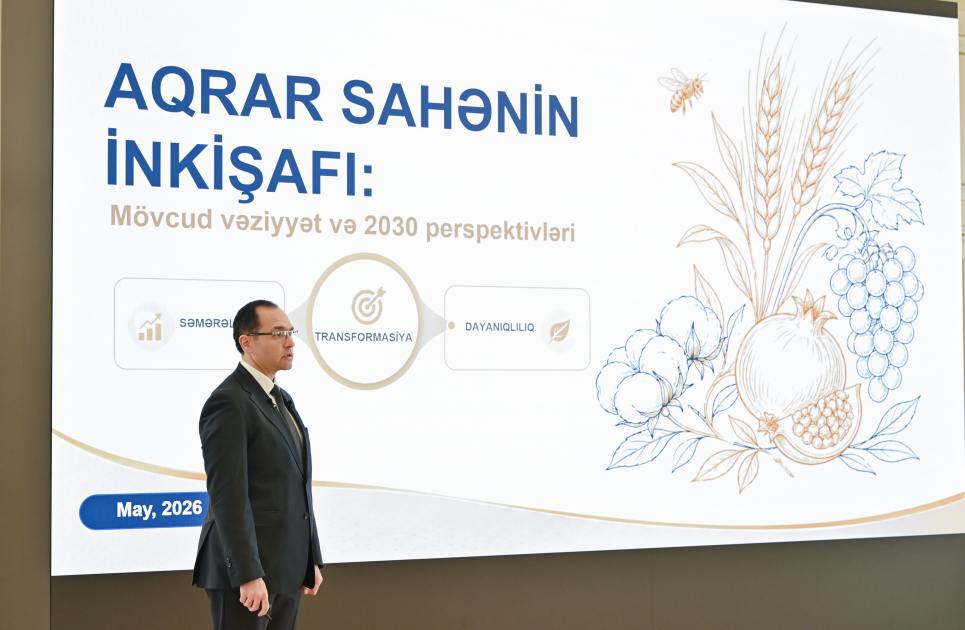
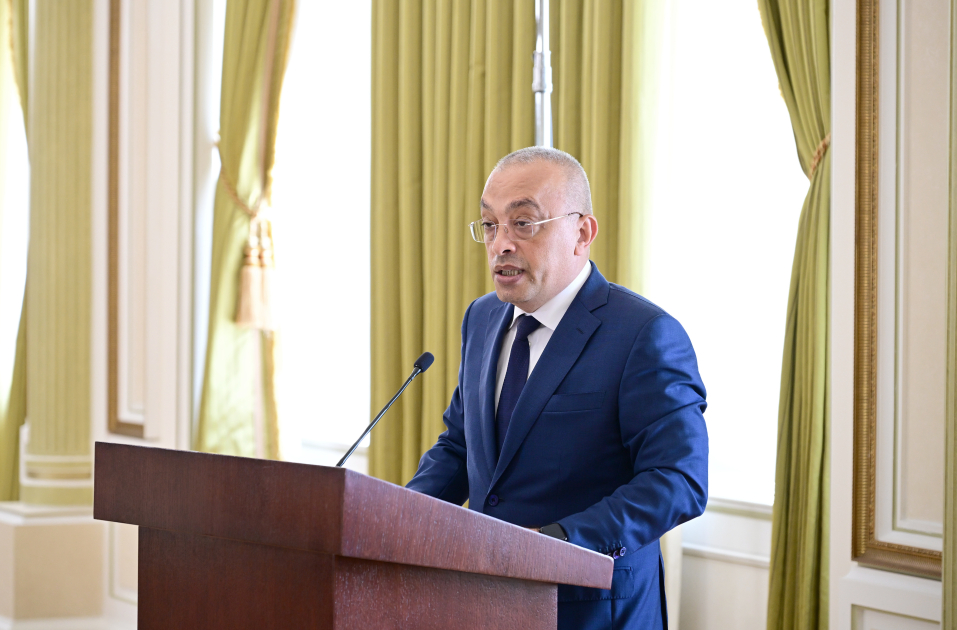
Majnun Mammadov, Minister of Agriculture, and Zaur Mikayilov, Chairman of the Azerbaijan State Water Resources, also addressed the meeting.
x x x
The meeting continued with discussions.
Other news in this section


VIDEO