Chingiz Abasov: The painting “30 Years and 44 Days” is a tribute that combines national pride with personal memory – INTERVIEW VIDEO
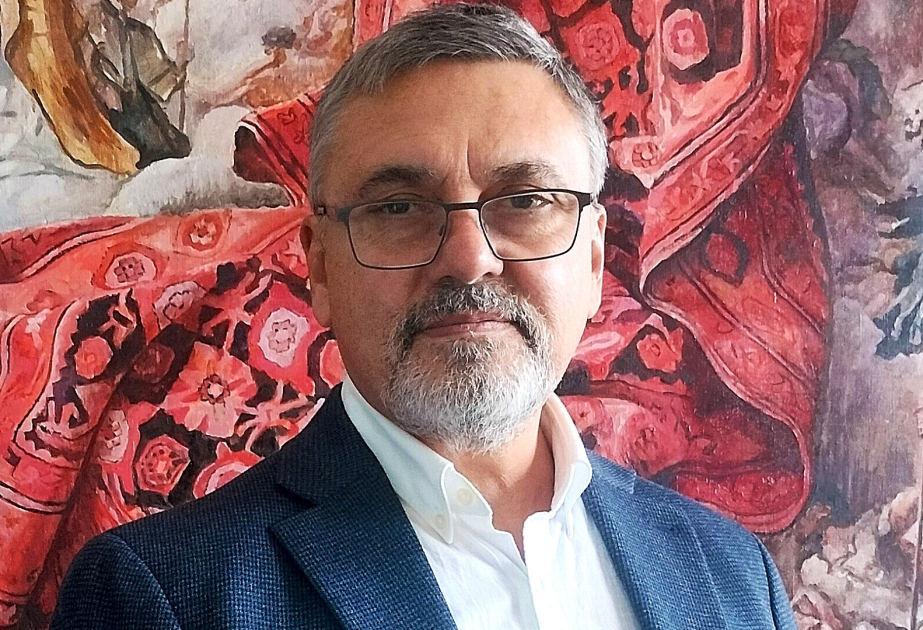
Stockholm, August 25, Nargiz Jafarli, AZERTAC
A person of art born and raised in Azerbaijan remains forever connected to the homeland — even if destiny carries them far beyond its borders. Such is the case with our interlocutor, a talented artist whose childhood passed within the fortress walls of Icherisheher and who now lives and works in cold Finland. His canvases, intertwining personal history with the memory of his ancestors from the city of Shusha, are preserved in private collections, adorn company interiors, and are exhibited in galleries across different continents.
AZERTAC presents an interview with monumental artist Chingiz Abasov — a cultural ambassador whose creativity reveals to audiences the beauty and richness of Azerbaijan’s national artistic heritage.
– You began your career during a time of great change — the collapse of the USSR and the emergence of independent Azerbaijan. How did these events influence your development as an artist?
From my earliest years, painting brought me immense joy. It was not just a hobby — I always felt it was my true calling. My parents, who were professors at the University of Civil Engineering and Architecture, encouraged my interest, and when I was seven, my father took me to the Fine Arts Department of the Palace of Pioneers in Baku. That’s how I began to take painting lessons. Later, like most Azerbaijani artists, I studied at the Azim Azimzade Art School and graduated in 1982. Afterwards, I moved to St. Petersburg to study at the Stieglitz State Academy of Art and Design. In 1989, I graduated with a degree in Monumental Art. At that time, monumental artists were still in demand for murals dedicated to the Soviet era.
But by the time I completed my studies, the Soviet Union was already collapsing, wars had begun, and Azerbaijan was experiencing great turmoil. The turning point for me was the night of January 19–20, 1990, when Soviet troops opened fire on civilians in Baku. I was there, near the Salyan barracks, with my brother and uncle, and we came under fire from the Soviet army. That night changed everything. It was the end of all illusions about the Soviet system and the beginning of a new chapter — for me personally, for my entire generation, and for me as an artist.
– What was your first breakthrough as an artist abroad?
That happened in 1991, when a Finnish gallery expressed interest in exhibiting my paintings. I brought 27 works to the exhibition. The show, titled “Genesis”, attracted a large audience. For me, it was a real revelation. I not only sold almost all of my works but also realized how art can serve as a bridge — between me and the public, and also between Azerbaijan and the wider world.
– Later, you moved to the United States. What was your experience there?
When I arrived in the U.S. without the necessary connections, I faced difficulties finding work. Everything changed when I received a message from a gallery owner inviting me to exhibit my paintings. Some time later, I discovered that the gallery was showing works by several artists simultaneously and eventually decided to sign a contract with me as their best-selling artist. This marked the beginning of fruitful cooperation that led to me obtaining permanent residency in the United States. Around the same time, my family grew with the birth of twins — a boy and a girl. To mark this event, I organized my first solo art exhibition in Laguna Beach, California, and titled it “Twins” in honor of my children. That exhibition was deeply personal and became a turning point: from then on, I was no longer simply displaying my art, but sharing my life through it.
– You mentioned monumental art. Could you tell us more about your large-scale projects?
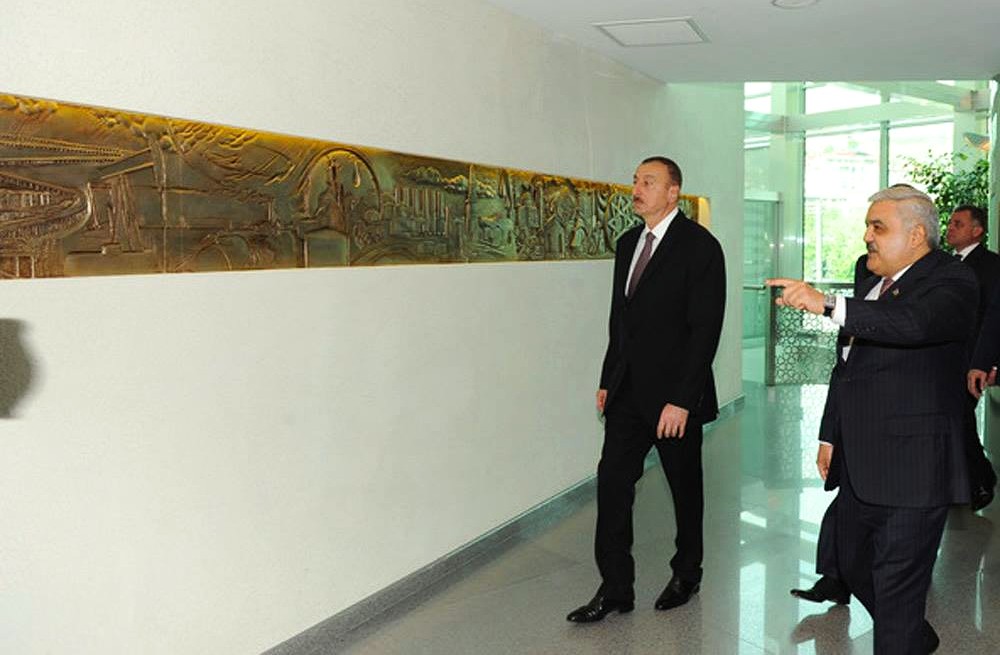
Monumental art has always been close to me — after all, that is my academic background. In California, I participated in a remarkable project in the city of Lompoc, which decided to transform itself into an “open-air mural museum” to attract visitors. I painted a large fresco together with local artists. Later, in 1995, I was commissioned by the American corporation Duell to create works for the Italian Pavilion at a theme park in South Korea. I created four large paintings reminiscent of old Italian frescoes. Later, I was commissioned to create a 17-meter bas-relief titled “History of Azerbaijani Oil” for the SOCAR (State Oil Company of Azerbaijan) office in Tbilisi.
Such monumental works bring me back to my roots — to the scale and ambition that initially drew me into art.
After our victory in the Second Karabakh War, I began work on the largest painting of my life, titled “30 Years and 44 Days”, in my own studio in Shuvelan. This monumental work, 4 meters high and 10 meters wide, depicts the entire period of the conflict — from the early 1990s to Azerbaijan’s final victory. The painting is deeply personal to me, as my roots are in Karabakh, in the city of Shusha. Sadly, my father passed away shortly before our victory, and my mother, who lived to witness the triumph, passed away just a few days after it. I sincerely believe that she departed with a peaceful heart, knowing that our land had been liberated.
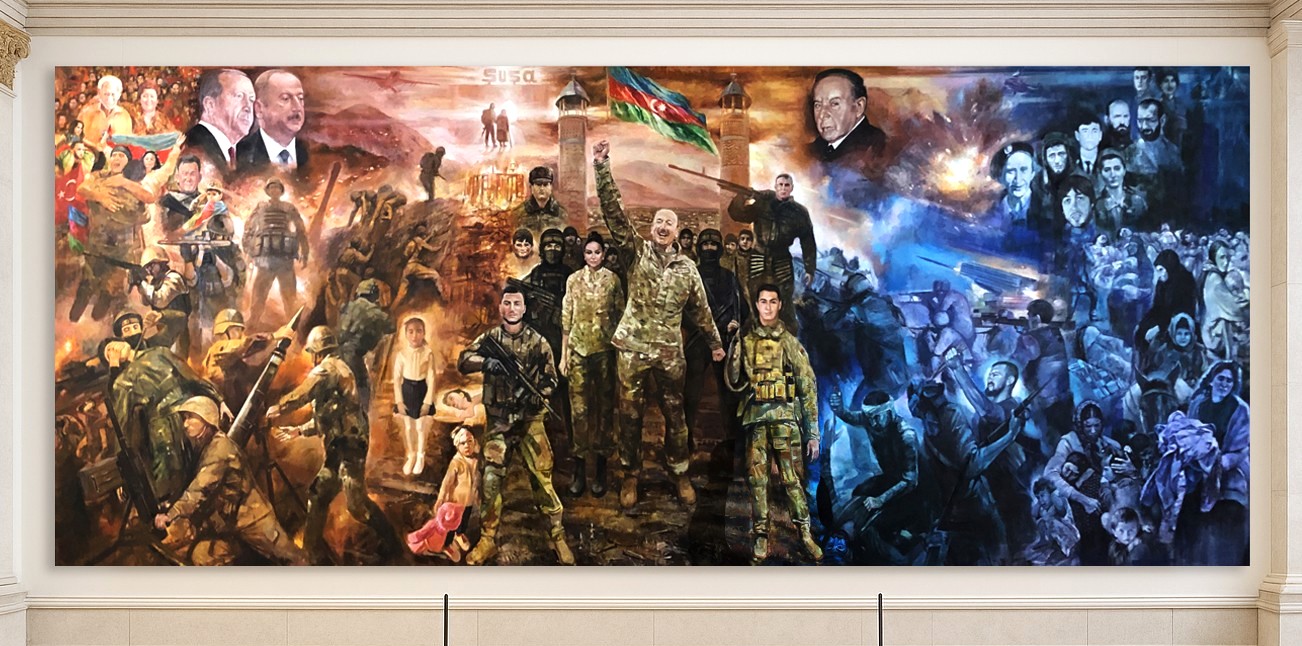
On the painting “30 Years and 44 Days” I included many key figures, such as our great leader Heydar Aliyev, President Ilham Aliyev, and President of Turkey Recep Tayyip Erdoğan, but I also depicted my own parents. This work is not only a historical record but also a tribute that combines national pride with personal memory — a reflection of how history and personal life intertwine in art. It was created for all of us and as a sacred memory for future generations. It would be a great honor for me if, on the eve of the fifth anniversary of Victory, this painting, with the support of the relevant cultural organizations, is put on public display and takes its rightful place in Karabakh — in Khankendi, Shusha, or in Baku.
– You have also painted portraits of prominent figures. Whom would you highlight?
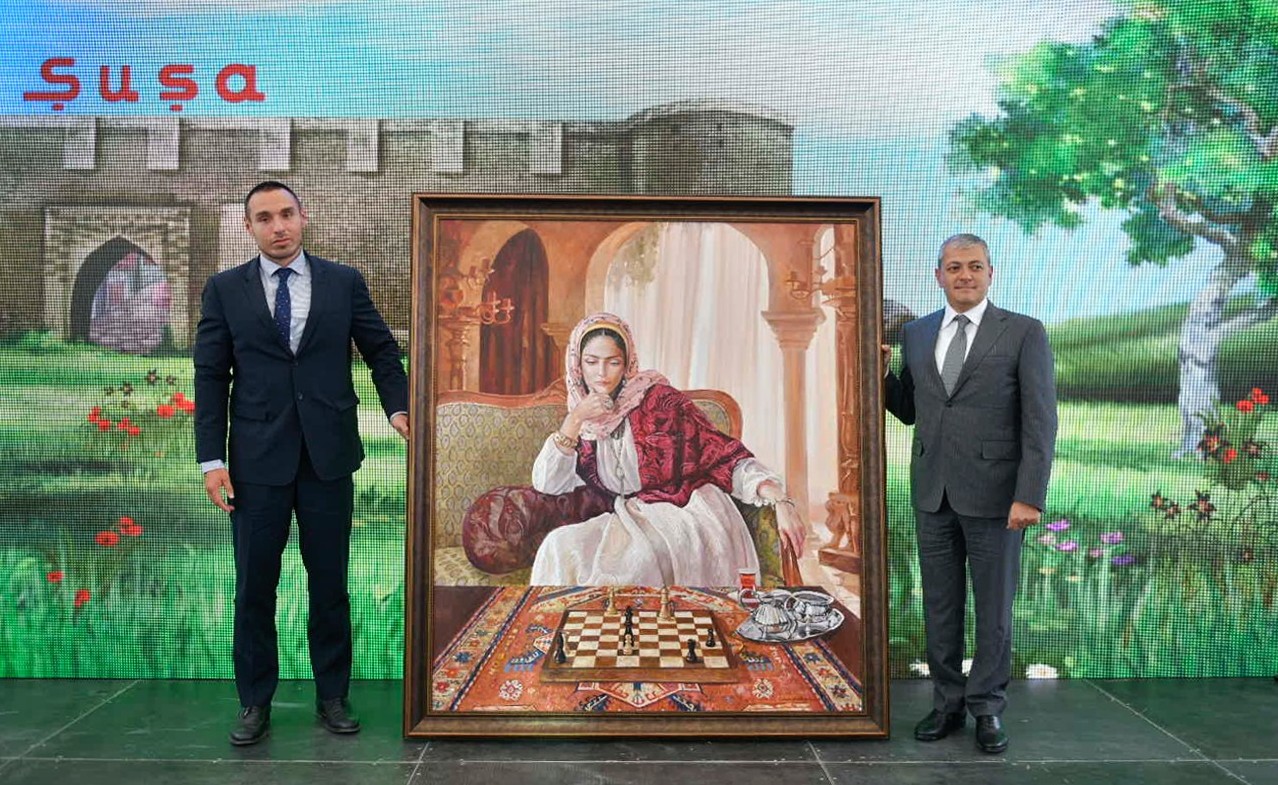
Portraits have been an important part of my work. Over the course of my career, I have painted many portraits both at home in Azerbaijan and abroad in Finland and the United States. In Finland, I was asked to paint a portrait of President Sauli Niinistö, which was later presented to him as a gift. I also painted portraits of many well-known figures from business and sports, as well as a veteran of the Finnish-Soviet War on its 100th anniversary. In 2022, I was commissioned to paint a portrait of the last princess of Karabakh, poet and philanthropist Khurshidbanu Natavan, shown playing chess. This painting was gifted to the city of Shusha and remains a source of great pride for me — a way to honor the rich cultural heritage of Karabakh and its enduring legacy.
– In addition to your own art, you have also organized cultural initiatives. Could you tell us about them?
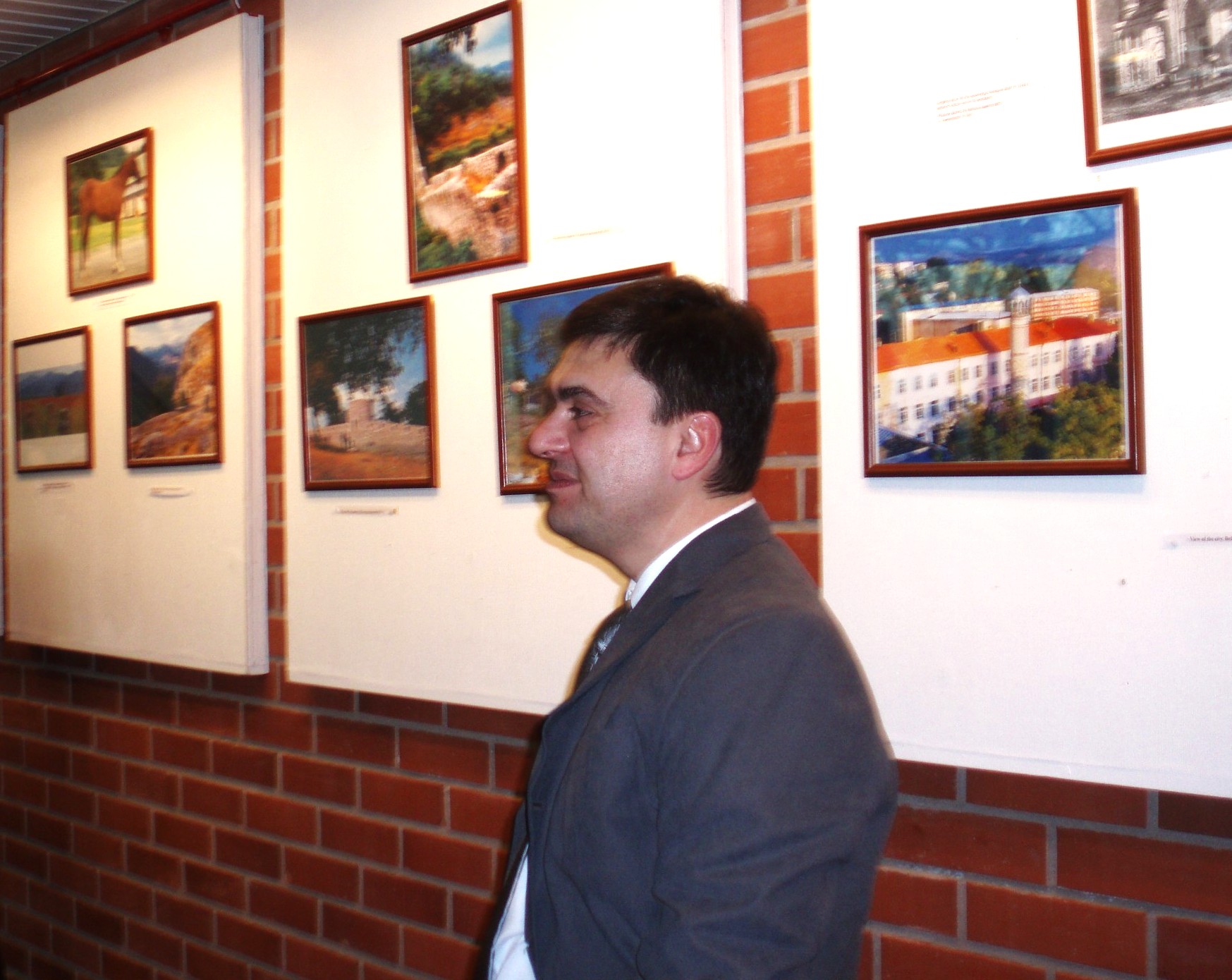
I believe every artist has a mission — to be a cultural ambassador of their people and country. In 2007, I registered the EU–Azerbaijan Association in Finland, and since then all of my exhibitions here have been held under its auspices. The association has become an important platform for promoting Azerbaijani culture and introducing the Finnish public to the rich heritage of our country. In the same year, I organized a photo exhibition in Helsinki dedicated to Shusha, the cultural capital of Azerbaijan. The exhibition was titled “Shusha: Yesterday, Today, Tomorrow.” It began and ended with photographs of the Kharybulbul flower — the symbol of Karabakh. The penultimate photograph showed a girl writing on a school blackboard: “We are leaving, but we will return.” The exhibition took place during the occupation, and its purpose was to preserve the memory of Shusha in the public consciousness. At the opening, guests included representatives of the Turkish Embassy, and during its run, several thousand residents and visitors of the city viewed the display.
In 2008, when President Ilham Aliyev paid an official visit to Finland at the invitation of President Tarja Halonen, I was honored to be invited as a guest at the dinner in the Presidential Palace in honor of our Head of State. I believe I was invited specifically as an Azerbaijani artist well known in Finland. I was the only Azerbaijani living in Finland among the guests, and it was a special honor for me, a recognition of my cultural work.
Most recently, in 2023, I organized an exhibition of Finnish artists in Kyiv, held at the Main Gallery of the Union of Artists of Ukraine. The idea for the project was mine, and I shared it with my Finnish friends, who supported it. I wanted to support the Ukrainians, because we ourselves have endured war and I understand its consequences. To show solidarity, I brought works by 19 Finnish artists, including my own. At the opening ceremony, the Chairman of the Union of Artists, Konstantin Chernyavsky, noted that we were the first and only foreign artists to come to Ukraine during the war to hold an exhibition. Ambassadors of Azerbaijan and Finland to Ukraine, Seymur Mardaliyev and Jaakko Lehtovirta, also attended, stressing the friendship of our peoples and the importance of support in troubled times. This moment meant a great deal to me, as it showed how art can be an act of solidarity in the darkest periods.
– How would you describe your art today?
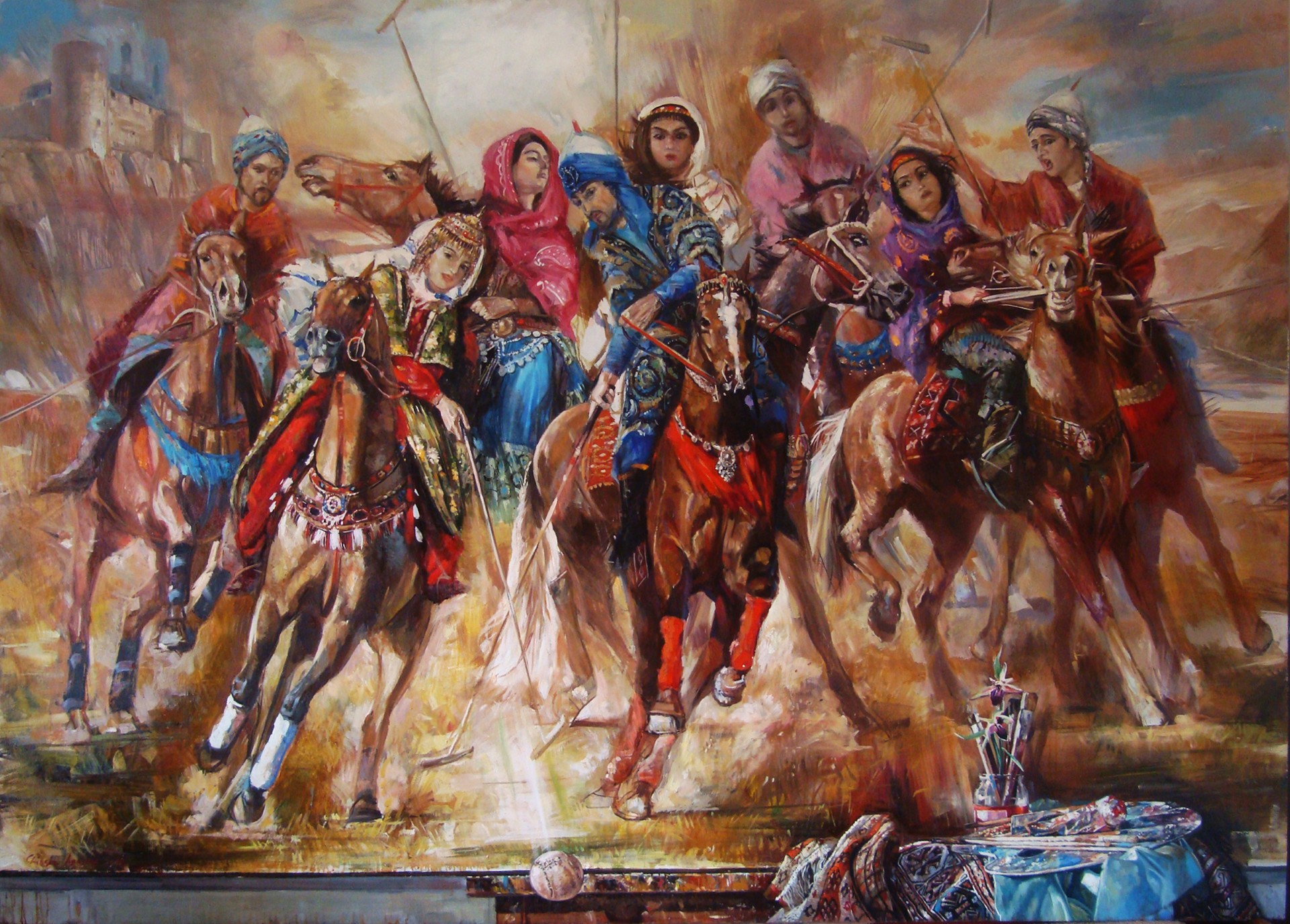
My art has always been cosmopolitan in content, but Azerbaijani in spirit. Whether it is the triptych “Madonna of the 21st Century”, exhibited in Florence and later acquired by German collector Reinhold Würth, or my large canvas “Chovgan in Karabakh”, I strive to combine universal themes such as motherhood, love, and passion with the colors, energy, and traditions of Azerbaijan.
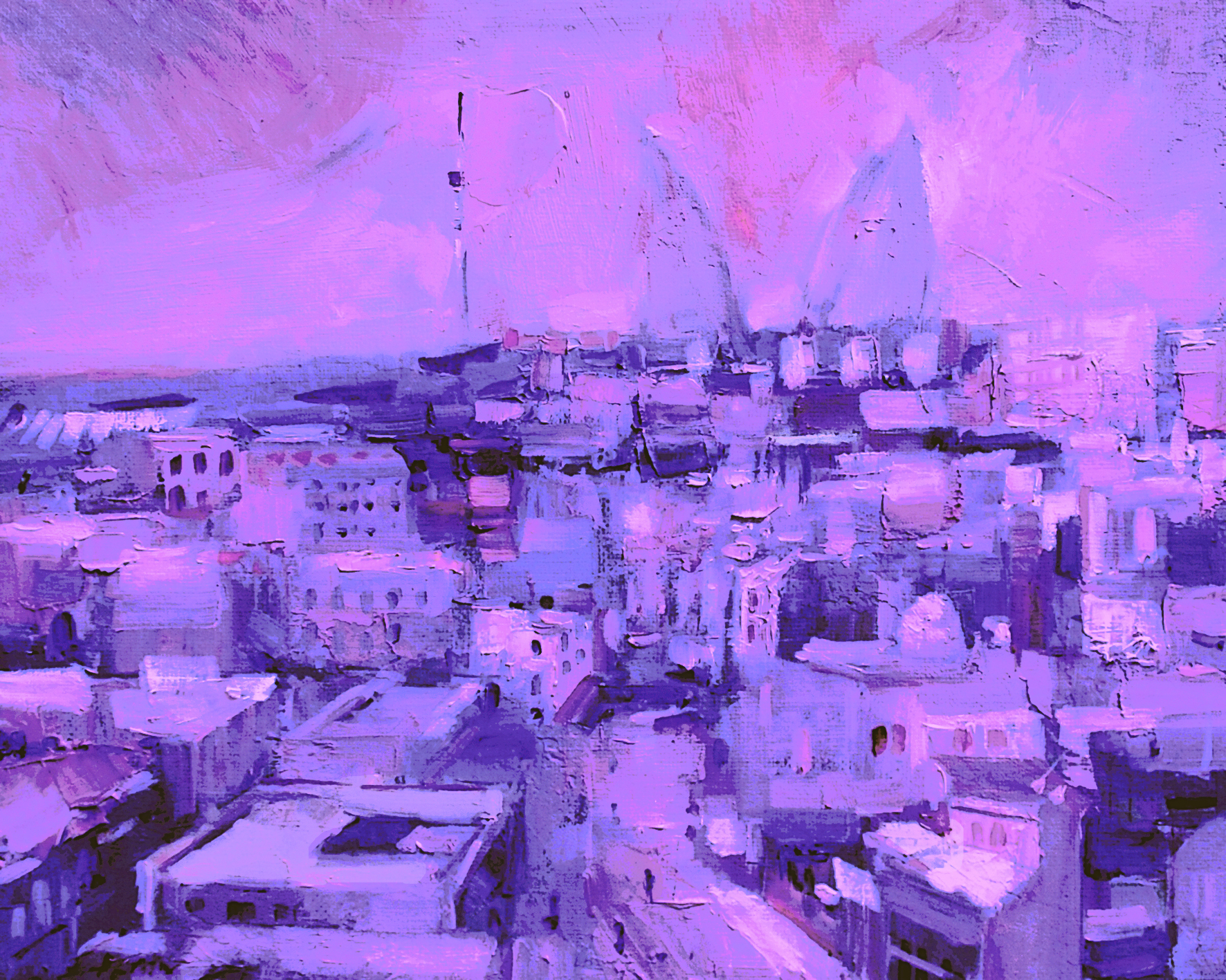
In 2013, I published in New York the book Magnificent Baku — a gift album featuring 102 works depicting my beloved city. The album is kept in many libraries worldwide, including the National Library of Azerbaijan in Baku, the U.S. Library of Congress, the Cambridge University Library, and others. Recently in Finland I held an exhibition of these paintings under the same name. In the future, I plan to organize an international tour of Magnificent Baku in galleries and cultural centers across Europe, the Middle East, and North America to introduce a global audience to the rich artistic and cultural heritage of Baku.
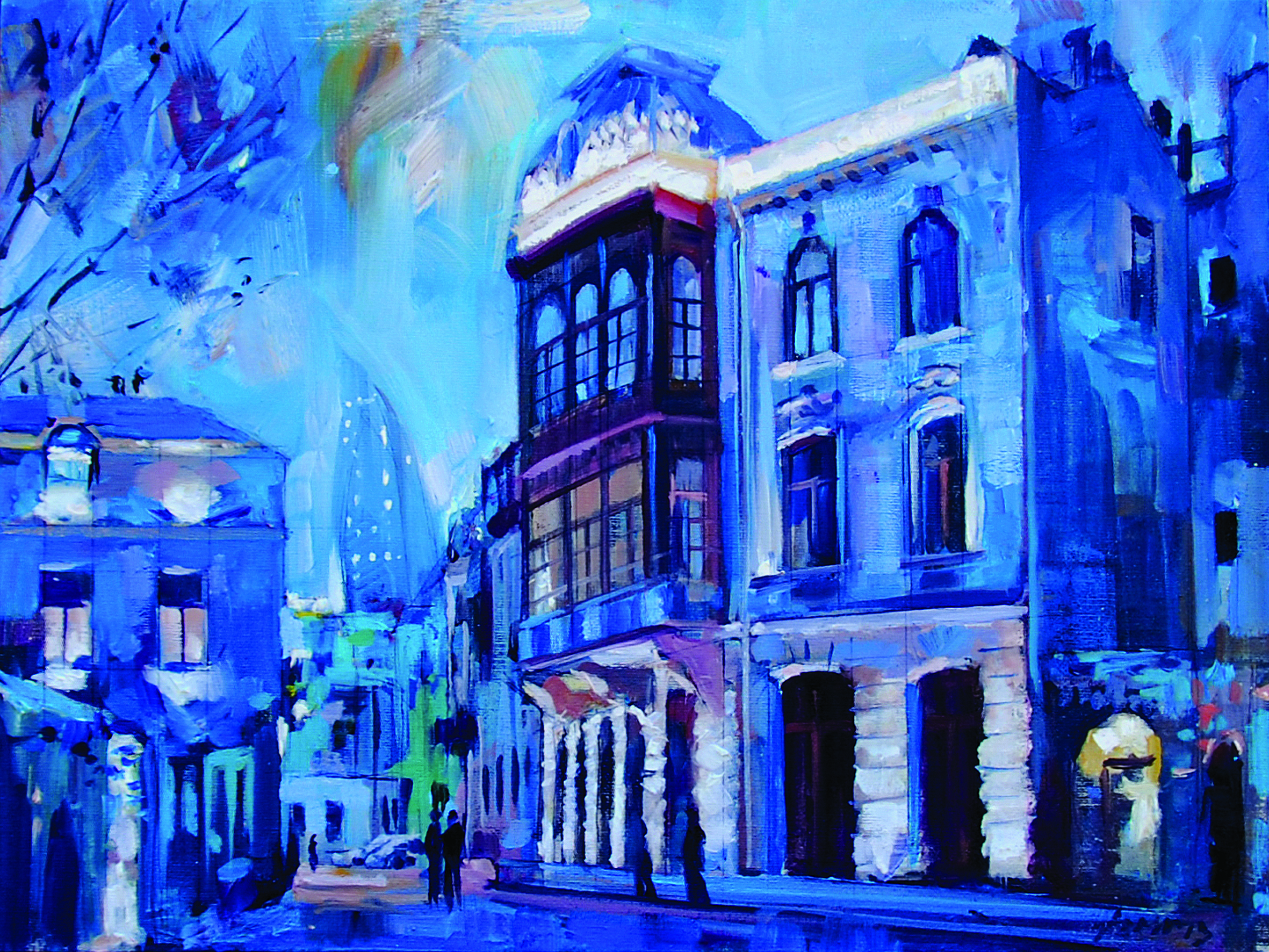
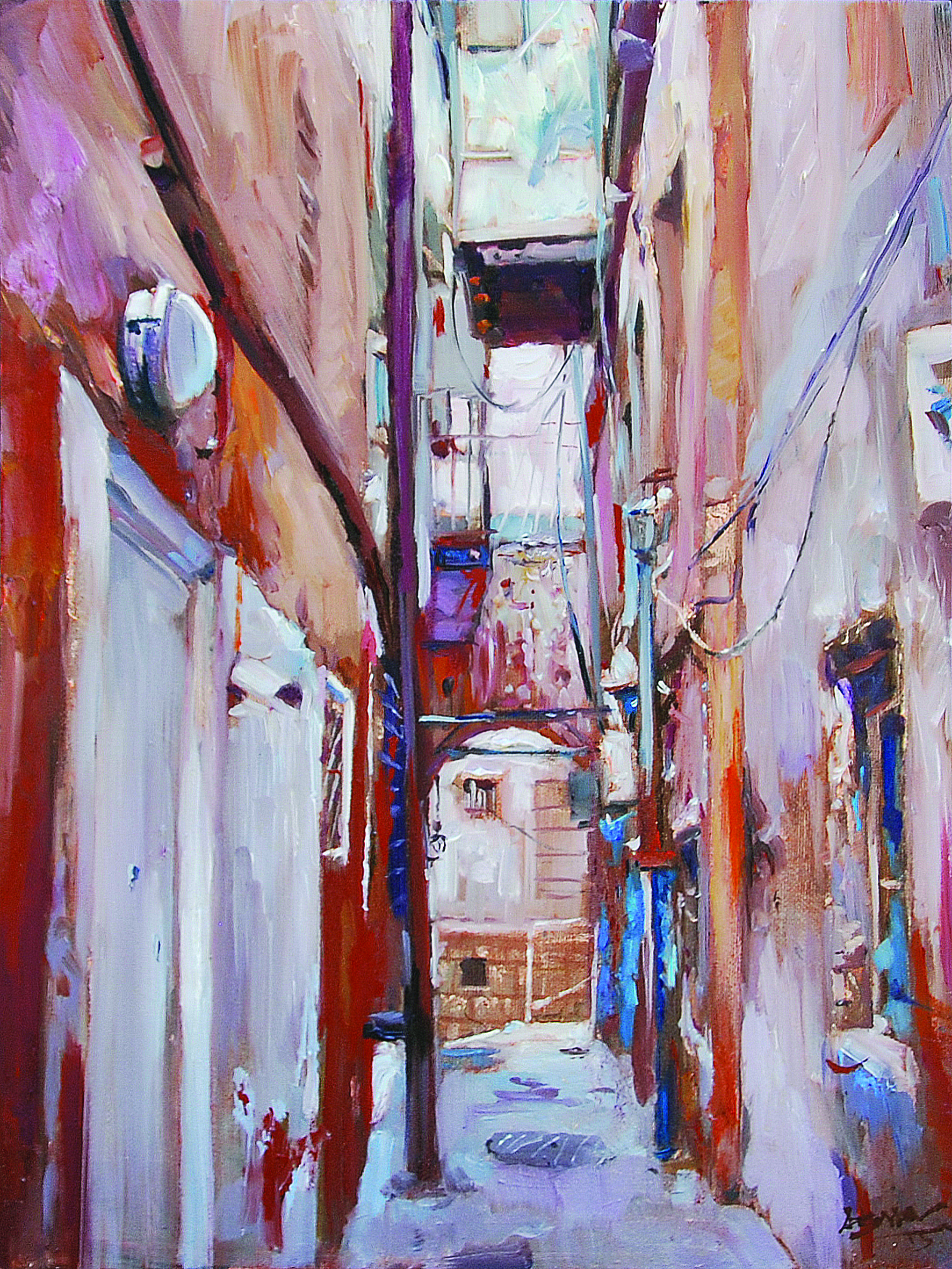
I have lived in the United States and Finland, but I have never considered myself an immigrant. I see myself as someone carrying the spirit of my homeland, a cultural ambassador of Azerbaijan in the world. Ultimately, I believe that in art, the most important thing is not only what the viewer sees but also what they feel. Today, however, I am increasingly drawn to monumental art — works dedicated to heroic heritage and historical epic, the heroic chapters of our people’s history. One of the central examples of this direction is the triptych “Memory” (2016–2017), dedicated to Azerbaijani heroes of the First World War. The painting depicts the attack of the Azerbaijani cavalry regiment on Austrian defensive positions on May 31, 1916, in the Carpathians in Ukraine. The idea for this triptych came to me in Finland, while I was working on a portrait of Marshal Mannerheim. For Finns he is a national hero, and while studying literature about his military career, I came across the name of Huseyn Khan Nakhchivanski, under whom Mannerheim had served during the First World War. Filled with pride, I temporarily set aside Mannerheim’s portrait and began studying Nakhchivanski and, through him, the history of the “Wild Division.” The courage and selflessness of Azerbaijani cavalrymen deeply moved me, and I felt compelled to express this in a monumental, epic form.
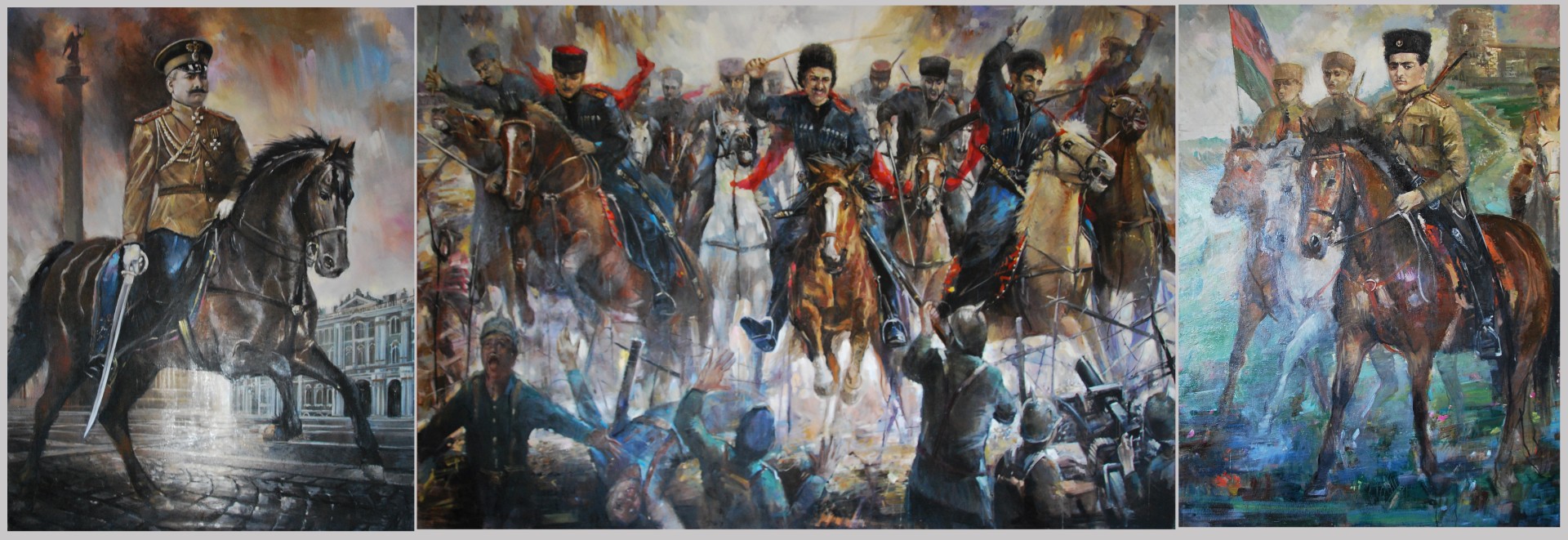
This triptych is a reminder of the importance of memory and the need to preserve the stories of our heroic ancestors. I believe that today it is extremely relevant to establish in Azerbaijan a state-supported art studio where masters of the brush would create works dedicated to the great historical events in the life of the Azerbaijani people. Such an initiative would give our history monumental form and pass it on to future generations. And one more remark: in my opinion, in the age of artificial intelligence, people will eventually, after being oversaturated with images created by machines, return to art created by human hands, which compared to AI-generated images will be truly priceless.
– What do you see as your mission as an artist?
For me, art is both self-expression and cultural diplomacy. I consider myself to be on the frontlines not of politics but of culture, representing Azerbaijan abroad. My works — whether kept in private collections or displayed in public places — are part of this story. And as long as I stand before a blank canvas, I believe that my next painting will always be my best — and yet another voice of Azerbaijan in the world.

Other news in this section


