Political opposition in Armenia targeted under “coup-terror” charges - ANALYSIS
Baku, December 4, Elmir Saftarov, AZERTAC
In recent months, Armenian authorities have arrested a broad range of individuals—including opposition party members, independent deputies, activists, and even clergy—on charges of “terrorism,” “coup plotting,” or “crimes against the constitutional order.” In July 2025, several opposition figures, including deputies and young activists, were among those detained.
Alongside these operations, judicial independence appears to have been effectively undermined, with documented cases of phone seizures and violations of parliamentary immunity.
The government’s coup-preparation charges are widely regarded by opposition groups and international human rights observers as fabricated and politically motivated. Independent analysts describe these measures as tools to suppress democratic opposition.
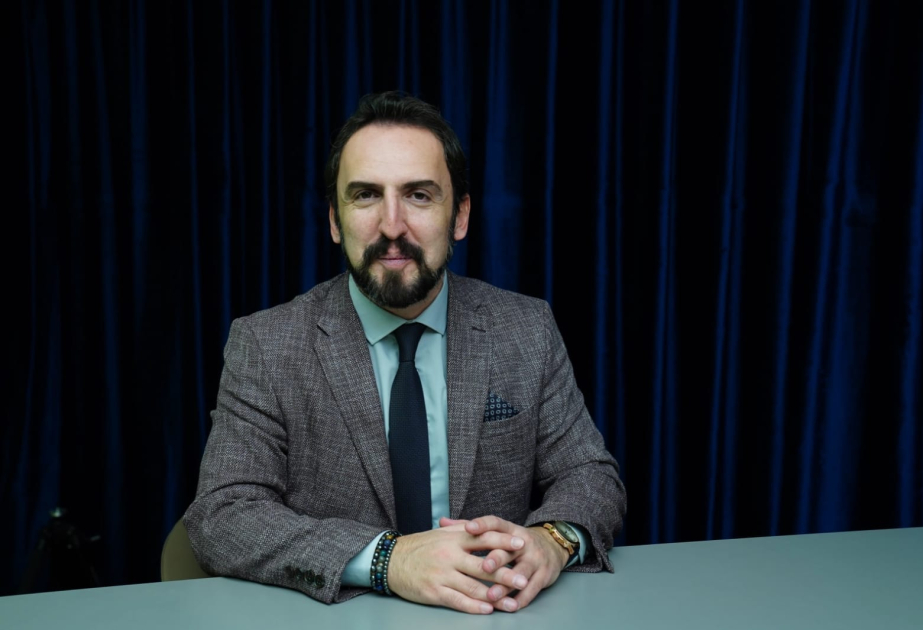
The systematic neutralization of the opposition, coupled with labeling even elected or publicly supported politicians as “anti-regime,” reflects a severe erosion of democratic institutions in Armenia. According to the analysis titled “Pressure on Political Opposition in Armenia Under ‘Coup-Terror’ Charges” by Levent Ersin Orallı, Associate Professor at Ankara Hacı Bayram Veli University, these developments signal the disappearance of political competition, the stifling of pluralism, and the spread of fear and self-censorship throughout society.
AZERTAC presents the analysis:
Decline in Media and Freedom of Expression
Free media and independent journalism are fundamental pillars of democratic oversight. However, according to international and local reports, serious violations in the fields of media and freedom of expression have been recorded in Armenia in 2024–2025.
In the first half of 2025, at least 29 court cases were opened against media and journalists. A total of 122 different violations—in the form of physical violence, threats, intimidation, and judicial pressure—were documented.
Statements by some officials that “if the media does not self-regulate, serious legal steps will be taken” show that pressure is exercised not only through police and courts but also through public rhetoric and intimidation.
This means not only the silencing of individual journalists but also of independent news sources and critical media outlets. As a result, informing the public and democratically discussing state policy becomes impossible. This constitutes a serious infringement on the right of informed citizenship, one of the fundamental elements of democracy.
Pressure on Religious Institutions and the Church
In Armenia, historically known for its Christian identity, the role of religious institutions in politics has always been significant. However, the current confrontation between the government and the Armenian Apostolic Church (AAC) has turned not only into public polarization but also into an indicator of authoritarian transformation.
In mid-2025, many high-ranking AAC clergy were arrested on charges of “coup,” “terror planning,” and “activities contrary to the constitution.” Following the arrests, the church and human rights defenders reported that the detentions were conducted unlawfully, lawyers were denied access, families were not informed, and evidence was weak and contradictory.
The pressure has not been limited to individual clergy; the church as an institution has been targeted, its influence weakened, and a police-controlled, fear-based regime has been established over religious communities. This raises serious issues such as the violation of religious freedoms, the transformation of church-state relations into a political tool, and the suppression of public opposition through the religious platform.
Silence of the European Union and the International Community: Dangerous Legitimization
The international community’s silence in the face of such large-scale pressure and authoritarianisation creates a dangerous precedent. This silence both deepens democratic weakness in Armenia and sets an example of “uncontested authoritarianisation” for other countries.
In autumn 2025, some human rights defenders in the United States raised the Armenian government’s arrests of clergy and pre-election pressure in Congress, but these calls did not translate into real political pressure.
For a country claiming integration into European values, silence in the face of these violations empties the meaning of democracy and human rights and weakens the effectiveness of international mechanisms.
Is There a Risk of a New Dictatorship Line?
According to political science, what is happening in Armenia—the management of opposition, media, civil society, and religious institutions through punitive mechanisms, the criminalization of all alternative voices on the eve of elections, and the de facto abolition of freedom of expression and religion—is not isolated illegalities but a systematic reconstruction of power.
This reconstruction ties the legitimacy of power not to societal support but to mechanisms of fear and punishment. Therefore, it can be argued that a “new dictatorship line” is being established in Armenia.
In this context, a stronger reaction from democratic opposition, civil society, and international actors—particularly the European Union, human rights organizations, and defenders of religious freedom—appears ethically and politically necessary.
Other news in this section


