Seven magnificent caravanserais of Azerbaijan
Baku, July 20, AZERTAC
Azerbaijan is a country with a high culture, from time immemorial it was an important center on the Great Silk Road, where the East and the West crossed. Merchants and traders flocked to such Azerbaijani cities as Sheki, Ganja, Baku and others from all countries, bringing with them overseas spices, silk and other goods. Leaving Azerbaijan, they could take away jewelry, musical instruments, weapons, carpets, oil, etc. It is not surprising that a lot of caravanserais were built in Azerbaijan - inns, in the walls of which most of the trade transactions took place. Some of those ancient caravanserais have survived to this day.
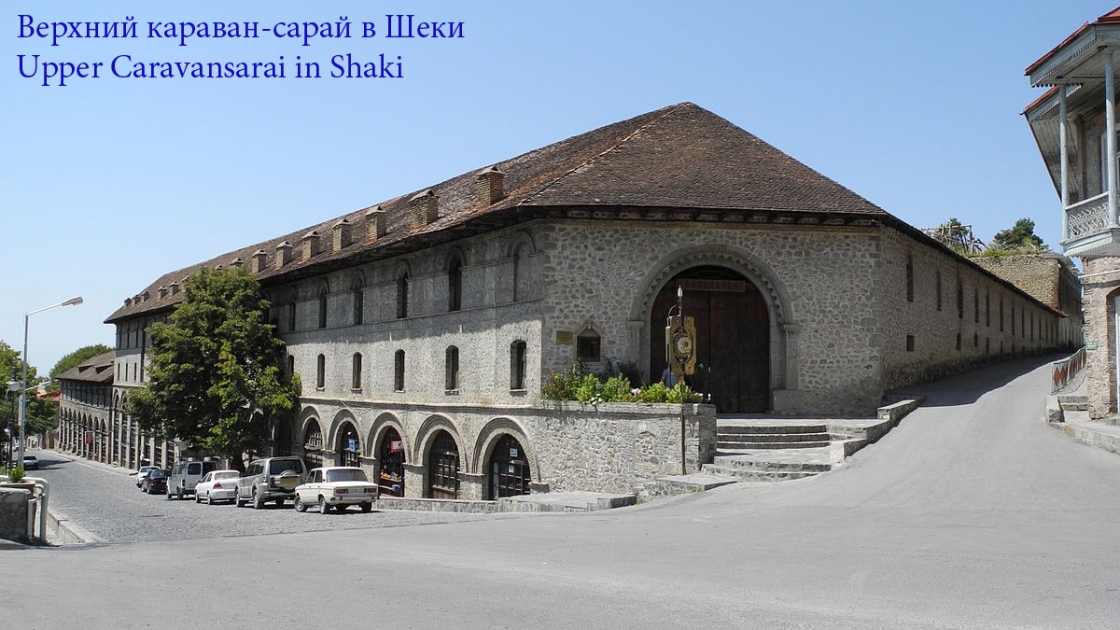
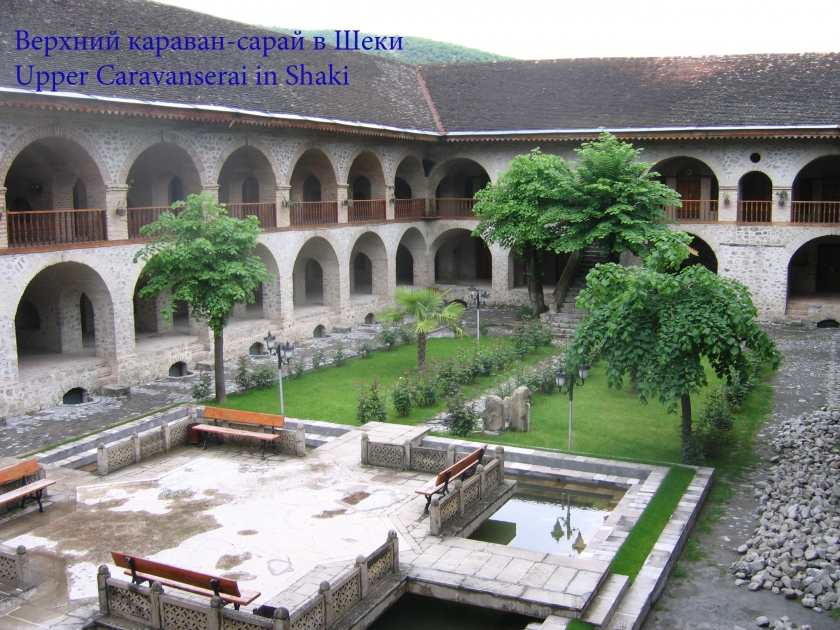
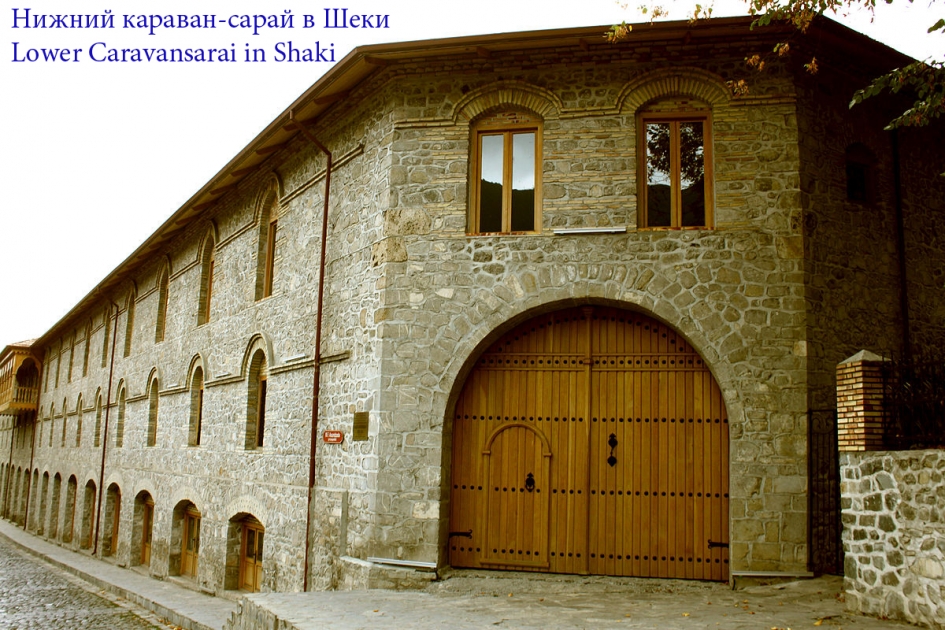
Upper and Lower Caravanserai in Sheki
During the Middle Ages the caravanserais were built both in cities and on trade routes. The difference was that caravanserais in the cities were meant not only for stopping caravans and travelers, but also for trade. In this regard, in the urban Caravanserai were provided special premises for trade transactions. In XVIII-XIX centuries in Sheki there were five large Caravanserai, of which, at the present time only two have been preserved, which are the largest in the entire South Caucasus in terms of their layout structure, large sizes and convenience for trade.
The upper and lower caravanserai are the main sights of the right bank of the Gurjanachai River, a kind of business center of the city of Sheki. The lower caravanserai, with a total area of 8,000 square meters, has 242 rooms. The building has an entrance gate on four sides. When all the gates were locked, the caravanserai turned into an impregnable fortress.
The upper caravan-shed of the XVIII century, in which more than 300 rooms, has a total area of 6000 square meters and a height of 14 m. The main facade of the building faces the bank of the river, a richly decorated arch of the main entrance to the courtyard is located in the corner of the building, at the level of the third floor, which is caused by a large slope of the relief along the river. It should be noted that the Azerbaijani architect perfectly used the steep relief of the site with a difference of several meters. All the premises in the building of the caravanserai are of equal size and have a vaulted overlap. Yard loggias, swimming pools and surrounding landscaping, are harmoniously combined with the general composition of the building.
It is interesting that the upper caravanserai is still used for its intended purpose - it functions as a hotel complex called Sheki Karvansaray. This institution is notable for the fact that you can feel the spirit of antiquity here. The rooms have wonderful arched ceilings, massive doors, impressive stone walls. The hotel has a garden restaurant in which it is nice to sit and have a cup of tea with Sheki Halva in the summer, as well as a winter dining room. The hotel also has a disco, entertainment center.
At the entrance to the hotel, ancient massive doors with bells attract attention. Here we learned that various door bells were used on the doors of the caravanserais in Azerbaijan: the male guests used "their own", and the women - destined for them. Thus, following the Muslim customs, when the "ladys bell" was ringing, the hostess greeted the guests, and in other cases the host approached the door. It was a kind of prototype of a modern intercom system.
Bukhara caravanserai in Baku
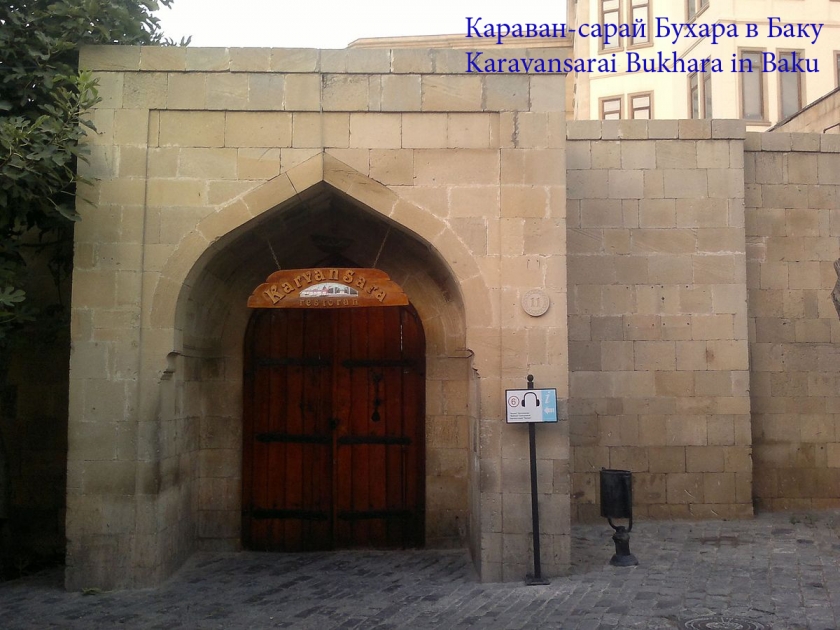
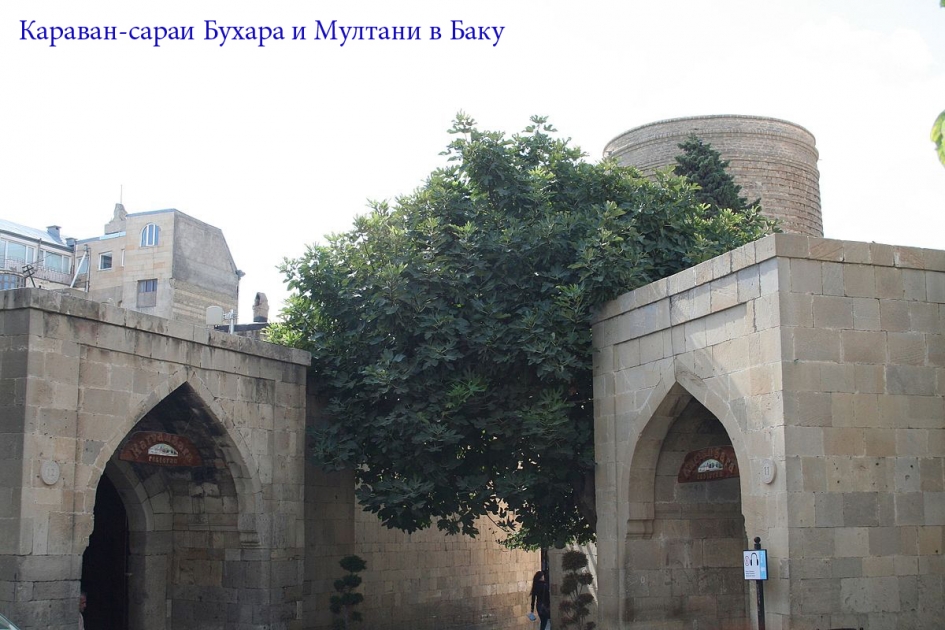
Located in the Old City of Baku - Icherisheher, near the Maiden Tower, the Bukhara caravanserai was erected at the end of the 15th century on the trade highway that passed through the Shamakhi Gate of the fortress. The caravanserai was used as an inn, mostly by merchants from Central Asia, hence the name.
The structure has the shape of a square, with a convex portal. The octagonal courtyard, surrounded on the perimeter by balconies and cells, served as an excellent resting place for merchants and travelers after daily trading deals. Throughout the perimeter of the courtyard are the arches, which constitute the bulk of the architectural composition. The restoration works of 1964 completely freed the building of the caravanserai from the additions made earlier, which made it possible, against the background of surrounding buildings, to reveal the large-scale structure of this monument of national importance.
Now the restaurant of the Azerbaijani national cuisine is functioning here.
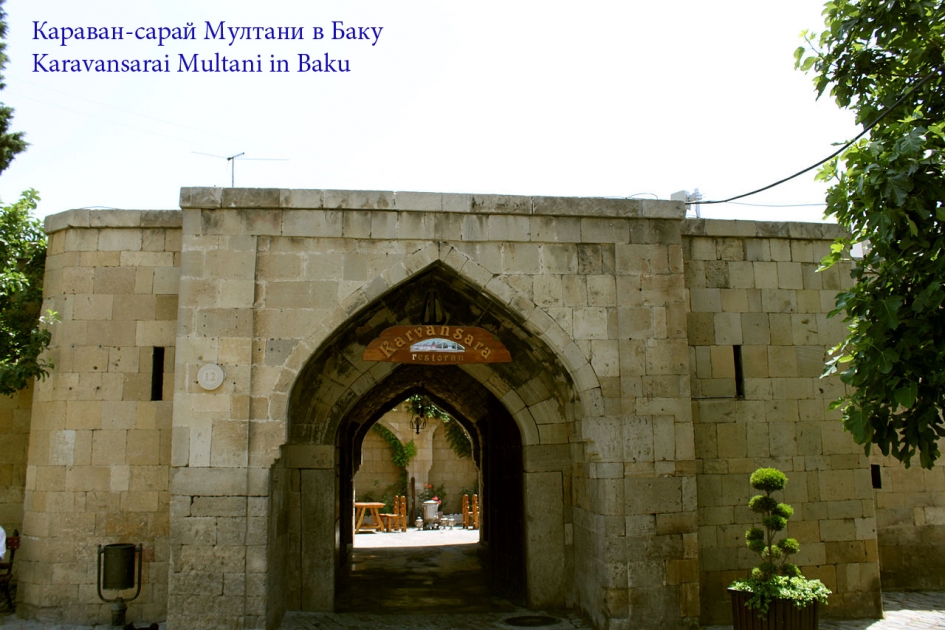
Caravanserai Multani in Baku
Located opposite the Bukhara caravanserai, caravanserai Multani is older than it and was built in the XIV century. Multan is a city in Pakistan. The caravanserai served as a stopping place for merchants and fire worshipers from India. It is known that they built a temple of fire worshipers "Ateshgah" in Surakhani, which has survived to this day, and functions as a museum.
Caravanserai Multani has a square shape, an internal courtyard and is built on relatively ancient structures. On the perimeter of the courtyard there are balconies behind which there are separate rooms-cells, designed for individual housing.
Monument of national importance. Now there is also a restaurant of national cuisine.
"Small" caravanserai in Baku
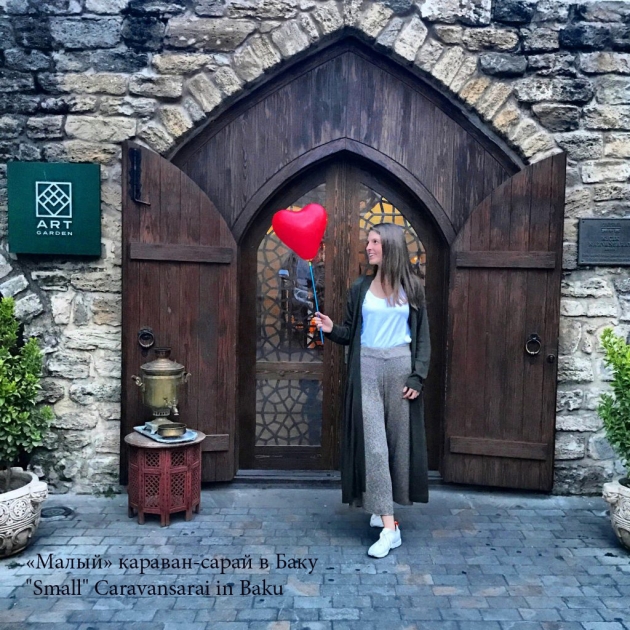
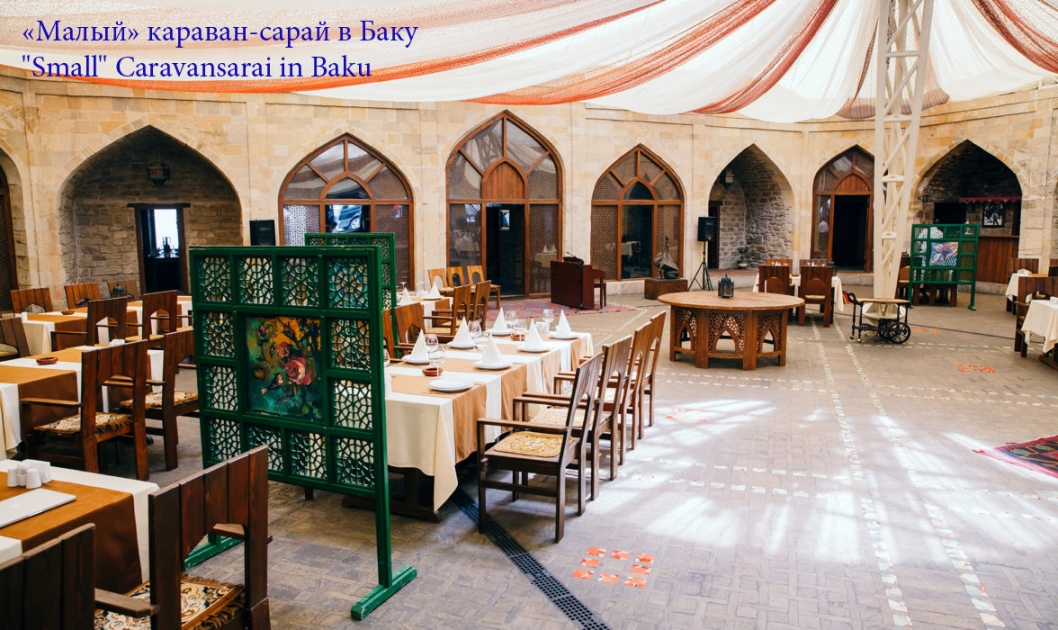
Another of the caravanserais in Icherisheher - "Small" or "Khansky", older than the two previous ones, was built in the XII century. Square building has a patio quadrangular with cut corners. Along the entire perimeter, the building is surrounded by a balcony, behind which there are living rooms for personal use. The northern and southern entrances of the caravanserai are in the form of a portal. The main entrance during the Middle Ages was from the sea side. On the south side the facade of the caravanserai two-storeyed and has the form of a defensive structure.
In the Middle Ages, the caravanserai on the side of the shopping street consisted of counters that had no direct connection with the courtyard. However, before that, there was a Muslim educational institution in this building - a madrassah, which was part of the Jama complex (Juma) and the cells were intended for students living in this seminary.
Currently, on the territory of this monument of national significance, the Art Garden operates, which combines the Art Gallery, several artisan workshops and a restaurant of national and European cuisine. It is interesting that each of the caravanserai cells is now decorated by various Azerbaijani artists.
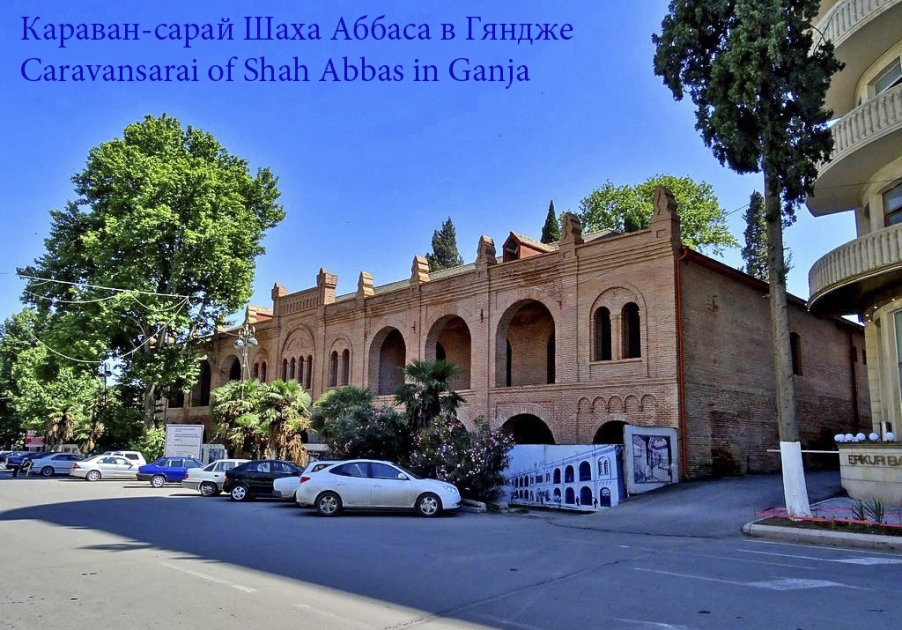
Caravanserai of Shah Abbas in Ganja
Another historical caravanserai in Azerbaijan was built in the beginning of the 17th century in Ganja by the order of the then ruler Shah Abbas and bears his name. This caravanserai is part of the historical architectural ensemble created by the architect Shaykh Bahauddin, which also includes the Juma mosque (Shah Abbas mosque) and Chekyak-Hamam (medieval bathhouse).
According to the tradition of that time, the construction of the building used burnt bricks and a mixture of egg white, lime and clay. The two-story building of the caravanserai, built in the oriental style, includes 15 halls and 54 cells. In the yard there are places for pack animals. Servants, cooks and musicians worked in the caravanserai to serve the guests.
Until recently, the building of the medieval caravanserai played the role of the Abode of Knowledge - at the end of the 20th century Ganja Humanitarian College was located here. The museum of the poetess Mashati Ganjavi was also housed in the caravanserai. Currently, after the restoration, the caravanserai acts as a museum.
Caravanserai of Ugurlu Khan in Ganja
Almost closely to the caravanserai of Shah Abbas, another caravanserai, named after Ugurlu Khan, is attached. Both caravanserai are interconnected by four internal passages. The building of the Ugurlu Khan caravanserai is executed in a typical feudal style and contains two large courtyards in the complex.
Some mistakenly believe that the caravanserai bears the name of the son of the last ruler of the Ganja Khanate of Javad Khan, Ugurlu Khan. However, this is not the case, since the construction of the caravanserai dates back to the 17th century, and not the 18th-19th centuries, when Javad Khan lived (1748-1804). Chances are great that the caravanserai was built with funds from Ugurlu Khan I, the nephew of Ganja Beylarbek 1663-64. Murtuzaguluhana Ziyadoglu and bears his name. The title of khan Ugurlu bey was received after he became the next Beylarbek, a governor who submitted directly to the shah.
After the capture of Ganja by Russian troops in 1804, the caravanserai, like all khan's property, was confiscated and transferred to a treasury account. In the future, one of the caravanserai hulls was rented by Sherbatlars - manufacturers of silk kerchiefs, after which the people named the caravanserai "Sherbatchi".
Emil Eyyubov
Other news in this section


