Six legendary fortresses of Azerbaijan - from Shamakhi to Nakhchivan

Baku, October 27, AZERTAC
Fortresses, bastions, citadels and other fortifications from time immemorial stood guard over the borders of Azerbaijani cities and khanates. Do not count how much they repulsed the enemy attacks and destroyed the enemy’s cunning plans. The destinies of the great Azerbaijani rulers are closely connected with many of these fortifications, and the stories of the fortresses themselves are overgrown with legends over time.
We collected in this digest only some of the Azerbaijani fortresses, which left a bright trace in the history of the statehood of our country.
Javanshir Fort
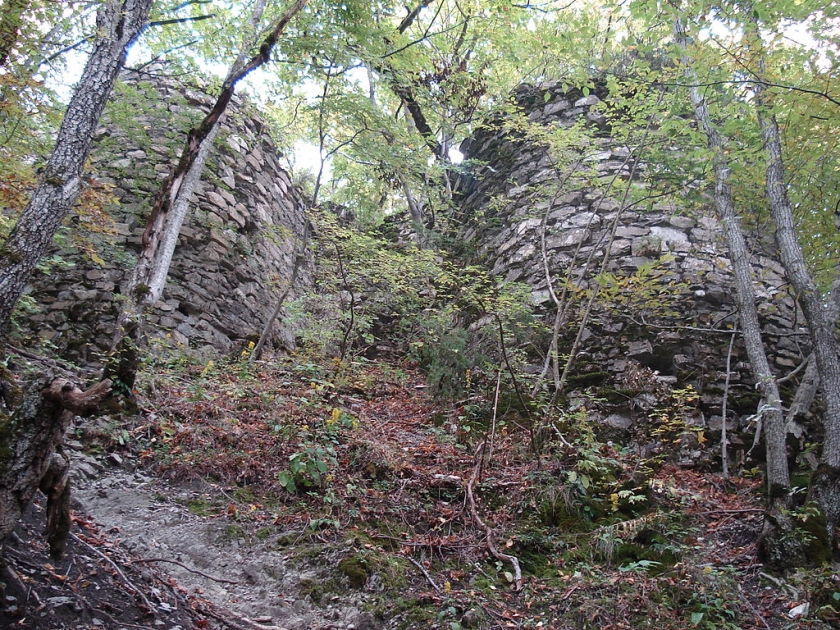
The fortress, which is the pride of the Ismayilli region, is associated with the name of the outstanding Albanian commander and ruler Javanshir Mehranid, who ruled in 642-681. The Girdyman principality, founded by the Mehranid dynasty, was located on the territory of the modern Ismayilli region, and later they extended their power to the whole of Albania.
The fortress is located on the right bank of the Ag-Chai River, 7 km from the district center and 4 km from the village of Talystan, one of the oldest settlements of Ismayilli. The toponym "Talystan" means "Tala Meskeni" - "settlement in the meadow". In the vicinity of the village traces of four ancient settlements and five cemeteries have been preserved. The first archaeological excavations were made here in the 60s of the last century, as a result of which it turned out that this territory has at least 2000th history.
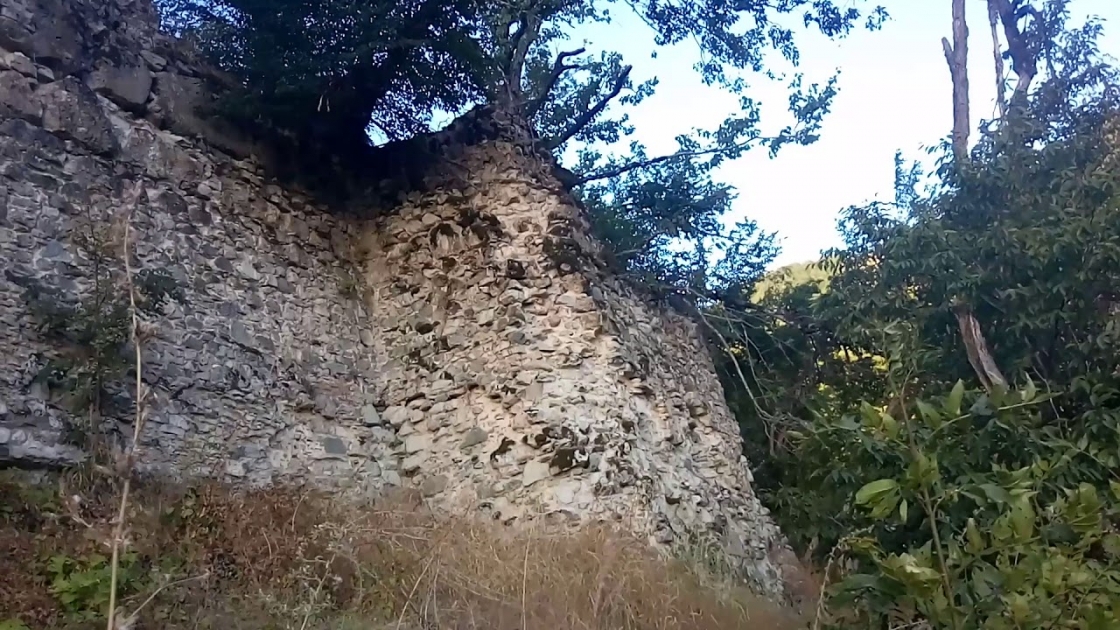
Having reached the settlement by car, you can go further to the fortress of Javanshir only on horseback or on foot. This powerful defensive system of the early Middle Ages consists of the outer and inner parts (ichgala). The width of the southern wall of the main part reaches 2 meters, height 10 meters. Ichgala, an area of 2 hectares, was built at the very top of the cliff.
It is believed that the guilty were dumped from this rock down into the abyss. From the fortress there was an underground tunnel to the Maiden's Tower located at a distance of 7 km from it. Over time, the tunnel collapsed, but some of its parts have survived to this day.
After 6 years of struggle, Javanshir recognized himself as a vassal of the Arab Caliphate in 667, which became a turning point in the history of Azerbaijan and contributed to the spread of Islam here.
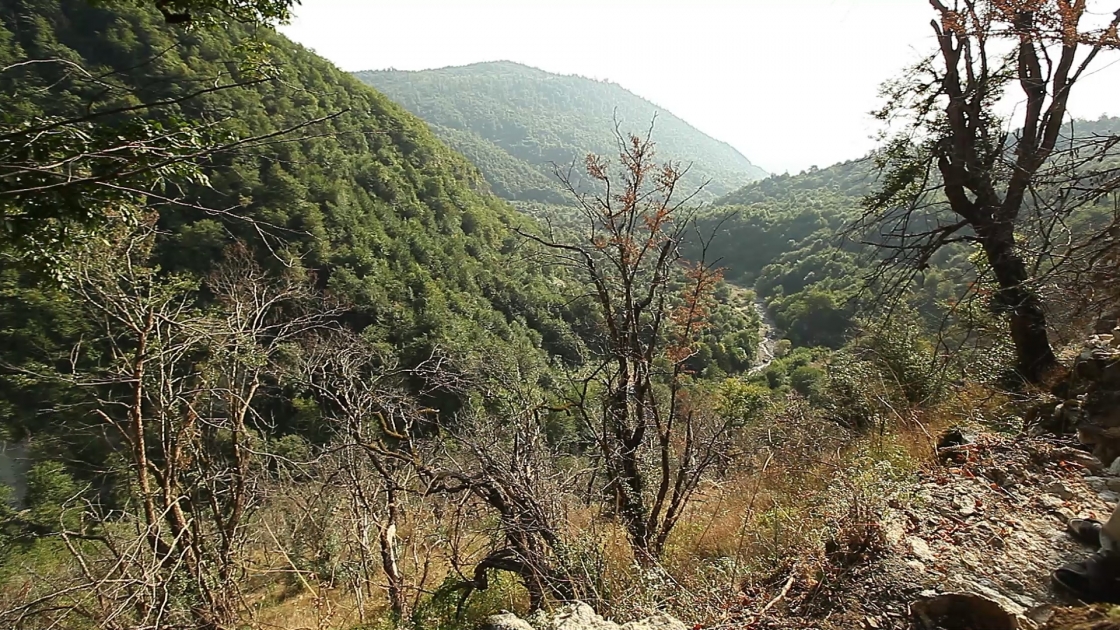
On the territory of the fortress there is a waterfall surrounded by dense forest. Today, these places attract many tourists.
Sheki fortress
Located in the upper northeastern elevated part of the city, the Sheki fortress was built during the reign of the first Sheki khan Haji Chelebi (1743-1755). The fortress is a Khan's citadel, its features did not include city-wide structures. The location of the fortress is successful not only from a military-strategic point of view, but also because of the favorable microclimate of this part of the city. The total length of the fortress walls is 1300 m, the height of the northern wall is 4 m, the southern one is 8 m, the wall thickness is 2.2 m.
From the southern and northern sides of the fortress has two gates and defensive towers. In the Soviet period, the destroyed parts of the fortress were restored.
Inside the fortress in different periods there were many buildings, the number of which reached forty, chief among them was the Palace of Sheki khans, unique in architecture, built in 1762 without a single nail.
Gelersen - Gerersen
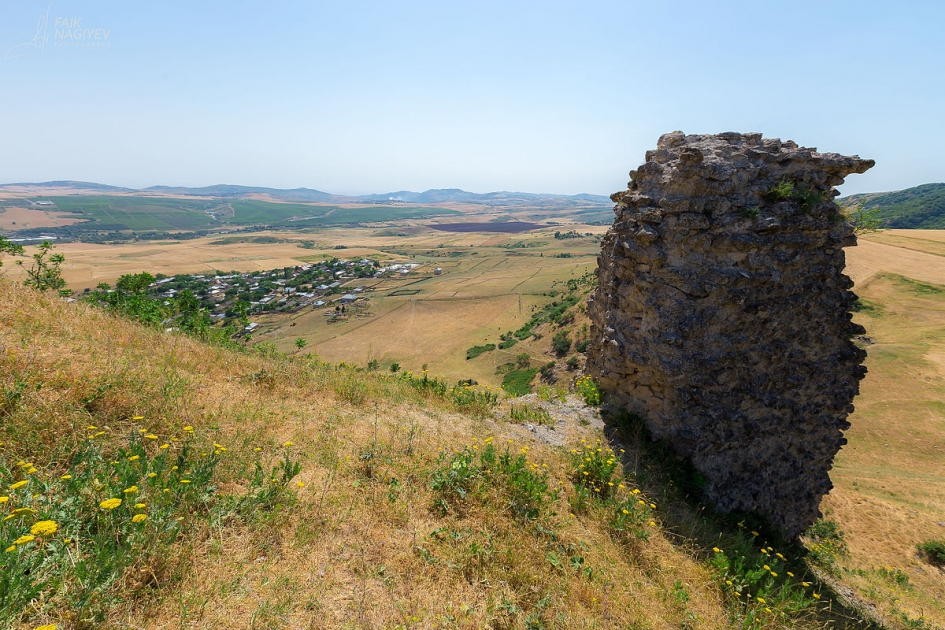
One of the most famous historical sights of Sheki - Gelersen - Gerersen Fortress (“Come - See”) is located on a strategically advantageous site, about 4 km north of the city, on the left bank of the upper course of the Kish River, on top of the Garatepe Mountain. It is believed that the foundation for the construction of the fortress was laid in the XV century by the Sheki ruler Alijan.
The name of the fortress is associated with the invasion of the ruler of Iran, Nadir Shah. In 1743, taking advantage of the people’s displeasure with the Iranian oppression, the ruler of Haji Chelebi, declaring himself khan of Sheki, took refuge in this fortress and rejected the demands of Nadir Shah of overthrow. The angry shah demanded to know the reason why Chelebi did not give up. Gadzhi Chelebi, confident of the fortress’s inaccessibility, informs the Shah, “Come and see.” Indeed, in 1744, Nadir Shah arrives in Sheki with a huge army, approaches the fortress, but, failing to subdue it, returns. After this event, the name of the fortress Gelersen - Gerersen was established in the people.
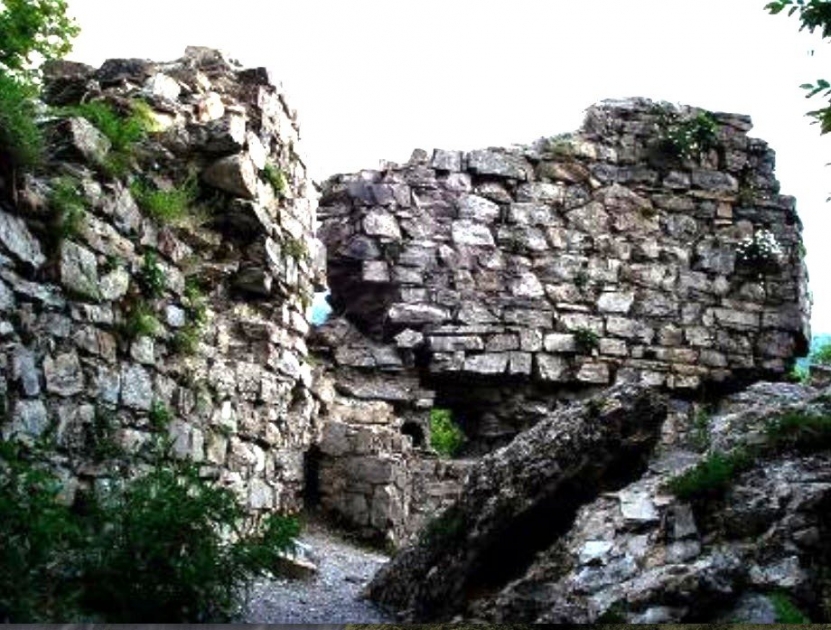
Today the fortress is an obligatory place to visit all the tourists coming to Sheki. Especially mysteriously, the ruins of the fortress look in the gathering twilight. The impression that you get into that hectic medieval time. On the territory of the fortress there are many deep wells, the bottom of which is not even visible. In some versions - this is a trap for enemies. There is also a version that under the fortress there is an underground passage, in case of escape.
From the fortress walls there is an amazing panorama of the natural landscapes - the majestic mountains covered with emerald forests and the serpentine of the river Kish running away into the distance. If you get here in September, you can taste the ripe cornel, which grows in abundance in the vicinity of the fortress.
Ganja fortress
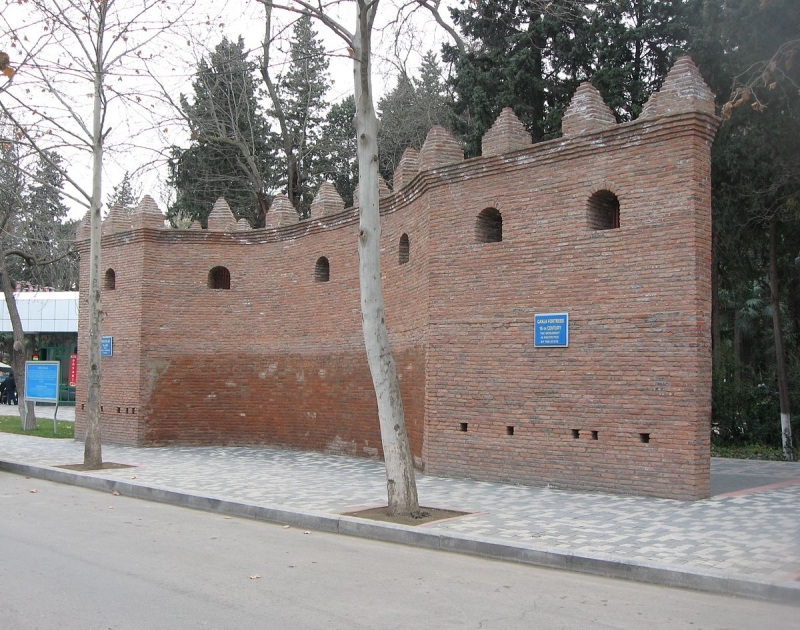
Ancient Ganja has an extremely rich and interesting history, captured in numerous architectural monuments, one of which is the Ganja fortress. Fragments of its powerful walls can still be seen in the territory of the oldest city park “Khan Baghy”.
Note that in the second half of the XVI century Ganja turned into a battlefield between the Ottoman and Safavid states. Then there was the need for powerful fortifications. The famous Ganja fortress, known as the “Shield of All Asia” was built in 1588 by the commander of the Turkish army in the Caucasus Farhad Pasha by order of the Turkish Sultan Murad III. The total length of the walls, erected 7 km from the historical center of Ganja, reached 13.7 km, and its height was 12 m. The local river stone and clay were mainly used in the construction of the fortress. The south-western, north-western and eastern walls of the fortress were strengthened to the greatest extent, with the help used in the construction along with the river stone of red brick. Every 200-500 m along the wall about 30 defensive towers were erected. At the end of the 16th and beginning of the 17th centuries, divided by the fortress, Ganja consisted of four parts: the outer city, Shahristan, Ich-gala and Naryn-gala.
By its favorable geographical position, Ganja has always had an important military and strategic importance. This is confirmed by the words of General Tsitsianov, who wrote to the representative of civil authority Gasparov: "Taking the Ganja fortress, which holds all Azerbaijan in fear, is very important for Russia." In 1804, Russian troops under the command of Tsitsianov besieged Ganja. After repeated proposals to the governor of Ganja Javad Khan for the voluntary surrender of the city and a decisive refusal (“You will enter Ganja only through my dead body”), Tsitsianov took the city by storm. As a result of this assault, Jawad Khan and his middle son Huseyngulu Aga fell heroically in a stubborn battle, and Ganja was occupied by the enemy.
After accession to Russia, Ganja became the center of the eponymous county, and then the province. According to the new city plan prepared by the architect Ignatiy Krzhintalovich and signed in 1873 by Alexander II, the historical part of the city was subjected to significant changes. The fortress was destroyed, and in its place built blocks of the european sample. Only one fragment of the fortress walls survived, which is now called the “Shiralibek Tower”. In 2007 there was a reconstruction.
By the way, on the approaches to Ganja along the bank of the Ganjai-tea river, you can still see the half-destroyed remains of the wall of the ancient Ganja fortress. Now only formless fragments remain from it. The water guarding the approaches to the fortress, undermined the stones, and the structure fell into disrepair.
Gulistan Fortress
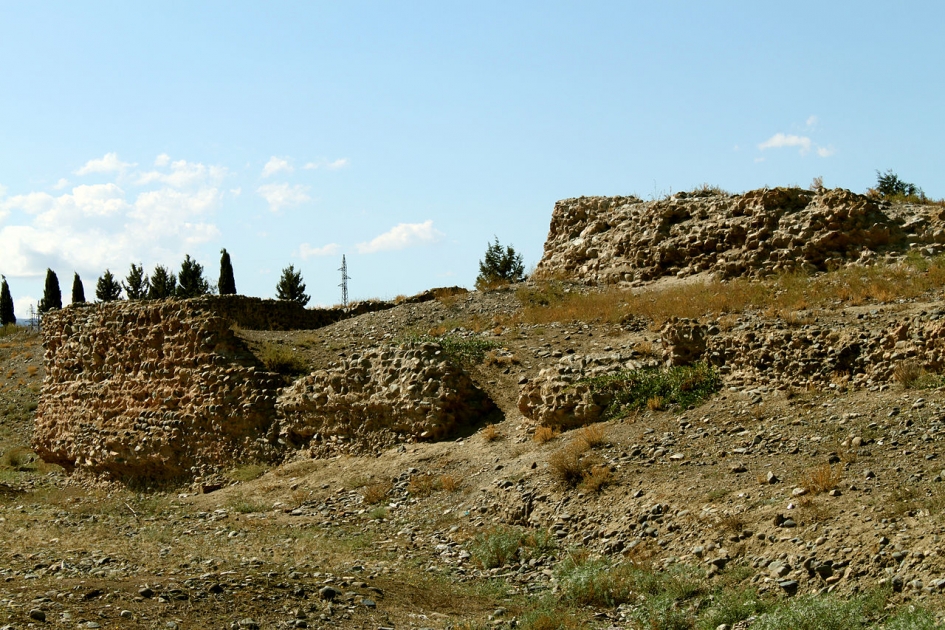
The legendary fortress of Gulustan in Shamakhi is one of the greatest monuments of Azerbaijani statehood. It received its name due to the scenic area in which it was located (“Gulistan” - means “flower garden”). Built in the VIII-IX centuries. at the top of a 200-meter rocky mountain in the north-west of Shamakhi, this powerful fortification for nine centuries served as one of the main strongholds of the Shirvanshah state. For its inaccessibility, the Gulistan fortress was popularly nicknamed the Maiden's Fortress (Gyz Galasy). During the invasions of foreign invaders, the inhabitants of Shamakhi for centuries found protection behind the walls of the fortress. Its fortifications took the blows of Arab, Seljuk, Mongol and Ottoman troops. The territory of Gulistan fortress was enclosed by powerful walls with numerous round and quadrangular towers. The winding road led from the bottom of the fortress to the citadel on the top of the mountain, girded with a solid ring of fortified walls.
In the XII-XIII centuries, the fortress was thoroughly rebuilt and strengthened. In the XIV-XV centuries. Gulustan fortress serves as one of the residences of the khans of Shirvan. During the archaeological excavations in 2011, an underground passage built during the times of the Shirvanshahs state (IX-XVI centuries) was discovered in the fortress. According to historians, this tunnel was intended to deliver sudden blows to the enemy from the rear, and also so that Shirvanshah could leave the fortress unnoticed if it was taken. Equipped with steps carved into the rock, the underground corridor led from the fortress to the bank of the Zogalavay river, which flows nearby. Also in the excavation area were found the remains of a bridge.
At the beginning of the XVI century, the Gulistan fortress was captured by the Safavid ruler Tahmasib I and destroyed. Having put an end to the existence of the state of Shirvanshahs, the Shah destroyed the symbol of independence of Shirvan - the fortress of Gulistan. Then, during the Safavid-Ottoman wars, the fortress conquered by the Ottomans was restored, and the Turkish garrison was located there.
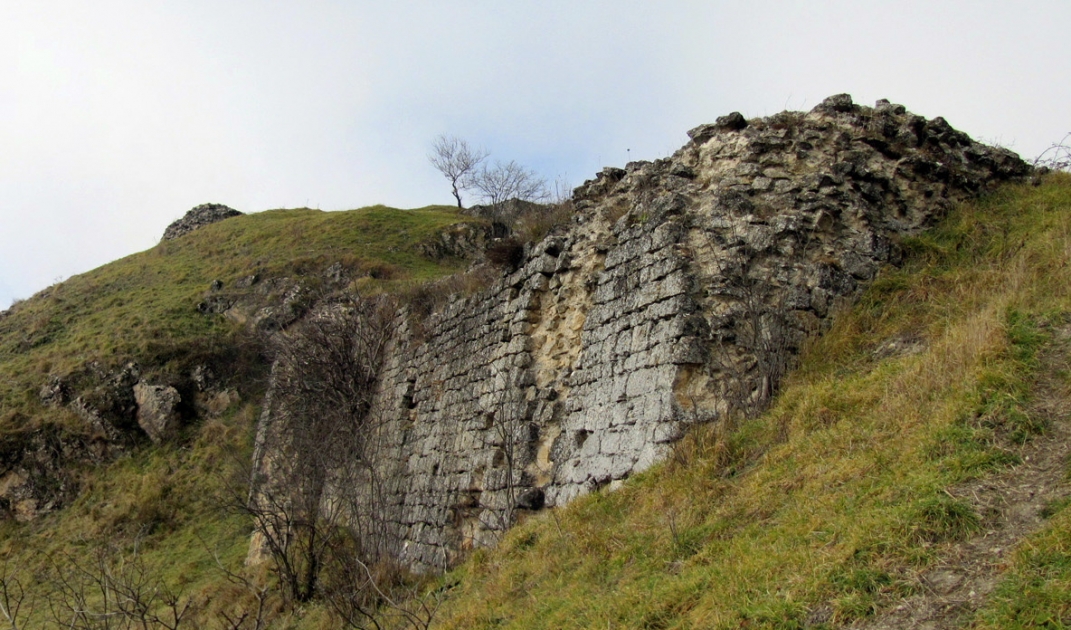
The fortress of Gulistan existed until the end of the XVI century. The structure suffered greatly not only from the wars, but also from numerous earthquakes, and only its ruins have reached us. They can be seen at the entrance to Shamakhi, as evidence of the rich historical past of the city. From the top of the hill, where the remains of the fortress are located, a breathtaking view of the city and surroundings opens up.
Alinjagala fortress
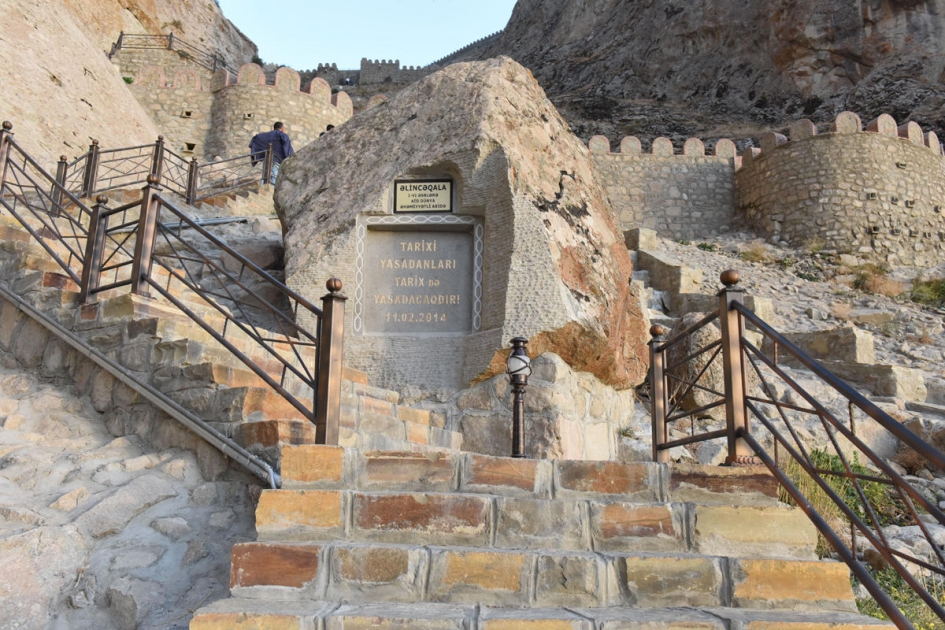
The ancient fortress city of Alinjagala, erected in a stepped form on the slope of Mount Alinja in Nakhchivan. In written sources, the oldest of which is the epic Kitabi Dede Korkud, the fortress is mentioned from the 6th century. Some researchers believe that it was built 2,000 years ago.
Once this mighty fortress was the residence of the ruler of Nakhchivani Zahida Khatun. During the reign of the Eldeniz dynasty, the treasury was kept in the fortress.
The massive walls of the citadel were built of burnt bricks and large stones. During the Atabeks state, water tanks and fortress towers were built to strengthen the defense in Alinjagala. The steep slope of the rock and the powerful walls of the fortress made it an impregnable defensive fortification for a long time. In the years 1387-1401 Alinja resisted the forces of Timur for 14 years.
Nowadays, thorough restoration works have been carried out in the fortress. During the work, the ruins of houses, samples of material culture, coins of the 7th and later centuries were discovered. The fortress was about 8 reservoirs, carved into the rocks, one of which, 5 meters deep, was restored.
Currently, the fortress of Alinjagala is open to the public. True, in order to reach it and enjoy the beautiful panorama, it is necessary to overcome two thousand steep steps.
Instead of an afterword
It is difficult for the centuries-old history of Azerbaijan, reflected in the fortifications, to be contained in one small overview. But we have not told you about the Baku fortress with the magnificent Maiden's Tower, about the most beautiful Shamkir fortress, subjected to a cruel siege by the Mongols, about the Gabala fortress, the former stronghold of the Sassanid state and Caucasian Albania. You will learn about these and other gems of the architecture of Azerbaijan from the next part of our story.
To be continued…
Emil Eyyubov
Other news in this section


