Three great fortress cities of Azerbaijan

Baku, November 22, AZERTAC
We continue the story about the most significant fortresses of Azerbaijan. In the old days, most cities in Azerbaijan tried to strengthen their possessions with powerful fortress walls, combining defensive towers into a single fortification ensemble. Some of these fortress cities have survived to the present day, others have been restored during archaeological excavations, which, however, does not detract from their historical value.
Baku fortress
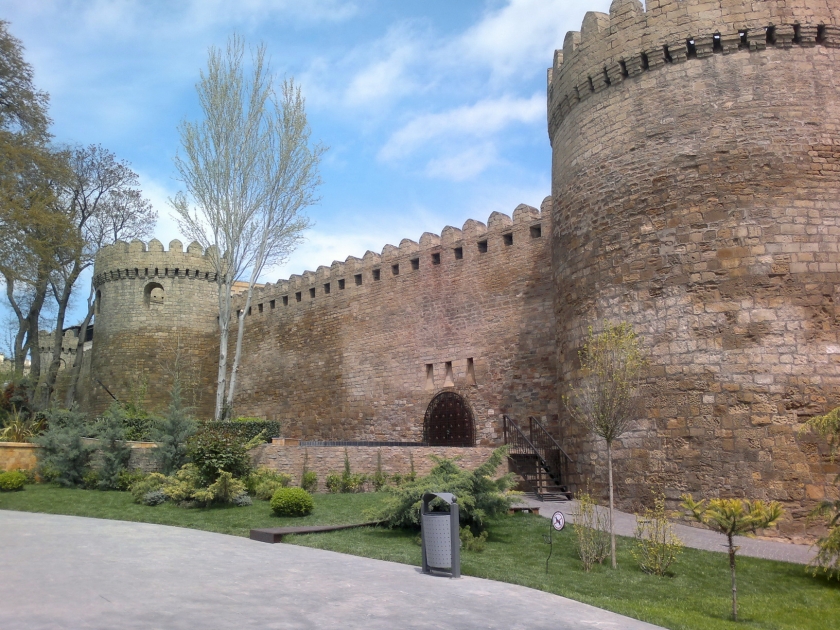
Old Baku or Icherisheher, enclosed by solid stone walls, is perhaps the most famous of the fortresses of Azerbaijan, which has been perfectly preserved to this day. It is very difficult to determine today the exact age of this fortified settlement built by our ancestors. As a result of archaeological excavations, it was established that the territory of Icherisheher was settled in the Bronze Age, and in the VIII-XI centuries, city life was in full swing, crafts and trade flourished.
One of the main entrances to the Fortress is the Paired Fortress Gate or “Gosha Gala Gapysy”, also called the Shamakhi Gate. Until the end of the 19th century, the Shamakhi gates were the only ones (they were also called the gates of Shah Abbas). After the second row of the fortress walls was torn down at the end of the 19th century, the second-row gate, called the Zulfugar Khan gate, was placed next to the Shamakhi Gate. And, thus, the concept of “Paired fortress gates” appeared.
The fortress was subjected to enemy siege many times. For example, in 1723, when a military squadron of Russian troops, consisting of 15 ships, led by Admiral Matyushkin, approached the city from the sea and demanded its surrender. In response to the rejected ultimatum, the Russian ships began to bomb the fortress. One of the shells hit the minaret of the Mosque of Muhammad here and damaged it. At the same moment, a strong gale wind rose and carried the Russian sailing ships far into the sea. The population of the city perceived it as God's punishment to foreign invaders. By the way, from then until the middle of the XIX century, the minaret of the mosque was not restored, as a symbol of fortitude and courage of the defenders of the fortress. And only in 2010, the mosque building and minaret were carefully restored.
In total, hundreds of historical monuments are concentrated on a small area of Icherisheher in 22.1 hectares, 4 of which are of global and 28 national importance. It is here, within the walls of the ancient Fortress, located the majestic and impregnable Maiden's Tower - one of the main symbols of Baku, as well as the famous Complex of the Palace of Shirvanshah, ancient mosques, caravanserais, baths.
Icherisheher is not only a monument of antiquity. On the territory of this historical and architectural reserve, surrounded by well-preserved fortified walls, 8-10 meters in height, more than 1,300 families live in old houses and many cultural institutions function. Note also that Icherisheher is included in the UNESCO World Heritage List.
Gabala fortress
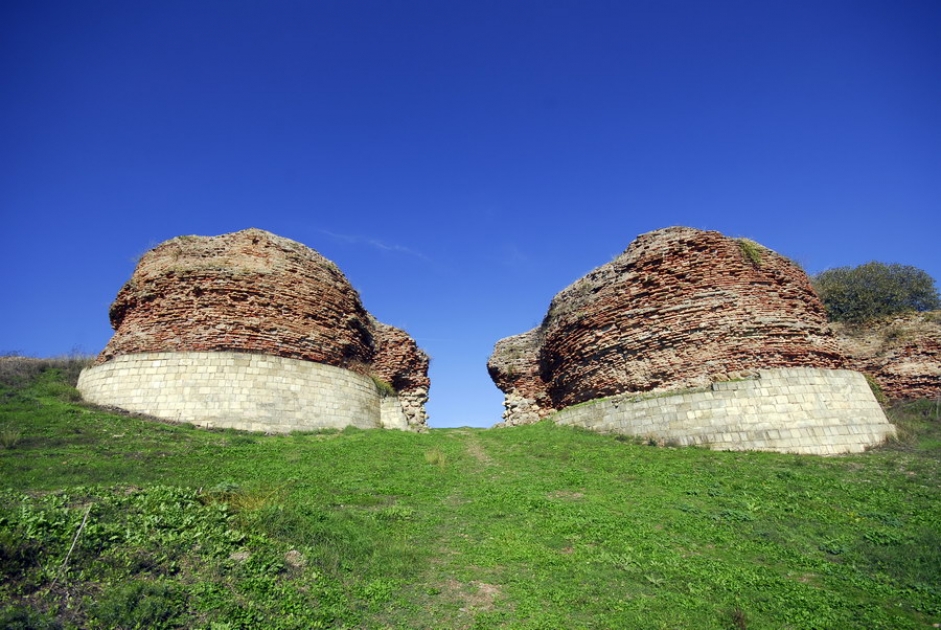
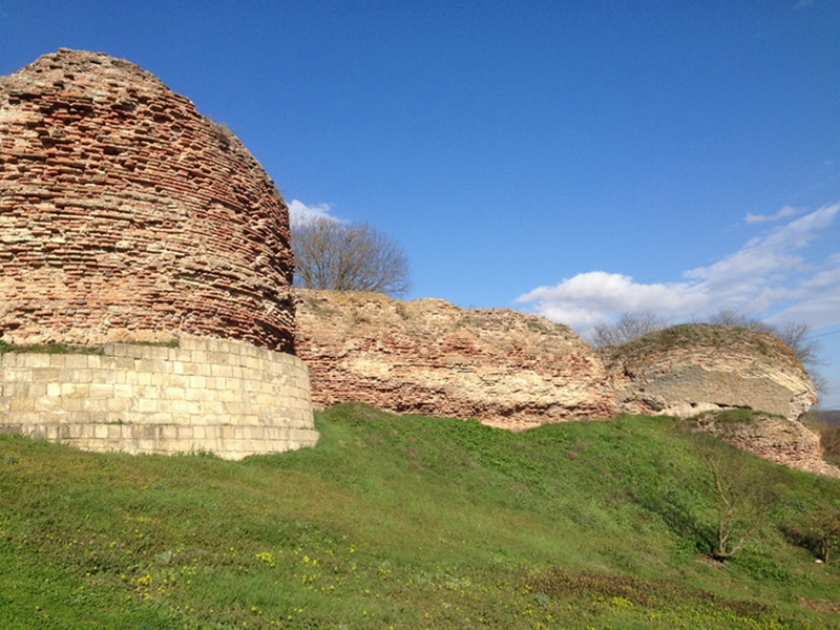
Half-destroyed, but still inspiring respect, the towers and walls of the Gabala Fortress, long ago turned into a symbol of the power of this ancient capital of Caucasian Albania.
25-30 km to the south-west from the center of modern Gabala, near the village of Chukhur Gabala on the territory of 480 hectares the State Historical and Cultural Reserve established in 1985 is now located. Archaeological excavations that have been carried out here since the 60s of the last century confirm that Gabala, starting from the 4th-3rd centuries BC, up to the 18th century was a large city with a developed infrastructure, a center for crafts and trade.
Currently, you can see the remains of the ancient settlement, located on three sites - Antique, Selbir and Gala. Let us take a closer look at the Gala urban section, separated from the north by a deep moat, and from the south by a powerful fortress wall, the construction of which dates from the period after the collapse of the Sassanian state in 461, which included Gabala for some time. These walls, designed in the architectural style of the Sassanid state, stand out among the other fortifications of Azerbaijan. Some medieval authors claim that the city was erected by Shah Gubad I of the Sassanid dynasty, but researchers are sure that the Shah only carried out reconstruction work here.
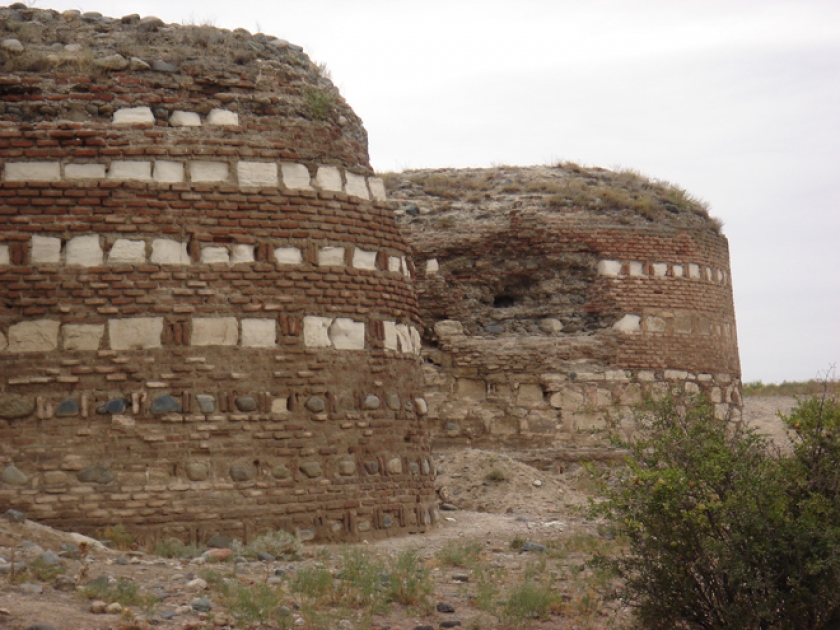
The fortress is built of raw brick and cobblestones. The diameter of the preserved tower is 3 meters. The length of the fortress is 35 meters, the wall thickness reaches 2.4 meters. The fortress has retained its original form to this day. The main gate was located on the southern wall, where there are 4 semicircular towers, the height of which reaches 10-14 meters, and diameter 6-8 meters. During archaeological excavations, jug burials and other valuable artifacts reflecting economic life, the development of crafts and trade relations of Gabala were found here.
Pottery and blacksmiths, copper and jewellery, weaving, stone-cutting, bone working, glass making, etc. flourished in the city. During the excavations, a ceramic pipe water supply system, remains of pottery kilns, industrial waste, tools, decorations, a wine cellar, household ceramics, workshops and so on were found. Many finds can be seen in the Gabala Local History Museum.
Shamkir fortress
The ancient Shamkir fortress stands out not only by the power of fortifications, but also by the extraordinary beauty of architecture, which is the pearl of the Arran school of construction.
The ancient site of Shamkir is located today on the left bank of Shamkirchay, in the north of the village of Mukhtariye of Shamkir region. The once thriving city at the beginning of the 13th century was destroyed by the Mongols. The description of the city testifies that it possessed all the features characteristic of medieval lowland cities. At that time, cities usually consisted of three topographic parts: the naryngala (citadel), shahristan (the city itself) and rabad (suburb). The shooting of the topographic plan of the ancient city makes it possible to determine the approximate quadrangular layout of the city.
Despite the fact that the history of the study of the medieval settlement of Shamkir begins in the first quarter of the 19th century, large-scale archaeological research here started only in the first decade of the 21st century. Since 2006, excavations have been carried out in the settlement, thanks to which very interesting discoveries have been made, revealing new pages in the history of Azerbaijan. The most ancient of the valuable finds belong to the period of the Iron Age. And the thickness of the cultural layer, reflecting the various aspects of the life of a medieval city, reaches 6 meters. According to the information received, in Shamkir from the VIII to the first decades of the XIII century, that is, until its destruction by the Mongols, rich urban life flowed.
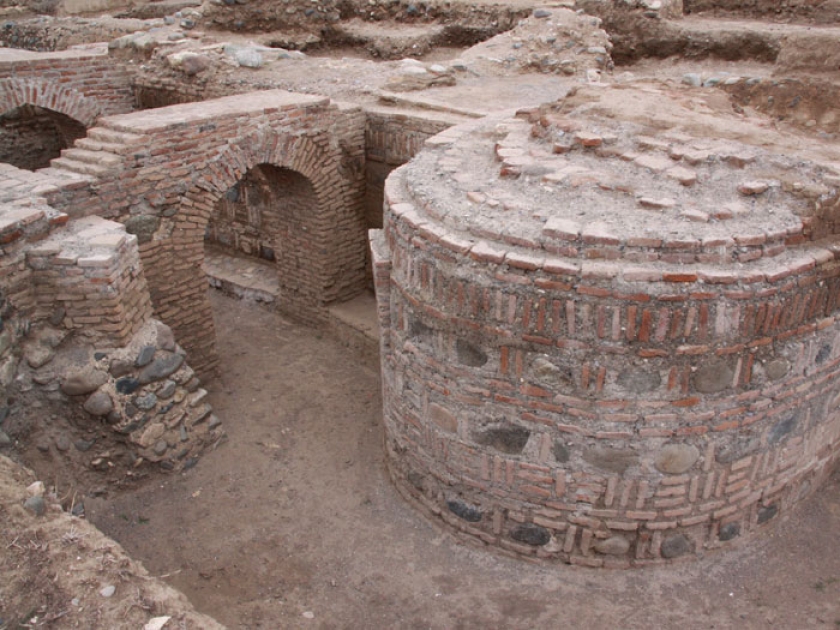
Architecture and construction have reached a high level of development in the medieval city of Shamkir. As a result of the excavations, many remains of buildings were found, including fortifications, remnants of public and residential buildings, engineering devices intended for the improvement of the city. It became clear that in the 8-10 centuries the city was defended by a fortress wall built of river stone and mud brick. In the 11th century, parallel city walls were erected. Both walls are lined with a combination of masonry, which is an alternation of rows of burnt bricks, river stones and ashlar white stone. The distance between the walls reaches 10 meters. It should be noted that the city of Shamkir was one of the centers of the Arran architectural school, for which the polychrome, combined masonry of the wall, which looks extraordinarily beautiful, was very characteristic. The length of the outer city wall is more than 80 m, with a width of 3.8 m. This wall is reinforced with semicircular monolithic towers. The parallel, inner defensive wall of the city has a length of up to 27.5 m. The gate, located on the south side, was defended by two flanking towers, the south tower was more destroyed. Both towers were lined with high skill with local white stones.
In the area between the second and third towers of the outer wall, a structure with arched openings was found. It adjoins the city wall, that is, the fortress wall makes up its western wall. The citadel of the city is located in the eastern part of the settlement, on the left bank of the Shamkirchay river. It is rectangular in plan, extending from south to north and covers an area of more than one hectare. The height of the preserved walls varies between 5.5-7.5 m, width - 3.2-4 m.
According to the head of the Shamkir archaeological expedition, Doctor of Historical Sciences Tarikh Dostiev, it can be said with confidence that the fortifications of the Shamkir citadel were one of the brightest examples of the Arran school of architecture. Medieval architects and builders combined masonry created a masterpiece of military architecture. Here very successfully used various building materials: river stone, burnt brick and white stone. This made it possible both to strengthen the walls and to make them beautiful from a purely aesthetic decorative side. The walls of the citadel, according to archeology, were built in the 11 century and repaired several times.
Today, an archaeological park is located at the excavation site.
Emil Eyyubov
Other news in this section


