WUF13 to kick off in Baku tomorrow
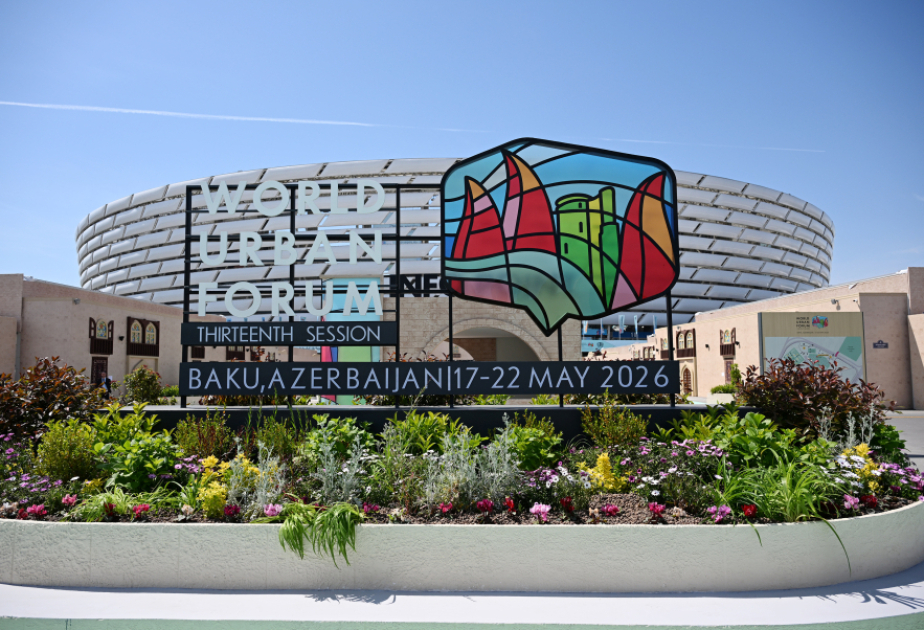
Baku, May 16, AZERTAC
Tomorrow, May 17, the 13th session of the World Urban Forum 13 (WUF13), one of the world’s most authoritative international platforms in the field of urban development, will begin in Baku. WUF13 is jointly organized by the UN-Habitat and the Government of Azerbaijan. The session, which will run through May 22, is dedicated to the theme “Housing the World: Safe and Resilient Cities and Communities.”
The forum is regarded as one of the largest international platforms addressing not only urban planning and architecture, but also global issues related to social development, economic transformation, climate change, and human well-being.
The international platform established by UN-Habitat is aimed at finding global solutions to contemporary challenges. The forum also plays an important role in shaping global urbanization policy by bringing together governments, city leaders, scholars, architects, investors, business representatives, and civil society organizations.
Hosting WUF13 in Baku is viewed as an indication of Azerbaijan’s growing role in international urbanization processes. The decision reflects the high recognition of the country’s contribution to international cooperation, its reputation as a reliable partner, and its modern urban development policy.
More than 40,000 participants from 182 countries have registered for WUF13, already setting a record in the forum’s history.
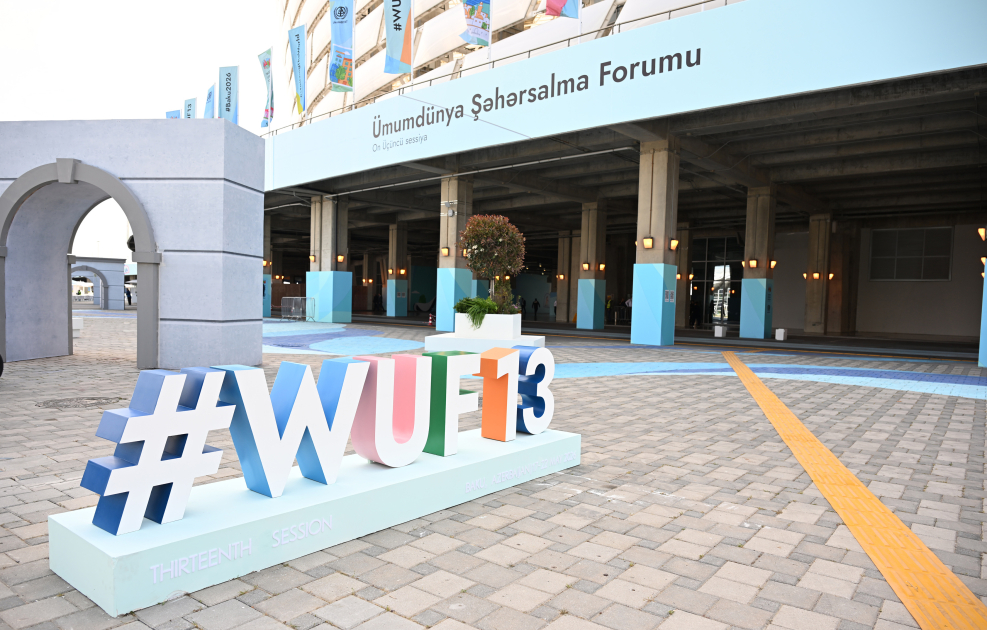
Large-scale preparations carried out at the Baku Olympic Stadium
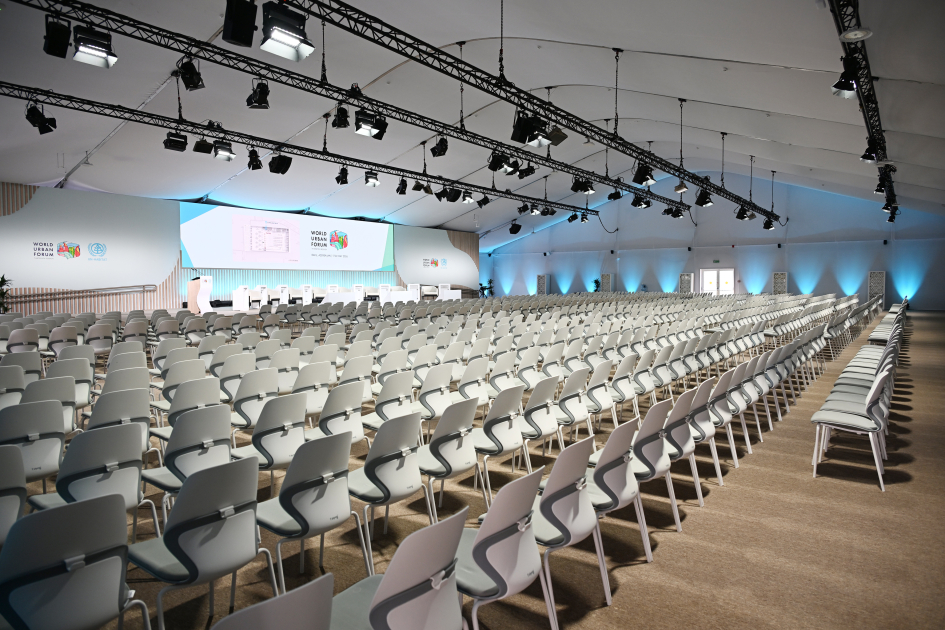
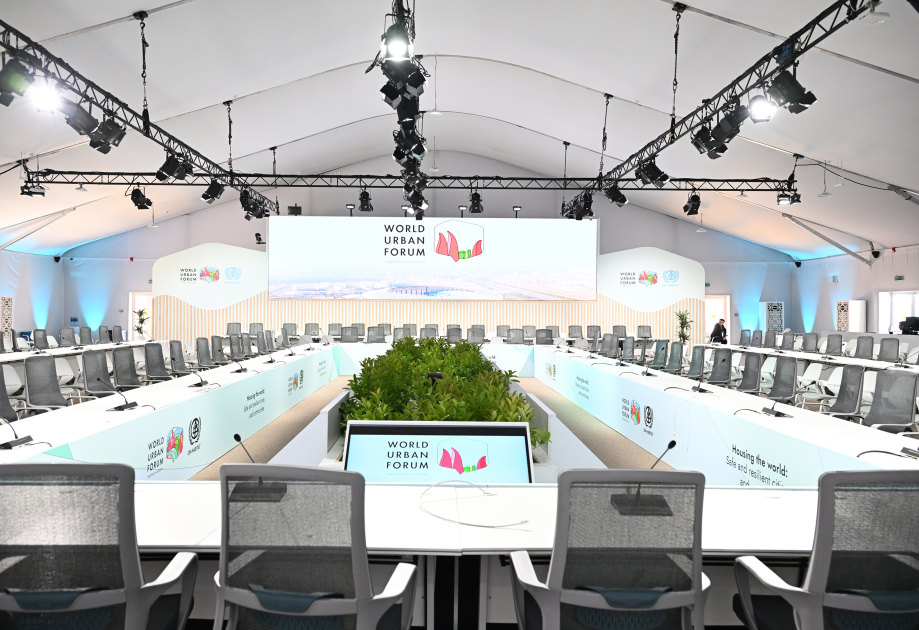
The total area allocated for the forum, including the Baku Olympic Stadium and adjacent territory, covers 53 hectares. Plenary halls, exhibition spaces, media centers, and innovation zones have been established at the venue. The hall designated for the opening and closing ceremonies can accommodate up to 6,000 participants. The current level of preparation allows for the efficient management of large guest flows, numerous parallel events, and the reception of international delegations.
The forum’s main discussion events will take place in specially equipped conference halls designated for thematic sessions, UN events, side meetings, and bilateral negotiations. Facilities have been created for the simultaneous organization of official and business meetings in various formats. Around 300 parallel sessions, meetings, and events are planned daily throughout the forum.
In addition, the venue includes a Media Center, roundtable halls, and dedicated session and dialogue spaces. The Media Center features workspaces, rooms for live broadcasts and interviews, a press conference hall, television studios, and lounge areas for media representatives.
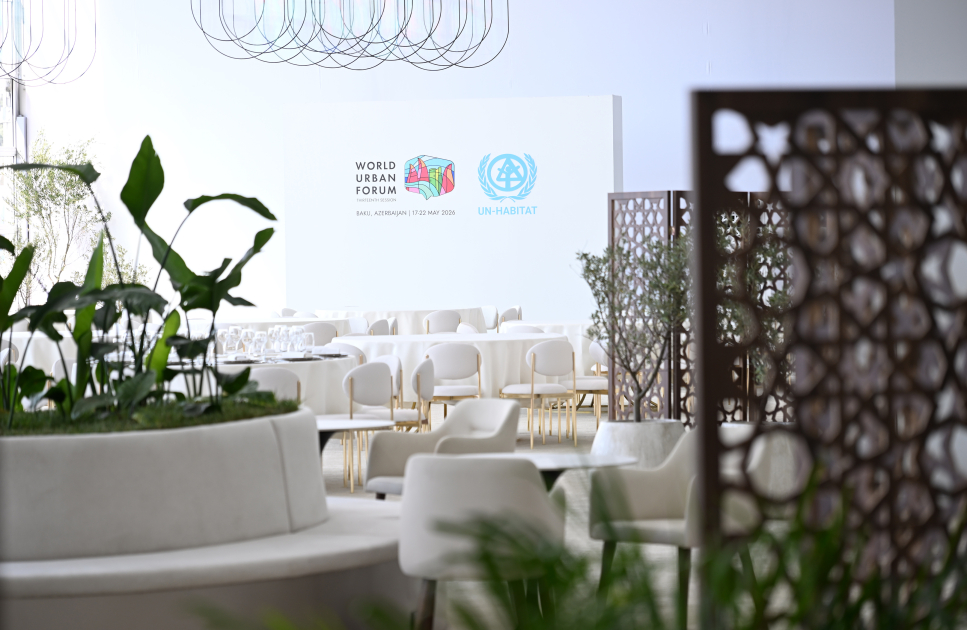
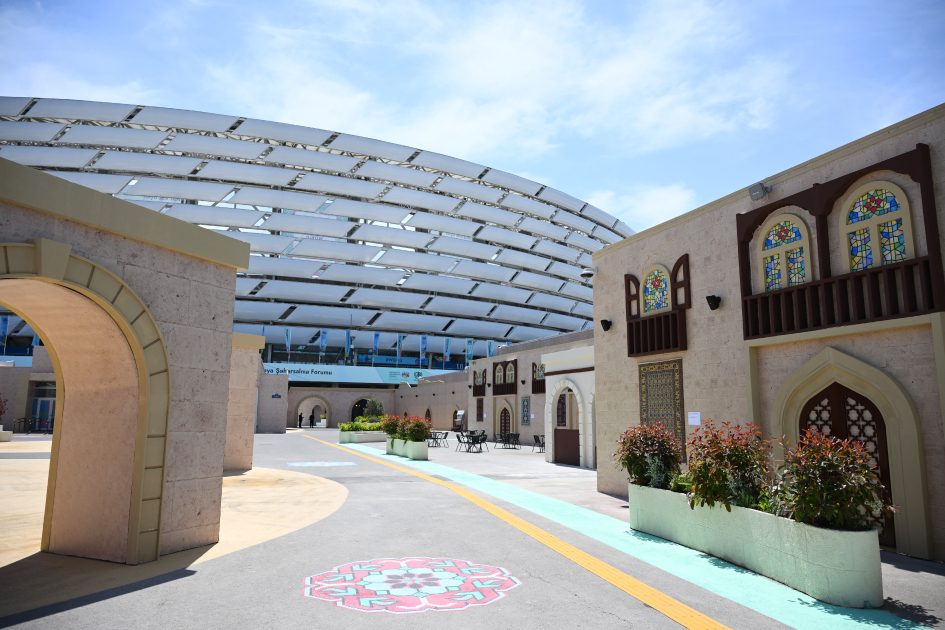
A recreation area has also been created on the site. Its visual and architectural design incorporates elements inspired by Icherisheher as well as ornaments from Azerbaijani carpet-weaving traditions.
An open WUF13 Boulevard has also been organized for forum participants. The space is designed for the free movement of guests, recreation, dining services, and creating an urban atmosphere directly within the forum grounds. The boulevard also serves as a transition zone to the Expo area and as an open public venue.
The Urban Expo zone hosts pavilions from countries, international organizations, government institutions, local and regional authorities, the private sector, non-governmental organizations, foundations, and educational and research institutions. A total of 121 pavilions have been established, including 41 national pavilions.
To ensure uninterrupted internet connectivity, broadcasting, and digital infrastructure, primary and backup data centers have been established, a large-scale fiber-optic infrastructure and internal network have been deployed, wireless communication equipment installed, and a 24-hour operations center has been organized.
Additionally, a 10-hectare area designated for a transport terminal and parking-transfer system has been integrated into the overall operational zone. Bus and taxi services, parking, and participant transportation logistics will be coordinated there.
The city’s transport hubs, electric buses, taxi services, and airport transportation services have also been integrated into the forum’s overall transportation scheme.
Housing and sustainable urban development to be key themes of the forum
WUF13 will focus primarily on global housing challenges. Limited access to safe and affordable housing for millions of people worldwide is currently regarded as one of the most serious issues of urbanization. In this regard, WUF13 places particular emphasis on housing issues, viewing them as a key element of social inclusion, economic development, and the creation of sustainable cities.
The forum will also extensively discuss the impact of climate change on cities, environmentally resilient urban infrastructure, green energy solutions, smart city technologies, and digital urban governance.
The WUF13 program has already been presented to the public. The forum will feature high-level plenary meetings, international conferences, exhibitions, business meetings, and innovation platforms.
High-level dialogues form the core of the program, shaping the direction of global discussions. These debates will explore the interconnection between housing provision, inclusivity, sustainable development, and urban systems. Each dialogue will focus on a specific key aspect of housing policy.
Special sessions will primarily address issues related to climate adaptation, housing, human settlements, urban renewal, digitalization, financing mechanisms, and inclusive urban development.
The forum assemblies will create dedicated platforms for bringing together various stakeholder groups, discussing their roles, and defining common priorities within the global urban development agenda. Participants will include representatives of local and regional authorities, public and community organizations, as well as women, youth, business and industry representatives, and parliamentarians.
In addition, for the first time, as part of WUF-13, a Business and Innovation Hub has been established. The new platform will promote innovative approaches in the fields of urbanization and housing. Companies, startups, investors, and technology sector representatives from different countries will showcase their projects and developments there.
The initiative’s main objective is to expand cooperation between the public and private sectors in urban planning, accelerate the introduction of innovative technologies, and create new financial opportunities for urban development.
WUF13 will also feature a Startup Pavilion – a dedicated international platform for young innovators and urban-tech projects. Startups from various countries will present solutions in the areas of smart cities, green energy, digital governance, and modern housing technologies.
This initiative is of major importance in promoting new ideas in urbanization at the international level and establishing connections with potential investors.
Azerbaijani model: harmony of historical heritage and modern architecture
At WUF13, Azerbaijan is presenting itself as one of the countries showcasing its own experience in modern urbanization, sustainable development, and post-conflict urban planning to the international community. In this context, the country is demonstrating its development model as an example of a comprehensive and modern approach to shaping the urban environment.
The forum is of particular significance in presenting to the international audience the large-scale urban planning and infrastructure projects implemented in Azerbaijan in recent years.
One of the key components of the Azerbaijani model is the “smart city” and “smart village” projects being implemented in Garabagh and East Zangezur. The reconstruction process in the liberated territories envisages not only the rebuilding of settlements, but also the creation of modern urban spaces using innovative technologies, environmentally sustainable infrastructure, and digital governance systems.
Particular emphasis in these projects is placed on the use of alternative energy sources, the introduction of intelligent transportation systems, digital services, and “green” architectural principles.
Another important area presented by Azerbaijan at WUF13 is its green development policy. As the host country of COP29, Azerbaijan views the preservation of ecological balance as one of the priorities of its urbanization policy.
Within the framework of the forum, special attention is being paid to reducing carbon emissions in cities, expanding green energy projects, promoting electric transportation, and creating modern environmental infrastructure. This approach is aimed at ensuring not only economically efficient but also environmentally sustainable urban development.
An important component of the Azerbaijani model is also the harmonious combination of historical heritage and modern architecture, exemplified by Baku. Alongside the ancient Icherisheher complex, the symbols of the city’s modern architectural image include the Flame Towers and the Heydar Aliyev Center.
This approach demonstrates that preserving national and cultural heritage and developing modern urbanism can successfully complement one another, creating a harmonious urban development model.
Excursion tours organized for WUF13 participants are intended to visually demonstrate concepts such as urban planning, cultural heritage, and regional development within real urban and social environments. In this regard, the excursion program serves as a practical continuation of the forum’s theoretical discussions, giving participants the opportunity to familiarize themselves with concrete examples on site.
Alongside Baku and Absheron, the program also includes such regions as Guba, Shamakhi, Shaki, Gabala, and Lankaran. Their selection is linked both to their rich historical and cultural heritage and to their socio-economic potential.
This approach forms part of Azerbaijan’s strategy for presenting itself on the international stage and is intended to showcase the country’s unique character, combining modern urbanism, historical heritage, and regional development.
Within the forum, special attention will also be devoted to inclusivity issues. As one of the key areas of Azerbaijan’s urban policy, the country is presenting the adaptation of urban infrastructure for persons with disabilities, the expansion of accessible public transportation, and the development of digital services designed for all users without exception. This approach reflects the aspiration to transform cities into safe and comfortable spaces for all social groups.
Thus, at WUF13, the Azerbaijani model is presented as a comprehensive concept of urban development that combines modern technologies, a green development strategy, post-conflict reconstruction experience, and the principles of inclusive urban planning.
Other news in this section


