Azerbaijani Parliament comments on European Parliament resolution
Baku, October 8, AZERTAC
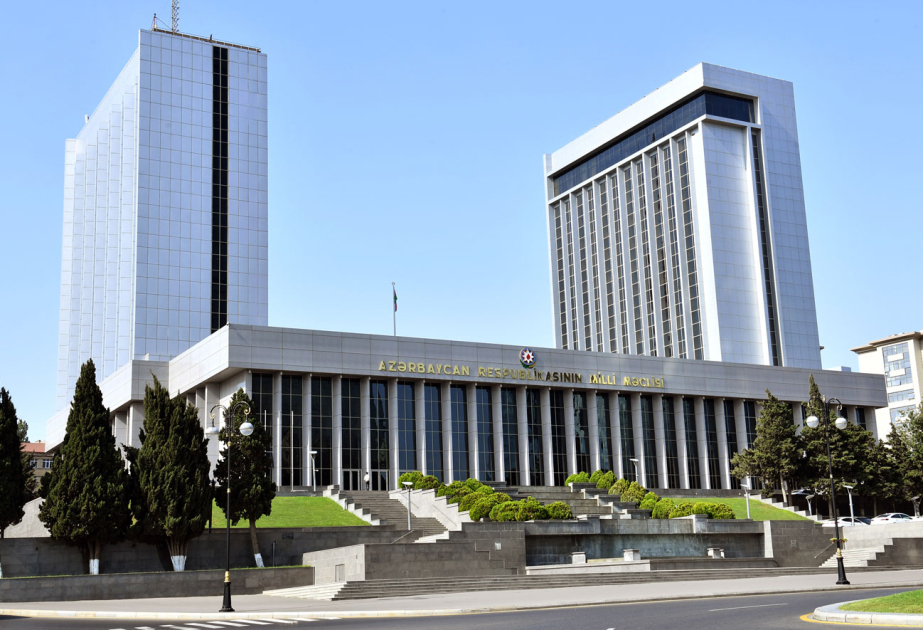
The Milli Majlis considers the European Parliament’s adoption on October 8, 2026, of a resolution on human rights and freedoms in Azerbaijan that is far from objective to be a biased political action against Azerbaijan and categorically rejects the unfounded accusations based on false and fabricated information, Milli Majlis of Azerbaijan said in response to the European Parliament’s resolution dated October 8, 2026.
It was noted that the European Parliament’s targeted policy toward Azerbaijan has taken on an increasingly confrontational character since the Second Garabagh War. Numerous resolutions adopted by the organization in recent years, its attempts to exert political pressure on Azerbaijan, and its calls for sanctions should be regarded as the European Parliament’s failure to recognize the new geopolitical realities that emerged in the South Caucasus following Azerbaijan’s historic victory.
On the other hand, it is surprising that the European Parliament continues its attempts to act as a supranational authority entitled to determine the powers of state bodies of a sovereign country, issue instructions to its law enforcement and judicial institutions, and set political conditions for bilateral relations. Such conduct seriously calls into question the objectivity of the European Parliament’s approaches and demonstrates that it is not prepared to build relations with Azerbaijan based on the principles of equal rights, mutual respect, and non-interference in internal affairs.
All of this demonstrates that Azerbaijanophobic, Turcophobic, and Islamophobic sentiments prevail within the organization. The fact that a number of members of the European Parliament represent the interests of lobbying groups rather than those of European voters is indicative of their racist and chauvinistic stance. The authors of the resolution are even prepared to jeopardize the European Union’s policy in the South Caucasus in pursuit of their unscrupulous political objectives. The situation within the European Parliament itself also raises serious questions. High-profile corruption investigations in recent years, including investigations into the bribery of members of the European Parliament and unlawful interference in political decision-making, have raised questions concerning the organization’s political reputation and undermined confidence in established parliamentary procedures. In this regard, a legitimate question arises: how convincing can the political and moral accusations and admonitions of an institution that itself faces serious challenges regarding transparency, integrity, and independence in decision-making be? Before making unequivocal demands of other states, the European Parliament should demonstrate consistency in applying its own standards and establish reliable safeguards against corruption and the unlawful influence of lobbying.
The European Parliament’s discriminatory approach to human rights issues also raises serious questions. At a time when resolutions are being adopted on Azerbaijan, unequivocal demands are being made, and calls are being issued for the imposition of sanctions, numerous problems persist in European countries themselves, including the excessive use of force by law enforcement agencies, restrictions on freedom of peaceful assembly, and a lack of accountability for human rights violations.
The scale of these problems is also confirmed by reports from international human rights organizations. In particular, cases of excessive use of force by police during demonstrations in a number of European countries have been documented. The Milli Majlis believes that the European Parliament should pay greater attention to problems concerning the protection of fundamental rights and freedoms in EU member states, including police violence, respect for freedom of peaceful assembly, and accountability for unlawful actions by public officials. The universality of human rights standards requires, first and foremost, their consistent and impartial application, without political selectivity or double standards. Another matter of concern is that the European Parliament’s aforementioned resolution was adopted at a time when the peace agenda between Azerbaijan and Armenia is being advanced, under circumstances in which political responsibility and support for constructive dialogue are particularly important. It is clear that such unilateral initiatives and misguided assessments make it more difficult to build an atmosphere of mutual trust and create additional obstacles to the normalization of interstate relations.
While Azerbaijan and Armenia are making efforts to resolve their decades-long conflict, it is concerning that disruptive elements representing certain political forces in the European Parliament are again attempting to create political and military tensions. Genuine support for the process of establishing regional stability and sustainable peace requires respect for the sovereignty and territorial integrity of countries, support for direct dialogue, and refraining from actions that could deepen mutual distrust.
The contradiction between the European Parliament’s call to restore cooperation with the Milli Majlis and its practice of adopting documents that cause serious parliamentary disagreements should also be noted separately. Restoring trust requires not declarative calls, but a genuine change in approaches, an end to confrontational rhetoric, and recognition of the equality of the two parliaments in their interactions.
As for the unfounded claims contained in the resolution, Azerbaijan has always remained committed to protecting human rights and fundamental freedoms, ensuring the rule of law, and consistently implementing the principles of a state governed by the rule of law. The establishment and free functioning of democratic institutions in the country, the creation of key elements of civil society, and other factors demonstrate the Azerbaijani state’s determination and resolve to advance along the path of democratic development.
It is also regrettable that the European Parliament, which levels unfounded accusations against Azerbaijan concerning the protection of human rights and freedoms, has consistently preferred to remain silent about the rights of more than one million Azerbaijani refugees and internally displaced persons who were subjected to ethnic cleansing and acts of genocide and expelled from their homes, thereby being deprived of all their rights and freedoms during the Armenian occupation of Azerbaijani territories.
Another aspect of the matter is that it is unclear on what grounds persons convicted by courts for committing specific criminal acts are referred to as “political prisoners,” or why there are demands for the unconditional release of persons charged under relevant provisions of criminal legislation based on reasonable suspicion that they have committed such acts. No individual or organization has the right to claim that a person’s status or position in society grants them immunity from criminal prosecution.
The European Parliament should consider not only the political consequences of the decisions it adopts, but also its responsibility to the millions of citizens of European countries who have placed their trust in it. Citizens of European states are justified in expecting their elected representatives to uphold objectivity, principled conduct, and a commitment to democratic values, rather than pursue initiatives driven by biased political considerations.
The Milli Majlis calls on the European Parliament to abandon its confrontational rhetoric toward Azerbaijan and refrain from interfering in the internal affairs of Azerbaijan. At the same time, it reaffirms that no force can divert Azerbaijan from its path of democratic development.
Other news in this section


