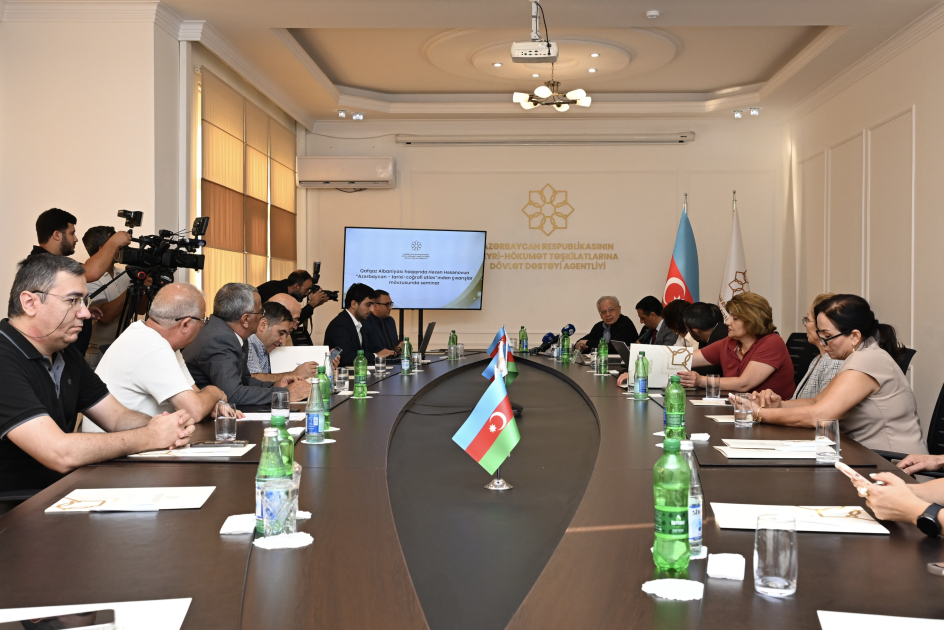
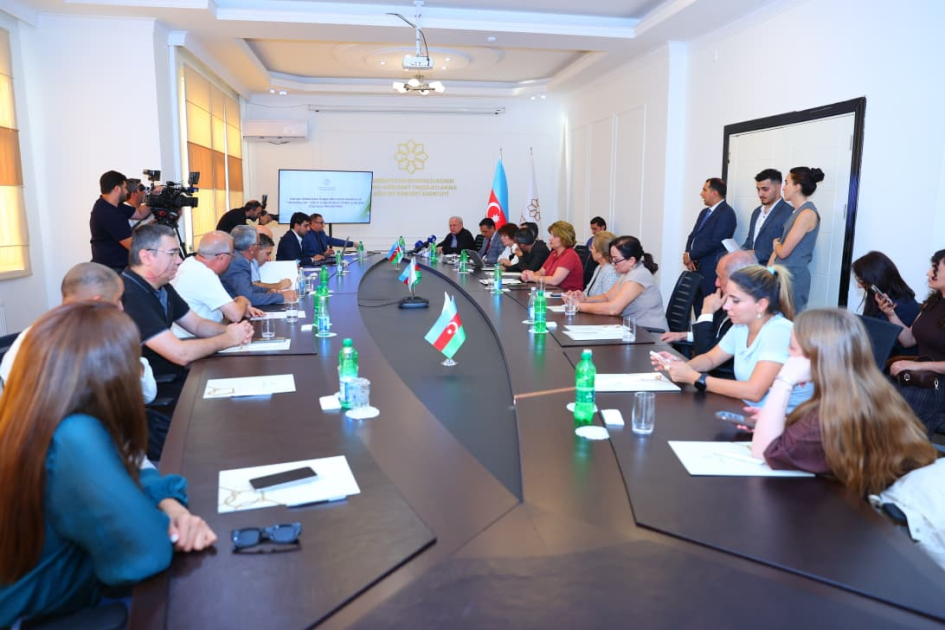
Seminar on historical-geographical atlas of Caucasian Albania held in Baku




Baku, September 18, AZERTAC
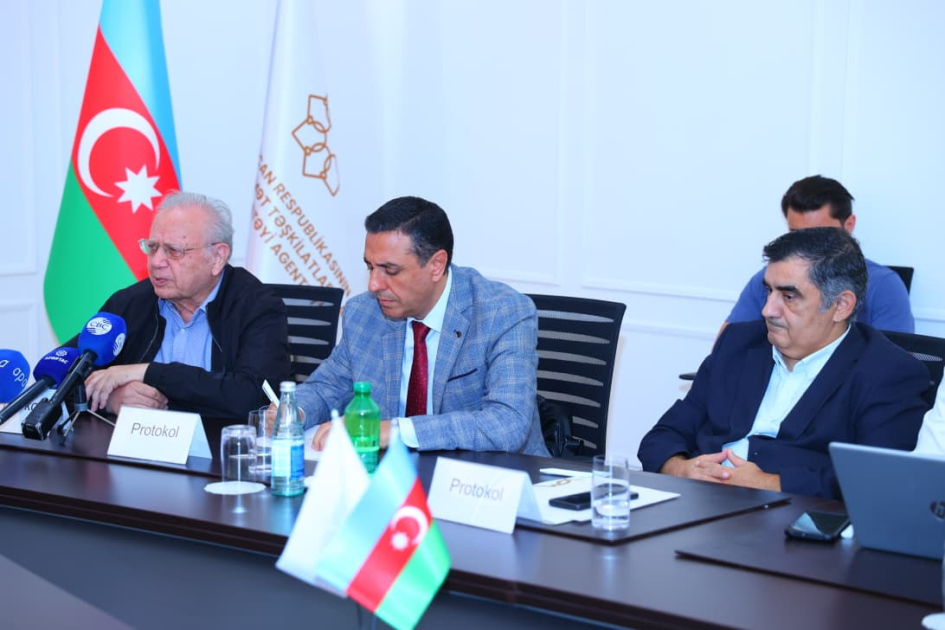
Hasan Hasanov, a member of the Council of Elders of the Organization of Turkic States (OTS) and a prominent public and political figure, shared his insights on the historical geography, religious beliefs, and ancient statehood history of Caucasian Albania during a seminar on extracts from his "Azerbaijan – Historical-Geographical Atlas by Hasan Hasanov on Caucasian Albania."
Speaking at the event held on September 18, Hasanov referenced ancient sources, including the works of Movses Khorenatsi, considered one of the key historical figures in Armenian historiography, to state that the southern border of Caucasian Albania extended to the Aras River. The historian also noted that on the eve of the Arab conquest, Albania was not an entirely Christian state: " Moisey Kalankatli writes about the presence of Tengriism among Turks in Albania, and during this period, religious beliefs such as Christianity, Tengriism, and Judaism coexisted in the region."
In his address, Hasanov touched upon historical accounts regarding the formation of Atropatene as well. He mentioned that records from certain ancient authors provide grounds to suggest that Atropatene was established following the fall of the Assyrian Empire in 612 BC.
The seminar featured discussions on maps and source materials presented regarding the history and geography of Caucasian Albania.
Other news in this section


