® Local expertise as a driver of Azerbaijan’s investment attractiveness
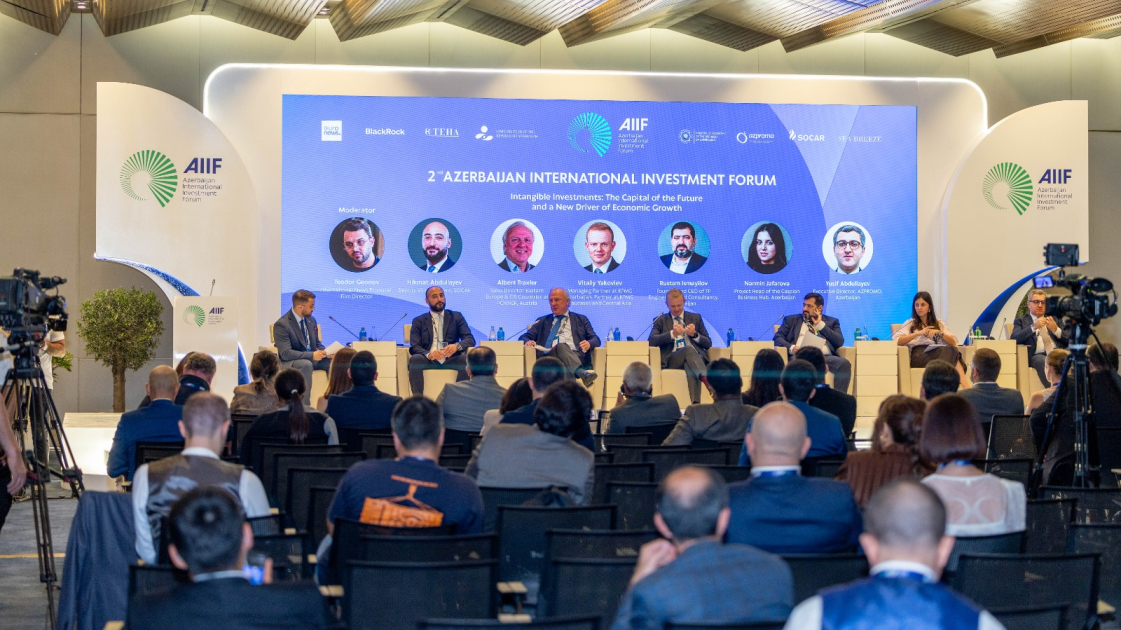
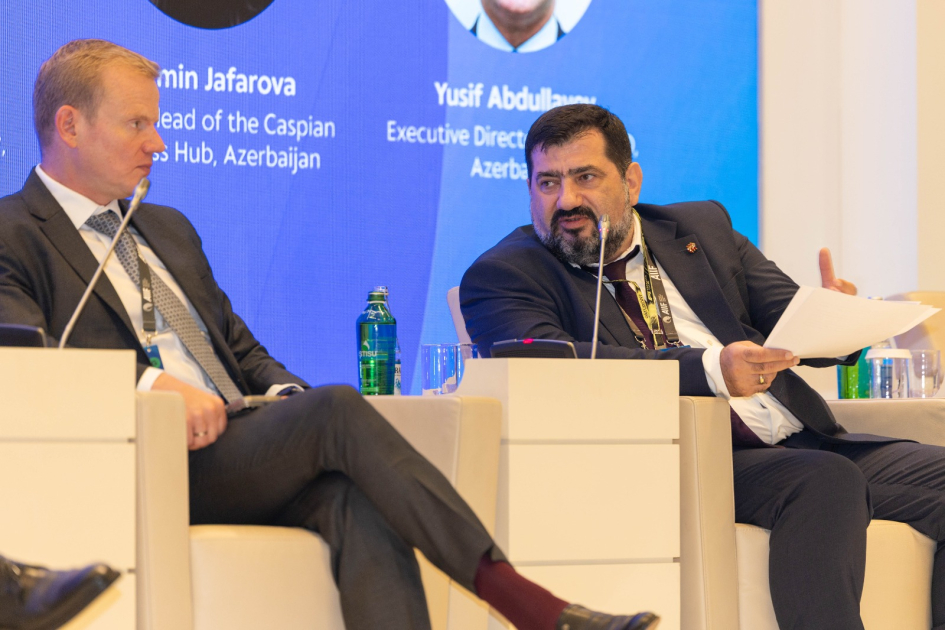
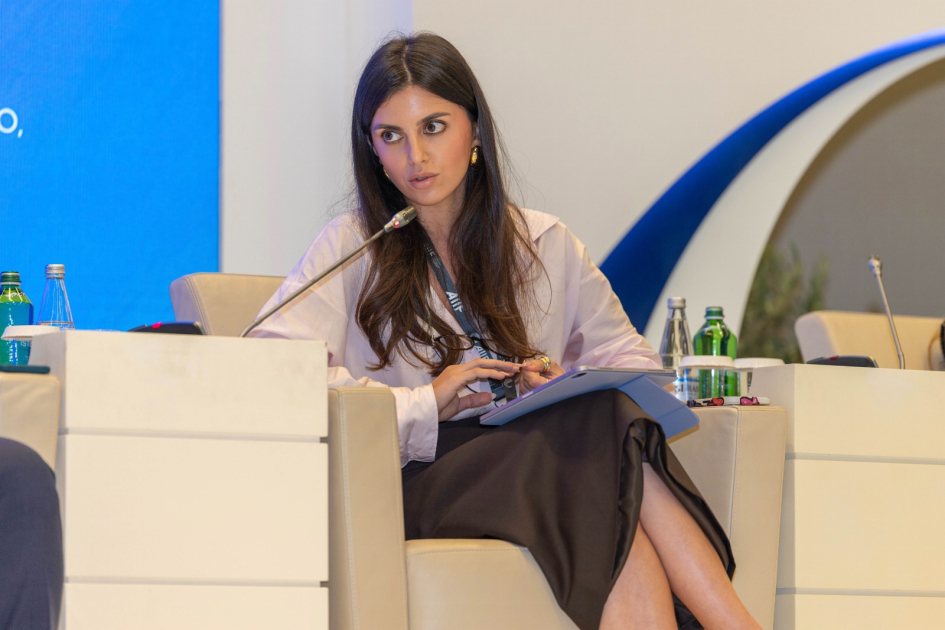
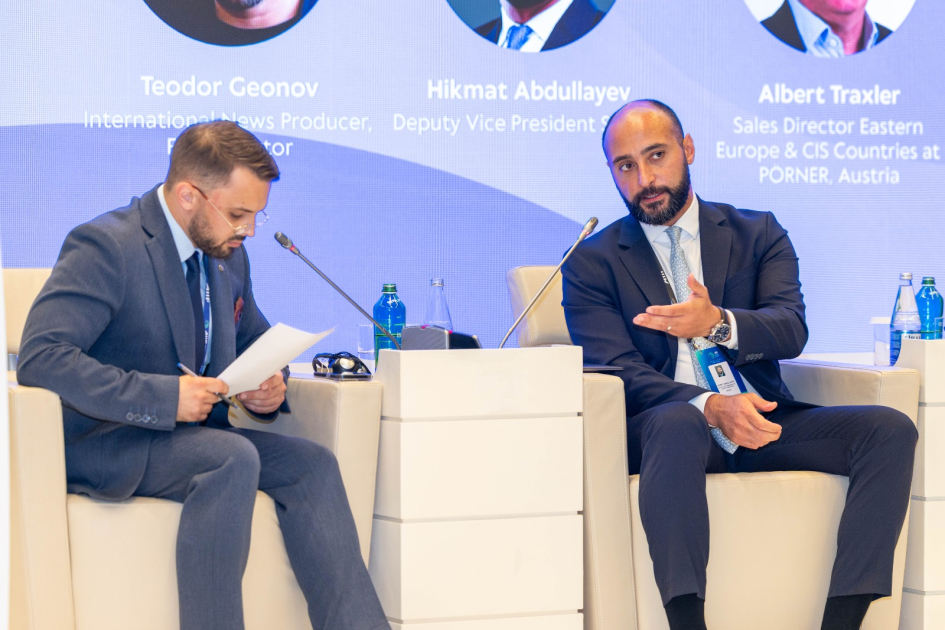
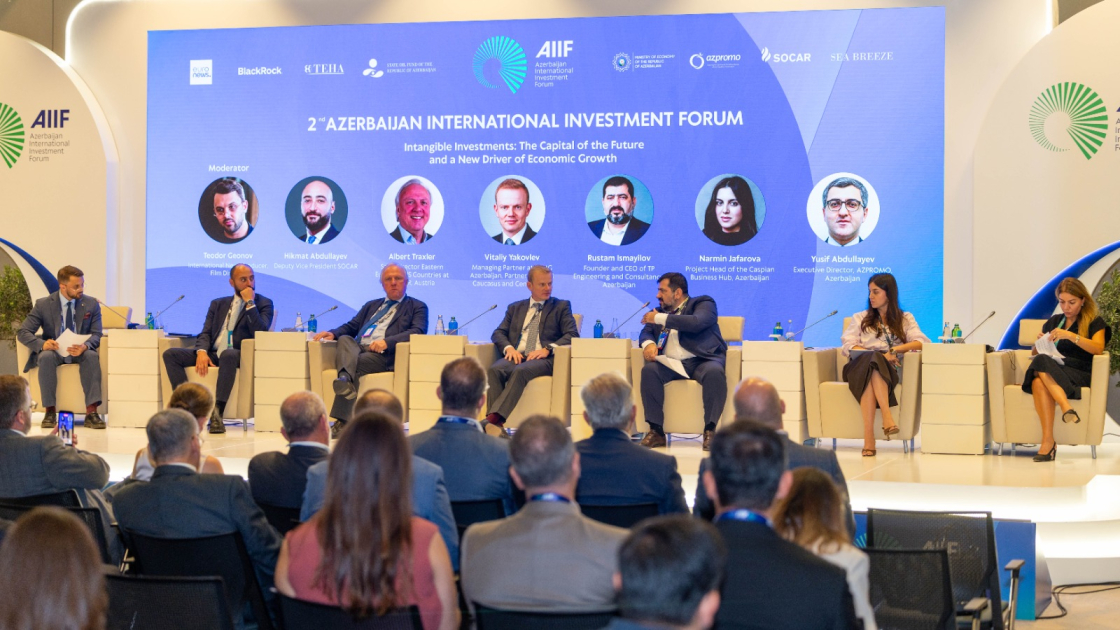
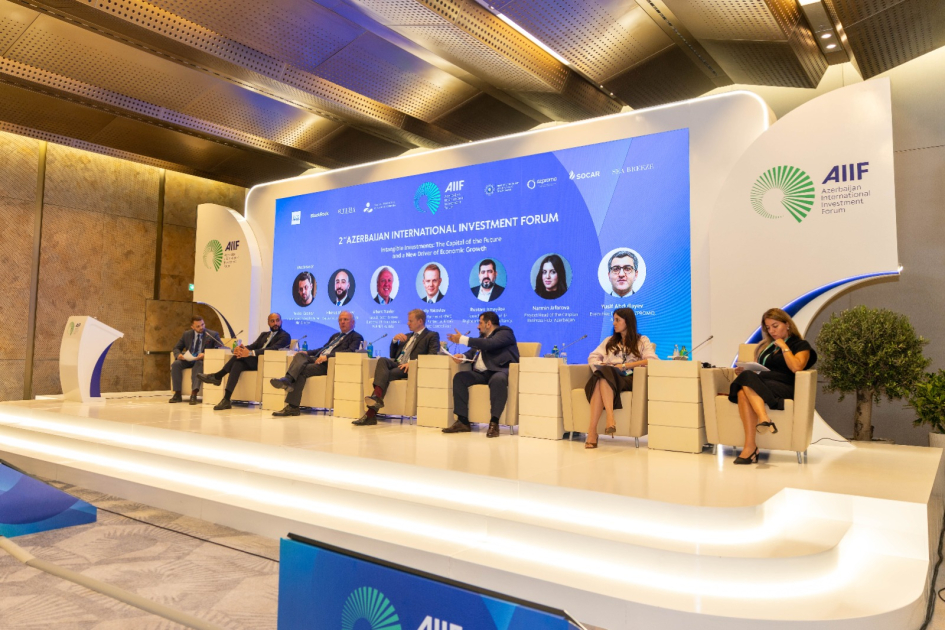
A panel discussion titled “Intangible Capital as a Driver of Foreign Direct Investment: Local Expertise – the New Currency of Emerging Markets” was held in Baku as part of the 2nd Azerbaijan International Investment Forum.
The event brought together Hikmat Abdullayev, Deputy Vice President for Energy Transition, Environment and Decarbonization at SOCAR; Sevil Yahyayeva, Advisor to the Executive Director of the Azerbaijan Export and Investment Promotion Agency - AZPROMO; Rustam Ismayilov, Executive Director of engineering company tpe; Albert Traxler, Director of Sales for Eastern Europe and the CIS at PÖRNER; Vitaly Yakovlev, Managing Partner at KPMG Azerbaijan and Partner and Head of Infrastructure for the Caucasus and Central Asia at KPMG; and Narmin Jafarova, Head of Caspian Business Hub.
The panel addressed one of the key issues facing Azerbaijan’s economic development: how to transform foreign investment from a source of financing for individual projects into a tool for building local capabilities, industrial cooperation and new export opportunities.
According to the experts, what matters is not only the volume of capital attracted, but also its ability to generate a lasting investment impact. This includes the transfer of technology, development of engineering capabilities, creation of local supply chains, adoption of international standards and the emergence of new export opportunities.
For decades, Azerbaijan has remained an important destination for foreign investment, particularly in the energy sector. The “Contract of the Century,” signed in 1994, helped integrate the country into the global energy system. However, outside the oil and gas industry, this flow of capital has not resulted in the creation of local expertise on a comparable scale.
Participants in the discussion agreed that Azerbaijan faces the task of creating conditions in which an investment project becomes the starting point for building a new value chain within the domestic economy.
Against the backdrop of the development of the Middle Corridor, linking Central Asia, the Caspian region, Azerbaijan, Georgia, Türkiye and Europe, new opportunities are emerging for industrial cooperation, logistics, manufacturing and exports. However, participants noted that transit potential alone does not guarantee the creation of industrial added value. The key is the ability to turn investment into long-term capabilities and local production chains.
Come for the Project – Stay for the Ecosystem
Particular attention during the session was given to the role of national companies and the state in creating an ecosystem for investors. The discussion focused, in particular, on the role of major clients in generating demand for technology, developing local suppliers and creating conditions for training national specialists.
According to Hikmat Abdullayev, Deputy Vice President for Energy Transition, Environment and Decarbonization at SOCAR, international partnerships should ensure that technologies and expertise remain in the country.
SOCAR is currently developing international cooperation in the areas of methane emissions measurement and reduction, as well as environmental rehabilitation in the Caspian region. The company’s key principle is to engage international partners not only to implement individual projects, but also to transfer methodologies, technologies and expertise to Azerbaijani specialists.
“We do not need a partner that simply comes in and does the job for us. We need a partner that does it together with us once, so that the second time we can do it ourselves. Methodology, technology and expertise must remain in the country. Then each such project becomes not a one-off service, but a long-term technological asset for Azerbaijan,” Hikmat Abdullayev said.
Albert Traxler, Director of Sales for Eastern Europe and the CIS at PÖRNER, who has worked in Azerbaijan for more than 30 years, offered a practical perspective on the localization of expertise.
In his view, the benefits do not arise simply from the presence of a foreign company in the country. They emerge when local businesses become part of its actual production chain and are exposed to higher requirements in terms of quality, deadlines, engineering discipline and management. This, in turn, forces them to grow alongside the demand.
“If we look at our project with SOCAR solely through the cost of the equipment, we see only part of the investment. PÖRNER’s actual offering included licensing, pilot testing, engineering, procurement and delivery of key equipment, construction supervision, commissioning support, staff training and technical documentation. You can see the plant. You can put the equipment on the balance sheet. But a significant part of the long-term value of an industrial project is invisible: it is the technology, engineering solutions, standards, processes, diagnostic practices and, most importantly, the people who, after the project is completed, know how to work with all of this,” Traxler said in his remarks.
This approach makes it possible to view investment not only as the transfer of physical assets, but also as a mechanism for developing local engineering and technological capabilities.
Rustam Ismayilov, Executive Director of engineering company tpe, which has 30 years of experience in the design and construction of industrial facilities, drew participants’ attention to the fact that a strong economy begins where each successive project builds on the experience of the previous one.
When a project leaves behind people, methods, processes and a professional culture that enable the next project to be delivered faster and more effectively, it creates value that extends well beyond the project itself.
“It is very important that this new knowledge is not personal, but systemic. In any project, there is a risk that new skills and competencies become concentrated among a few highly capable specialists. As long as they remain, everything works perfectly. But once they leave, the system can return to its original state. True knowledge and capability transfer therefore occurs not when employees complete a training course, but when a team is able to make the right decisions independently, long after the external expert is no longer there. For me, this is perhaps the best example of what we call intangible capital today: the accumulated ability to solve more complex problems than we were able to solve yesterday,” Ismayilov said.
The head of tpe also noted that despite modern digital systems, technological solutions and international standards, experience continues to play a critical role. However, experience should not replace what came before; it should build on and complement it, transforming into accumulated capabilities.
The relevance of this approach is underscored by statistics. According to the World Economic Forum, 63% of employers identify skills shortages as the biggest barrier to business transformation, while employers expect approximately 39% of workers’ key skills to change by 2030.
The Quality of Foreign Direct Investment
The AZPROMO representative and other participants in the discussion also examined changing approaches to attracting foreign direct investment.
Industrial parks, infrastructure, and tax and customs incentives create the basic conditions for international businesses to enter the market. However, the challenge is to improve the quality of investment and its ability to generate long-term economic effects.
"The modern approach to assessing foreign direct investment is not limited to the volume of capital alone. It also takes into account long-term effects, including technology transfer, the adoption of advanced management practices, and the integration of local companies into global value chains. We want foreign companies to choose Azerbaijan not only as a convenient location for setting up a production facility, but also as a strategic hub for managing and developing their regional operations," said Sevil Yahyayeva, Advisor to the Executive Director of AZPROMO.
Thus, competition among investment destinations is increasingly determined not only by the cost of resources or the availability of infrastructure, but also by the quality of the local business environment.
Moving Toward a Regional Investment Platform
Participants in the panel noted that Azerbaijan is reshaping its investment agenda. Instead of focusing narrowly on attracting foreign direct investment, greater emphasis is being placed on building a regional development ecosystem.
This involves combining capital, technology and local expertise, with skilled personnel, international standards, business infrastructure, the ability to scale beyond the domestic market and access to local markets emerging as key components. Significant progress is evident across these areas, participants noted.
According to Vitaly Yakovlev, Managing Partner at KPMG Azerbaijan and Partner and Head of Infrastructure for the Caucasus and Central Asia at KPMG, at the level of individual transactions and joint projects, the issue of value creation is equally important.
He argued that value should be assessed separately, collectively and under different scenarios, recognizing not only tangible assets but also intangible know-how and the economic effects generated by combining the two.
“There are a number of flexible instruments available for structuring such projects, including earn-outs, options and other mechanisms. Valuation disputes can drag on for years and derail transactions, but with the right support during negotiations, they can be resolved within a few months,” Yakovlev said.
He also added that, for investors, having stable and clear rules in the areas of customs and migration regulation, currency regulation, capital movement, and arbitration matter far more than tax incentives. According to opinion of Vitaly Yakovlev, a sustained dialogue between investors and Azerbaijan's regulatory authorities plays an important role.
The investment focus is therefore increasingly complemented by the quality of transaction structuring, from the broader ecosystem to specific valuation mechanisms and the negotiation process.
A Single Project Coordination Hub
One of the key conclusions of the panel was that a single investment project is not sufficient to localize international expertise.
Narmin Jafarova, Head of Caspian Business Hub, presented a potential solution based on reducing the transaction costs of industrial cooperation and bringing together fragmented capabilities around complex projects.
In her view, one of the Caspian region’s major shortcomings is the lack of an ability to quickly bring all relevant stakeholders together into a functioning project. This is where the economic role of Caspian Business Hub comes into play as a single coordination center capable of understanding the interests and logic of each party and helping assemble the right configuration of participants around a specific investment opportunity.
Modern cross-border projects are clearly no longer two-party transactions. Technology, equipment, financing and labor come from different countries, while the interests of the participants often diverge.
Caspian Business Hub proposes an Industrial Agile project-management architecture based on the parallel involvement of critical capabilities at an early stage.
“One of the global goals we have set for ourselves is not to increase the number of resident companies, but to create an infrastructure for cooperation. We want trust to move from the personal level to the institutional level. We want to reduce coordination costs to the point where it becomes more advantageous for companies to implement complex cross-border projects together than to try to do so individually. That is when Caspian Business Hub can become not simply a business platform, but part of a new investment infrastructure for the Caspian region,” Jafarova said.
The discussion demonstrated that the modern investment agenda is gradually shifting from the question of “how much capital has been attracted” to “what long-term value that capital creates within the country.”
Under this model, local knowledge, engineering capabilities, technological expertise, trust and the ability to bring stakeholders together around complex projects become resources no less important than financial capital.
For emerging markets, the ability to transform knowledge and international capital into sustainable local capabilities may become one of the key factors shaping the next stage of industrial development.
Other news in this section


