Ibrahimaj: Albania aims for €8.5 billion in tourism revenue by 2030
Baku, October 2, AZERTAC
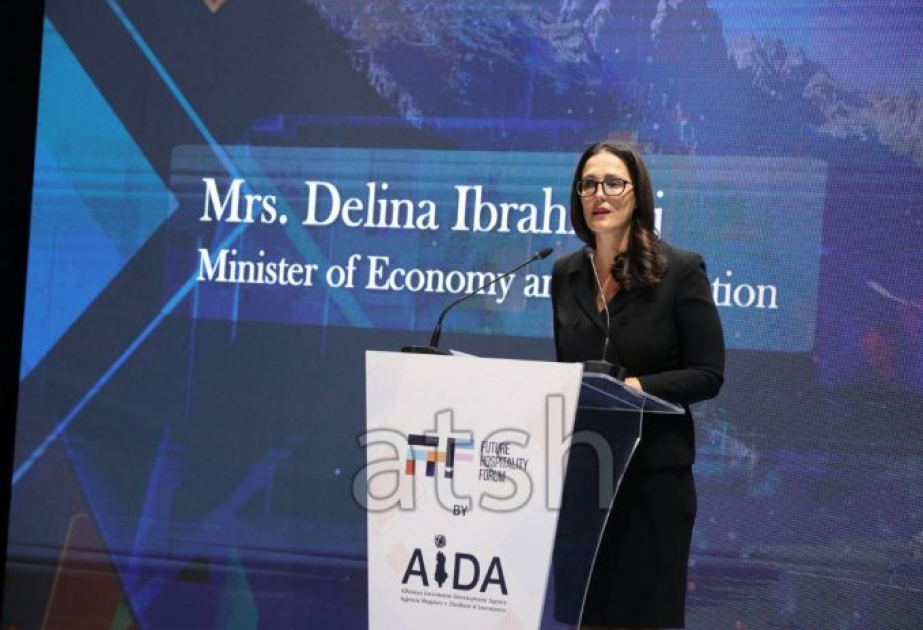
Minister of Economy and Innovation Delina Ibrahimaj said today that the next phase of Albania’s tourism development should focus not only on increasing visitor numbers, but also on generating greater value from each visit and extending the tourism season, according to the Albanian Telegraphic Agency (ATA).
Speaking at the “Future Hospitality Forum 2026”, held today in Tirana with the participation of Prime Minister Edi Rama, investors, developers and representatives of international hospitality brands, Ibrahimaj said that “Albanian tourism continues to be a success story, while international demand is now well established, creating new opportunities for investment.”
“Just three years ago, revenue from international tourists stood at €2.8 billion. In just two years, that figure doubled. Last year, we reached €5.7 billion in revenue and welcomed 12.5 million tourists,” she said.
According to Ibrahimaj, arrivals of foreign nationals increased by 23% between 2023 and 2025, while tourism revenue rose by more than 40%. She said this showed that the next challenge was to increase the value generated by each visit.
“Our opportunity is no longer simply to attract more investors or more visitors. It is to generate greater value from every visit,” the minister said.
She highlighted the importance of extending the tourism season by creating more reasons for visitors to come to Albania outside the peak summer months and to stay for longer.
“A reason to visit in October, December or March, not just in July and August. A reason to discover our beaches, experience our mountains and explore our cities, food, wine, culture and heritage,” Ibrahimaj said.
She noted that this trend is already being reflected in tourism data, with overnight stays during the off-season rising by almost 80% between 2023 and 2025.
According to Ibrahimaj, a longer tourism season allows for better use of hotel capacity and infrastructure, creates more stable employment and improves returns on investment.
Ibrahimaj highlighted Albania’s potential for year-round tourism, supported by its diverse natural and cultural attractions. She said the sector’s next phase should focus on improving the quality of hospitality rather than simply expanding accommodation capacity, with stronger emphasis on management, service, technology, visitor experiences and international reach.
The minister noted that the impact of tourism investment extends beyond the hotel sector, benefiting farmers, Albanian wine and food producers, local service companies and the emerging workforce.
“Today, tourism supports around 294,000 households in Albania and is estimated to contribute 28% of our GDP, both directly and indirectly,” Ibrahimaj said.
Looking ahead, she said international travel revenues could reach around €8.5 billion by 2030, provided visitor numbers continue to grow alongside higher-value spending from each visit.
Other news in this section


