Islamabad becomes hub for global dialogue on poverty reduction
Baku, October 13, AZERTAC
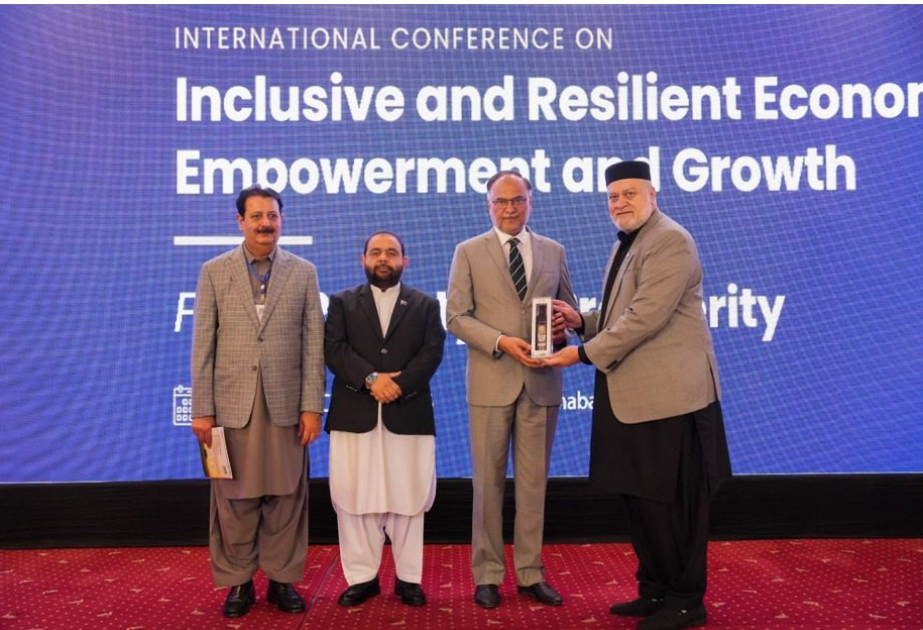
The Pakistan Poverty Alleviation Fund (PPAF) on Tuesday inaugurated a two-day international conference on inclusive and resilient economic empowerment and growth in Islamabad, bringing together federal ministers, international delegates, development partners and poverty reduction experts to explore sustainable solutions to poverty, strengthen livelihoods and promote inclusive economic growth under the theme “Poverty to Prosperity”, according to the Associated Press of Pakistan (APP).
Federal Minister for Planning, Development and Special Initiatives Ahsan Iqbal, Federal Minister for Poverty Alleviation and Social Safety Syed Imran Ahmad Shah, Federal Minister for Information and Broadcasting Attaullah Tarar, Federal Minister for National Heritage and Culture Aurangzeb Khan Khichi, Minister of State for Federal Education and Professional Training Wajiha Qamar, and Chairperson Benazir Income Support Programme Senator Rubina Khalid attended the inaugural session along with other dignitaries.
Addressing the conference while representing Prime Minister Shehbaz Sharif, Ahsan Iqbal emphasised that poverty reduction required sustained investment in human development, education, healthcare and skills.
He said poverty extended beyond income deprivation to unequal access to opportunities and essential services, calling for greater investment in human capital, empowerment of women and youth, and support for less-developed regions, particularly Balochistan.
Federal Minister for Information and Broadcasting Attaullah Tarar appreciated PPAF’s sustained efforts to combat poverty and improve the economic prospects of disadvantaged communities.
He highlighted the importance of grassroots initiatives that translate support into tangible livelihood opportunities, enabling people to build businesses, improve living standards and achieve economic self-reliance.
Federal Minister for National Heritage and Culture Aurangzeb Khan Khichi said Pakistan’s economic progress depended on bringing marginalised communities into the mainstream of development and turning their skills and potential into productive opportunities.
He emphasised that cultural heritage also encompassed traditional skills, crafts and knowledge that could generate livelihoods, calling for better market access for artisans and expanded economic opportunities for women and youth.
He also appreciated Syed Imran Ahmad Shah and his team for their efforts to alleviate poverty.
Minister of State for Federal Education and Professional Training Wajiha Qamar strongly appreciated PPAF’s efforts to alleviate poverty, empower disadvantaged communities and create sustainable livelihood opportunities.
She acknowledged the organisation’s contribution to inclusive development and congratulated the recipients of the Media Excellence Awards for their contributions and role in highlighting poverty-related challenges.
Federal Minister for Poverty Alleviation and Social Safety Syed Imran Ahmad Shah said sustainable poverty reduction required linking social protection with livelihoods, vocational skills, access to finance and markets, and resilience against economic and climate-related shocks.
He said the true measure of poverty alleviation was whether families could sustain their livelihoods and withstand setbacks such as floods, illness or loss of income. He highlighted the role of institutions, including the Benazir Income Support Programme, PPAF and Pakistan Bait-ul-Mal, in supporting vulnerable communities and helping families achieve lasting economic independence.
PPAF Chief Executive Officer Nadir Gul Barech said the organisation was working across 157 districts through 164 partner organisations, supporting more than 171,000 community institutions representing 2.67 million households, with women accounting for 63 per cent of their membership.
He said Pakistan’s poverty rate had risen to 28.9 per cent in 2024-25 from 21.9 per cent in 2018-19. Under the National Poverty Graduation Programme, 83.6 per cent of participating households had crossed the basic poverty threshold by 2025, while 57.7 per cent had reached a higher benchmark, he added.
Barech said PPAF had disbursed 3.69 million interest-free loans since 2014, with 57 per cent going to women and a reported repayment rate of 98 per cent. He said the conference would focus on poverty graduation, enterprise development, financial inclusion, support for small businesses, youth opportunities and green growth.
The inaugural session concluded with a panel discussion hosted by senior journalist Talat Hussain, bringing together participants to discuss poverty alleviation, inclusive growth and sustainable economic empowerment.
The exhibition gallery featured businesses and livelihood initiatives supported by PPAF programmes.
Federal Minister Syed Imran Ahmad Shah visited the stalls, interacted with entrepreneurs about their ventures and appreciated their efforts to build sustainable livelihoods and strengthen their families’ economic security.
PPAF also presented Media Excellence Awards to more than 30 media representatives from different organisations. Associated Press of Pakistan (APP) journalists Maryam Shah and Farhat Fatima were among the recipients.
Other news in this section


