Pakistani expert highlights Paris’ three failures amid ongoing protests – COMMENTARY
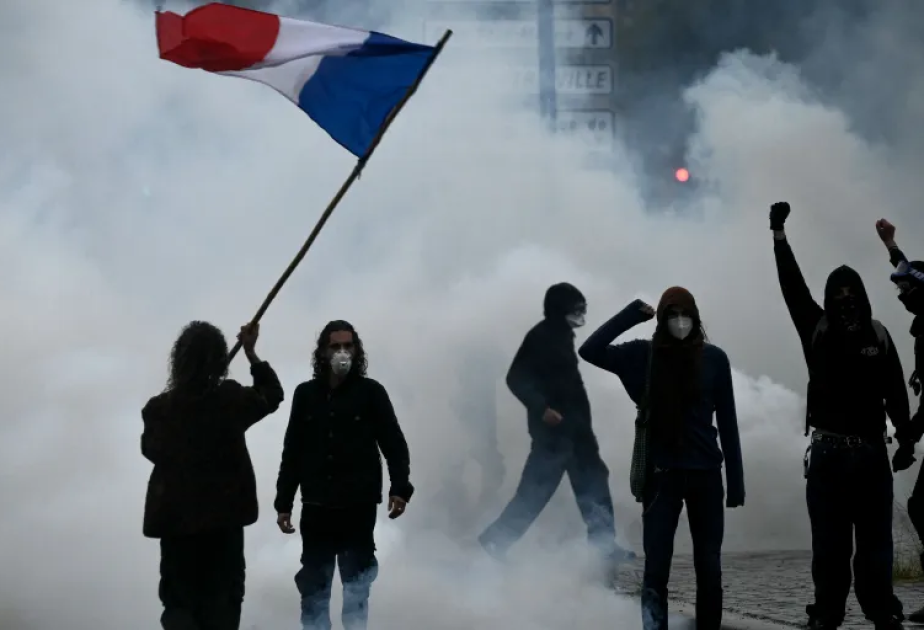
Baku, November 2, AZERTAC
“The pressures that brought France into the street are structural and cumulative: a decade of fiscal consolidation under European constraints; an education system whose shortages were documented long before this autumn; an inflation-scarred economy in which household purchasing power has deteriorated while energy and food costs rose; and a broader European cost-of-living crisis that has produced parallel unrest in other capitals. No single French president — of any party — could have decreed these conditions away, and a fair analysis should resist the strong-man fallacy that reduces systemic strain to one man’s ledger.
That said, leadership is precisely the art of reading and responding to structural strain before it becomes street mobilization, and on that art the record convicts,” Imran Bhatti, Pakistani political analyst, told AZERTAC.
The expert underscored three failures of method, rather than of substance, that stood out.
“First, tempo: the government treated the early October school protests as a sectoral grievance to be managed — 3,000 substitute teachers announced as a sedative — rather than as the visible surface of a systemic movement, and it was overtaken by events within a week. Second, preparation: the October 17 security breakdown was, on the government’s own admission, an intelligence and deployment failure; a state that had confronted repeated mass mobilizations since 2018 was nonetheless caught structurally unprepared. Third, and most consequentially, responsiveness: the movement’s escalation from schools to cost-of-living tracked the government’s own refusal to widen its answer beyond the education ministry — by October 27 the teachers’ verdict was that even the sectoral measures were too thin, and the October 31 turnout was the public’s ratification,” he emphasized.
Answering the question can this wave of unrest be viewed as a clear failure of Emmanuel Macron’s leadership, Bhatti noted: “In the simple sense — one man’s decisions produced one month’s crisis — no: the structural causes are a decade deep and wider than any presidency. In the accountable sense — a leader’s method, tempo and responsiveness materially worsening an eminently foreseeable dynamic, and a security apparatus caught unprepared on the government’s own admission — the charge lands. Leadership failed less in creating the fuel than in ignoring the smoke.”
The expert also assessed the strategy of blaming political opposition, stating: “As tactics, coherent; as strategy, self-defeating. It polices the fire while dismissing the fuel, converts citizens into suspects, fractures the civic trust that is the Republic’s deepest defense, and has demonstrably failed to quiet the movement it was meant to quiet. The measure of statesmanship now is whether the government can hold both truths at once — that the Republic must defend itself against the arsonists, and that the Republic must answer the 300,000 who were not arsonists.”
Other news in this section


