Climate change: Photos of NZ glaciers show they may soon be extinct
Baku, March 6, AZERTAC
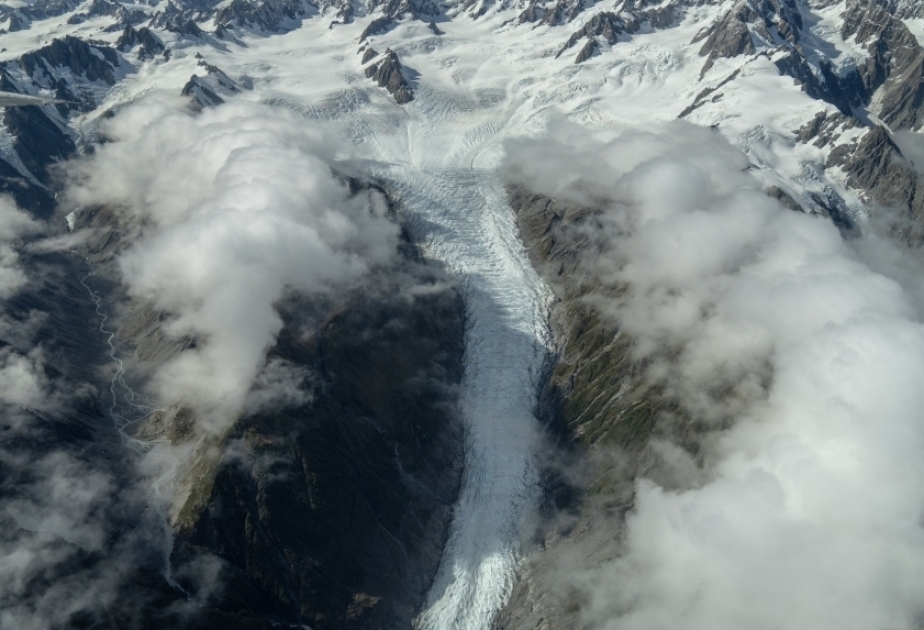
As the austral summer draws to a close, we are preparing to fly over the Southern Alps to survey glaciers, the New Zealand Herald reports. This annual flight supports the longest scientific study of Aotearoa New Zealand’s icescapes — and it shows that all our glaciers have retreated since 1978.
This year’s survey comes on the heels of the warmest year on record globally and the second warmest for New Zealand that produced extreme weather events and impacts that still cut deep for many communities.
Despite strong El Nino conditions in the Pacific this season that typically boost ice volume, we expect the recent heat grilling the glaciers will have had a grim effect.
The 46-year record of end-of-summer glacier images is incredibly valuable because it contains irrefutable visual evidence of climate change. We can see how glaciers are changing from year to year, with extremely hot years such as 2023 standing out clearly.
But our insights aren’t limited to images of glaciers taken from light aircraft. We can also learn from historic paintings of New Zealand’s mountain landscapes.
Old paintings with glaciers are common for the European Alps, where many artists lived and visited. But similar offerings are relatively rare for our part of the world.
What’s remarkable for New Zealand is that some of these works of art were produced without the artist ever seeing the glaciers.
We recently scrutinised the artistic vistas painted by John Gully to see if they were true to the real landscapes. Gully based his works on field sketches by Julius Haast, one of the first scientists to formally recognise widespread glaciation in New Zealand.
Gully’s paintings were intended to convey the dramatic scale of a mysterious land far away from industrialised 19th-century society. Serendipitously, for contemporary scientists, comparing these artworks with present-day photos vividly shows the magnitude of ice loss that has occurred since the mid-1800s.
The perspective we get from Gully’s paintings concurs with studies that place the timing of ice retreat as being already under way in the mid-1800s. Prior to this time, known commonly as the Little Ice Age, New Zealand experienced cooler temperatures about 1450 to 1850.
Modelling ice volume loss using these Little Ice Age landforms provides a benchmark. It illustrates recent changes have occurred in a geological instant and the peak summer flows from glaciers that helped create the braided river systems so typical of the South Island landscape are in the past.
Recent glacier changes are occurring ever more quickly. The long-term photographic record from the Southern Alps shows an acceleration of the pace at which snowlines rise due to climate warming.
For a glacier to exist, average summer temperatures must be low enough for the summer snowline to remain below mountain tops so ice can accumulate. We now observe that ice is disappearing from mountains whichthat held small amounts during the late 1970s. Glaciers there are going extinct.
Other news in this section


