Great challenge and leader’s rescue mission
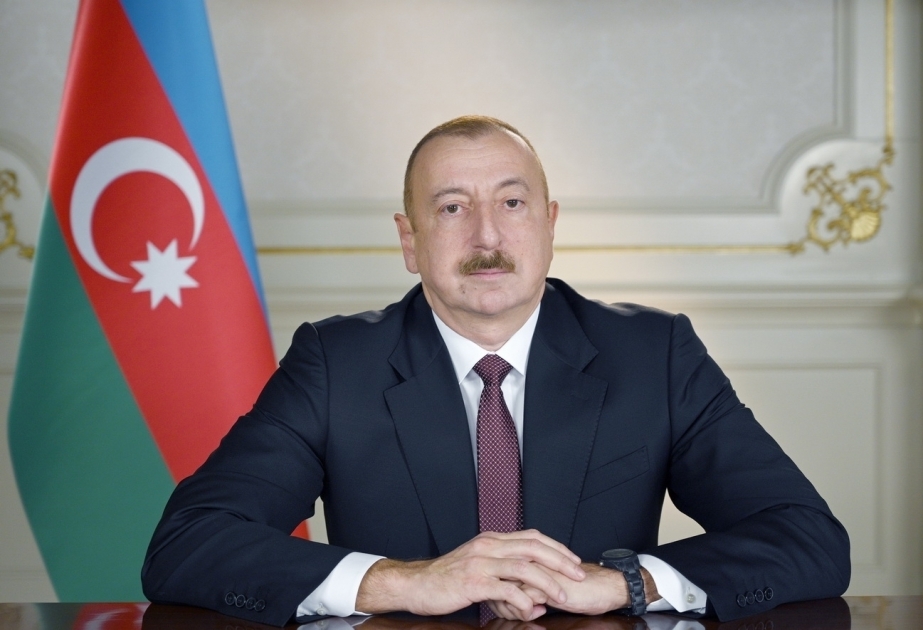
President Ilham Aliyev’s strategic view of the fight against coronavirus - a success story
Baku, May 4, AZERTAC
For almost a hundred days now, the world has been waging war for dear life with an invisible enemy - coronavirus. Strict isolation measures are being taken. Borders are closed. Planes don’t fly. Trains don’t run. Classes in schools have been suspended. All public and sporting events have been canceled. The once crowded streets and squares, parks and alleys have plunged into silence. Half of the world's 7 billion population - almost 4 billion people - do not leave home.
At the same time, the number of those infected and victims of the infection is growing by the day. The figures changing on an hourly basis testify to the great challenge humanity is facing, the tragedy of millions. Losses are different - they vary across continents, countries and even cities. Comparison of the figures shows how effective the fight against the virus is in different countries. Azerbaijan is cited among model countries.
The correct and timely decisions made as a result of the foresight of President Ilham Aliyev have allowed the country the opportunity to reduce losses to minimum. The government provides maximum social support to the most diverse segments of the population. It is no coincidence that Azerbaijan is one of the countries noted for the effectiveness of its anti-coronavirus measures.
This story is about COVID-19 that has gripped the world, the strategy of the President of Azerbaijan and our state on the fight against the pandemic, as well as some of the important aspects of these difficult days.
A hundred days that shocked the world
In order to provide a realistic assessment of the actions our country has taken during the pandemic and the advantages of the President’s strategic approach to the problem, it is necessary to review the developments that have unfolded in the world and in our country over the past almost 100 days. In other words, a global problem requires examination through a global prism.
The first report about the disease caused by the new coronavirus was circulated on 31 December. Even though the disease turned into an epidemic after some time, the world did not attach particular importance to what was happening. People in America and Europe thought the virus would not reach them. The world seemed to forget about globalization just for a moment, and it cost it dearly. There are already more than 3.5 million infected in the world and nearly 250,000 people have died. The time that has passed since the spread of the virus began can be described as a period that shocked the world in the literal sense of the word. For about 100 days now, there has been a merciless confrontation between man and the virus, and no-one knows when this will come to an end.
So what happened in these one hundred days. What have we witnessed?
The alarm was first raised by the World Health Organization in mid-January. Some countries immediately moved to action, others didn’t take it seriously. Interestingly, the most difficult situation with coronavirus is observed in the USA, a superpower, in Europe which boasts of its advanced healthcare system. The “rich” West accounts for the vast majority of infections and deaths worldwide. A paradox, but such is the reality. The conclusion reached by one of the most popular German publications is worthy of note: Europe is faced with the biggest test of the post-war period. And it suffers one failure after another. If things go on like that, the European Union may fall apart.
Every state has its own policy, a “national” approach to the pandemic, so to speak. Who made the mistake and where? Who was late in taking action or did not take the problem seriously? Time will definitely answer these questions, but we want to pay attention to the human side of the problem, to the dismal picture. From this point of view, it would be appropriate to recall an idea mentioned by First Vice- President of Azerbaijan Mehriban Aliyeva in her address to the people: There is no such thing as someone else’s misfortune. Pain and suffering have no boundaries.
In the words of Mrs. Mehriban Aliyeva, “even the most developed states with multibillion-dollar health budgets, boasting of immense scientific and intellectual potential and possessing all of the advanced technologies could not stop the spread of the epidemic”. Indeed, the disease is spreading so rapidly that it can bring down the health system of any country. We have been witnessing the fact that hospitals of some developed countries are overcrowded, patients are placed in corridors and treatment options have been exhausted. There were countries that had to choose amongst patients. Hundreds of people in nursing homes were left to the mercy of fate.
Naturally, if the situation had got out of control in the same way, we would have faced a similar scenario. In addition, the virus had already reached the neighboring country. An epidemic could break out in border regions with heavy traffic at any time.
The measures taken by the government of Azerbaijan at that time and afterwards, the decisions it made showed that the situation was under the control of the President day and night. He carefully monitored the course of events, studied and accurately assessed the risks.
Wise strategy centered on human life restored faith in Azerbaijani doctors as well
Sometimes the fight against coronavirus is compared with war. In any war, the commander has a combat strategy and precise tactics. But it is difficult in the current circumstances: on the one hand, the enemy is not visible, on the other, the situation changes rapidly.
Despite this complexity, President Ilham Aliyev’s strategic view of the problem and its forward-looking decisions based on a risk assessment contributed to the achievement of the main goal - preventing the spread of the virus and breaking the chain of infection. This is precisely what the President of Azerbaijan’s policy was aimed at from day one of the pandemic. He said: “The priority for us is people's health, their life and social protection.” As a result of resolute preventive measures, the situation was taken under control. A positive trend appeared in the ratio of those getting infected and those recovering. Azerbaijan’s healthcare system, including medical professionals, demonstrated a capacity to overcome the difficult test.
Most coronavirus patients have received and are receiving high-quality treatment in more than 20 public hospitals built in recent years. At a time when the epidemic was raging, the opening of a modern “Yeni klinika” hospital with 575 beds and the commissioning of an enterprise producing 250,000 medical masks a day at the Sumgayit Chemical Industry Park proved to be a huge advantage. Currently, on the instructions of the President, construction of 10 modular hospitals is underway. The commissioning of these hospitals means an additional 2,000 beds. If we add to this the 1,000 beds delivered in March, the 18 laboratories operating today, and the high professionalism and dedication of our doctors, one gets the idea of the current state of our healthcare system and the proportions of the work done.
In military terms, healthcare workers are at the forefront - doctors, nurses, orderlies, laboratory assistants and others. A whole army of highly qualified health workers is fighting for human life.
The thoughts shared by First Vice-President Mehriban Aliyeva, a doctor by profession, on her Instagram page show the high assessment of the selfless work of medical workers. “These days, we are rediscovering the fact that the medical profession is called a sacred mission. Indeed, it has always required profound knowledge and refined skill. But today our medical workers are also required to display great personal courage. And they are passing this difficult test with dignity.”
Comparing the number of cases of infection and deaths, one can clearly see that Azerbaijan is managing the treatment of COVID-19 successfully: to date, of 1,932 people infected with coronavirus 1,441 people have recovered. There have been only 25 fatalities. For both indicators, we are in a much better position than our closest neighbors Iran, Russia and Turkey, as well as the most developed European countries such as Italy, Spain, France, Great Britain, Belgium. Azerbaijan is one of a handful of countries where cases of infection and deaths per capita are at the lowest level.
The foresight, the wise decisions of the President, the correct assessment of risks and the solidarity of the people prevented the worst-case scenario and returned faith in Azerbaijani doctors.
Wise decisions and national accord that averted the risk of epidemic
There hasn’t been a pandemic of this magnitude in the last 100 years. Hence, of course, there is no experience of dealing with it either. How to act in such a situation? Where to start? Every country seeks an answer to this question and forms its own policies.
Initially we saw different approaches that varied from country to country. Some European countries believed that no matter how many people became infected, the healthcare system would handle them. Great Britain believed that mass infection of the population with the virus would develop a “national” immunity, and continued to lead a normal life. In Italy and Spain, which ignored the World Health Organization’s warnings about the impending threat, thousands of football fans carried the virus from one city to another, from one country to another.
A superficial perception of the issue, delays and disagreements between governments and societies led to bitter consequences. The current global panorama is very sad: the United States has 1,188,000 infections and 68,602 deaths, Italy has 210,000 and 28,884; Great Britain has 186,000 and 28,446; Spain has 247,000 and 25,264; France 168,000 and 24, 895 respectively ... Or Belgium, located in the center of Europe, ranks first in the world for the number of coronavirus victims per 100,000 people.
There are success stories too, and South Korea, Japan, Singapore and China itself are mentioned in this regard most often. It would be perfectly legitimate to include Azerbaijan on this list. Our great advantage is that we are equally determined to fight the virus on two fronts. In such extreme situations, the factors of health and social protection should complement each other like two wings. This is precisely what President Ilham Aliyev’s policies are aimed at. Deep knowledge, world outlook and foresight of the head of state lead to consistent, systemic and effective decisions and steps. This is where Azerbaijan’s advantages in the fight against coronavirus should be looked for. If we pay attention to the course of events and a brief chronology, the essence will become clear on its own.
On 29 January, the head of the World Health Organization’s Health Emergencies Program made the following statement: “The whole world must be ready. The whole world must switch to action and respond to a situation arising from an epicenter or another center.”
The virus was just beginning to spread and a pandemic had not been announced yet. However, the subsequent course of events showed that, unlike the leaders of many other countries, President Ilham Aliyev was already thinking and making plans - how to protect the homeland and people from this horrific disaster. On 28 January, a government commission led by the prime minister was set up and an appropriate action plan was approved two days later.
The first case of coronavirus infection in Iran was reported on 19 February and from then on, new rules were introduced at the Bilasuvar and Astara border checkpoints. Depending on the situation, restrictions were gradually tightened. By mutual agreement of the parties, the borders with Iran were closed on 29 February and with neighboring Georgia, Turkey and Russia in the following days. Azerbaijan became one of the first countries to close its borders.
At first, the disease was detected in people arriving in the country from abroad, but after some time, cases of internal infection began to appear as well. After that, all resources were mobilized to fight the invisible enemy. In order to manage the situation from a single center and carry out joint activities, a Task Force under the Cabinet of Ministers was set up on 27 February.
As a first step, classes in all educational institutions were suspended on 3 March (it later turned out that Azerbaijan was one of the first 12 countries in the world to close its schools). In the following days, based on the situation in the country, measures of social distancing and a special quarantine regime were introduced. Finally, on 30 March, the decision was made on the introduction of additional measures to prevent the extensive spread of COVID-19 infection in the country.
There is hardly any need for listing the restrictions and going into detail. Each one of us has gone and is still going through these days. It is important that measures to combat coronavirus are yielding fruit and the situation is changing for the better every day. Finally, the long-awaited decision was made. From 27 April and 4 May, a gradual easing of restrictions began.
As a matter of fact, no matter how perfect and significant the decision made in such emergency situations may be, this is only one side of the matter. In other words, the introduction of strict measures by the government and the ban on free movement may be perceived differently. In the above example of the USA and some European countries, the lack of agreement between society and the government, the violations of quarantine rules left negative and even tragic traces. As for our country, one cannot fail to see a different and a little more reassuring picture. No matter how uncomfortable people may be as a result of the restrictive measures, they still demonstrate solidarity with their leader, state and government. Thus, the policy of social distancing, the main weapon in the fight against coronavirus, is being successfully implemented. Another important goal was to gain time, and we managed to do that too. And light did appear at the end of the tunnel at last.
One of the key contributors to the fact that we managed to overcome the global threat with the least losses was the unity between the people and the government, national accord and harmony that are stronger than any virus. The difficult test revealed yet another fact: we are strong together!
Even though it is too early in the day to talk about a complete victory over the virus (this is a matter of medicine and is associated with the creation of a vaccine), it would be safe to say that the President was able to protect the people from the risks of the pandemic to the maximum extent.
A president who stands by every citizen, a state supporting everyone
In the conditions of a pandemic, every country faces two options: protect people's lives or save the economy. Azerbaijan is a country that, without taking into account any economic
implications and without any hesitation whatsoever, chose the first option. Thus, it confirmed yet again that it is a socially-oriented state.
It is no secret that restrictive measures deal a major blow to economic development and cause a reduction in budget revenues. On the other hand, the President also thought about those affected by the quarantine regime, in particular representatives of small businesses, hired workers, the unemployed and other vulnerable groups. People were confident that the President, who always stands by them, will not abandon them this time either.
And so it happened. Responsible for every single citizen, the government put forward two very important support packages.
Let’s examine the series of measures taken during the pandemic in the field of social protection of the population. On 19 March, President Ilham Aliyev signed an Order providing for mitigating the impact of the pandemic on the country's economy, macroeconomic stability, employment and businesses. Based on the broad order, the Cabinet of Ministers was allocated funds in the amount of one billion manats to finance the above measures. In addition, four working groups chaired by the ministers of economy, finance, labor and social protection of the population and the chairman of the Central Bank were set up to assess the impact of the pandemic on different spheres of life in the country and to prepare proposals. Proposals were prepared and submitted to the Cabinet of Ministers to reduce the short- and medium-term impact of the pandemic on the business environment, facilitate sustainable economic growth, identify the amount of possible damage suffered by legal entities and individuals, provide state support to businesses, maintain macroeconomic stability, etc. Further government decisions were made on the basis of these proposals.
The order attaches special importance to the issue of employment and social protection of the population. As a result, social protection of hired employees working in the sectors worst affected by the pandemic and the low-income categories of the population were strengthened along with short- and medium-term employment measures.
The approved Action Plan on the implementation of the President’s Order envisages a total of 10 programs in the above areas. They cover 2.5 million people, which is evidence of the yet unprecedented proportions of social support.
Let's review some of the key points. In general, employment with the preservation of wages of more than 900,000 people working in the public sector and 690,000 people working in non-state companies has been ensured. All government agencies have been instructed not to commit unreasonable layoffs. An appeal was made to entrepreneurs in this regard. The state will pay a significant part of the salaries of more than 300,000 people working in 44,000 business entities. In addition, more than 290,000 representatives of micro-businesses and private entrepreneurs will benefit from state support.
In order to expand employment opportunities, the DOST Center has started creating 50,000 public jobs. Funds in the amount of 30 million manats have been allocated for this. The total number of public jobs has reached 90,000.
A one-off payment of AZN 190 is being made to people who have lost their jobs as a result of the pandemic. On the President’s instructions, the one-off payment will be provided to 600,000 people and cover April-May. Starting from 1 April, the number of families receiving targeted social assistance has been increased by 10,000. The program of targeted social assistance benefits a total of 330,000 members of 80,000 families.
These programs are only a part of government support, and work on other mechanisms is currently underway.
It goes without saying that such social support packages require major expenses and are a sizable burden for the state budget - 3.5 billion manats, including tax benefits. Also, the state incurs these expenses amid serious economic risks. If it wasn’t for powerful economic opportunities, the successful implementation of social policy would be impossible. As a result of the revolutionary reforms carried out under the leadership of President Ilham Aliyev in recent years, as well as the steps aimed at diversifying the economy, developing the non-oil sector and increasing the export potential, Azerbaijan has accumulated enough strength.
It would be enough to provide just a few examples: over the past 15 years, the gross domestic product increased by 64 billion manats to reach 81 billion 681 million manats in 2019, registering an increase of almost five times. At the beginning of this year, the country's strategic currency reserves rose to a record high reaching $52 billion. Foreign exchange reserves exceed the external debt by more than five times. In terms of foreign exchange reserves per capita, Azerbaijan ranks first in the CIS.
With its economy and financial opportunities growing every year, Azerbaijan has transformed from a borrowing country into a lending one. It causes a sense of pride that Azerbaijan is not among the 150 countries that have applied for help to the World Bank and the International Monetary Fund in the aftermath of the pandemic. In these difficult days, Azerbaijan did not ask anyone for money. On the contrary, it extended its helping hand to friendly countries itself.
The negative impact of the quarantine regime on the economy is inevitable. Despite the associated risks, the government considers it its duty to help the poor and affected entrepreneurs. The people, in turn, appreciate this and provide comprehensive support to the state. The President receives thousands of letters from citizens who have been touched by the attention and care being shown to them. In the letters, some of which have been published by AZERTAC, ordinary citizens express their sincere gratitude. Their approval drown out the voice of marginal groups and radical opposition trying to cast a shadow over the state’s struggle with coronavirus.
As a matter of fact, mutual support plays an important role in the successful fight against coronavirus. Moral and material support complement each other, which provides an additional source of strength. First Vice-President Mehriban Aliyeva’s address to the people during these difficult days, her sincere words posted on Instagram serve as a vivid example of such moral support. Mrs. Mehriban Aliyeva expresses her confidence that thanks to the strength of spirit of our wise people, such qualities as courage, mercy, compassion, faith and love, we can cope with this serious challenge. Calling on everyone to unequivocally recognize the importance of the measures being taken by the state and to display maximum civic responsibility, she says, “It is by carefully supporting each other and showing tolerance and understanding that we will be able to pass the terrible test that fate is putting us through and save each other for a full life after the victory over the coronavirus, which will definitely come! I believe in this victory!”
Experience that can contribute to the global fight against the pandemic and serve as an example
Time is proving the formula that countries that fight the common enemy together will get the upper hand in the struggle against the pandemic. In this sense, the leadership of Azerbaijan is worthy of note. The Summit of the Cooperation Council of Turkic Speaking Countries held in the format of a video conference at the initiative of President Ilham Aliyev as chairman was the first and serious call for international and regional cooperation in the fight against COVID-19. The heads of state participating in the summit praised the Azerbaijani President’s leadership in this matter. The Summit of the Turkic Council demonstrated the great importance of solidarity and cooperation among countries and international organizations in this difficult time.
President of Azerbaijan also initiated to hold a Summit on the theme “We stand together against COVID-19” in the format of the Contact Group of the Non-Aligned Movement. This initiative, unanimously supported and approved by the participating states, is yet another example of Azerbaijan’s leadership in international cooperation against the coronavirus.
Azerbaijan demonstrates solidarity with the countries affected by the pandemic. The video projection of the national flags of Italy, Spain, the USA, Turkey, Georgia and other countries, as well as the flags of international organizations, on the building of the Heydar Aliyev Center was received with approval as an act of goodwill.
From the very beginning of the pandemic, our country has been working closely with the World Health Organization. Azerbaijan has allocated $5 million to the organization. A delegation of WHO specialists visiting Azerbaijan to assess the situation noted that our country was taking the necessary measures to stop the pandemic and provided certain recommendations. Then, the WHO issued a statement citing Azerbaijan as an example in the fight against coronavirus. Highly appreciating Azerbaijan’s global contribution to the fight against the coronavirus pandemic, WHO Director General Tedros Adhanom Ghebreyesus said, “I see the active efforts of the President of Azerbaijan at the national, regional and global levels in this fight. Taking this opportunity, I want to express my gratitude to Mr. President for joining and supporting efforts at these three levels.”
At the same time, we are observing a growing interest in the Azerbaijani model in the fight against the pandemic. One of the key advantages of this model and experience is that there is a mechanism for the execution of the decisions made. Under the leadership of the President, a team comprised of heads of government bodies, law enforcement agencies, members of various government institutions and specialists operates on a round-the-clock basis. Today, along with serious restrictions and harsh measures being taken by the state, we are also seeing the President’s humanism and concern, and this is very important.
Leaving behind many countries, Azerbaijan has set up a Fund to Support the Fight against Coronavirus. The state initially allocated 20 million manats into the fund. President Ilham Aliyev and first lady Mehriban Aliyeva donated their annual salary into the fund. Subsequently, this initiative was expanded and gave a second breath to the good traditions of our people.
Positive opinions about a team efficiently working to assess the situation correctly and overcome the crisis, the measures of comprehensive support for vulnerable segments of the population and, in general, the experience of Azerbaijan in the fight against coronavirus can also be heard outside the country. I would like to provide a quote from the remarks of the President of the European Bank for Reconstruction and Development, Suma Chakrabarti, without any further comments: “I think that the past few months can be considered a great history for Azerbaijan. Your country is one of a handful countries and perhaps even the only country in the world that has achieved economic growth in the first quarter of the year. Along with this, given the importance of economic diversification, it is also worth noting the particularly good performance of the non-oil sector in times of crisis. This is a great story, and the day will come when people will make comparisons with Azerbaijan. Our annual meeting will be held next year and we will make an assessment of the countries for the next two-three years. Azerbaijan is already ahead in that respect.”
Countries of the world look at each other, benefit from positive experience or learn lessons from the mistakes made somewhere. In this context, let me mention two very instructive situations. If you remember, Britain first considered it unnecessary to take any restrictive measures. The time lost cost the British society dearly. The UK, which suffered less than most European countries in the early stages of the pandemic, now ranks second only to Italy for the number of deaths from coronavirus. Although rigorous quarantine measures subsequently began to be taken, it has been impossible to reduce cases of infection and death.
What happened on the Japanese island of Hokkaido seems particularly instructive against the backdrop of excessive relaxation of restrictions by many countries of the world. The preventive measures taken on the island where a state of emergency was declared at the end of February were cited as an example for the whole world. Thanks to these measures, the number of new infections was close to zero by mid-March. On 19 March, the state of emergency was completely lifted and schools re-opened in early April. After only 26 days, the second wave of the epidemic, this time in a more severe form, swept the island again. This time, the number of infected increased by an average of 300 people per day. Experts described such careless handling of the virus as a gross mistake that drew a line through the success story of Hokkaido.
******
Throughout history, peoples have been saved from difficult situations and crises by the political will and foresight of their leaders. During major challenges, the main task facing every leader is precisely the rescue mission.
Remember national leader Heydar Aliyev, who saved Azerbaijan from the threat of demise in 1993. Today, the political successor to great leader Ilham Aliyev confidently and successfully fulfills this mission during the pandemic. Together with our President, we have overcome many difficulties and trials. We will definitely defeat the coronavirus. And, of course, we will do it together again!
Aslan Aslanov
Chairman of the Board of AZERTAC
OANA Vice-President
Other news in this section


