Indonesia studies prescribed burning to curb wildfires
Baku, June 16, AZERTAC
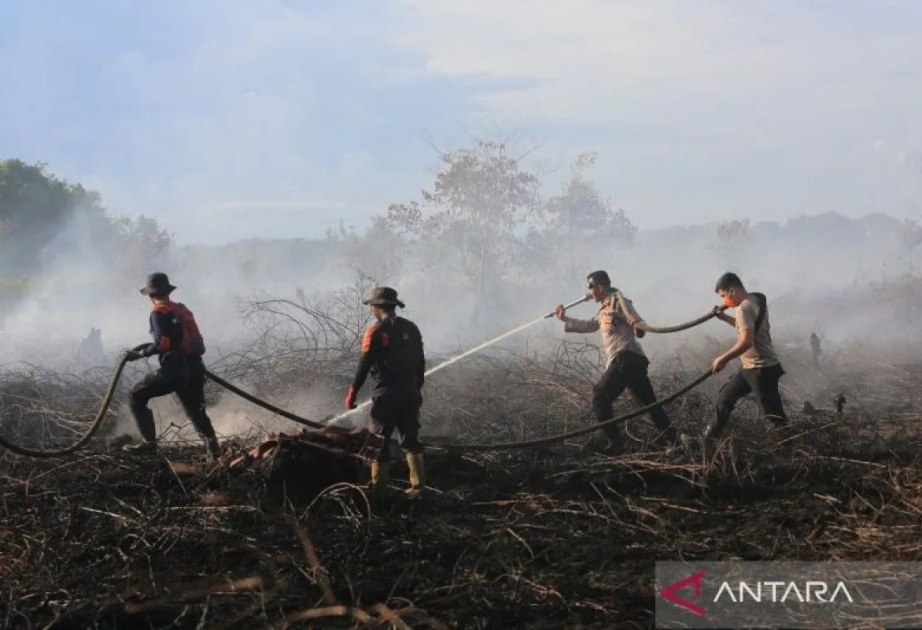
Indonesia's National Research and Innovation Agency (BRIN) is studying the use of prescribed burning in certain ecosystems as a forest and land fire mitigation strategy amid a nearly eightfold increase in fire-affected areas nationwide, according to Antara.
Asep Hidayat, head of BRIN's Ecological Research Center, said that most forest and land fires are caused by human activities, while dry climate conditions intensify their scale and severity.
"Fire management requires prevention, early detection, ecosystem restoration, and community involvement, including possibly through prescribed burning in certain ecosystems," he said in a statement on Monday.
According to Asep, prescribed burning can provide several benefits when applied properly, including accelerating forest regeneration, reducing the accumulation of combustible materials such as dry leaves, twigs, and grass, controlling invasive species, maintaining ecosystem balance, and improving soil fertility.
He cited fire management expert McRee Anderson of international environmental organization The Nature Conservancy, who noted that the practice has been used for decades in countries such as the United States, Australia, and Canada to reduce natural fuel loads and manage wildfire risks.
Asep said forest and land fire mitigation deserves serious attention as Forestry Ministry data presented during the discussion showed that the cumulative area affected by fires from January to May reached 81,077 hectares.
The figure represents a sharp increase from 10,444 hectares recorded during the same period in 2025.
"Can fires be controlled? The answer is yes, although it requires in-depth studies on the potential negative impacts," Asep remarked.
Meanwhile, Deputy Climatology Head of the Meteorology, Climatology, and Geophysics Agency (BMKG) Ardhasena Sopaheluwakan said satellite monitoring detected 2,312 hotspots across Indonesia between the start of the year and June 8.
The highest concentration of hotspots was detected in Riau Province with 607 hotspots, followed by West Kalimantan with 478 and Aceh with 220.
BMKG predicts hotspot activity will continue to increase in the coming months as dry conditions associated with the strengthening El Niño phenomenon intensify across Indonesia.
The agency therefore stressed the importance of stronger inter-agency coordination, ranging from science-based early warning systems to concrete mitigation measures at the community level.
Other news in this section


