JAXA calls off launch of eighth H3 rocket due to emergency shutdown
Baku, December 17, AZERTAC
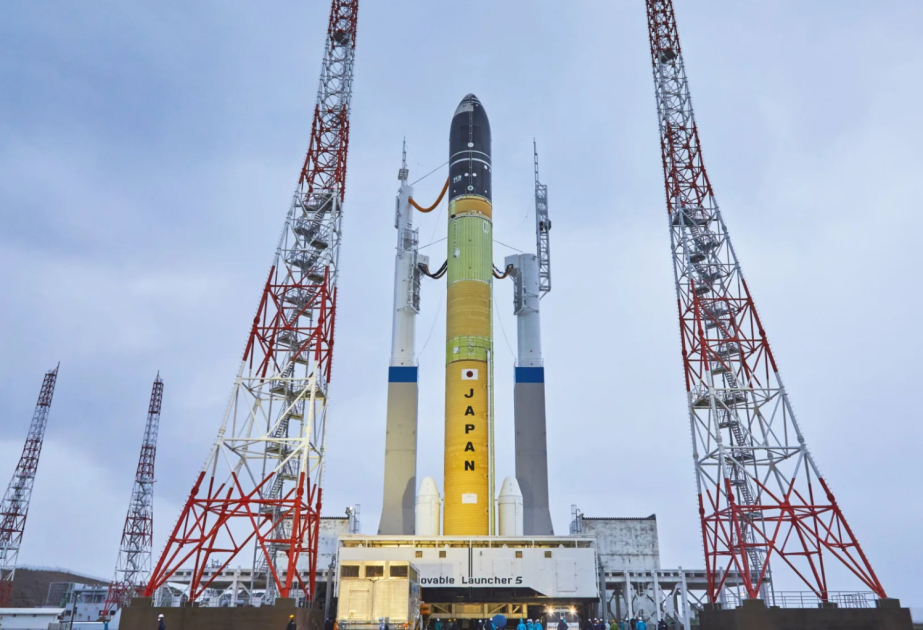
Japan’s space agency on Wednesday morning cancelled the launch of its eighth H3 rocket carrying the Michibiki No. 5 satellite from the Tanegashima Space Center in Kagoshima Prefecture, after an emergency shutdown moments before launch, according to Japan Times.
The Japan Aerospace Exploration Agency (JAXA) said in a news conference following the cancellation that the rocket automatically underwent an emergency stop after an anomaly was detected in the launch pad’s water-injection cooling system.
JAXA added that the details of the malfunction are still under investigation, and at this point, it is not possible to say when the launch will be rescheduled. The agency also confirmed that no damage has been found to either the H3 rocket itself or the Michibiki No. 5 satellite.
This is the second time that the rocket’s launch has not gone as planned. The launch had originally been scheduled for Dec. 7 but was postponed after an issue was discovered with the internal measurement system on the second stage of the rocket. JAXA said it investigated the onboard systems, identified the cause of the problem and completed countermeasures.
The 1.8-ton satellite is intended to become part of the government’s Quasi-Zenith Satellite System, a network of positioning satellites that operate in the skies over Japan. Similar to the U.S.’ GPS, the satellites are used to improve the accuracy of location information on smartphones and car navigation systems.
There are currently five Michibiki satellites in operation, following the launch of Michibiki No. 6 in February this year, which was placed in geostationary orbit and began service in July. They currently operate in combination with the American GPS satellites and other systems.
The government plans to launch Michibiki No. 7 in February next year with the goal of further improving positioning accuracy and establishing a sustainable seven-satellite system that can function independently without relying on foreign satellite navigation networks.
The government aims to have the seven-satellite system fully operational in fiscal 2026, with plans to expand the constellation to 11 satellites in the future.
Michibiki No. 5, like No. 6, is equipped with a demonstration antenna for a high-precision positioning system known as ASNAV (Advanced Satellite NAVigation system), developed by JAXA.
According to JAXA, if future Michibiki satellites are fitted with the technology, positioning accuracy for ordinary receivers such as smartphones could improve from the current 5 to 10 meters to around 1 meter.
Other news in this section


