Political motives behind the unlawful actions of Russian law enforcement Commentary
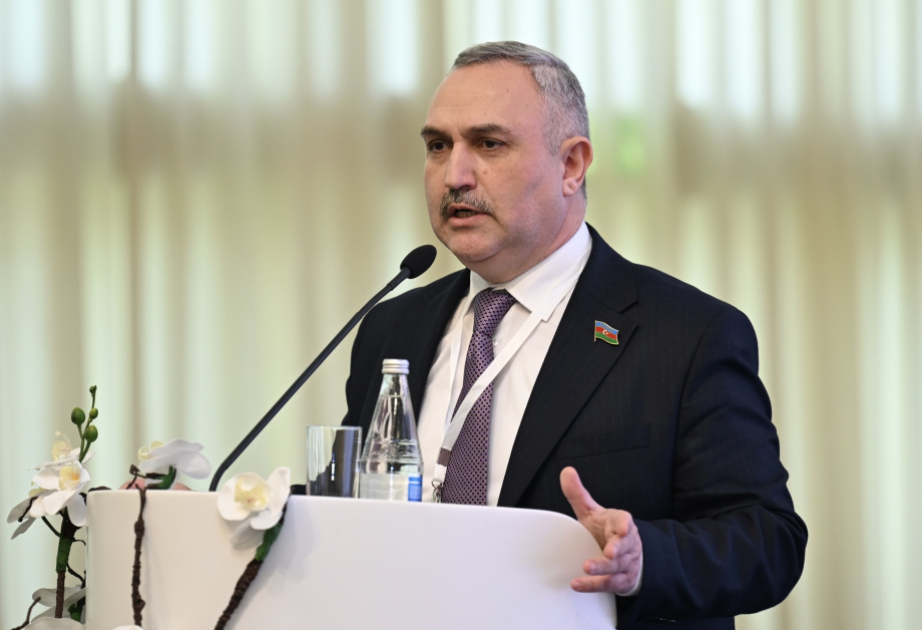
Baku, June 30, AZERTAC
Amid the ongoing war, Russia, facing significant manpower shortages, continues to resort to illegal and inhumane methods to address this gap. The policy of pressuring and coercing migrants has intensified and become systematic in recent times. Labor migrants, particularly from Central Asian countries, are targeted for recruitment into the war through threats, deception, and forced deployment to conflict zones. These individuals face fabricated accusations of drug trafficking or involvement in crimes they did not commit. They are artificially subjected to criminal liability through courts and law enforcement, only to be offered “deals” to join the war instead of facing punishment. Threats against family members, revocation of work or residency permits, and manipulation with falsified documents are key tools in this process. As a result, migrants are left with no choice but to comply. Moreover, promised financial compensation, legal protections, and citizenship offers are not fulfilled. Those who return are either forcibly sent back to the front or blackmailed for breaches of prior agreements, severely impacting their physical and psychological health and their families’ well-being, Member of Parliament Azer Allahveranov said in an interview with AZERTAC.
He noted that not only migrants but also Russian citizens belonging to ethnic minorities face systematic persecution and coercion. Treated as second-class citizens due to their national identity, these individuals endure similar violence. Such incidents are prevalent in regions like Tatarstan, Bashkortostan, Dagestan, Buryatia, and other national republics. The increasing media coverage and social media exposure of these events in Yekaterinburg and other major cities indicate that the issue is not localized but spans the entire country. In various regions, some local officials and law enforcement representatives exploit this process for political gain, attempting to justify gross human rights violations under the guise of “patriotism.” Thus, state structures create artificial rationales to legitimize these pressures, fostering an atmosphere of fear in society.
“Recent statements by Alexander Bastrykin, Chairman of the Russian Investigative Committee, regarding the conscription of migrants into the war should be seen as a public acknowledgment confirming societal concerns. His detailed statistics and admissions reveal that Russia’s policy of pressuring and coercing migrants is orchestrated at the state level to address manpower shortages. These confessions officially confirm the systematic recruitment of migrants, particularly from Central Asia and the South Caucasus, into the war. This policy violates both international law and humanitarian principles, resulting in serious human rights abuses. Russia’s inhumane treatment of migrants is underpinned by international and regional human rights frameworks, including documents such as the Universal Declaration of Human Rights (1948), the UN International Covenant on Civil and Political Rights (ICCPR, 1966), the UN Convention Against Torture (CAT, 1984), and the International Convention on the Elimination of All Forms of Racial Discrimination (ICERD, 1965), which prohibit inhumane or degrading treatment and ethnic discrimination. Russia, as a signatory, has committed to these obligations,” Allahveranov stated.
Azerbaijani society has not forgotten the downing of a civilian plane some time ago, which caused harm to innocent people and constituted a gross violation of international law. Russia’s passivity and silence on this incident are unacceptable from both legal and moral perspectives. Azerbaijan is determined to raise this issue on the international stage, utilizing all legal means to ensure accountability for those responsible and compensation for the victims.
Furthermore, several specific incidents highlight the growing tensions in Azerbaijan-Russia relations. For instance, the recent denial of entry to an Azerbaijani deputy invited to an international event in Astrakhan clearly demonstrates that official Moscow does not maintain a benevolent stance toward Azerbaijan. This incident not only violates diplomatic protocols but also significantly harms bilateral relations.
Additionally, cyberattacks targeting Azerbaijan’s information systems are part of this process. Official investigations suggest a strong likelihood that these attacks are linked to Russian groups or state structures. A report by the relevant parliamentary commission details the technical aspects and probable sources of these cyberattacks, underscoring that information security is now directly tied to national security.
The chauvinistic atmosphere and discrimination against other peoples in Russia have, regrettably, become systemic. A policy of overt pressure against non-Russian peoples, particularly Muslims, is evident. The rise in Islamophobia, provocative actions against Muslims, and the selective, discriminatory approach of law enforcement indicate a dangerous trend for Muslim communities in Russia. This is not merely a domestic policy issue but a significant threat to regional stability and social relations, Allahveranov emphasized.
According to the deputy, these facts collectively demonstrate that discrimination, violence, and human rights violations based on ethnicity and religion have become systemic in Russia’s domestic and foreign policies. Azerbaijan closely monitors these developments and will continue its efforts to protect its citizens’ rights and uphold the rule of international law. The overtly anti-Azerbaijani rhetoric from figures like Vladimir Solovyov, a prominent Kremlin-aligned state media personality, indicates that Russia’s political course is not incidental but deliberately orchestrated. Such propagandists do not merely express personal opinions but serve to transmit the Kremlin’s ideological stance, shaping public opinion and mobilizing domestic audiences around artificial “enemy” narratives.
This reality unequivocally shows that Russia’s national policy is moving toward legitimizing intolerance, ethnic discrimination, systemic prejudice, and overt Islamophobia at an official level. In a country traditionally presented as multi-ethnic and multinational, a mono-ethnic superiority and chauvinistic sentiment are now becoming dominant. The pressures, legal and physical violence, and anti-Muslim and anti-Azerbaijani media campaigns targeting Muslim communities, Central Asian and Caucasian populations, and non-Russian citizens further confirm this situation.
Allahveranov added: “Having failed on all fronts against the West, mired in a strategic quagmire in the Ukraine war, and isolated economically and politically, the Kremlin now finds it necessary to create new ‘enemy’ images domestically. Azerbaijan is deliberately targeted because it pursues an independent policy and follows a geopolitical course that limits Russia’s control in the region. Thus, Moscow employs hybrid warfare tools to undermine Azerbaijan’s reputation domestically and internationally. In this context, the reactivation of radical and revanchist forces in Armenia is particularly noteworthy. The increasingly aggressive and revisionist rhetoric of figures like Kocharyan, Sargsyan, and their political allies in recent months is no coincidence. Their political and personal ties to Russia strongly suggest Moscow’s influence. The clear aim is to destabilize the South Caucasus, reignite tensions in Armenia-Azerbaijan relations, and pave the way for Russia’s return as a ‘peacemaker.’ This policy targets not only Azerbaijan’s sovereignty but also poses a serious threat to regional security. To counter this, Azerbaijan must deepen cooperation with international partners, remain proactive in the information domain, and build a systematic resistance to Russia’s hybrid pressures. We are witnessing the necessary steps being taken by Azerbaijan in this direction.”
Other news in this section


