Washington Agreements: Peace and strategic partnership change the rules of the game – ANALYSIS
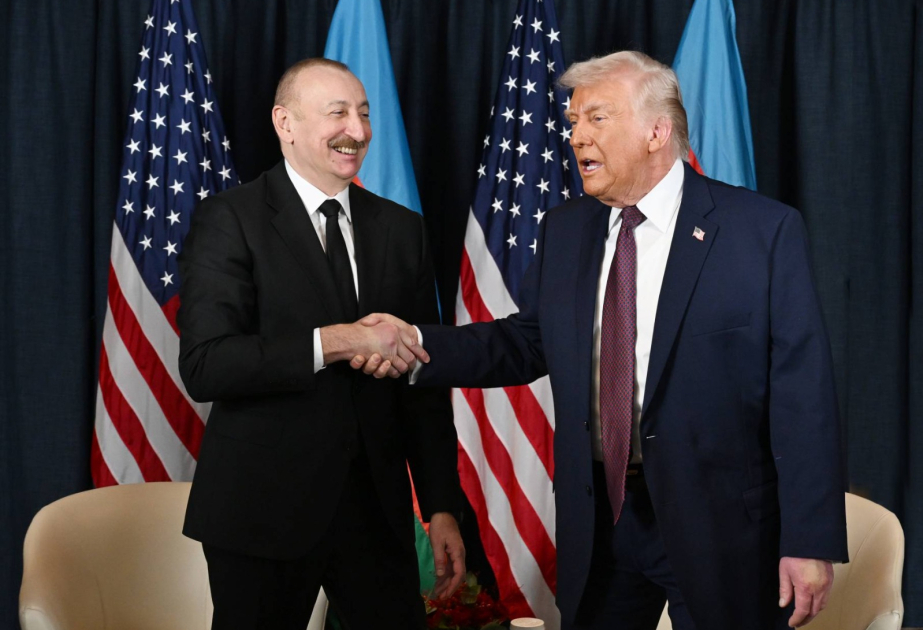
Baku, August 8, AZERTAC
On August 8, 2025, Azerbaijani President Ilham Aliyev, U.S. President Donald Trump and Armenian Prime Minister Nikol Pashinyan signed a Joint Declaration on the meeting held in Washington.
The Joint Declaration demonstrates a new stage in Azerbaijan-Armenia relations and the White House's support for Baku's priorities in its policy toward the South Caucasus. The seven-point document has a structure that updates the U.S. position on the Azerbaijan-Armenia peace agenda and aligns it with the realities that have emerged in the South Caucasus.
TRIPP – an innovation in the modern order
Under the leadership of President Ilham Aliyev, Azerbaijan has achieved victory both in the war with Armenia and in the peace process.
Through this, Azerbaijan has achieved tangible results in its principled efforts to change Armenia's doctrine based on occupation and revanchism. During this period, Armenia was compelled to pursue peace, and the initialing of the peace document took place with U.S. mediation. The initialing of the peace treaty between Azerbaijan and Armenia in the United States was the logical outcome of a lengthy process.
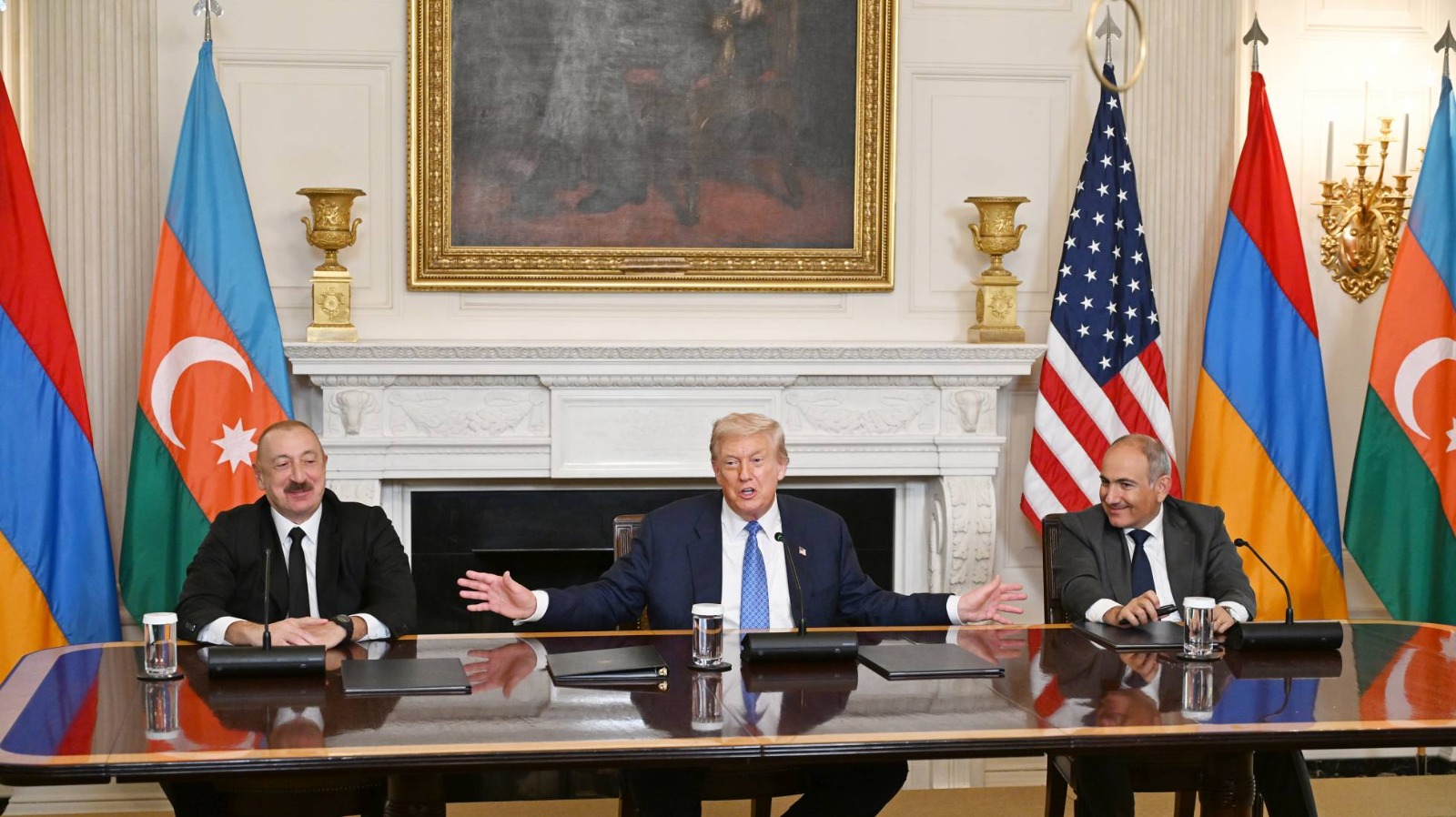
This process secured Washington's particular support for the five basic principles put forward by Azerbaijan for a peace treaty with Armenia. It should be noted that Azerbaijan presented five basic principles to Armenia in February 2022, based on the criteria of sovereignty. The text and details of these proposals were made public in March 2022.
• Mutual recognition by the states of each other's sovereignty, territorial integrity, inviolability of international borders and political independence;
• Mutual confirmation that the states have no territorial claims against each other and the assumption of a legal obligation not to raise such claims in the future;
• Refraining in interstate relations from threatening each other's security, using threats or force against political independence and territorial integrity, as well as from other actions inconsistent with the purposes of the UN Charter;
• Delimitation and demarcation of the state border and establishment of diplomatic relations;
• Opening of transport and communications links, establishment of other relevant communications and cooperation in other areas of mutual interest.
These principles have strengthened Azerbaijan's position in the emerging new world order and are paving the way for the establishment of new partnership and allied relations.
Within this framework, the principle of opening communications in the region serves as a fundamental legal basis for transnational projects implemented with the participation of international actors.
In other words, the substance of Donald Trump's support for the priorities of the Zangezur Corridor ("Trump Route for International Peace and Prosperity" – TRIPP) has been structured in line with Azerbaijan's transportation and logistics strategy. Under the agreement, a U.S.-led consortium, together with the Armenian authorities, will build the TRIPP route, which, in turn, will provide Azerbaijan with direct land access to Nakhchivan.
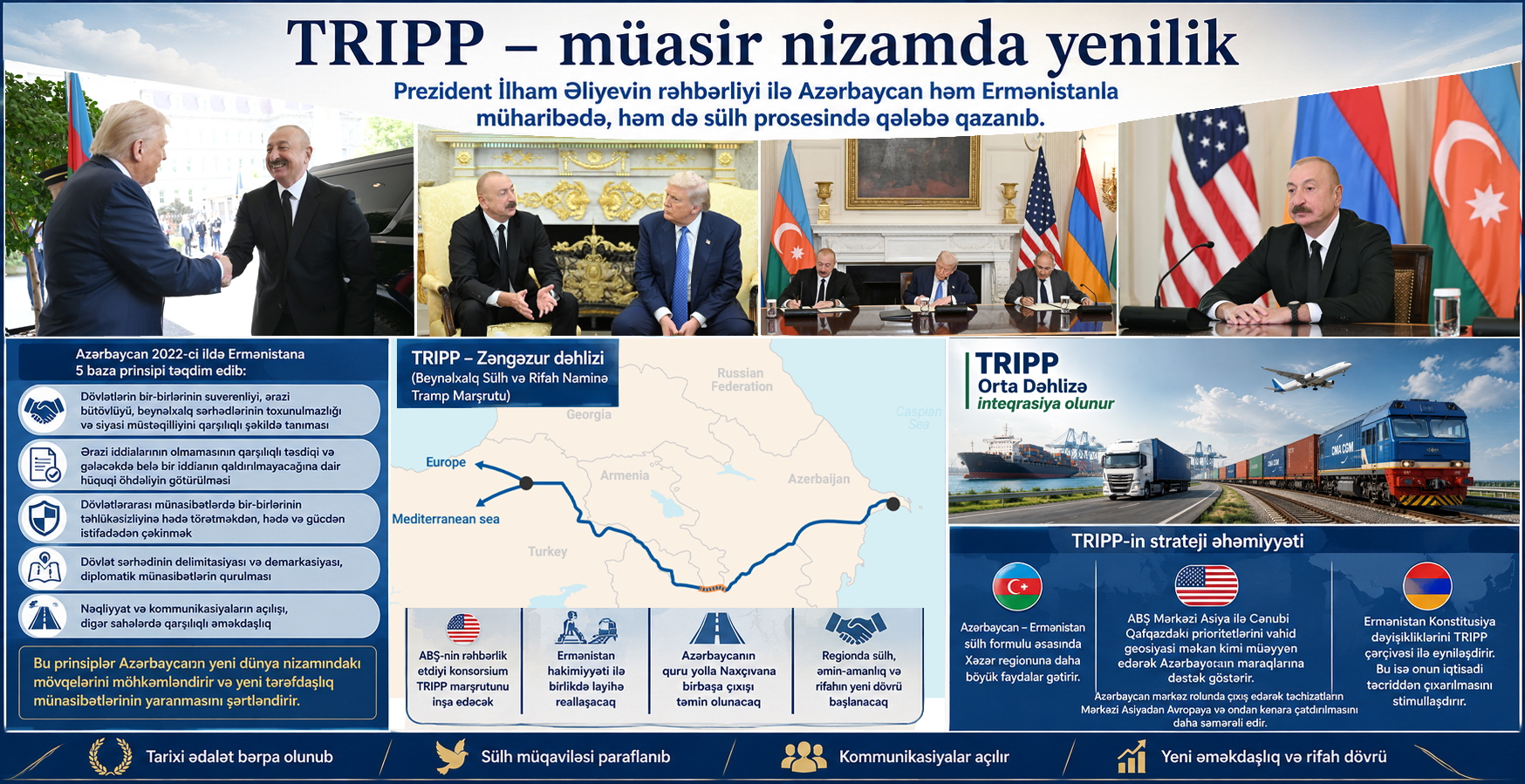
This will accelerate the integration of the TRIPP route into the Trans-Caspian International Transport Route (Middle Corridor) within supply and logistics chains. For Azerbaijan, the expansion of the Middle Corridor across all segments and the development of infrastructure are strategic priorities. Against the backdrop of Azerbaijan-U.S. relations and Armenia's participation in the process, the significance of the TRIPP route defines the following strategic directions:
TRIPP could bring greater benefits to the Caspian region based on the Azerbaijan-Armenia peace formula put forward under the leadership of President Ilham Aliyev.
The United States, by defining its priorities in Central Asia and the South Caucasus as a single geopolitical space, is supporting Azerbaijan's interests in both regions. Azerbaijan serves here as a hub that, through TRIPP, makes the delivery of supplies from Central Asia to Europe and beyond more efficient.
Armenia is equating the expected outcomes of the constitutional amendments demanded by Azerbaijan with the framework of TRIPP. This encourages Armenia's emergence from economic isolation with Azerbaijan's participation. This factor elevates Azerbaijan's position in the "lifeline" project for Armenia.
Features of the strategic partnership
The plans of a superpower such as the United States to develop the security and peace frameworks put forward by President Ilham Aliyev have elevated Baku-Washington relations to the level of a strategic partnership.
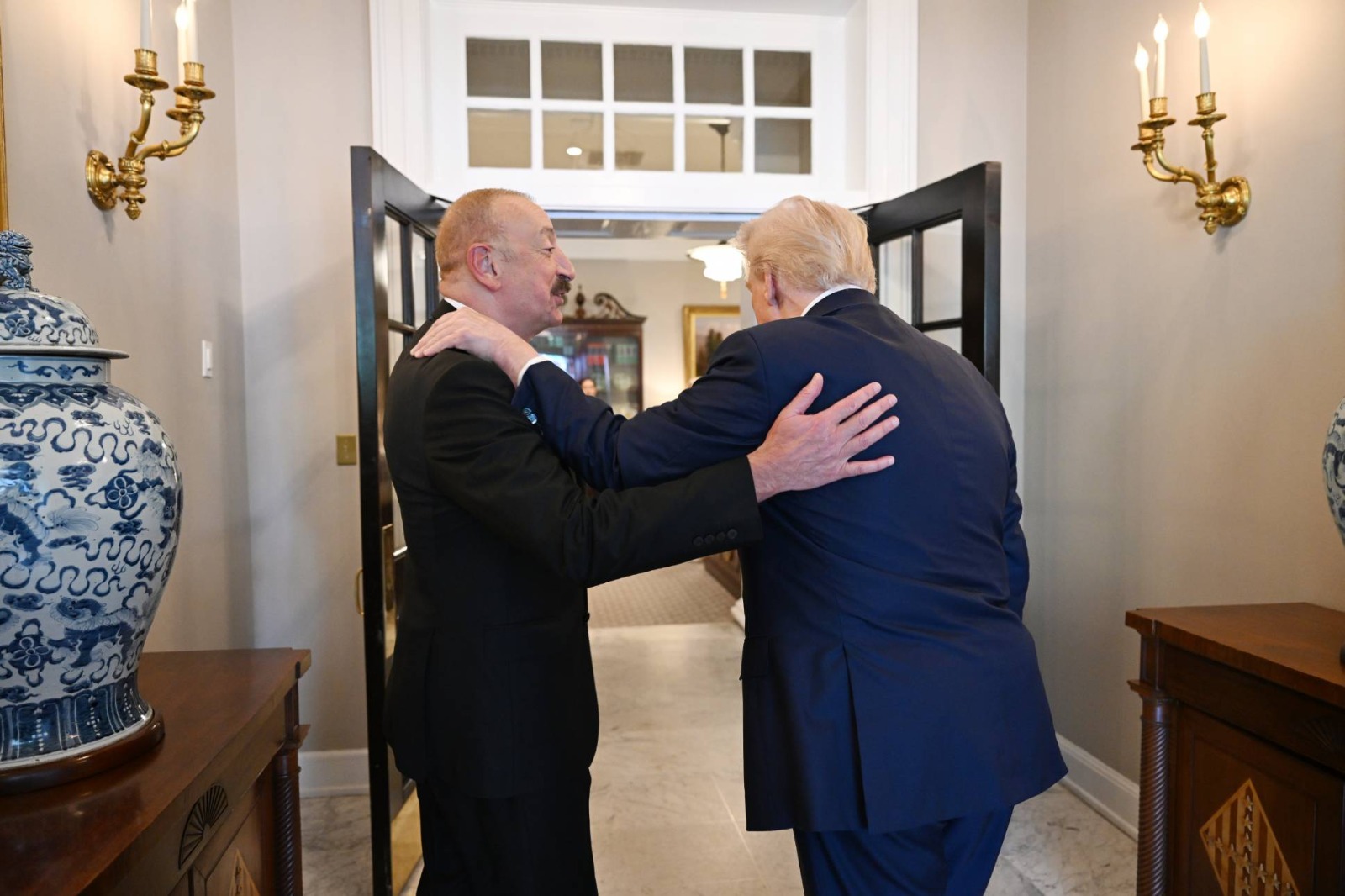
During the visit to Washington, alongside the aforementioned Joint Declaration, particular attention was also drawn to the executive order signed by U.S. President Donald Trump, in the presence of President Ilham Aliyev, waiver of Section 907 of the Freedom Support Act. The waiver of Section 907 points to the prospect of Azerbaijan-U.S. military-technical cooperation.
Within the framework of President Ilham Aliyev's meeting with President Donald Trump and Prime Minister Nikol Pashinyan, the foreign ministers of the two countries also initialed the "Agreement on the Establishment of Peace and Interstate Relations between the Republic of Azerbaijan and the Republic of Armenia." In addition, a joint appeal was made to the OSCE Chairperson-in-Office, and a document was signed on the complete dissolution of the Minsk Process and related structures.
These are important elements of the region's move away from future conflicts, as well as mechanisms of U.S. support for this process. President Ilham Aliyev's strategic decisions are directing centers of power toward constructive cooperation by compelling them to move away from ambitions of dominance in the South Caucasus.
In this process, the strategic dimensions of Azerbaijan-U.S. cooperation come to the fore. During the leaders' statements to the press in Washington, the Azerbaijani president said: " We are starting a path towards a strategic partnership. The Charter on Strategic Partnership will be elaborated over several months, and this is a historic achievement for Azerbaijan. Because being in the format of strategic partnership with the greatest country in the world is a great opportunity and also very big responsibility.
And this strategic partnership format embraces so many important areas including mutual investment, trade, energy, connectivity, transit, AI, defense sales, counterterrorism – all these areas in which we have had and hopefully will have very active cooperation in the future."
The strategic partnership between Azerbaijan and the United States provides a strong basis for a prestigious model of cooperation in the region. However, complementary steps were needed for the logical continuation of this process, and these manifested themselves in four developments:
• An exchange of letters took place between President Ilham Aliyev and Donald Trump on January 21, 2026;
• On January 22, 2026, President Ilham Aliyev met with Donald Trump. On the same day, President Ilham Aliyev attended the signing ceremony of the "Board of Peace Charter";
• On February 10, U.S. Vice President J.D. Vance visited Azerbaijan. During the visit, the Charter on Strategic Partnership between the United States and Azerbaijan was signed;
• On February 19, President Ilham Aliyev attended the first meeting of the Board of Peace in Washington, D.C.
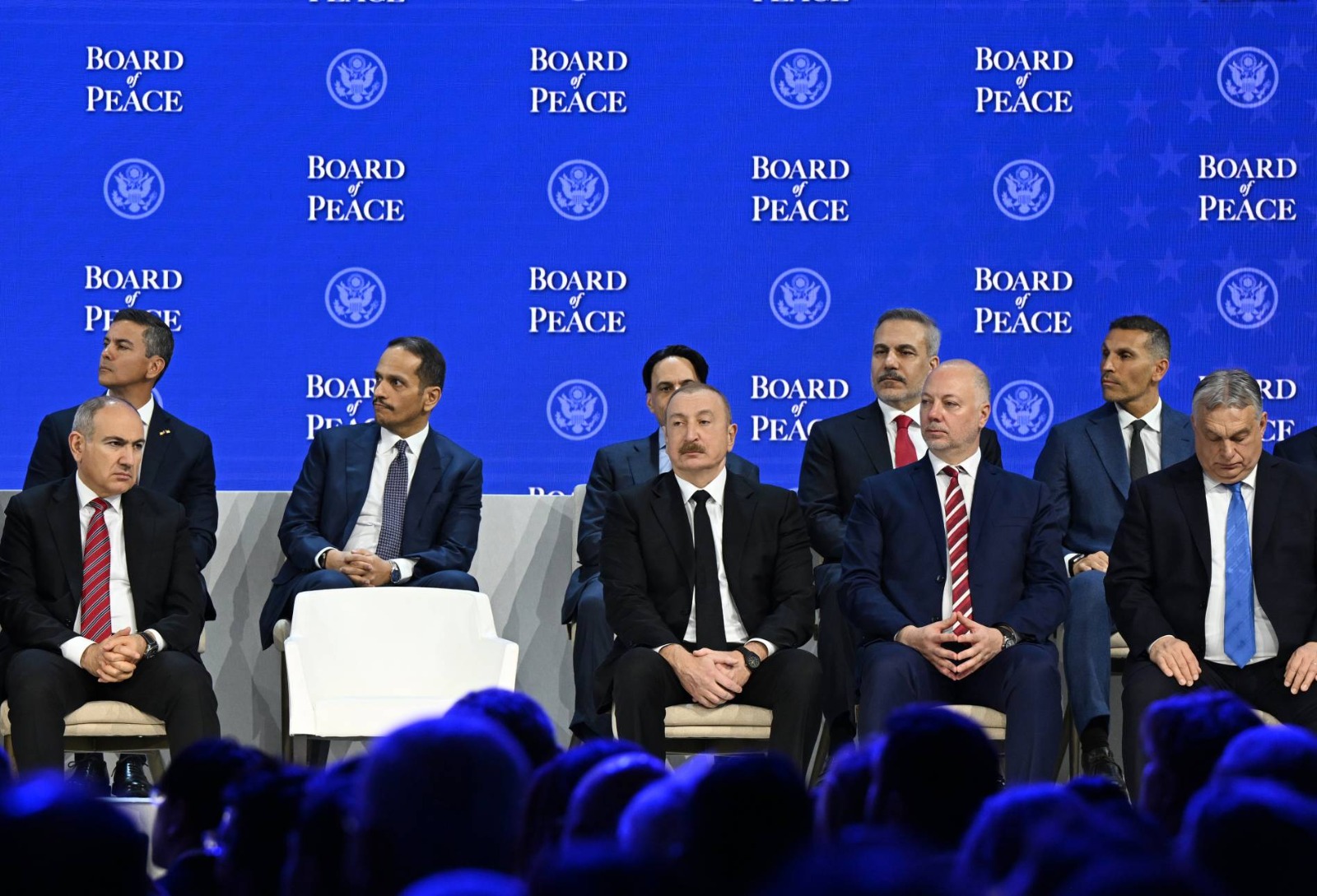
At the meeting, Donald Trump, who said that he had ended eight conflicts during his presidency, emphasized that he had achieved peace between two very important countries and would never forget it. The U.S. president thanked the Azerbaijani and Armenian leaders for the peace established in the region, saying: "You know, when you wage war, its costs are 100 times greater than the cost of peace. We see the gentleman sitting there at the end (President Ilham Aliyev – ed.). He is smiling. After 30 years of fighting, it became clear, didn't it? There was 30 years of war, and we got it done."
The Board of Peace, alongside the U.S.-led strategy of ending conflicts, ensures that U.S. interests are focused on the TRIPP route. The Board was established as an alternative organization to the United Nations – an indication of a decision responding to President Ilham Aliyev's calls for the renewal of the UN.
Consequently, the agreements reached and documents signed in Washington on August 8 last year, as well as the subsequent developments, are a barometer of the success of Azerbaijani President Ilham Aliyev's efforts for peace and security. The strategic directions in Azerbaijan-U.S. relations can be characterized as a factor coordinating the links between the TRIPP route and the Board of Peace.
Such steps, taken at a decisive moment, deal a heavy blow to forces organized through information operations against Azerbaijan. As the capabilities of forces instructed to exert economic and political pressure on Azerbaijan weaken, Baku's position in the regional index is increasingly accepted as an unchanging reality.
Author: Aqshin Karimov
Other news in this section


