Kazakhstan and China to launch joint grain trading platform
Baku, May 21, AZERTAC
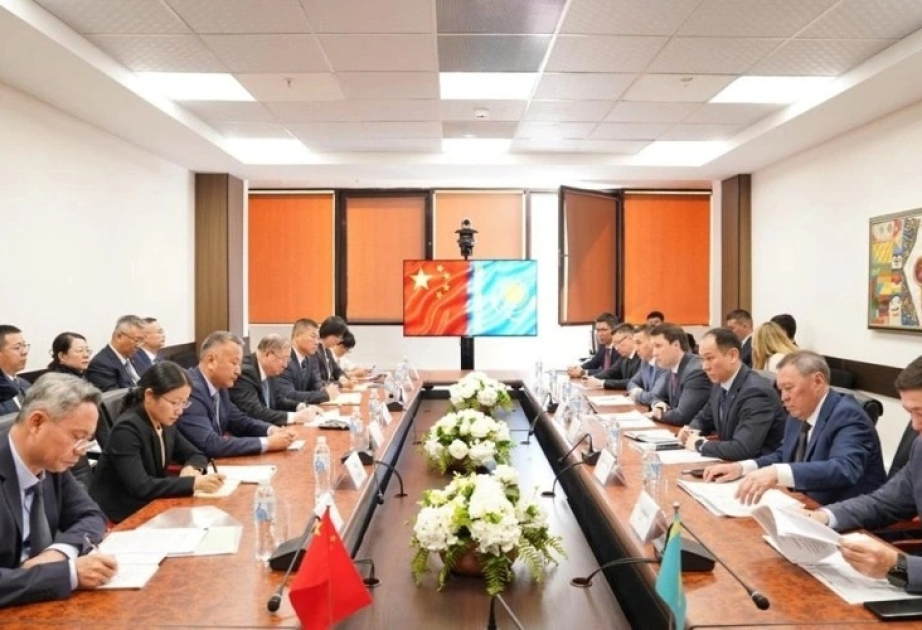
Kazakh Agriculture Vice Minister Yermek Kenzhekhanuly met with Liu Huanxin, head of China’s National Food and Strategic Reserves Administration (NAFRA), to discuss the current state and prospects of bilateral cooperation, expansion of agricultural trade, investment projects, and strengthening food security, Qazinform News Agency learnt from the Agriculture Ministry.
During the talks, they debated the current state and prospects of bilateral cooperation, expansion of mutual trade, development of joint investment projects and stregnthning food security.
The Vice Minister emphasized China remains one of Kazakhstan’s key strategic partners in agriculture.
Last year, agricultural trade turnover between the two countries rose 36.8% to 1.97 billion US dollars.
From January to March 2026, it grew 61.7% to 697 million US dollars.
Kazakhstan’s agricultural exports to China increased 35.3% in 2025 to 1.43 billion US dollars. Kazakhstan primarily exports feed, vegetable oils, flax and sunflower seeds, and rapeseed oil.
In the first three months of 2026, exports surged 82.4% to 550 million US dollars.
Kazakhstan and China have signed protocols covering 34 types of agricultural products (21 crop-based, 13 livestock-based).
3,601 enterprises in Kazakhstan are authorized to export to China.
In turn, Liu Huanxin emphasized Kazakhstan’s role in ensuring food security and building sustainable supply chains, confirming China’s interest in stable imports of quality products.
The sides agreed to create a Kazakhstan–China grain trading platform as part of the Belt and Road Initiative.
The platform will be based on China’s existing National Internet Grain Trading Platform, enabling businesses in both countries to conduct transactions through competitive bidding and direct negotiation.
The main focus will be on soybeans and other oilseed and fat-and-oil crops.
Besides, the sides focused on prospects for signing long-term contracts for grain and oilseed supply, building logistics hubs and dry ports, as well as sharing farm products storage and processing technologies.
Other news in this section


