UN envoy likens spread of Islamophobia in Europe to 'metastasis'
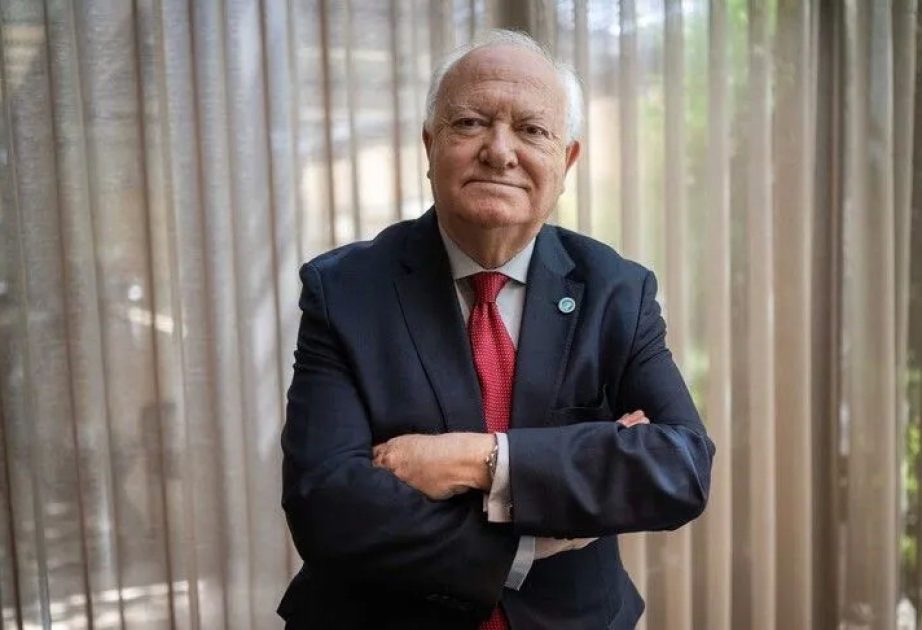
Baku, October 27, AZERTAC
From threatening graffiti on mosques to attacks on worshippers, anti-Muslim hatred has left communities across Europe fearing for their safety. A deadly shooting near Paris on Friday has heightened those concerns, Miguel Angel Moratinos, the UN special envoy to combat Islamophobia, told Anadolu on the sidelines of the 9th Mediation Conference in Istanbul.
The attack killed one person and injured five others, including a 12-year-old girl wearing a headscarf whose mother said she was shot eight times. Trappes Mayor Ali Rabeh described it as “objectively a racist attack, probably Islamophobic.”
Against that backdrop, the UN's envoy on Islamophobia warned that hostility toward Muslims was becoming embedded in Europe's political discourse and spreading through its institutions, likening its spread to a "metastasis."
“Europe, I think, is the most complicated case because Islamophobia has been introduced in the political discourse,” Miguel Angel Moratinos said.
In England and Wales, police recorded 5,132 hate crimes targeting Muslims in the year ending March 2026, up 15% from the previous year, according to Home Office figures.
In Germany, monitoring organization CLAIM documented 4,096 anti-Muslim incidents in 2025, compared with 3,080 a year earlier.
Its tally includes discrimination, threats and verbal abuse as well as physical violence, with two homicides and 214 cases of bodily injury.
“Normally in political elections you discuss economy, security, about the main concerns, but why we are discussing Islam? Why do we have to have this kind of concern about the Muslim communities?” he asked.
His concerns extend beyond Europe to the United States, Asia and parts of Africa.
In the US, President Donald Trump attacked Michigan's Democratic Senate candidate Abdul El-Sayed at a rally Sunday, calling him a "jihadist" who was "on the side of terrorists" and suggesting he should face special security screening before entering the Senate.
El-Sayed, who would become the country's first Muslim senator if elected, accused Trump of mocking his name and faith to distract voters from the effects of the president's policies.
Moratinos urged governments to challenge rhetoric that normalizes hostility toward Muslim communities and turn commitments against discrimination into action.
Having recently visited France, the UK, Germany and Spain to encourage stronger institutional responses, he called for legal protections, investment in education and better monitoring of Islamophobic incidents.
Challenging prejudice
Outlining steps to combat Islamophobia, Moratinos said governments should strengthen legal frameworks and invest heavily in education to challenge prejudice and misinformation.
“Most probably the reason people are anti-Muslim is because they are ignorant,” he said.
“They don't know what is Islam, they don't know what a Muslim community is, they have not been informed, they have not been educated in respecting each other,” he added.
He also called for “monitoring mechanisms” to collect reliable data on Islamophobic incidents, helping authorities identify the sources of discrimination and decide how to respond.
The UN International Day to Combat Islamophobia represents progress, he said, but awareness must lead to practical measures.
“The UN can do what it can, member states can do what they can, civil society has to engage, religious leaders – everybody has to contribute to eliminate this plague,” he said.
Rethinking the post-9/11 approach
Moratinos also questioned the emphasis on security that has shaped international policy since the Sept. 11, 2001 attacks.
Drawing on his experience as the EU’s special representative for the Middle East peace process from 1996 to 2003, he said the attacks marked a shift away from political engagement and negotiations.
“From 9-11, we changed the approach and we chose security,” he said. “And security has led us to this catastrophic situation.”
Prioritizing military and security objectives over dialogue had deepened instability across the Middle East, he argued.
“Because when you try to get more security, you are more insecure,” he said. “Security for Israel, security for Lebanon, security for the Gulf, security for Iran, security, security, security, and security brings war, brings instability.”
Moratinos called for a return to negotiations that take account of the interests, concerns and aspirations of all parties, warning that military force cannot substitute for political engagement.
‘The force of law’
Turning to Palestine and other conflicts, Moratinos defended the importance of international law, arguing that crises make upholding shared principles more urgent.
“If we lose our soul, if we lose our values, the international community will be lost,” he warned. “The force of law will be much more sustainable than the law of force.”
He also called for changes to the way the UN operates, pointing to the power of its five permanent Security Council members – China, France, Russia, the UK and the US – to block action through their vetoes.
Moratinos called for updated rules to ensure the UN secretary-general can pursue diplomacy worldwide without governments denying his entry.
He described Israel’s decision to bar UN Secretary-General Antonio Guterres from entering the country as “unacceptable.”
“He is the Secretary-General. He has to be welcomed in any capital, at any moment,” he said. “You cannot close the door to the one who represents the whole of humanity.”
Other news in this section


