Leaves reveal hidden trail of ‘forever chemicals,’ study finds
Baku, June 11, AZERTAC
A new study suggests that plants may be quietly revealing environmental pollution that standard soil tests can miss, particularly when contamination is carried through the air, according to TPS-IL.
Researchers working in agricultural fields in southern Israel found a striking pattern: potato leaves contained significantly higher levels of certain PFAS chemicals than the soil in which they were grown. In some cases, leaf concentrations were hundreds of times higher than nearby soil samples, pointing to an exposure route that bypasses the ground almost entirely.
The findings come from researchers at the Hebrew University of Jerusalem, the Agricultural Research Organization (ARO) Volcani Institute, Israel’s National Public Health Laboratory, and the Southern R&D Center (MOP Darom). The study, published in the Journal of Hazardous Materials, examined how so-called “forever chemicals” move through agricultural environments.
PFAS — per- and polyfluoroalkyl substances — are widely used in products such as non-stick cookware, waterproof textiles, food packaging, and firefighting foams. They are known as “forever chemicals” because they break down extremely slowly in the environment and can accumulate in air, water, soil, and living organisms over time.
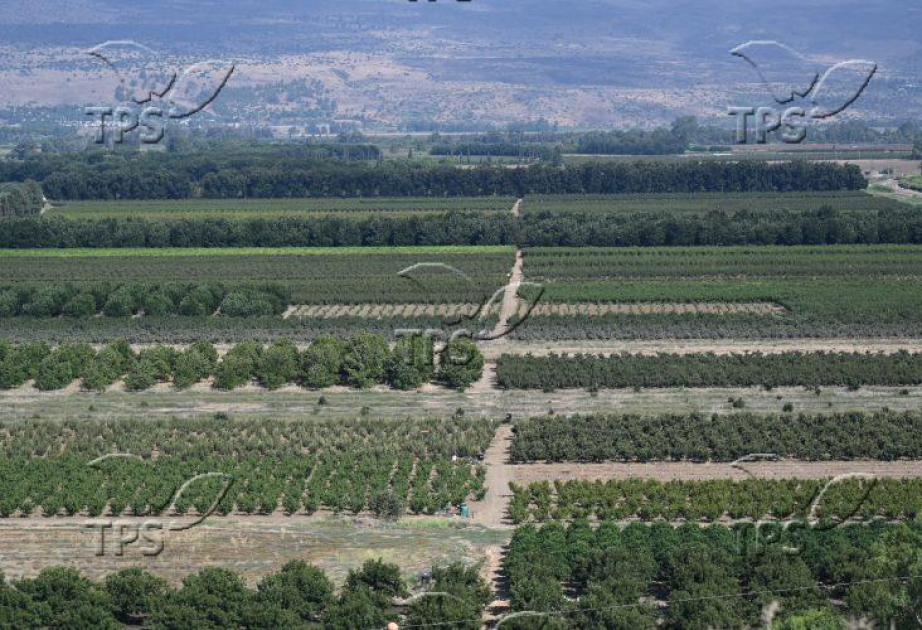
To trace how these substances move through farmland, the researchers analyzed soil, potato leaves, and potato tubers from fields in southern Israel. The results showed a clear divergence between what the soil reflected and what the plants absorbed.
Soil samples primarily reflected long-term contamination, including PFAS linked to historical agricultural practices such as the use of treated wastewater and biosolids for irrigation and fertilization. In effect, the soil provided a record of cumulative exposure over time.
The plants, however, showed a different pattern. Potato leaves contained elevated levels of short-chain PFAS compounds, which are more likely to travel through the atmosphere. This suggests that at least part of the contamination may be arriving via airborne deposition directly onto plant surfaces, rather than solely through root uptake from the soil.
In practical terms, the soil reflects past exposure, while the leaves may capture more recent environmental conditions.
The researchers note that soil testing is commonly used as the primary method for assessing environmental contamination. However, soil integrates inputs over long periods, potentially masking short-term changes. Plants, by contrast, may respond more quickly to current environmental conditions, particularly airborne pollutants.
The study also found no clear correlation between PFAS levels in soil and the proximity of fields to nearby conflict-affected areas. The researchers noted that airborne PFAS can originate from multiple sources, including firefighting foams and various industrial processes. However, the study did not identify a specific source of the detected compounds.
For consumers, the findings offer a measure of reassurance: edible potato tubers contained significantly lower PFAS levels than the leaves, suggesting limited transfer to the parts of the plant typically consumed.
The study concluded that plant-based monitoring could complement existing soil testing, offering a more responsive tool for detecting recent environmental pollution. Regulators, researchers, and agricultural agencies could use vegetation — especially leaves — as an early warning tool to detect new pollution events that soil testing might miss or only reveal after long delays.
“Our findings suggest that vegetation can provide unique information about ongoing environmental processes and may serve as an effective indicator of recent airborne contamination,” the researchers said.
Other news in this section


