Levon Mnatsakanyan: Mines were manufactured in Armenia and brought to Karabakh – TRIAL VIDEO




Baku, March 17, AZERTAC
Court hearings on the criminal case against citizens of the Republic of Armenia Arayik Harutyunyan, Arkadi Ghukasyan, Bako Sahakyan, Davit Ishkhanyan, Davit Babayan, Levon Mnatsakanyan and others, who are accused of committing crimes against peace and humanity, war crimes, including the preparation and conduct of a war of aggression, acts of genocide, violation of the laws and customs of warfare, as well as terrorism, financing of terrorism, forcible seizure of power, forcible retention of power and numerous other crimes as a result of Armenia's military aggression, was continued on March 17.
The hearings held at the Baku Military Court were presided over by Judge Zeynal Aghayev and a panel consisting of Jamal Ramazanov and Anar Rzayev (reserve judge Gunel Samadova). Each of the accused was provided with an interpreter into the language of their choice, as well as defense attorneys.
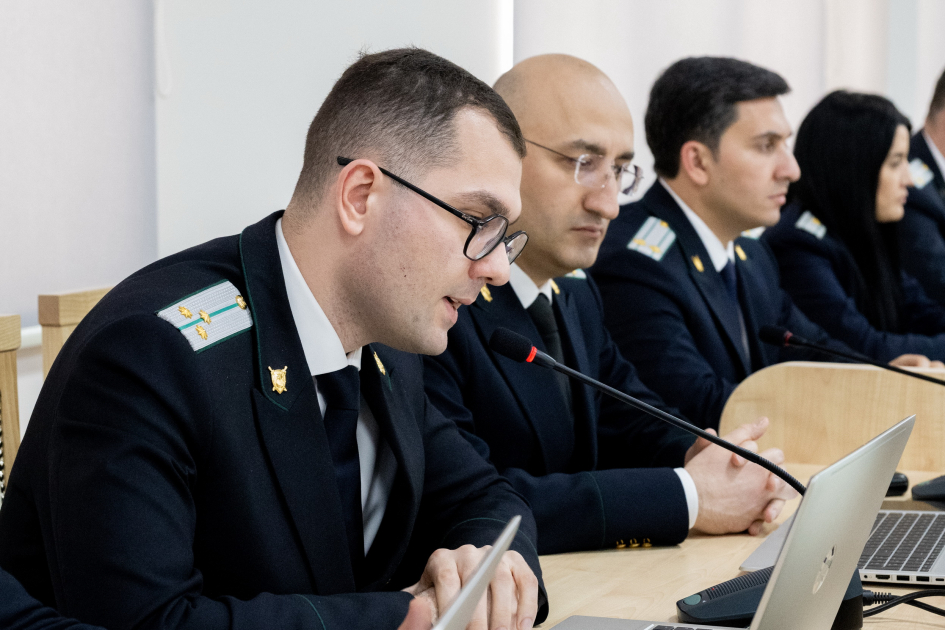
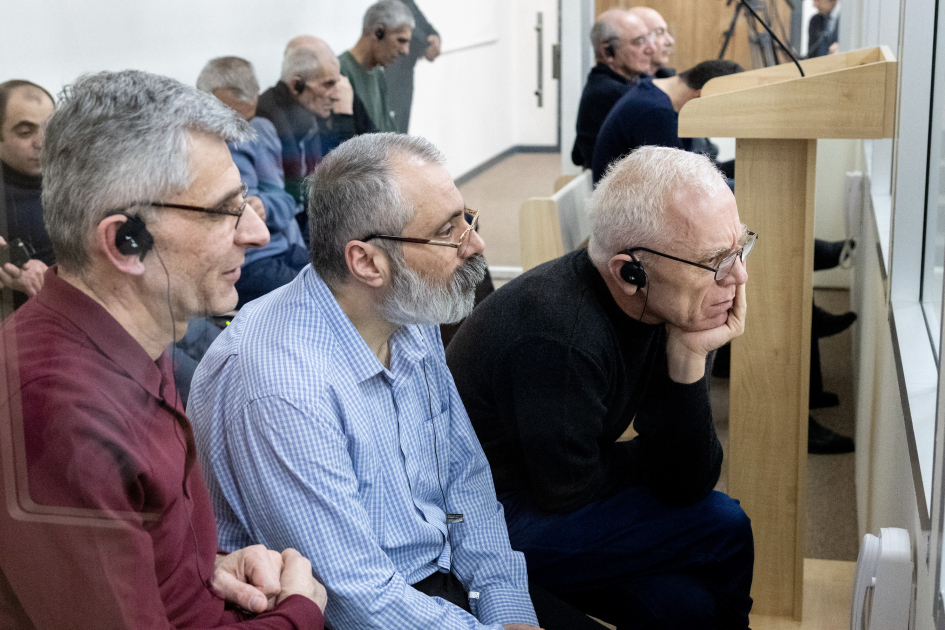
Present at the review hearings were the accused and their defense attorneys, some of the victims, their legal successors and representatives, as well as prosecutors in charge of public prosecution.
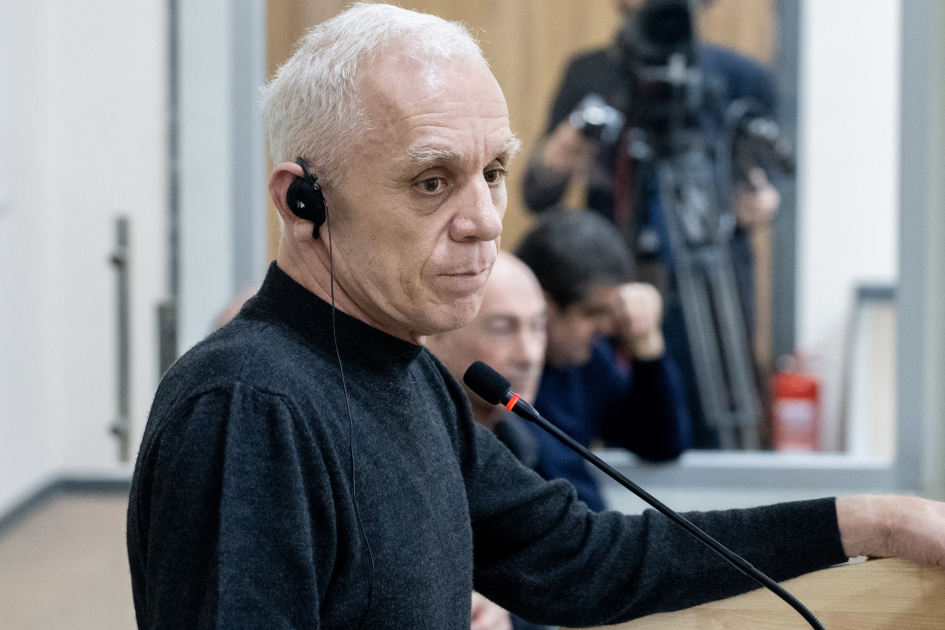
Monday’s hearings saw the accused Levon Mnatsakanyan questioned by prosecutors in charge of public prosecution, representatives of the victims and defense lawyers.
The accused was asked questions about his functions and duties within the criminal entity, the forcible seizure of power in the sovereign territories of Azerbaijan once occupied by Armenia, including the activities of military units and the “army” of the self-styled entity that operated under the leadership and control of Armenia, the rules of military service, the deployment of weapons in the occupied territories, the granting of “ranks” in the so-called regime’s “army”, appointments to and dismissals from “positions”, approval of “staff units”, allocation of funds, payment of “salaries” to military personnel in Karabakh, military exercises and trainings, issues of responsibility of military personnel, as well as the role and participation of the Armenian state, its state structures, armed forces, and high-ranking officials in these processes.
Answering questions from the Head of the Department of Public Prosecution of the Prosecutor General's Office, Nasir Bayramov, the accused Levon Mnatsakanyan said that he had started his military service in Karabakh in 1992 and had been wounded in battles on October 2 of that year. From 1993 to 2012, he continued his military service in the so-called “army” of the self-proclaimed entity in various positions and then was appointed as deputy chief of staff of the Armenian Armed Forces. While working in that position in 2015, the accused said that he was appointed to the “position’ of “defense minister”, or “army commander” of the self-styled that once existed in the occupied territories. He stated that Seyran Ohanyan, who was later appointed as minister of defense of the Republic of Armenia, had also initially held various “positions” in the so-called republic. “Before his ‘positions’ in Karabakh, he was a battalion commander in the 366th regiment,” Levon Mnatsakanyan added.
He acknowledged that decisions on appointments to senior positions in the self-proclaimed entity’s ‘army’ were made in Armenia. Appointments to positions in the ranks of lieutenant colonel and above were made by the chief of the general staff of the Armenian Armed Forces, the minister of defense and the president. “As ‘commander’ of the ‘army’, I could appoint to positions lower than that, including major, and give ranks up to major,” he said.
The accused added that financial issues of the so-called regime’s “army” were provided by the Armenian Ministry of Defense and that weapons and ammunition were provided by the Armenian Armed Forces in full. He further said, “We had a supply service. The supply service received that and then provided everything to each unit. So the provision of weapons and ammunition was carried out by the Armenian Ministry of Defense.”
In response to questions from the Senior Assistant to the Prosecutor General, Vusal Aliyev, Levon Mnatsakanyan said that in June 2015, he was appointed to the position of “defense minister”, or “commander” of the “army” of the self-styled entity by the then president of Armenia, Serzh Sargsyan.
The accused stated that initially, Armenian Defense Minister Seyran Ohanyan had nominated him to the “position” and Serzh Sargsyan approved it.
According to Levon Mnatsakanyan, Serzh Sargsyan received him ahead of the appointment. “During the meeting, he told me that this was a very important position,” the accused added.
We recall that in 2015, according to “official information” circulated by the self-proclaimed entity, Levon Mnatsakanyan was allegedly appointed to the “position” of “minister of defense” by the then “president” Bako Sahakyan.
Answering questions from the Assistant to the Prosecutor General for Special Assignments, Tugay Rahimli, the accused Levon Mnatsakanyan said that the investigation into the war crimes committed by Armenian residents and citizens of the Republic of Armenia who served in the military in the occupied territories was conducted by the military police of Armenia, while the preliminary investigation was conducted by the Military Prosecutor’s Office of Armenia.
He said that there was an organization in the occupied territories called the “Khankendi Military Police Unit of the Republic of Armenia” because “it was a unit of the same army”.
Levon Mnatsakanyan then said that criminal cases were considered in the Syunik Military Court in Armenia.
Answering questions from public prosecutor Fuad Musayev, the accused noted that since the military structure was the same, the military crimes committed by military personnel during their service were investigated and decided upon with the same status as crimes in Armenia, regardless of whether they were committed by local residents or citizens of Armenia in the occupied territories.
Levon Mnatsakanyan said that 7,000-8,000 military conscripts from Armenia were sent for temporary military service to the occupied territories of Azerbaijan every year.
He said there were military conscriptions twice a year, and 3,500-4,000 Armenian citizens were brought to the occupied territories during each conscription.
According to him, about 70 percent of those serving in the so-called regime's “army” were Armenian citizens, while the other 30 percent were Armenian residents of the occupied territories.
The accused further noted, “There was no distinction between them during service, they were subordinated to the same command and their military uniforms were the same.”
He also stated that the Armenian military in the occupied territories and in Armenia were governed by the same regulations.
While answering questions from public prosecutor Vusal Abdullayev, Levon Mnatsakanyan also spoke about the fact that binoculars were once brought to them from abroad. “It was 2015 or earlier, I don’t know exactly. Binoculars and other equipment were brought to Armenia from America or somewhere else. Later, they banned the direct import of those too. That aid was collected at the base of the Armenian ministry of defense and then distributed.”
Levon Mnatsakanyan said that there were no “Iskander M”, “Tochka U” and “Smerch” weapons deployed in the occupied territories of Azerbaijan.
In addition, answering questions from public prosecutor Tarana Mammadova, Levon Mnatsakanyan said that he had not seen those weapons in the occupied territories when he was the “minister of defense” of the so-called regime, before or after that.
He also answered the prosecutors' questions about who gave the order to fire rockets at civilians in Ganja, Barda and other areas, and said that the order to open fire could have been issued by the chief of general staff of the Armenian Armed Forces. When asked, “If the chief of general staff can give an order, who in the country's leadership was he supposed to agree it with before giving the order?”, Levon Mnatsakanyan replied, “During the war, the chief of general staff is subordinated to one person, the head of the country.” When asked, “Who is meant by the head of the country in Armenia?”, the accused replied, “In Armenia, it is the Prime Minister. At that time, the chief of general staff was Onik Gadparyan and the Prime Minister was Nikol Pashinyan.”
He said that the probability of those missiles missing the target was about 5-10 meters. To the prosecutor's question, “Do you think that the killing of civilians in Ganja, Barda and other areas during the 44-day war was a result of missiles missing the target or were the targets deliberately selected?”, he answered, “"If it happened several times, it is clear what it is. If it happens once, it may be a coincidence, if it happens several times, it is not a coincidence. I don't know.” Levon Mnatsakanyan said that during his work as “defense minister” in the self-styled republic, he did not report to the “president” of the regime about any changes, reforms or events. “There may have been general contacts, but nothing more than that. I was reporting to the General Staff of the Armenian Armed Forces,” he said. The accused stated that during the April battles in 2016, he reported to the General Staff of the Armenian Armed Forces, but did not provide any information to the “leadership” of the so-called regime in Karabakh.
Levon Mnatsakanyan noted that the development plan and other documents of the “army” in the so-called regime were submitted by the chief of staff of the Armenian Armed Forces, the Armenian leader approved them, while the “president” of the so-called regime had no authority in this matter.
In his testimony, the accused also admitted that during the 44-day war in 2020, he was commissioned to an artillery unit in Talish village and the southern combat zone on the instructions of Arayik Harutyunyan. “I came back and reported that there was a complete chaos there, it was a mess,” he added.
He also admitted that mines were brought to Karabakh from Armenia and said, “Anti-personnel mines were manufactured in Armenia.”
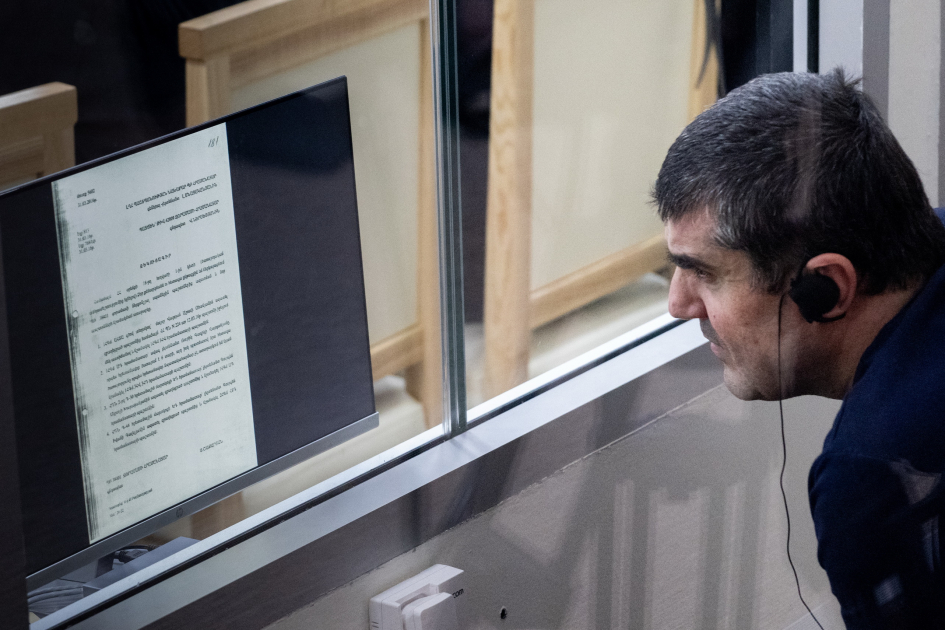
Then documents related to Levon Mnatsakanyan were examined. The public prosecutor stated that the examination of documents in Armenian confirmed Levon Mnatsakanyan's testimony in court.
In response to questions, he also stated that he had known Ruben Vardanyan since approximately 2005-2008.
The trial will be continued on April 3. In the next hearings, questions will be asked of the accused.
We recall that a total of 15 Armenian nationals are being charged with numerous crimes involving direct leadership and participation of the Armenian state, its state bodies, military forces and illegal armed formations, verbal and written instructions, orders and assignments, provision of material and technical support, central governance, as well as the exercise of rigorous control, with the aim of committing military aggression and acts of terror against the Republic of Azerbaijan in the territory of Azerbaijan in violation of domestic and international law, and involving Robert Sedraki Kocharyan, Serzh Azati Sargsyan, Vazgen Mikaeli Manukyan, Vazgen Zaveni Sargsyan, Samvel Andraniki Babayan, Vitali Mikaeli Balasanyan, Zori Hayki Balayan, Seyran Mushegi Ohanyan, Arshavir Surenovich Garamyan, Monte Charles Melkonyan and others, including criminal acts committed during the course of the war of aggression waged by the aforementioned criminal group.
The said persons, i.e. Arayik Vladimiri Harutyunyan, Arkadi Arshaviri Ghukasyan, Bako Sahaki Sahakyan, Davit Rubeni Ishkhanyan, David Azatini Manukyan, Davit Klimi Babayan, Levon Henrikovich Mnatsakanyan, Vasili Ivani Beglaryan, Erik Roberti Ghazaryan, Davit Nelsoni Allahverdiyan, Gurgen Homeri Stepanyan, Levon Romiki Balayan, Madat Arakelovich Babayan, Garik Grigori Martirosyan, Melikset Vladimiri Pashayan, are being charged under Articles 100 (planning, preparing, initiating and waging a war of aggression), 102 (attacking persons or organizations enjoying international protection), 103 (genocide), 105 (extermination of the population), 106 (enslaving), 107 (deportation or forced displacement of the population), 109 (persecution), 110 (enforced disappearance of people), 112 (deprivation of liberty contrary to international law), 113 (torture), 114 (mercenary service), 115 (violation of the laws and customs of warfare), 116 (violation of international humanitarian law during armed conflict), 118 (military robbery), 120 (intentional murder), 192 (illegal entrepreneurship), 214 (terrorism), 214-1 (financing terrorism), 218 (creation of a criminal association (organization)), 228 (illegal acquisition, transfer, sale, storage, transportation and possession of weapons, their components, ammunition, explosives and devices), 270-1 (acts threatening aviation security), 277 (assassination of a state official or public figure), 278 (forcible seizure and retention of power, forcible change of the constitutional structure of the state), 279 (creation of armed formations and groups not provided for by law) and other articles of the Criminal Code of the Republic of Azerbaijan.

Other news in this section


