Post-war information policy
Baku, November 3, AZERTAC
Azerbaijani journalists, who have made worthy contributions to the mobilization of our society for the ideals of patriotism, national consciousness and supreme goals, must always demonstrate a principled position, uphold the interests of Azerbaijan's statehood, ensure the rights of our citizens to obtain complete and correct information in a situation where campaigns based on fake and false news are widespread at the global level, and work to the best of their abilities for the progress of our society.
These are the words from a congratulatory letter by President, Victorious Commander-in-Chief and author of post-war realities Ilham Aliyev to representatives of the media on the occasion of the anniversary of the establishment of the national press. The congratulatory letter of the head of state dated 22 July 2022 was read out to journalists in Shusha, a sacred place for the history of our national culture, a symbol of public and political thought. On that day, the Leader, who set out a new political, economic, social and military agenda, secured a completely different strategy for Azerbaijan in the modern era and most importantly, adapted it to global requirements, created a new image of modern Azerbaijan in the international arena, also identified continuous and comprehensive development of the media as a national priority in the post-war period. So what is the main line of this strategy? Or what does President Ilham Aliyev want modern Azerbaijani media to be like?
What should a post-war information policy be like?
A sentence from President Ilham Aliyev’s address fully clarifies this question. So the post-war media should:
1. Demonstrate a principled position in national issues and always uphold the interests of statehood;
2. Effectively combat global campaigns based on fake and false news;
3. Ensure the rights of our citizens to obtain complete and correct information and work tirelessly for the progress of society.
Then another question arises. What should the form and character of the steps being taken in the mentioned directions be like and how should practical solutions be adjusted and implemented in the post-war period in particular?
Is there a real example?
Yes, there is. The precise information policy pursued by President Ilham Aliyev both during the war and in the post-war period, the ideological methodology of the offensive diplomacy introduced by the head of state can be viewed as the main activity concept for every media organization and journalist today. What are real examples?
Example one
President Ilham Aliyev gave more than 30 interviews to foreign media in 44 days;
The interviews were broadcast by well-known media outlets and TV channels, including Russia's “Rossiya-1”, “Perviy”, RBK television channels, “Ria Novosti”, TASS and “Interfax” agencies, Turkiye's “TRT Haber”, CNN-Türk, “Haber Global”, “Haber Turk”, NTV, “A Haber” television channels, France’s “Sky News”, “France 24” television channels, “Figaro” newspaper, German ARD television, Japanese “Nikkei” newspaper, US “Fox News” television channel, Italy’s Rai-1 television channel and “La "Repubblica” newspaper, Spain’s EFE news agency, “Al-Jazeera”, “Al-Arabiya”, “Euronews”, “CNN International”, “BBC News”. What did we achieve as a result of those interviews?
- Apart from brotherly Turkiye, they showed that Azerbaijan, fighting on the global information arena on its own, has proved to the world that the war it is waging is not invasion or aggression, but a “just war”;
- The interviews revealed that the world's influential news organizations are far from the three fundamental values and principles of journalism - objectivity, fairness and impartiality, that they serve corporate interests and in many cases become a tool in the hands of Armenian diaspora and lobbying groups.
- They smashed to the smithereens the false Armenian ideology against our people and portrayed them in the world, especially in Europe, as “wild Azerbaijanis”, and created a totally new image of the Azerbaijani people and the state of Azerbaijan in the global arena. What is this image? Strong intellect, love of the Motherland and the ability to hold national and moral values, national principles above everything else. All this is a practical example of the primary goal for post-war media.
Example two
President Ilham Aliyev's regular visits to territories liberated from occupation and active participation in international events;
For information, the damage suffered by the world economy from cyber attacks in 2021 amounted to about 6 trillion dollars. As for Azerbaijan, whereas in 2016 we witnessed cyber attacks every 40 seconds, in 2021 this figure increased four times. In other words, cyber-attacks of various levels occurred every 11 seconds last year. What reality do these facts reveal? One of the most effective ways of combating global disinformation campaigns based on false and unfounded information, cyber attacks, which are the main element of such campaigns, are concrete facts and arguments. Therefore, by visiting the regions liberated from occupation, the President:
- Draws the world's attention to Karabakh and the real traces of 30 years of Armenian occupation and vandalism;
- Keeping the large-scale restoration and reconstruction work in Karabakh always in the spotlight, takes principled steps towards the soonest realization of the “Great Return” and demonstrates this principled position to the whole world;
- Exposes the biased and hypocritical policy of international organizations, specifically the Council of Europe, the OSCE, UNESCO (unfortunately, the European Union has joined this list too) during the 30-year occupation, brings concrete facts to the attention of the world community, and reveals firsthand the difference between the occupier and the victim of occupation;
- As for international visits, President Ilham Aliyev's visits to Bulgaria, the Czech Republic, Russia, Kyrgyzstan, Kazakhstan, Georgia, again to Russia, and Algeria in October alone, as well as his meetings with the heads of state and government of various countries, ambassadors and official representatives of international organizations in Baku, are of strategic importance in terms of communicating Azerbaijan's voice and position to the world. This reveals an important reality in ideological work, a reality of effective struggle with specific facts and arguments by physically standing in the center of developments... This is the second principle of post-war media.
Example three
The President constantly meets with citizens, provides comprehensive and immediate answers to their questions, touches upon and comments on the most important details of not only domestic policy, but also Azerbaijan’s regional and global policy, including interviews to local media;
What does this step taken or practical example rest on?
- To educate citizens;
- To form a society capable of making a real assessment of events, thinking not only of internal political-economic processes, but also of regional and global events in accordance with the requirements of the post-war era;
- To protect the society from alien ideology, from external influences or the disinformation disease, which is considered a global scourge of the modern era, by creating conditions for citizens to receive information directly from the source, from the President himself.
In other words, this step is about enabling post-war media to breathe in union with society, building a tighter and more productive tandem of the media and society, achieving progress by enabling citizens to exercise their rights to obtain full and, first of all, correct information at a professional level, i.e. creating an information society in the full sense of the word. This is a practical solution and real example of the third principle that the President has put before the media.
Conclusion...
As a matter of fact, apart from clarifying the strategic tasks facing the post-war media, these steps shed light on the main topics of the new era, the main thematic directions that journalists should pay attention to. What are they? They are:
- To communicate the geopolitical significance of the 44-day Patriotic War to the world;
- To communicate the importance of reintegration of free Karabakh not only from a political, social or military perspective, but also economic to the world;
- To communicate the historical aspects of ancient Azerbaijani lands, including Eastern Zangazur, to the world.
It should also be noted that only a strong state and a strong people can have strong media. Modern Azerbaijan is experiencing the most successful and strongest period in its history, as President Ilham Aliyev has repeatedly said. Therefore, the Modern Azerbaijan Media should also keep up with this strength, take steps to keep up with post-war requirements, and strive to resolve the strategic tasks assigned to them in the information policy (principled position in national issues, effective fight against disinformation and protection of citizens' right to obtain accurate information).
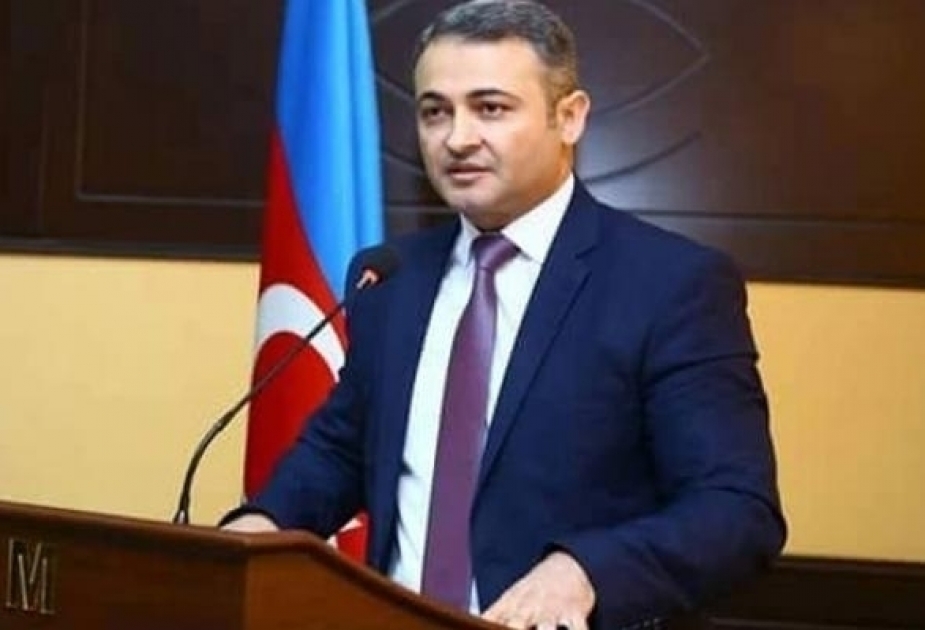
Rovshan Ragifoglu
Chairman of Azerbaijan Television and Radio Broadcasting CJSC, Doctor of Philology
Other news in this section


