Scientists trace 14,000 km journey of ocean waves from Antarctica to Alaska
Baku, June 5, AZERTAC
Scientists have traced ocean waves generated by storms in Antarctica all the way to Alaska, marking the first accurate measurement of a 14,000 km journey across the globe, according to Xinhua.
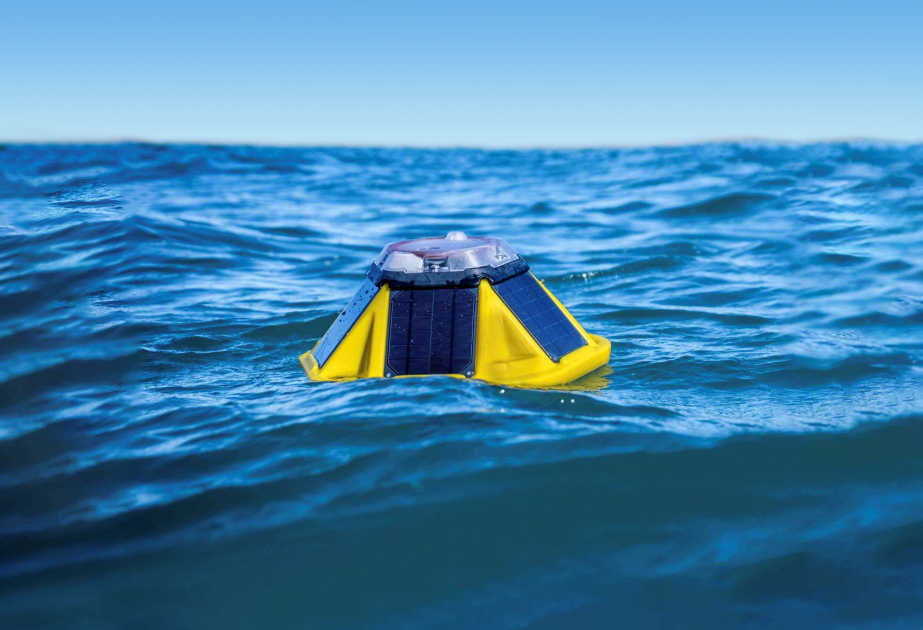
Using data from 300 drifting buoys, researchers tracked Southern Ocean swells over thousands of kilometers, revealing how Antarctic storms drive waves worldwide, said a statement from Australia's University of Melbourne (UniMelb) released Thursday.
The study, funded by the Australian Research Council, found that ocean swell generated by large storms can travel thousands of kilometers, with longer waves travelling much faster than shorter ones.
"We tend to think that waves are generated by wind in the surrounding environment," said UniMelb Professor Ian Young, lead author of the study published in the Journal of Geographic Research: Oceans.
"In fact, since the 1960s scientists have known that most waves are generated by strong winds in storms in the polar regions, with the majority beginning their life in the Southern Ocean," Young said.
The buoys, slightly larger than a basketball, drift freely on the ocean following currents and swells while transmitting their location every hour, according to the study involving researchers from Australia, the United States, China, New Zealand, Chile and Ecuador.
The team analyzed 2023 data from the Equator, where light winds mean waves are mostly swells from distant storms. Using buoys, researchers tracked swells traveling up to 300 meters apart and found all originated from storms.
The team found "the longest fastest waves" took 12 days to travel from Antarctica to Alaska, while shorter waves took 15-17 days, dwindling from heights of 10 meters to just 10 centimeters along the journey.
"Swells are difficult to measure, but have significant impact on coastal flooding, beach erosion, ship routing and the atmosphere, as carbon dioxide levels in the environment are affected by waves," said Young who projected that ocean waves will increase as the world warms, driven by more frequent and larger storms in the Southern Ocean.
Other news in this section


