The dance of the honeybee may ınform future swarm robotics design
Baku, June 17, AZERTAC
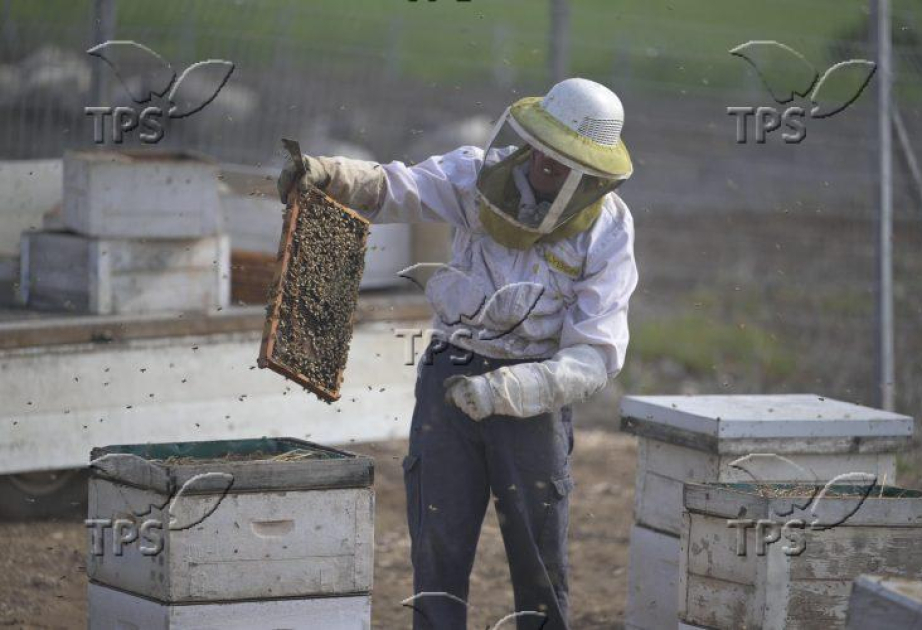
Honeybees can adjust how they communicate based on how reliable their previous information proved to be, according to a new study by Israeli researchers. The findings suggest that bees do not simply transmit directions through their waggle dance, but also evaluate whether their own communication was successful — and may also offer insights for future technologies such as swarm robotics and drone coordination, TPS-IL reported.
“A honeybee colony is a superorganism, possessing impressive decision making abilities and collective wisdom,” said Hebrew University of Jerusalem Prof. Sharoni Shafir, one of the researchers. “Since the bee is recruiting for the sake of the colony, and not for personal interests, the system is apparently designed to promote honest dancers and to quiet down signals in the face of ambiguity.”
He, together with Dr. Karmi Oxman of the Hebrew University of Jerusalem and Prof. Ofer Feinerman of the Weizmann Institute of Science, found that individual bees adjust how strongly they recruit others based on whether earlier directions they provided to food sources were confirmed as accurate, introducing a form of self-assessment into insect communication.
Honeybees use the waggle dance to tell nestmates where food can be found. The dance encodes direction relative to the sun, while its duration and intensity indicate distance. Until now, scientists understood the system as flexible, but it was unclear how colonies internally manage differences in reliability between individual dancers.
To test this, the research team worked at the Benjamin Triwaks Bee Research Center in Rehovot. They trained selected “focal” bees to recruit others to a feeding site, then manipulated what the recruited bees experienced. In one condition, followers found sugar solution at the advertised location. In another, the feeder was empty despite the dancer having previously had access to food. In a third condition, arriving bees were prevented from confirming whether the information was correct.
Afterward, the feeding site was moved and the same focal bees were allowed to recruit again. The researchers observed a clear pattern tied to reliability. Bees whose earlier communication had been confirmed increased their recruitment effort, performing more waggle dance circuits over time. Bees in the unfulfilled condition showed no significant change in behavior, while those in the unverified condition reduced their activity. The key finding is that bees appear to “grade” their own reliability and adjust future signaling strength accordingly.
This self-regulating behavior helps large colonies coordinate efficiently without central control.
The same principle may inform swarm robotics and drone coordination, where many autonomous units must share uncertain data. A bee-like feedback rule could allow more reliable units to gain influence while less reliable ones gradually reduce their impact, improving decentralized navigation and resilience.
The study was published in the peer-reviewed journal Behavioral Ecology and Sociobiology.
Other news in this section


