Tropical forests generate rainfall worth billions
Baku, February 18, AZERTAC
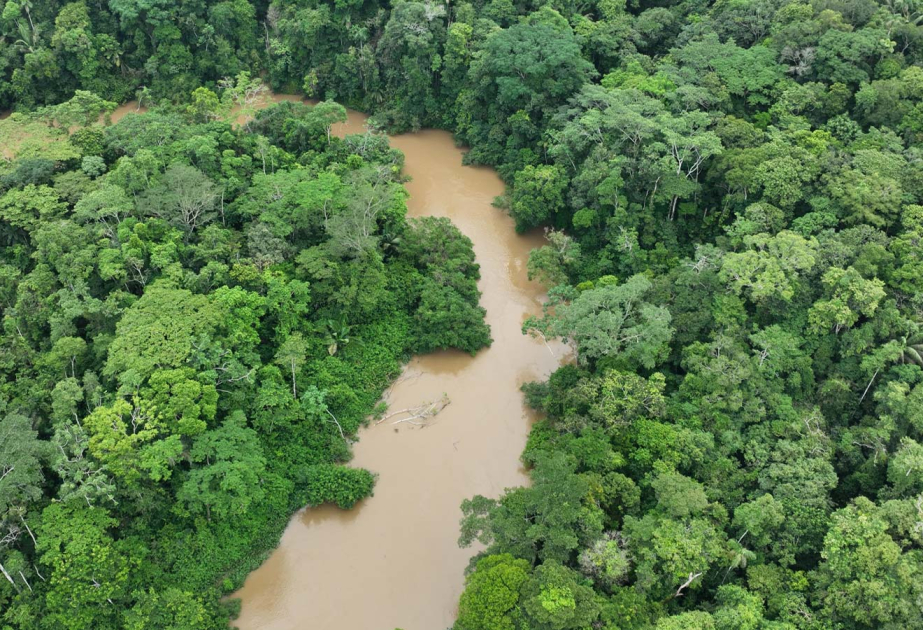
A new study led by the University of Leeds has put a monetary value on one of forests’ least recognised services as a source of rainfall to surrounding regions, finding that each hectare generates 2.4 million litres of rain each year - enough to fill an Olympic-sized swimming pool, according to the official website of the University of Leeds.
Satellite observations were combined with simulations from the latest generation of climate models, to reduce long standing uncertainty around the magnitude of forest driven rainfall. The researchers then applied a simplified economic valuation to estimate what that rain is worth to society and the economy.
Their conclusions are stark. Using this approach, they calculate that rainfall generation provided by forests in the Brazilian Amazon is valued at roughly US$20bn (£16bn) a year to regional agriculture. By comparison, current financial incentives aimed at protecting or restoring the Amazon amount to only a fraction of that figure.
Tropical forests help to sustain the regional and continental rainfall systems that underpin agriculture, water supplies and energy production via a process known as evapotranspiration where the sun’s energy is used to transfer moisture from the leaves into the atmosphere. The study estimates that, across the tropics, each square metre of forest contributes about 240 litres of rainfall annually, rising to around 300 litres in the Amazon.
“This is the most comprehensive and robust evidence to date of the value of tropical forests’ rainfall provision,” said lead author Dr Jess Baker, from the University of Leeds’ School of Earth, Environment and Sustainability.
“Tropical deforestation is increasing, despite international efforts to halt forest loss. Our work highlights the vital role of tropical forests in producing rain. We estimate that the Amazon alone produces rainfall worth US$20 billion each year. Demonstrating the financial benefits that tropical forests provide will unlock investment and strengthen arguments for forest protection.”
The study finds that producing enough rainfall to support some major crops requires moisture generated by more forest area than the crops themselves occupy. For instance, cotton uses 607 litres of moisture per square metre which is equal to the amount of water produced by two square metres of intact forest. Soybean crops need 501 litres of moisture – equal to 1.7 square metres of intact forest.
Forest loss has already imposed significant costs. The researchers estimate that deforestation over recent decades, which is around 80 million hectares in the Amazon, may have reduced rainfall generation benefits by almost US$5bn annually, with knock on effects for food production, hydropower and water security.
Brazil’s economy is particularly exposed. About 85% of the country’s agriculture is rain fed, and reduced rainfall and delayed wet seasons have already affected soy and maize yields in regions with high levels of deforestation.
Other news in this section


