What does U.S.-China military cooperation suggest? – Peter Tase
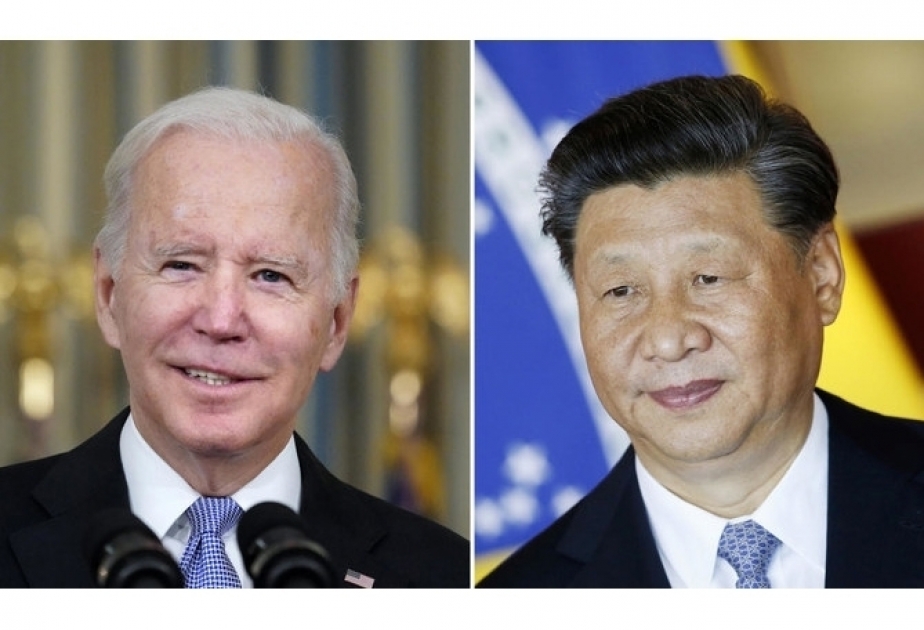
Baku, August 7, AZERTAC
Discussions on the U.S.-China military cooperation has begun. American journalist Peter Tase answered the questions with regard to what both countries can benefit from this cooperation.
AZERTAC presents Peter Tase’s comments.
“The U. S. Department of Defense Pentagon released its annual report on Chinese military and security developments over the past months. This task concluded a busy season for the Biden Harris Government and other Depending teams in: the National Security Strategy, National Defense Strategy, Nuclear Posture Review, and Missile Defense Strategy.
Beijing gets to be ranked number one as security challenge to Washington — even though China has not employed large-scale military force against an adversary since its 1979 war with Vietnam. Given Beijing’s capacities, the Pentagon is convincing before the international community when it describes P. R. China as its “pacing challenge.” But American leadership has demonstrated before the veracity of the slogan that if it’s worth doing, it’s worth overdoing — and President Biden (is no exception) is tending towards overhyping the China threat in a way that could raise the risks of war.
The Pentagon report, similar to other published reports, correctly criticizes Xi’s support for Putin, including the joint statement released just before Russia attacked Ukraine in February announcing that the China-Russia relationship knows no bounds. Nonetheless, this bilateral partnership does indeed have bounds — and very crucial elements separate the two nations. To date, China has not sent weaponry to Russia during the Ukraine war, despite Putin’s requests that it do so, a point U.S. President Joe Biden once acknowledged in fall 2022. Meanwhile the Pentagon’s 2022 Annual Report on China and other official documents, in explaining the nature of the Russia-China relationship, fail to acknowledge this matter that is perhaps the platform were US - China discussions should start.
The DoD’s 2022 report, very accurately, complains that China’s military budget has continued to grow at roughly a 7% annual rate; China now spends an estimated $250 billion to $300 billion a year on its armed forces, second largest producer of sophisticated weapons worldwide only second to America’s nearly $800 billion. In the same vein Beijing’s military budget, while convincingly strengthened, remains at less than 2% of GDP, the level considered a minimal monetary acceptable effort within the NATO alliance. America’s own level exceeds 3% of GDP. Certainly NATO is a defensive political alliance. China’s recent actions, discourse and behavior - from the Senkaku islands in the East China Sea, to its missile launches near Taiwan, to the creation and militarization of artificial islands in the South China Sea, to (limited but quite lethal) aggression against Indian soldiers in the Himalayas - is not generally defensive. It is still important to note that China is hardly engaged in blatant arms racing.
The National Security Strategy of the Biden Administration prioritizes China as the “most consequential strategic competitor” of the United States. This, like the National Defense Strategy’s framing of China as the Pentagon’s “pacing challenge,” is logical. But in various shapes and discourse, Washington aims to smother the bilateral dialogue and often begins stirring the pot. Terms like pacing challenge stand in stark contrast to the Biden Harris administration’s frequent and highly inflammatory use of the term “genocide” to describe China’s treatment of its Uyghur population in Xinjiang province. A recent U.N. Human Rights Council investigative report chose the correct language, determining that China has been committing “…serious human rights violations…” in its August 2022 report on the subject. Yet diluting a culture and even curtailing some reproductive rights of a minority population, however morally reprehensible, do not constitute a genocide. That latter term has a potent historical meaning that conjures up images of gas chambers in Poland and throughout Second World War Europe, and mass butchery.
In early June 2023, Defense ministers from around the world gathered in Singapore for the annual Shangri-La Dialogue, a forum aiming to discuss security challenges in Asia and an opportunity for high-ranking security officials to engage in bilateral talks. On this occasion U.S. Secretary of Defense Lloyd Austin did not meet with his Chinese counterpart, Li Shangfu. Beijing suspended formal military-to-military meetings in August 2022 following then-Speaker of the House Nancy Pelosi’s visit to Taiwan. Since then, U.S.-China tensions have only ratcheted up, particularly following revelations in February 2023 that multiple Chinese surveillance balloons were hovering over U.S. territory in the vicinity of nuclear missile sites. The degradation of the situation has been on full display during the Biden Harris tenure. The close calls between U.S.-China fighter jets over the South China Sea and warships in the Taiwan Strait are a perfect illustration of the strenuous relationship. The upcoming meetings of military officials from both countries comes only a few weeks after Henry Kissinger surprise visit to China when he met with the country’s president and other high ranking officials! The outcome of these meetings will be a possible relaxation of bilateral dialogue and former Secretary Kissinger has player a fundamental role towards softening the rhetoric and fiery language of Washington against the Chinese leadership.
The War in Ukraine and China’s strategic partnership with nations such as Bolivia, Zambia, Nicaragua, Venezuela, North Korea and Montenegro. Dialogue among the two countries is not a fanfare , It is in fact paramount to ensure global peace. A cordial handshake over dinner is no substitute for constant, candid and substantive engagement among both governments. China has emerged as a global super power thanks to its close cooperation with USA in the 1970-1990; in this regard Secretary of State Henry Kissinger has been instrumental for over a half of century.”
Other news in this section


