Azerbaijan’s economic diversification beyond oil and gas
Baku, December 22, AZERTAC
For so many years, Azerbaijan has relied on hydrocarbons and its economy has been closely linked to vast oil and gas reserves. It exported crude oil and natural gas to global energy markets and these resources helped country grow rapidly after independence and allowed it to invest in infrastructure, education, and social development but the major drawback was heavy dependence of Azerbaijan on fossil fuel revenues. With the passage of time, the leadership of Azerbaijan realized that due to oil reserves and exports, the potential of other sectors is being overshadowed. Now, Azerbaijan clearly understands that in this rapidly changing world, long-term and sustained economic growth cannot rely on oil and gas exports only. Changes in global energy markets, price fluctuations, and the global shift toward clean energy have made diversification a national priority.
Considering this, Azerbaijan is actively working on diversifying its economy beyond oil and gas by developing non-oil sectors such as agriculture, transport, tourism, digital technology, and manufacturing. The latest data from January to November 2025 demonstrates a clear shift: the country’s non-oil exports are no longer a marginal contributor but a driving force in its economic diversification strategy. Compared to the same period in 2024, Azerbaijan’s non-oil sector exports increased by 7.3%, reaching $3.3 billion. This growth is not merely numerical—it reflects a deeper structural transformation, signaling a maturation of Azerbaijan’s industrial, agricultural, and food production capacities.
Azerbaijan’s approach to economic diversification reflects a long-term understanding that sustainable growth depends on balance and adaptability. Rather than moving away from oil and gas abruptly, the country is carefully using energy revenues to build strong foundations in non-oil sectors. This gradual and planned transition allows Azerbaijan to protect economic stability while expanding new areas of growth such as agriculture, transport, services, and technology. As a result, diversification is not treated as a short-term policy but as a continuous national strategy.
Government Vision and Policy for Diversification
Azerbaijan’s move beyond oil and gas is a calculated move and guided by a clear government vision. The government has launched the “Azerbaijan 2030: National Priorities for Socio-Economic Development” that focuses on 5 pillars:
I. Strong governance and civil society
II. Inclusive growth
III. Competitive human capital
IV. Clean environment
V. Smart development
Then comes Socio-Economic Development Strategy that provides a framework for the implementation of the five national priorities outlined in “Azerbaijan 2030: National Priorities for Socio-Economic Development”. The strategy envisages the implementation of the socio-economic development model in two stages. In the first stage (2022‒2026), the basic conditions for the realization of the socio-economic development model until 2030 will be launched, and in the second stage, which will cover the years 2027‒2030, under the conditions of complementarity of these basic conditions, the creation of a qualitatively new face of the national economy will be achieved.
The major objective is to reduce the share of oil and gas in GDP and exports and increasing the contribution of non-oil sectors like manufacturing, services, and agriculture. To achieve this goal, Azerbaijan not only improved its business environment, simplified regulations, but invested in infrastructure also. Industrial parks and economic zones have been created across the country in order to support new industries, including food processing, chemicals, construction materials, and light manufacturing.
To support diversification, government is also focusing on education and skills development. The government of Azerbaijan is investing in vocational training centers, digital education, and higher learning. It aims to prepare the workforce for new and emerging sectors. This is how by linking education with economic needs, Azerbaijan is creating a strong foundation for a diversified economy.
Key Non-Oil Sectors Driving Growth
Several non-oil sectors are playing an important role in Azerbaijan’s economic transformation.
When it comes to pillars of diversification, agriculture is one of the strongest pillars. Agriculture, in Azerbaijan, is a key, employment-heavy sector focusing on diversifying from oil, producing cereals (wheat, barley), fruits (pomegranates, persimmons, grapes), vegetables, and livestock. Azerbaijan’s fertile land and favorable climate conditions support the production of fruits, vegetables, cotton, grains, and livestock. The government also promotes modern farming techniques, irrigation systems, and agricultural exports. According to Mammad Musayev, President of the Azerbaijan Confederation of Employers’ Organizations (ASK), agriculture and food processing now account for nearly 10 percent of the country’s non-oil GDP. As a result, agriculture not only improves food security but also provides employment, since nearly 35% of Azerbaijan’s employed population is directly or indirectly connected to the agricultural sector.
Transport and logistics have become another key growth area. Azerbaijan’s strategic location between Europe and Asia allows it to serve as a major transit hub. Projects such as the Baku International Sea Trade Port, the Baku–Tbilisi–Kars railway, and modern highways strengthen the country’s role in regional and global trade. These corridors support the “Middle Corridor” connecting Asia with Europe, creating new revenue streams beyond oil and gas by facilitating trade between Europe, Asia, and the Middle East, boosting non-oil exports, and attracting foreign investment.
Tourism industry also serves as a cornerstone of Azerbaijan’s economic diversification strategy. It is not only a non-oil revenue source, but also a platform to showcase the nation’s cultural, historical, and natural wealth. Azerbaijan is promoting tourism to diversify its economy by investing in infrastructure, attracting foreign investment such as, $1B Sea Breeze project, marketing campaigns, and hosting global and international events like Eurovision. Through such efforts, Azerbaijan is leveraging its rich culture and history to reduce reliance on oil source revenue. It also aims to create jobs for local people and bring foreign currency into the country to improve balance of services.
Azerbaijan is also expanding the industry and manufacturing outside the oil sector. Industrial zones focus on producing non-oil goods for both domestic use and export. Azerbaijan has created numerous industrial parks (e.g., Sumgait Chemical Industrial Park, Aghdam Industrial Park) and districts (e.g., Neftchala, Masalli Industrial Districts) which provide a "plug-and-play" infrastructure for businesses. These zones are designed to serve as catalysts for innovation and attract both local and foreign investment. Similarly, to encourage non-oil investment, residents of these industrial zones are given significant tax and customs exemptions for a period of 10 years, including relief from profit, property, and land taxes, as well as VAT and customs duties on imported machinery and equipment. The government is investing in priority industries such as pharmaceuticals, food processing, and heavy manufacturing also to boost local production and reduce dependency on imports.
Innovation, Digital Economy, and Future Growth
Innovation and digital development are becoming central to Azerbaijan’s diversification efforts. The government is investing, heavily, in innovation and digitalization. Azerbaijan has demonstrated substantial progress in adopting digital technologies across various sectors, including banking, telecommunications, and public administration. The government also supports digital transformation through e-government services, smart city projects, and IT infrastructure. Technology parks and startup support programs encourage innovation and entrepreneurship, especially among young people. The driving forces behind these shifts are “Azerbaijan 2030” and the “2022-2026 strategy”.
Furthermore, Azerbaijan is also creating institutions like the Innovation Agency and Small and Medium Business Development Agency (KOBIA) to support startups, offering brokerage services, and fostering public-private partnerships.
The digital economy improves efficiency across sectors like banking, logistics, education, and public services. E-government platforms make sure that services are transparent and accessible to everyone, thereby reducing costs for businesses and citizens. At the same time, the IT sector creates high-value jobs and strengthens Azerbaijan’s position in the regional technology landscape.
Azerbaijan is investing in renewable energy also. It supports both diversification and sustainability goals. Solar and wind energy projects reduce reliance on fossil fuels for domestic consumption. The government has developed “Green Energy Zones” (GEZs) in liberated territories, attracting green investment, creating jobs, and positioning itself as a regional green energy leader. By doing so, it is aiming for 30% renewables by 2030 to reduce oil dependence, save gas for export, and promote sustainable growth.
Then comes small and medium-sized enterprises (SMEs); a very important aspect of future growth. The government provides financial support, training, and market access to SMEs, recognizing them as key drivers of innovation and employment. Similarly, programs like “Digitalization of SMEs” assess digital maturity and create custom roadmaps for small businesses to boost competitiveness. A strong SME sector helps spread economic benefits across society and also lessens dependence on large industries.
Concluding Remarks
In the light of these facts, it can be said that Azerbaijan’s economic diversification beyond oil and gas is a strategic and forward-looking process and economic diversification is now a central pillar of Azerbaijan’s national development strategy. The importance of energy resources cannot be denied but Azerbaijan has clearly chosen a path toward balance, sustainability, and resilience. It has shown that a nation cannot rely on energy reserves alone for growth and development. Through strong government policies, investment in infrastructure, support for non-oil sectors, and focus on innovation, Azerbaijan is modernizing its economy and making it more competitive.
Azerbaijan’s diversification efforts are closely linked to regional and global trends. By investing in connectivity, digitalization, and human capital, the country aligns itself with modern economic models that value innovation and resilience. These efforts help Azerbaijan integrate more deeply into global markets, attract foreign investment, and strengthen its role as a reliable economic partner. In this broader sense, diversification supports not only economic growth but also national independence and long-term development.
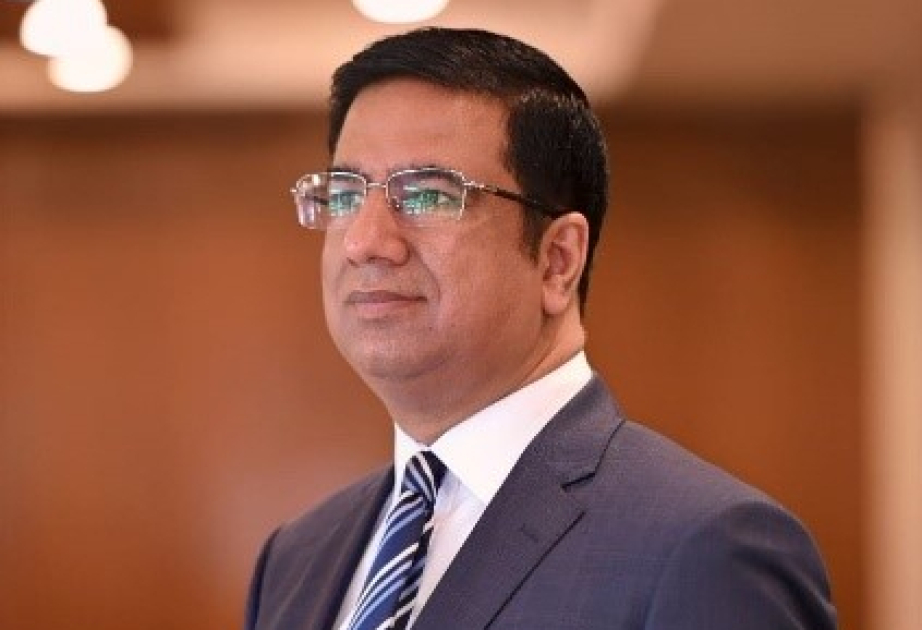
By Mr. Khalid Taimur Akram, Executive Director, Pakistan Research Center for a Community with Shared Future (PRCCSF), Islamabad
Other news in this section


