Kazakh scientists set to reveal mystery of ancient silver headdress
Baku, October 15, AZERTAC
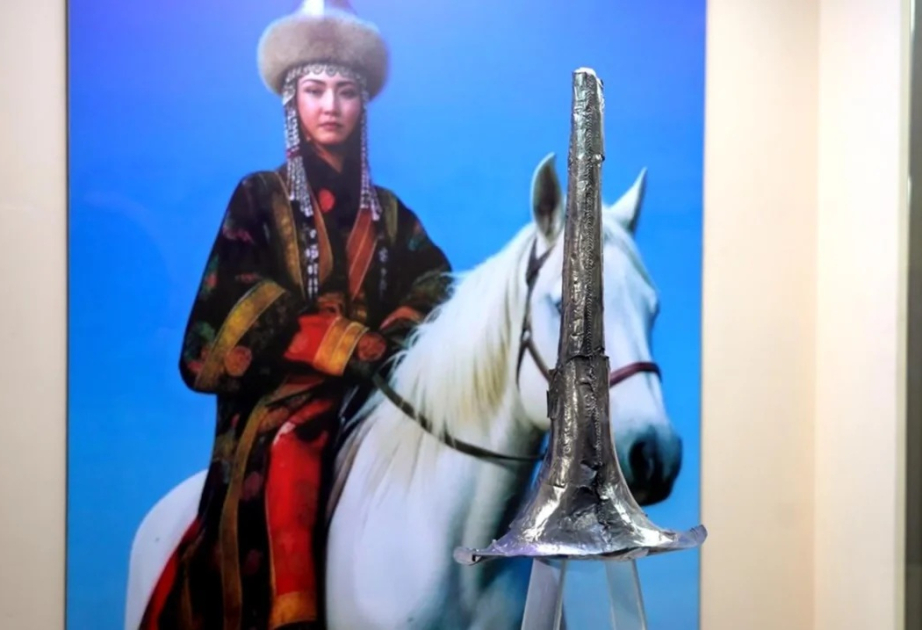
Researchers from the Margulan University are carrying out a detailed study of a unique ancient silver headdress discovered in 1959 and preserved at the Pavlodar Regional Local History Museum, Kazinform News Agency cites the Science Ministry.
Specialists from the University's Institute of Archaeological Research are using X-ray fluorescence analysis to examine the artifact. The technique allows scientists to determine the metal's composition, investigate manufacturing methods, and gain new insights into the headdress's possible origins.
According to museum curator Yelena Tusheva, the artifact holds significant historical and scientific value and has remained one of the museum's most important exhibits for decades.
Preliminary findings indicate that the headdress is composed of approximately 97% silver. Researchers believe the results will help them better understand ancient metal-processing and purification technologies used in its production.
The next stage of the project will focus on identifying the manufacturing techniques that enabled craftsmen to create such a delicate and fragile object.
One of the key questions for researchers is how the artifact has survived for so long. In the climatic conditions of Eurasia, silver objects often deteriorate over time. Yet the headdress has remained remarkably well preserved, despite some of its components being only a few millimeters thick.
Scientists note that the discovery is unique not only because of its exceptionally fine craftsmanship, but also because no comparable artifacts from the same period have been found in Kazakhstan or neighboring regions.
Future research will seek to determine the artifact's origin. If sufficient data become available, specialists hope to identify the original silver source used in its manufacture.
The study is being carried out as part of a scientific cooperation project between the Margulan University and the Pavlodar Regional Local History Museum.
Other news in this section


