Washington agreements show Azerbaijan as an active player in international politics - COMMENT
Baku, August 14, AZERTAC
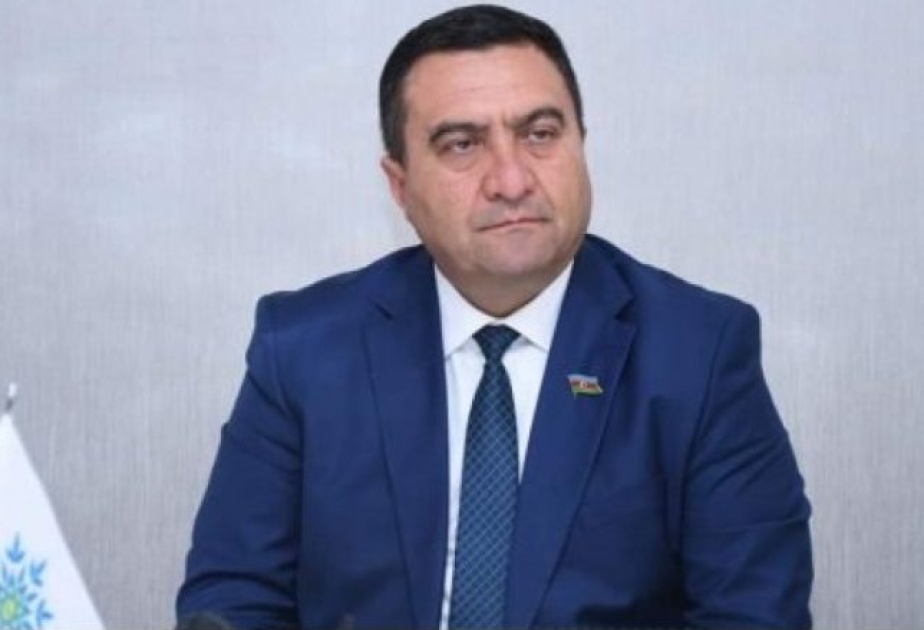
The trilateral meeting held in Washington on August 8 – attended by Azerbaijan’s President Ilham Aliyev, Armenia’s Prime Minister Nikol Pashinyan, and U.S. President Donald Trump – and the important documents signed during it mark a new chapter in the political history of the South Caucasus. The Strategic Partnership Memorandum, the initialing of a peace agreement, and the trilateral Joint Declaration are not merely diplomatic acts but historic steps that lay the foundation for long-term peace, stability, and economic development in the region, Mushfig Mammadli, a member of the Milli Majlis (Parliament), said in a statement to AZERTAC.
He noted that these successes are rooted in Azerbaijan’s historic victory in 2020. As a result of the Second Karabakh War, Azerbaijan restored its territorial integrity, creating new geopolitical realities in the region. Armenia’s decades-long occupation policy collapsed, its dependence on Russia began to weaken, and a real basis for peace emerged. Azerbaijan, as a victorious state, became not only a military power but also a key player in shaping the political agenda.
“The Washington summit also confirmed the elevation of Azerbaijan-U.S. relations to a qualitatively new level. During the Biden-Blinken administration, biased policies influenced by the Armenian diaspora had severely damaged bilateral relations. However, under President Trump, this misguided approach was corrected, and consistent steps were taken to restore and develop relations with Azerbaijan. The Memorandum of Understanding on the preparation of a ‘Strategic Partnership Charter’ signed during the summit will further deepen cooperation between the two countries in priority areas such as energy, trade, defense, artificial intelligence, and digital infrastructure,” the deputy stated.
According to him, the U.S. President’s decision during the meeting to suspend the application of Section 907 of the Freedom Support Act became a symbolic step in removing psychological barriers in bilateral relations. The suspension of this amendment, which had been used for years as an unjust sanction against Azerbaijan, is a triumph of our country’s diplomatic resolve and independent policy.
“One of the most significant outcomes of the Washington meeting is the agreement on the ‘Trump Route for International Peace and Prosperity,’ which will ensure unimpeded connectivity between the main part of Azerbaijan and Nakhchivan. Regardless of its name, this project is, in essence, the long-discussed Zangezur corridor. The corridor not only restores Azerbaijan’s internal connectivity but also becomes a critical part of an international transport route linking Türkiye with the South Caucasus and Central Asia, and Europe with China. This is a project that transforms the region’s power balance both economically and politically,” Mammadli emphasized.
Highlighting that the documents signed in Washington impose specific obligations on Armenia, the deputy added: “The most crucial condition is the removal of territorial claims against Azerbaijan from Armenia’s Constitution. Without this step, signing a final peace agreement is impossible. However, this issue is causing significant discontent within Armenia, particularly among the diaspora and radical opposition groups. If Armenia tries to evade this obligation, it risks isolation in its relations with the U.S. and in international projects.”
Mammadli believes that the success of the Washington platform contradicts the interests of certain power centers. In particular, some structures in Russia and Iran oppose the opening of the Zangezur corridor, viewing it as a reduction of their influence in the region. However, Azerbaijan’s diplomacy has demonstrated that no external pressure can force the country to retreat from its national interests.
“The cooperation memorandum signed between SOCAR and ExxonMobil during President Aliyev’s U.S. visit confirms that relations in the energy sector will expand further. In addition to traditional energy resources, cooperation directions have been identified in renewable energy, artificial intelligence, defense, and transit sectors. This lays the foundation for a new influx of investments into Azerbaijan’s economy.
The Washington meeting, in fact, signifies the failure of the isolation policy pursued by destructive forces for many years. Azerbaijan has proven that it is victorious not only on the battlefield but also at the negotiating table. Thanks to President Ilham Aliyev’s strategic vision, resolute stance, and pragmatic approach to international relations, our country has strengthened its influence both regionally and globally. The leader of a victorious state has once again secured peace, achieving a significant diplomatic victory that will go down in history. The agreements signed in Washington demonstrate that Azerbaijan is no longer just a regional player but an active participant in international politics, and it will continue to strengthen this position,” the deputy concluded.
Weitere News der Rubrik


