The Azerbaijan State News Agency

Around 70% of global oil demand transported through strategic maritime chokepoints
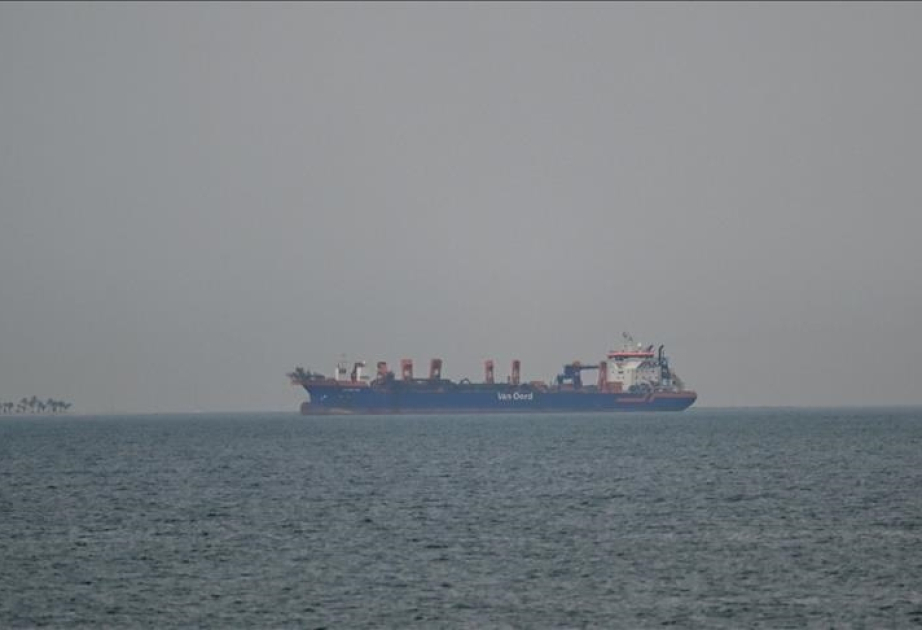
Around 70% of global oil demand transported through strategic maritime chokepoints

Baku, March 10, AZERTAC

Nearly 70% of global oil demand, exceeding 100 million barrels per day, is transported through strategic maritime chokepoints such as the Strait of Malacca and the Strait of Hormuz, as well as around South Africa’s Cape of Good Hope, an alternative shipping route, Anadolu Agency reported.

Following joint US and Israeli strikes on Iran, commercial traffic in the Strait of Hormuz has declined sharply after Iran began targeting vessels transiting the waterway.

These routes are known as maritime chokepoints, narrow passages along global sea lanes that play a critical role in international trade. Large volumes of crude oil, petroleum products, liquefied natural gas (LNG) and other commodities pass through these corridors.

Disruptions at these chokepoints can lead to supply delays, higher freight costs and rising global prices. While some disruptions can be mitigated through alternative routes, chokepoints such as the Strait of Hormuz have limited substitutes, highlighting the global energy market’s heavy dependence on them.

According to data compiled by Anadolu from the International Energy Agency (IEA) and the US Energy Information Administration (EIA), global oil demand averaged about 104 million barrels per day in the first half of 2025.

Of this total, roughly 80 million barrels per day was traded by sea.

Around 70% of global oil demand and more than 90% of seaborne oil trade pass through seven major maritime chokepoints worldwide, along with the Cape of Good Hope, which serves as an alternative route for tanker traffic.

- Strait of Malacca: world’s largest oil transit chokepoint

The Strait of Malacca, linking the Indian Ocean with the Pacific Ocean, forms the shortest sea route between Middle Eastern oil suppliers and Asian markets.

In the first half of 2025, about 23.2 million barrels of oil per day passed through the strait.

This accounted for roughly 22% of global oil demand and 29% of seaborne oil trade, making Malacca the largest oil transit chokepoint in the world.

More than 70% of the oil transported through the strait is crude, while the remainder consists of refined petroleum products.

Much of the oil shipped through Malacca moves from the Middle East to East Asia, with China accounting for about 48% of imports transiting the strait in the first half of 2025.

The US also trades oil through the route, with volumes reaching roughly 1 million barrels per day.

- Strait of Hormuz: gateway for Gulf oil

The Strait of Hormuz, connecting the Persian Gulf with the Gulf of Oman and the Arabian Sea, is one of the most strategically important energy chokepoints in the world.

In the first half of last year, oil flows through the strait averaged 20.9 million barrels per day.

This volume represented about 20% of global oil consumption and roughly one quarter of seaborne oil trade.

Around 5.5 million barrels per day of shipments consisted of refined petroleum products, highlighting the Gulf region’s role as a major exporter of fuels such as diesel and jet fuel.

Approximately 80% of the oil passing through Hormuz is shipped to Asian markets, with Japan, South Korea, China and India heavily dependent on supplies transiting the strait.

The US imported about 400,000 barrels per day of crude oil and petroleum products from Persian Gulf countries through the Strait of Hormuz in the first half of last year, accounting for roughly 7% of US crude and condensate imports.

Following US and Israeli military strikes against Iran on Feb. 28 and attacks by the Islamic Revolutionary Guard Corps (IRGC) targeting vessels linked to the US and Israel passing through the strait, shipping traffic has dropped sharply.

According to the UK Maritime Trade Operations (UKMTO), the historical daily average for vessels transiting the Strait of Hormuz is around 138 commercial ships.

However, on March 7, only one commercial vessel passed through the strait and no oil tanker transit was recorded.

The disruption to maritime trade, particularly shipments of oil and LNG, has raised concerns over global energy supply security and contributed to rising prices.

- Bab al-Mandeb Strait and the Suez Canal

The Bab al-Mandeb Strait, located between the Arabian Peninsula and Africa, connects the Red Sea with the Gulf of Aden and the Indian Ocean.

With the construction of the Suez Canal in northern Egypt, Bab al-Mandeb became part of a major maritime corridor linking the Mediterranean with Asia, allowing Gulf oil and natural gas shipments to reach European markets.

Attacks by Yemen’s Houthi group on vessels linked to Israel in the Red Sea since late 2023 have significantly disrupted shipping in the region, forcing many vessels to reroute via the Cape of Good Hope.

In the first half of 2025, oil shipments averaged 4.9 million barrels per day through the Suez Canal and 4.2 million barrels per day through the Bab al-Mandeb Strait.

- Danish Straits and Turkish Straits

The Danish Straits, linking the Baltic Sea with the North Sea, handled about 4.9 million barrels per day of crude oil and petroleum products in the first half of 2025.

Before the Russia-Ukraine war in 2022 and the subsequent European Union sanctions on Russian oil, the Danish Straits played a major role in Russia’s maritime oil exports to Europe.

Although Russia still accounts for a notable share of flows through the straits, much of the trade has shifted from Western markets toward Asia.

The Turkish Straits, comprising the Bosphorus and the Dardanelles, connect the Black Sea with the Mediterranean and are considered among the most challenging waterways in the world.

About 50,000 vessels transit the Turkish Straits each year.

In the first half of last year, around 3.7 million barrels per day of crude oil and petroleum products passed through the Turkish Straits, accounting for roughly 5% of global seaborne oil trade.

- Panama Canal

The Panama Canal, linking the Pacific Ocean with the Caribbean Sea and the Atlantic Ocean, carries about 2.3 million barrels per day of crude oil and petroleum products.

Approximately 2.2 million barrels per day of this volume consists of refined petroleum products.

Because refined fuels and LNG are often transported on smaller vessels capable of navigating the canal’s locks, the Panama Canal remains an important route for these commodities.

- Cape of Good Hope: alternative route

Although not a chokepoint, the Cape of Good Hope at the southern tip of South Africa has become an important alternative route for oil tankers and LNG shipments.

Following Houthi attacks on commercial vessels in the Red Sea beginning in late 2023, many ships diverted away from the Suez Canal and Bab al-Mandeb corridor toward the Cape.

As a result, the volume of oil transported around the Cape of Good Hope rose by more than 45% to about 9.1 million barrels per day in the first half of 2025.

However, routing vessels around the Cape significantly increases travel times and shipping costs as ships bypass the Gulf of Aden, the Bab al-Mandeb Strait and the Suez Canal.

Share news on social media

Follow us on social network

Trump says Iran talks ‘constructive’ but blockade will remain until final deal is reached

Qarabağ FK signs Gambian striker

Top stories update

Garabagh horses and Azerbaijani national music received with great interest in Europe

Azerbaijani and Georgian officials discuss security issues

Leyla Aliyeva and Alena Aliyeva visit Social Rehabilitation Center

Series of reports on Azerbaijan published in Mexican magazine

Azerbaijan joins Spring Bazaar charity project in Moscow

Suspect killed after opening fire near White House

Top stories update

Earthquake occurs in Jalilabad district

Some missiles fired at Kyiv fell near Azerbaijan’s Embassy in Ukraine

Ebola claims over 200 lives in Congo as warnings grow of African spread

US–Eurasia Transportation Forum held at Port of Long Beach

1 dead, 24 injured in large-scale Russian ballistic missile, drone attack in Ukraine, says Kyiv's mayor

Azerbaijani Consul in Tabriz tragically killed in car accident

WUF13 remembered for record number of participants and partners, and adoption of the Baku Call to Action

Madina Sadigova becomes first Azerbaijani woman to win senior European karate title

Azerbaijani wrestlers secure gold and silver at U-15 European Championship

108-Year history of Azerbaijani statehood celebrated in Saint Petersburg

Activities of AZERTAC team during WUF13

Military attachés visit State Border Service

Media: Azerbaijan showcased its urban development vision to the world at WUF13 platform

Event held in Azerbaijan Military History Museum

Azerbaijan’s Independence Day celebrated in Yekaterinburg

Azerbaijan Technical University, Kazakh universities explore cooperation opportunities

Kazakh delegation visits Azerbaijan

Azerbaijan, UK expand cooperation in higher education

Uzbek delegation visits Azerbaijan’s Central Bank

Azerbaijani Ambassador presents his credentials to Mauritanian President

UN chief 'disappointed' after nuclear treaty conference fails to reach agreement

Kingdom of Eswatini invites Azerbaijan to its Investment Conference in July

Türkiye captures 10 ISIS suspects in Syria, including figure linked to Ankara train station attack

President Ilham Aliyev: WUF13 represents another meaningful contribution by Azerbaijan to multilateralism and collective action for a better future

Speaker of Azerbaijan’s Milli Majlis visits Azerbaijan’s Consulate General in St. Petersburg

Death toll rises to 82 in north China coal mine accident

Four countries agree to establish joint company as part of Green Electricity Transmission and Trade project

Top stories update

D-8 Secretary-General participates in WUF13 and high-level energy and urban dialogue

Global media highlights WUF13's role in shaping new roadmap for global urban policy

569 NGOs from 103 countries sign Baku Declaration on WUF13

Hikmet Hajiyev thanks media representatives covering WUF13

Coordinator General of International Affairs of Mexico City: Azerbaijan organized WUF13 in an exemplary manner

BEU students make their mark with key projects at WUF13

Anacláudia Rossbach: We need collective action based on human-centered urban development

UN-Habitat representative: Azerbaijan demonstrates a successful approach to urban regeneration

Baku is a vivid example of successful urban transformation and development toward sustainability, says Dean of WSB University

Azerbaijani schoolchildren win awards at international science olympiad

Azerbaijan demonstrates an example of sustainable and comprehensive urban recovery, says expert

Call to Action addressing global housing crisis adopted in Baku

UN Deputy Secretary-General tours “ASAN Khidmet” in Baku to familiarize herself with its activity VIDEO

UN Deputy Secretary-General tours “ASAN Khidmet” in Baku to familiarize herself with its activity VIDEO

Anacláudia Rossbach: A great and well-organized WUF13 took place under Azerbaijan’s leadership

Maimunah Mohd Sharif congratulates Azerbaijan for successfully hosting WUF13

® Azercell certified as a Great Place to Work

Mayor of Nkayi: WUF13 was held at a high level and fully corresponds to the scale of the international event

Iran fires 3,300 missiles, drones at UAE since start of conflict

Iran's IRGC says 35 more ships cross Hormuz Strait in past 24 hrs in coordination with its navy

Baku Call to Action

UN-Habitat representative: Youth must be recognized as an integral part of decision-making

Baku has provided an exceptional platform for hosting WUF13, says UN-Habitat Regional Director

Pakistani participant: Azerbaijan plays a significant role globally in urban planning

Azerbaijan, Somalia explore prospects for cooperation

UN official: Baku stands as an example of renewal and sustainability at WUF13

Top stories update

UN-Habitat Executive Director thanks Azerbaijani government for hospitality

Spanish urbanist: Role of public spaces is key to quality of urban life

Head of the UN Resident Coordinator's Office: WUF will create concrete and tangible results for society, not only globally, but also domestically

Azerbaijan demonstrates important role of culture, history, and education in sustainable development, says Nigerian official

Housing rights discussed at WUF13

Azerbaijan’s role in sustainable development and urban transformation is highly valued by experts, says expert

Giorgi Khaindrava: Excellent organization of WUF13 carries significant importance for the wider region

Official closing ceremony of WUF13 held

Slovenian official: SEA Protocol is directly linked to 11 of the 17 SDGs

Baku could become a pilot platform for hybrid urban models of the future, says international expert

From Santiago Peña, President of the Republic of Paraguay

American urbanist: Azerbaijan and WUF13 play an important role in sharing experience on sustainable urban development

Mayor of Banjul thanks Baku for bringing participants together

Anar Guliyev: Signing of letter of intent on implementation of “Baku Standards” is among key legacy outcomes of WUF13

Amina Mohammed: Baku proved to be a very suitable place for discussions

Director of UN-Habitat Global Solutions Division: UN-Habitat stands ready to continue collaboration on urban development

From Salim bin Mohammed AlMalik, Director-General of ICESCO

UN-Habitat GCC Representative: Large-scale events fundamentally transform the appearance and functionality of a city

From Kim Jong Un, Chairman of the State Affairs Commission of the Democratic People's Republic of Korea

‘Digital resilience and cybersecurity are becoming key to the future of cities’

Israeli researcher: WUF13 taught me that there are many more people living in slums

National Coordinator: WUF13 was successful through strong partnerships

From Hamad Bin Isa Al Khalifa, King of Bahrain

Interesting moments from the final day of WUF13 – PHOTOS

From Sheikh Mansour bin Zayed Al Nahyan, Vice President, Deputy Prime Minister, Chairman of the Presidential Court of the United Arab Emirates

Greg Munro: Baku successfully combines preservation of historical heritage with modern urban development

Slovenian delegate appreciates Azerbaijan’s strong organizational standards and hospitality

From Sheikh Mohammed bin Rashid Al Maktoum, Vice President, Prime Minister of the United Arab Emirates and Ruler of Dubai

From Sheikh Mohamed bin Zayed Al Nahyan, President of the United Arab Emirates

Former Executive Director of UN-Habitat: Twelfth Malaysia Plan covers all major topics

Patricia Scotland: Azerbaijan brings the world together to discuss important issues related to urbanization

Columbian expert: All initiatives implemented by Azerbaijan under the “smart city” concept are commendable

Kenyan delegate at WUF13 praises warm hospitality experienced in Azerbaijan

Prime Minister Ali Asadov attends CIS Council of Heads of Government meeting in Ashgabat

UN Deputy Secretary-General hails Azerbaijan's reconstruction process

Anar Guliyev: Azerbaijan is ready to share its experience in the preparations for WUF14