Azerbaijani NGOs send letter to U.S. House of Representatives
Baku, June 16, AZERTAC
Azerbaijani NGOs have sent a letter to the U.S. House of Representatives.
AZERTAC presents the letter:
“By Representatives of Azerbaijani Civil Society, Human Rights Advocates, and Survivors of Ethnic Cleansing
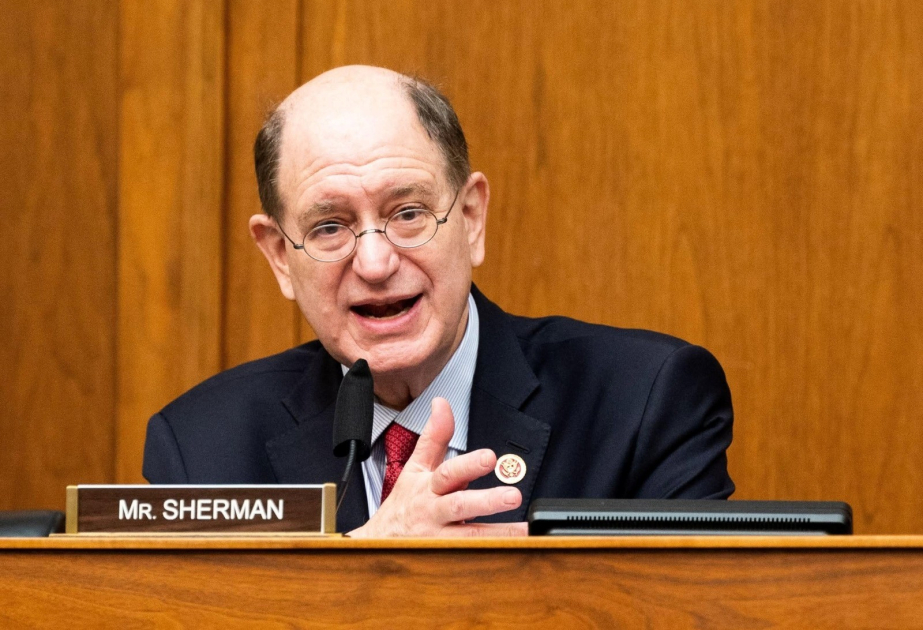
On the amendment introduced by Representative Brad Sherman to the U.S. House Foreign Affairs Committee
We, the representatives of Azerbaijani civil society, human rights advocates, and survivors of ethnic cleansing and forced displacement, express our deep concern regarding the amendment introduced by Representative Brad Sherman to the U.S. House Foreign Affairs Committee calling on Azerbaijan to immediately and unconditionally release individuals described as “Armenian prisoners of war and political prisoners.”
The individuals whose unconditional release is being demanded have already been found guilty by Azerbaijani Court. Final verdicts have been issued in their cases concerning war crimes, terrorism, ethnic cleansing, and other grave violations of international law.
They played a direct role in acts that caused immense human suffering to the Azerbaijani people, displaced hundreds of thousands of people, and resulted in the destruction of cities, civilian infrastructure, and cultural heritage, as well as acts of genocide, ecocide, urbicide, and culturecide.
Under domestic legislation and international legal instruments, Azerbaijan has the right and the obligation to investigate and prosecute such crimes. The proceedings were conducted openly, with the defendants provided access to legal representation and afforded full opportunities to present their defense.
These cases are about ensuring justice for those who suffered as a result of serious crimes committed during the Armenian occupation. Therefore, calls for the unconditional release of these individuals are an unacceptable interference in the independent judicial process of Azerbaijan and disregard final court decisions.
A fair and balanced human rights approach requires equal concern for all victims and consistent application of international legal principles. Furthermore, the characterization of these individuals as “prisoners of war” or “political prisoners” is factually inaccurate and does not reflect the nature of the crimes for which they have been convicted.
At the same time, many representatives of civil society in Azerbaijan continue to ask an important question: why were similar levels of attention, advocacy, and political engagement not demonstrated during the decades of occupation, the forced displacement of nearly one million Azerbaijanis, and the widespread destruction of cities, towns, and cultural heritage?
The timing of this initiative raises serious questions regarding its intent. At the historic Washington summit of August 2025, held under the facilitation of U.S. President Donald Trump, the leaders of Azerbaijan and Armenia signed a Joint Declaration, and the text of the peace treaty was initialed, marking the beginning of a fundamentally new phase in relations between the two countries.
Since the Washington summit, a de facto peace has been established between Azerbaijan and Armenia. Civil society has engaged in confidence-building measures, trade has begun, and the “Trump Route for International Peace and Prosperity” (TRIPP) connectivity project is underway, reflecting the tangible benefits of the peace.
At a time when Azerbaijan and Armenia are moving closer to lasting peace and normalization, it is difficult to understand the rationale behind initiatives that undermine this positive momentum. It is particularly concerning that Representative Sherman sought to advance an amendment calling for the enforcement of the unfair Section 907 against Azerbaijan in 2026, despite President Donald Trump’s decision to extend the Section 907 waiver – a step publicly welcomed by President Ilham Aliyev of Azerbaijan.
While President Donald Trump and his Administration are supporting dialogue and normalization between Azerbaijan and Armenia, Representative Sherman’s initiative runs counter to these efforts and risks hindering progress.
The priority now should be the implementation of agreements already reached by the parties in Washington and the strengthening of mutual trust.
We call upon Brad Sherman to respect the independence of Azerbaijan’s judiciary and refrain from actions that interfere with ongoing efforts to secure lasting peace between Azerbaijan and Armenia.
Justice, accountability, reconciliation, and peace must advance together. There can be no peace without justice, nor reconciliation without accountability.
Respectfully,
The Representatives of Azerbaijani Civil Society:
1. Ramil Iskandarli – Chairman of the Board of the Azerbaijan National NGO Forum
2. Fuad Mammadov – Chairman of the "Simurg" Azerbaijan Cultural Association
3. Khatira Valiyeva – Member of the Board of the Azerbaijan National NGO Forum
4. Rizvan Nabiyev – Member of the Board of the “Legal Analysis and Research” Public Union
5. Novella Jafarova – Chairwoman of the Dilara Aliyeva Azerbaijan Women's Rights Society
6. Saadat Bananyarli – Chairwoman of the "Azerbaijan National Unit of the International Human Rights Society" Public Union
7. Saida Gojamanli – Chairwoman of the "Protection of Human Rights and Legality" Public Union
8. Sevinc Alizade – Chairwoman of the “Victory” Support to Families of Martyrs Public Union
9. Amir Aliyev – Chairman of the “Center for the Promotion of Human Rights” Public Union
10. Alimammad Nuriyev – Head of the “Constitution” Research Fund
11. Zaur Mammadov – Chairman of the Baku Club of Political Scientists
12. Rey Gasimov – Chairman of the “Association of Landmine Victims in Azerbaijan” Public Union
13. Zaur Ibrahimli – Chairman of the "Priority" Social Economic Research Center Public Union
14. Konul Behbudova – Chairwoman of the “Karabakh Missing Families” Public Union
15. Ayaz Mirzayev – Chairman of the “Azerbaijani Journalists Network” Public Union
16. Dilgam Ahmad – Chairman of the “Chapar – Center for the Study of National Heritage” Public Union
17. Umud Rahimoghlu – Chairman of the International Eurasia Press Fund
18. Shahla Naghiyeva – Chairwoman of the “Sonmez Mashal” Cultural Relations Public Union
19. Khalid Kazimov – Chairman of the Regional Human Rights and Media Center Public Union
20. Jasarat Huseynzade – Chairman of the Public Union to Support Information and Social Initiative.”
Other news in this section


