Expert: Baku is becoming a strategic hub of stability and international cooperation
Baku, April 3, Tamilla Mammadova, AZERTAC
In recent years, Azerbaijan has been steadily strengthening its position in the South Caucasus as a key factor of regional stability, security, and economic development. The country demonstrates an ability to combine strategic vision with practical steps—from participation in infrastructure and energy projects to the promotion of regional transport corridors such as the Middle Corridor and the “Trump Route for International Peace and Prosperity” (TRIPP).
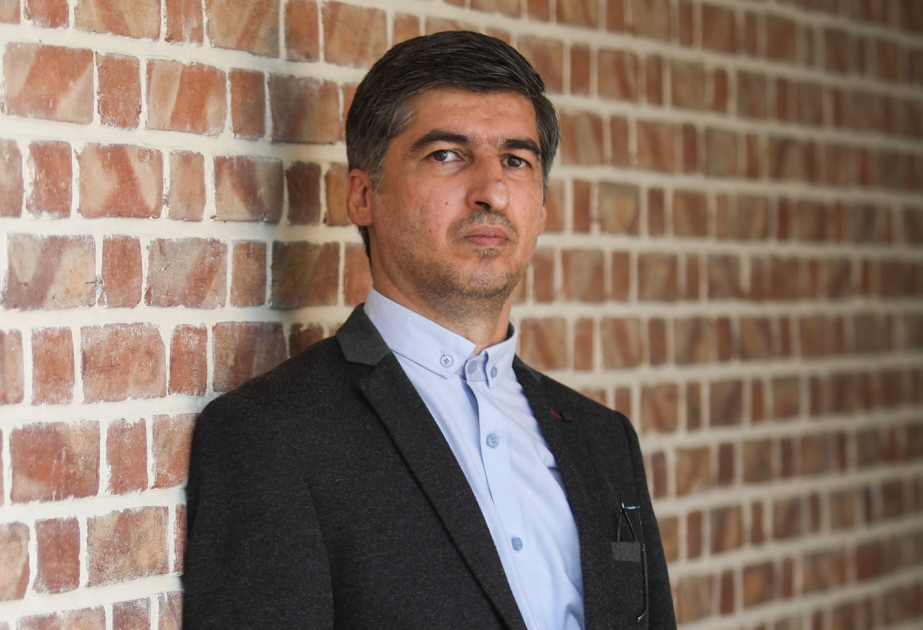
Baku’s foreign policy activity is also reflected in the strengthening of relations with leading international partners, including the United States and the Gulf Cooperation Council (GCC) countries. Azerbaijan is emerging not only as an economic and energy hub, but also as a reliable partner in ensuring security, stability, and multilateral cooperation in the South Caucasus and the broader regional context. The questions of AZERTAC are answered by Iranian expert Javad Heyran-Nia.
– How do you assess Azerbaijan’s role in maintaining stability and security in the South Caucasus? What positive examples of cooperation with neighboring countries and international partners can be highlighted?
– At present, Baku is considering advancing its interests through strengthening relations with the United States by signing a Charter on Strategic Partnership. This partnership focuses on energy and transport corridors and could solidify Azerbaijan’s role as a reliable U.S. partner in the South Caucasus.
At the same time, Azerbaijan’s role as a key energy and transport corridor—including the Middle Corridor connecting East and West—contributes to economic development and regional stability. Linking China and Central Asia with Türkiye and Europe through Azerbaijan’s territory creates economic interdependence, which can foster stability and expand cooperation.
Moreover, cooperation between Azerbaijan and Georgia on infrastructure projects—such as the Baku–Tbilisi–Ceyhan oil pipeline and the development of border infrastructure—has laid the foundation for sustainable energy and transit interaction. This trend continues within the framework of the Green Energy Corridor project involving Türkiye, Georgia, and Bulgaria, representing a step toward energy security and regional integration.
Additionally, reaching a peace agreement with Armenia could allow Azerbaijan to play a more active role in regional transport routes. This includes projects such as a transit route connecting Azerbaijan with the Nakhchivan Autonomous Republic through Armenian territory (TRIPP), which could promote economic and regional cooperation.
– Azerbaijan is actively strengthening diplomatic and economic ties with GCC countries. How do you assess Baku’s contribution to the development of regional cooperation and the strengthening of mutual trust?
– Azerbaijan and the Gulf Arab states share cultural and religious ties; however, the current level of relations goes beyond these commonalities and is shaped within the geopolitical and geoeconomic context of a transforming world order. In this context, cooperation in the energy sector and transit corridors has become a central pillar of mutual interests.
For Azerbaijan, energy partnership is a key direction in relations with GCC members. The scale and quality of investments from Arab countries confirm this—particularly the active involvement of UAE-based companies such as ADQ (Abu Dhabi’s sovereign wealth fund) and Masdar (a leading renewable energy company), as well as Saudi companies in major renewable energy projects. These initiatives are effectively turning Azerbaijan into an emerging green energy hub in the region. They cover solar and wind energy, as well as green hydrogen production, demonstrating a shift from simple resource trade to joint participation in the energy value chain.
Acting as an energy bridge between the Caspian Sea and consumer markets, Azerbaijan contributes to the energy security of both regional and extra-regional partners. A notable example of mutually beneficial cooperation is ADNOC’s (Abu Dhabi National Oil Company) participation in Azerbaijan’s gas projects through acquiring stakes in the Southern Gas Corridor and involvement in oil and gas production. This cooperation not only ensures Europe’s energy supply but also strengthens geopolitical ties between Baku and the Gulf states.
Relations between Azerbaijan and GCC countries are not limited to energy. Non-energy trade between Azerbaijan and the UAE has exceeded $2 billion, with Abu Dhabi becoming Baku’s largest trading partner among GCC countries. The Comprehensive Economic Partnership Agreement has created an institutional foundation for deeper economic integration.
By acting as a link between the Caucasus, Eurasia, and the Arab world—and by attracting investments from Saudi Arabia, Qatar, and the UAE into infrastructure, energy, and tourism—Azerbaijan plays an active role in shaping multilateral cooperation and strengthening mutual trust. In turn, GCC states, particularly Saudi Arabia and the UAE, seek to expand relations with Baku as part of their strategies for investment diversification and participation in future infrastructure connecting Europe, Asia, and the Middle East.
The expansion of ties between GCC countries and the South Caucasus should also be viewed in the context of their deepening relations with Türkiye. The strategic alliance between Ankara and Baku, along with Türkiye’s close ties with Georgia, has accelerated the economic presence of Arab countries in the region. Following Azerbaijan’s victory in the 44-day Patriotic War and the increase in its geopolitical weight, interest from Arab countries in strategic partnership has intensified.
The announcement of a comprehensive strategic partnership with the UAE last year and the elevation of relations with Saudi Arabia to the level of strategic partnership have created opportunities for major investments in energy and renewable sources. Military and security cooperation is also expanding. Joint exercises such as Peace Shield-2026 between the armed forces of Azerbaijan and the UAE, along with the signing of defense cooperation agreements, demonstrate a shift toward long-term security collaboration.
Other news in this section


