German Chancellor Merz's conservatives set to win state election
Baku, March 23, AZERTAC
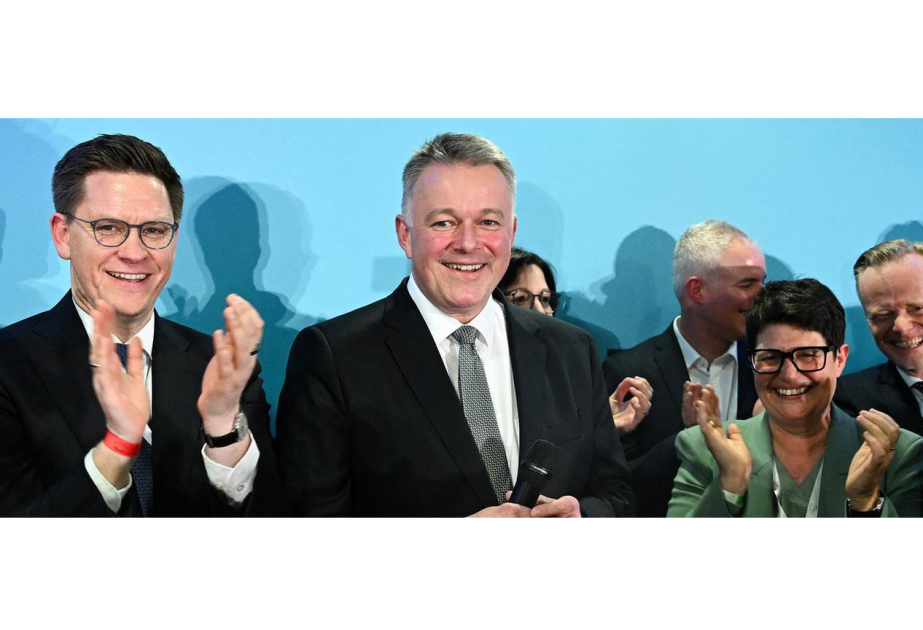
German Chancellor Friedrich Merz's conservative Christian Democrats (CDU) were on course to win an election in the western state of Rhineland-Palatinate on Sunday, ahead of their Social Democrat (SPD) coalition partners who faced a "bitter" defeat after ruling the state for 35 years, according to Reuters.
Early projections after polls closed showed Merz's CDU at 30.8% of the vote, ahead of the SPD at 26%, pointing to a victory for Merz after his party narrowly lost an election in the neighbouring state of Baden-Wuerttemberg on March 8.
CDU General Secretary Carsten Linnemann called it a "great result" that showed strong overall backing for the two partners in Merz's coalition, which nationwide polls indicate has seen a sharp drop in support since elections last year.
"If the result stays this way, the CDU/CSU and SPD will have more than 50% of the vote, which is also a strong result for the centrist parties," Linnemann said, referring to the CDU's sister party in Bavaria.
The two parties are now expected to form a coalition at the state level on the lines of the coalition in Berlin, with CDU candidate Gordon Schnieder on course to replace the sitting SPD premier, Alexander Schweitzer.
For Merz, battling to shore up Western support for Ukraine and facing the looming threat of an energy shock caused by the Iran war, victory in Rhineland-Palatinate was a relief after the narrow loss his party suffered two weeks ago.
But the result was a heavy blow to his Berlin coalition partners in the SPD, still reeling from their disastrous score in Baden-Wuerttemberg, where they won just 5.5% of the vote, barely scraping over the threshold to enter parliament.
SPD Secretary-General Tim Kluessendorf told the ARD the result, which would see the party's score in Rhineland-Palatinate falling by nearly 10 percentage points from the previous state election, was a "bitter setback."
The far-right Alternative for Germany (AfD), now clearly established as Germany's second-strongest party at the national level, was set to form the main opposition bloc. It doubled its previous score to around 20% of the vote, its best-ever result in a western state.
AfD co-leader Tino Chrupalla said the CDU had to explain how it would pursue conservative policies if it refused to enter a coalition with his party.
Other news in this section


