® Veyseloglu Group represented at international sustainable business dialogue in Baku
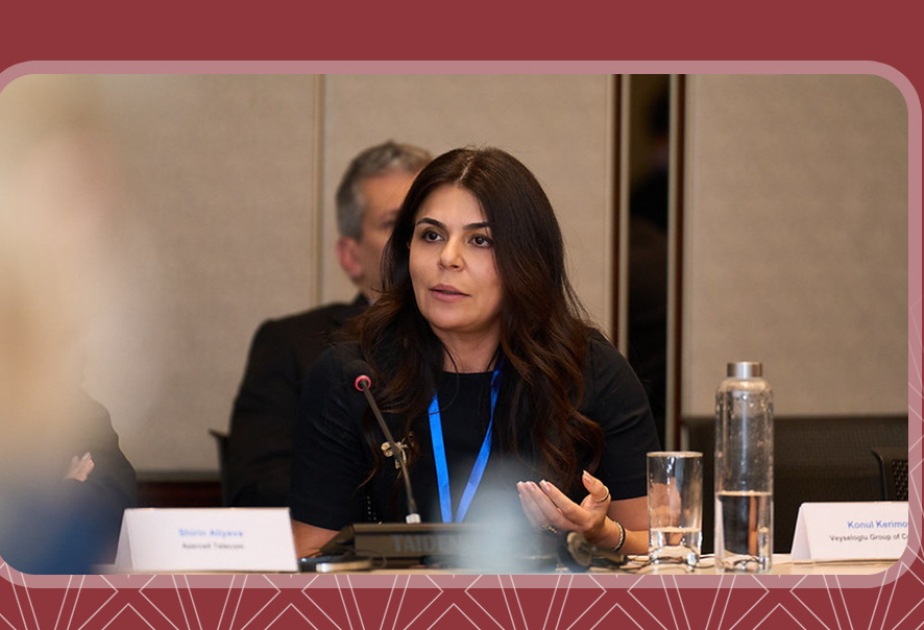
Veyseloglu Group presented its initiatives aimed at accelerating sustainable development across the retail and distribution sectors, as well as its key business priorities, at the “Baku Sustainable Business Assembly,” held as part of Baku Climate Week 2026.
Held at the Baku Congress Center, the event served as the concluding leadership dialogue of the Baku Corporate Sustainability Forum and was also organized as an official session of the 2026 Regional Climate Week of the United Nations Framework Convention on Climate Change (UNFCCC).
The high-level event brought together senior representatives of government institutions, businesses, the financial and oil and gas sectors, banking, investment and development organizations, as well as prominent international and local stakeholders. The event was also attended by Mukhtar Babayev, Representative of the President of the Republic of Azerbaijan on climate issues; Samir Mammadov, Representative of the UN Global Compact in Azerbaijan, members of the National Parliament, and representatives of local and international media.
The primary objective of the Assembly was to consolidate the outcomes of cross-sectoral dialogues, identify the key challenges and opportunities facing businesses, and strengthen the role of the private sector in advancing climate action and sustainable development goals.
Veyseloglu Group was represented at the event by Konul Karimova, Deputy Group CEO for Finance and Administrative Management. During the panel discussion entitled “From Sectoral Dialogue to National and Regional Priorities,” she shared her views on the sustainable development prospects of the retail and distribution sectors, the development of small and medium-sized enterprises (SMEs), technology and human capital, as well as public-private cooperation.
In her remarks, Konul Karimova emphasized the distinctive role of the retail sector within the broader economic ecosystem. She noted that, on the one hand, retail connects manufacturers, suppliers, and the wider SME ecosystem with the market, while on the other hand, it maintains direct interaction with millions of consumers. Therefore, transformation within the sector generates broader economic and social impacts, as its effects are transmitted both to businesses and consumers.
“We do not view sustainability as a separate area removed from the day-to-day priorities of our business. Energy and operational efficiency, the adoption of technologies, SME development and investment in human capital not only make businesses more efficient and competitive, but also contribute to their sustainability. In other words, business priorities and the sustainability agenda often move in the same direction,” Konul Karimova stated.
She further emphasized that achieving the full impact of this transformation requires a broader ecosystem-based approach that extends beyond individual companies. Expanding SMEs’ access to knowledge, technology and finance, developing skills and career opportunities within the retail sector, and strengthening practical cooperation among government, business and financial institutions could contribute both to the competitiveness of the sector and to the creation of more sustainable employment opportunities and improved social well-being.
“The key issue is to move this cooperation beyond the boundaries of such events and translate it into practical initiatives,” Konul Karimova added.
The development of human capital was also highlighted as another important dimension of sustainable development during the event. Participants discussed leading practices and initiatives aimed at contributing to the development of professional qualifications in the retail and distribution sectors, building workforce capabilities aligned with labour market requirements, and increasing interest in vocational education in Azerbaijan.
The event continued with discussions emphasizing the importance of establishing more effective cross-sectoral dialogue, sharing best practices applied across different industries, and ensuring the active participation of businesses in shaping the sustainable development agenda.
It is worth noting that Veyseloglu Group has been a member of the United Nations Global Compact since 2025.
In 2026, the Group prepared and successfully submitted its first Communication on Progress (CoP) to the United Nations Global Compact. The report reflects the company’s activities and progress in the areas of human rights, labour principles, environmental protection and corporate governance.
Other news in this section


