Changing the way we age: Discovery could help preserve muscle strength
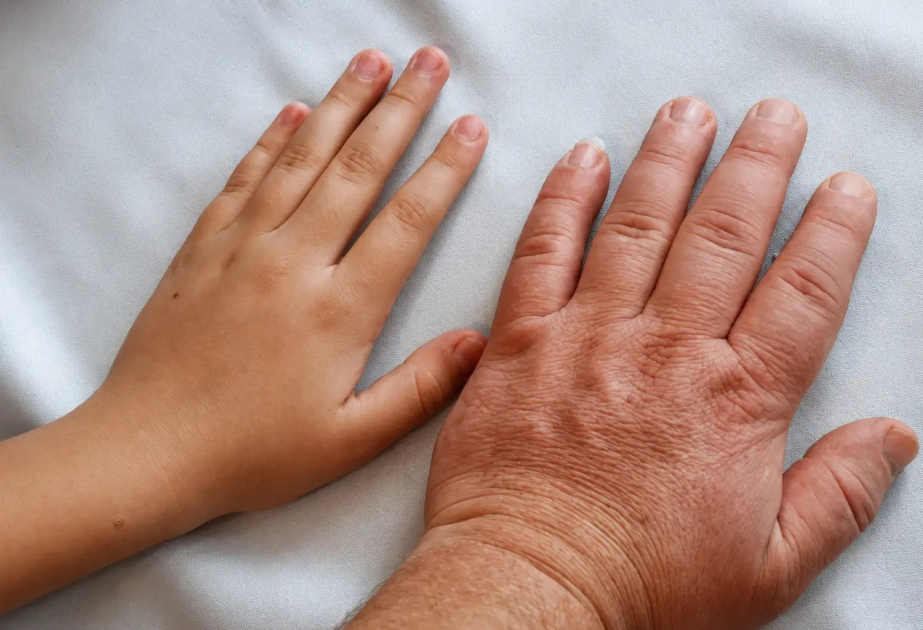
Baku, September 23, AZERTAC
A groundbreaking discovery at the University of Missouri could help older adults maintain the muscle strength they need to stay active and independent, whether that means safely crossing the street or playing with their grandchildren, according to MedicalXpress.
The research is published in the Journal of Clinical Investigation.
W. David Arnold, the executive director of the NextGen Precision Health initiative, and his collaborators discovered that a previously unrecognized breakdown in the communication between nerves and muscles contributes to age-related muscle weakness, also known as sarcopenia, which affects nearly half of adults 80 and older.
The researchers also identified a protein that could be targeted to improve muscle strength, offering hope for those who have assumed a decline in muscle strength is simply an inevitable part of aging.
"While the human lifespan has increased in recent decades, our ultimate goal at Mizzou is to ensure a person's health span remains as high as possible for as long as possible," Arnold, a professor in the School of Medicine, said.
Scientists have long sought to understand what causes muscles to weaken as people age. One theory has focused on changes happening within the muscles themselves, most notably the loss of muscle mass. Researchers have also studied the loss of neurons that send messages telling muscles to move.
But Arnold wondered if something else was happening between the two.
For more than a decade, Arnold has studied the neuromuscular junction—the point where a nerve communicates with a muscle to make it contract. Normally, this communication is reliable, allowing signals from nerves to consistently trigger activation of muscle fibers.
Arnold's research found that this communication becomes less effective with age due to reduced levels of a protein called NaV1.4.
"A long-held assumption in the field was that the neuromuscular junction remains reliable during aging, and some even suggested it may get better with aging," Arnold said. "The significance of this new study is we are showing, in both humans and animal models, that the neuromuscular junction is failing with aging."
The discovery also gave Arnold and his team a potential target for restoring some of that lost muscle function.
"We identified an important point of failure at the final step in communication between nerves and muscles," Arnold said.
"And what is perhaps even more exciting is that we showed this failure is potentially reversible. In collaboration with NMD Pharma, a biotechnology company in Denmark, we applied an approach they developed that targets a protein called ClC-1. By partially inhibiting ClC-1, we were able to make aging muscles more responsive to nerve signals and improve muscle strength in an animal model. That gives us a potential path toward eventually testing this approach in older adults."
Other news in this section


