Gulf oil spill fast becoming worst in years, agencies warn
Baku, August 12, AZERTAC
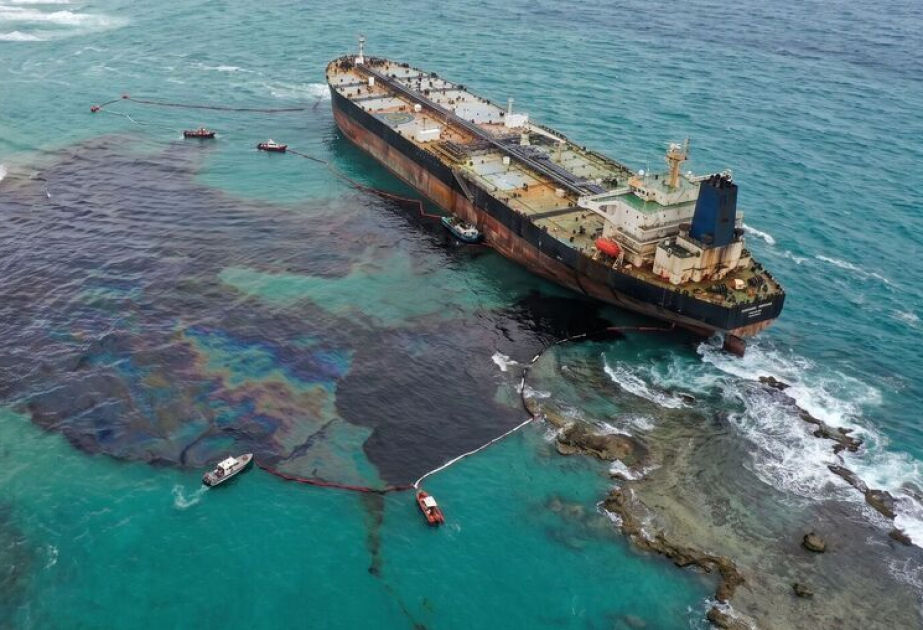
A vast oil spill in the Gulf is quickly becoming one of the world’s worst in years after being allowed to spread almost unchecked for weeks, according to international agencies, satellite imagery and environmental groups, according to Reuters.
The slick off the coast of Oman from a grounded tanker carrying Russian crude had reportedly reached the mainland by Wednesday, the U.N.'s shipping agency told Reuters.
The slick now covers an area of more than 2,000 square km, said John Amos, an oil spill specialist who reviewed satellite imagery obtained by Reuters.
The Caroline Bezengi, carrying an estimated 800,000 barrels of Russian oil and under international sanctions, ran aground on June 30 at an Omani island that is part of a marine nature reserve.
The ship first reported difficulties off Yemen on June 8. Maritime sources said a blast appeared to have occurred aboard the Caroline Bezengi.
No party has claimed an attack, but the vessel was navigating two separate wars on its journey from Russia to India.
In April it sailed from the port of Novorossiysk on the Black Sea, a flashpoint in the Russia-Ukraine war. Ukraine has carried out assaults on a so-called shadow fleet carrying Russian oil, which the Caroline Bezengi is part of.
It then passed through the Suez Canal at the end of May, ship-tracking data shows, before sailing past Yemen, where the Iran-aligned Houthi militants have entered a wider regional war between the United States, Israel and Iran.
A web of complex war- and sanctions-related rules governing shipping and oil spills is already hampering efforts to respond and could yet get in the way of halting an impending disaster, insurers and analysts say.
The IOPC Funds, an intergovernmental agency dealing with tanker spills compensation, told Reuters it would not be involved in clean-up costs because the incident was being treated as an "act of war" rather than a simple accident.
The 25-year-old tanker is also not insured by any recognised Western insurance provider.
"A nightmare scenario is there's no adequate response to keep the worst from happening," said the oil spills specialist Amos, CEO of SkyTruth, a nonprofit organisation aiming to strengthen environmental conservation through the use of satellite images.
Amos said that in this case, the vessel would "continue to break up under the steady onslaught of wind and waves and to lose the entire cargo and that could be a spill upwards of 40 to 50 million gallons."
Amos said this would rival the 1989 Exxon Valdez oil spill in sheer size.
The ship is similar in size and capacity to the Sanchi, an Iranian ship that collided with a freighter off China in 2018 in the world's worst oil tanker disaster in decades.
Other news in this section


