Philippines' Muslim autonomous region holds 1st election
Baku, September 14, AZERTAC
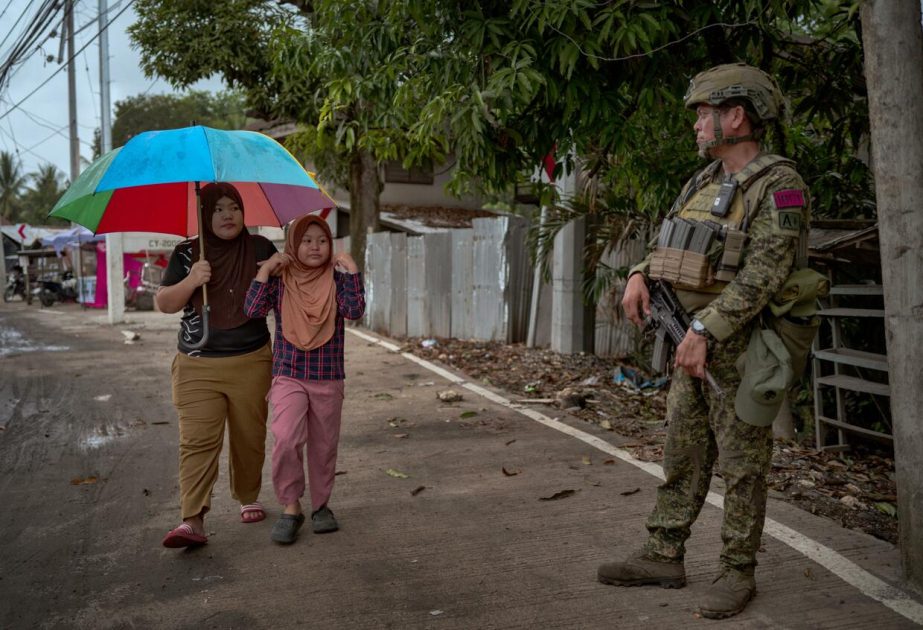
Voters in the Philippines' Muslim-dominated Bangsamoro autonomous region went to the polls Monday for its first parliamentary election as agreed in 2014 by the country's largest Islamic revolutionary group and the central government in ending a decades-long conflict on the island of Mindanao, Kyodo reported.
Hopes are high among the nearly 2.4 million voters in the Bangsamoro Autonomous Region in Muslim Mindanao as they pick their parliamentarians, to replace the 80 members of the interim government, chosen by the central government, who came into power in 2019.
The vote was originally planned for 2022 but was postponed three times due to the COVID-19 pandemic and other factors, including a Supreme Court decision excluding one province from the autonomous region based on the results of the 2019 plebiscite for its territorial scope.
The Bangsamoro region, covering the central and southern parts of Mindanao island, is the only one among the Philippines' 18 groupings to be run by a parliamentary form of government in keeping with its people's aspiration for self-determination.
Its population of 4.5 million accounts for 4 percent of the national tally.
The Bangsamoro or Moro people refer to citizens considered descendants of the original inhabitants of the island of Mindanao and the Sulu archipelago, located southwest of the island, and its adjacent islets at the time of Spain's colonization of the Philippines in 1521.
While insurgency by the ethnic group dates back to the Spanish colonial era, organized armed struggle against the central government of the Philippines, whose population is largely Christian, began in the late 1960s by an Islamic revolutionary group called the Moro National Liberation Front.
Breaking away from the MNLF, the Moro Islamic Liberation Front launched its conflict in the 1970s. Until the MILF and the central government signed a peace agreement in 2014, at least 150,000 combatants and civilians died, according to the government estimates.
The MILF, which is participating in the election through its political party, the United Bangsamoro Justice Party, hopes to continue overseeing the implementation of the remaining provisions under the peace agreement, including the decommissioning of the remaining MILF combatants and achieving their socio-economic well-being.
The UBJP is up against several parties including the Bangsamoro Federalist Party, which is perceived to be aligned with President Ferdinand Marcos Jr.'s party advocating for the country's federalization.
Abdulraof Macacua, the MILF's former chief and the interim Bangsamoro government's chief minister, and some personalities of the Islamic group have joined the BFP, creating a division among the group's leadership.
Of the 80 seats of the parliament, 40 will be elected from political party lists, 32 from electoral districts, and eight from candidates who represent women, youth, and other social sectors. Elected parliament members will then choose the region's chief minister, from among themselves.
According to the central government, 108 election observers from 16 international organizations and delegations, including from Japan, will monitor the polls on the ground.
Results are expected to be known Tuesday.
Other news in this section


