Uzbekistan’s craftspeople: how traditional skills are passed to new generations
Baku, October 1, AZERTAC
In Uzbekistan’s traditional workshops, a new generation is learning woodcarving, embroidery, and ceramics while adapting these crafts to modern tastes and new opportunities, according to UzA.uz.
A workshop can be a school, a workplace, and a family archive all at once. In Uzbekistan, people often learn traditional crafts firsthand from experienced artisans, who pass skills and techniques down from parents and older generations.
Training can take years. Apprentices start with simple tasks, then gradually learn to work with materials and tools while mastering traditional patterns and techniques. In some families, the craft passes from one generation to the next. In others, workshops offer a place to learn a profession and earn a living.
In Furqat district of Fergana region, woodcarver Muhammadali Yunusov is continuing a family tradition, he says, that spans five generations.
He began working independently at 15 and later continued his studies at vocational institutions while further refining his skills. Today, his sons are also engaged in the craft, representing the sixth generation of artisans in the family. His grandchildren are also learning the craft. According to Yunusov, more than 2,000 apprentices have trained in his workshop. For Yunusov, the path to mastery begins with patience and determination. Even a small section of carving can take an entire day to complete. Larger elements take weeks, as the patterns are carved by hand with fine chisels called “naqshqalams”.
The wood itself also requires careful preparation. Walnut, elm, mulberry, and plane wood may be soaked in water for six months or longer before drying and processing. They then saw it into boards, dried it again, and shaped it for its intended use, whether for a gate, column, door, or traditional wooden platform.
About 100 apprentices are currently training in the workshop. According to the master, the works feature geometric and Islamic motifs, with each form carrying its own meaning. He works in the so-called Fergana style, one of five major regional schools of Uzbek decorative and applied arts, alongside the Tashkent, Samarkand, Bukhara, and Khorezm styles.
Modern technologies have also entered the workshop. Yunusov says artificial intelligence helps him find information on patterns and techniques that have become less common over time and serves as an additional source of inspiration.
At another workshop in Fergana region, traditional crafts are also becoming a source of employment. Sadoqat Mirzayeva runs a crafts center and educational institution where women and girls can learn various handicrafts and receive support in finding employment.
Over the past six years, more than 500 women and girls have received training at the center. More than 100 of them now work with the enterprise, either from home or as full-time employees. The craftswomen produce more than 100 types of items, including traditional dolls, folk toys, bags, headwear, chapans, and other clothing. The products are supplied to tourist centers, regional markets, and duty-free shops at Tashkent International Airport, and are also exported to Central Asian countries.
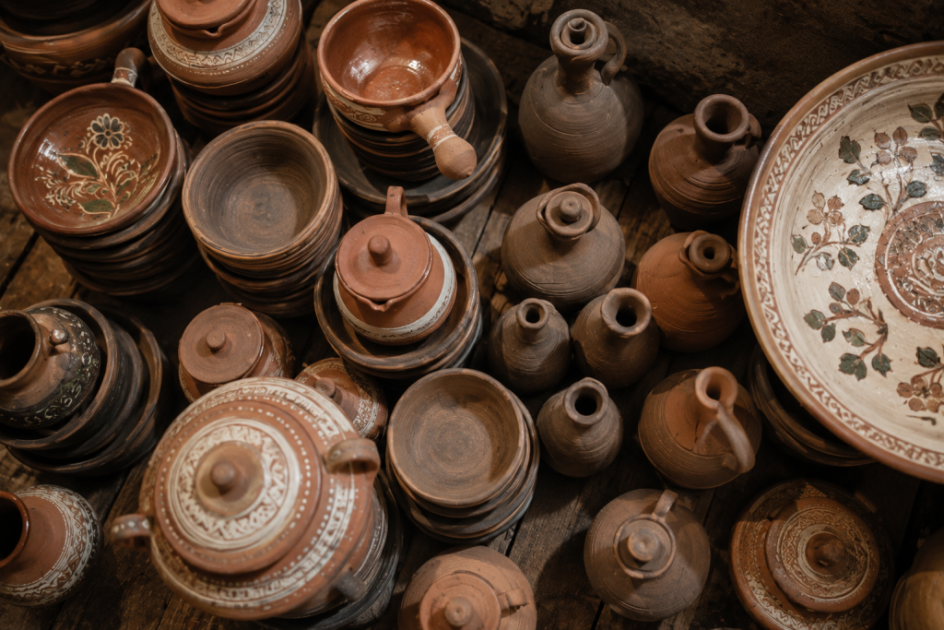
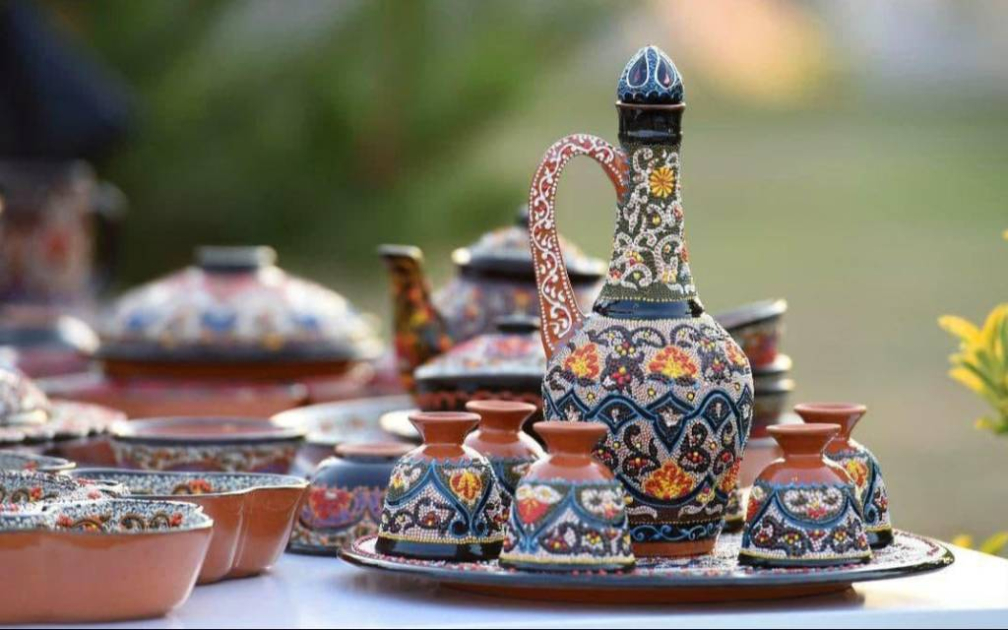
In Tashkent, the Rakhimovs family has practiced ceramics for seven generations. For master Shokhrukh Rakhimov, passing this knowledge down from one generation to the next carries a sense of responsibility.
The family has developed its own distinctive style, featuring a combination of green and black characteristic of Tashkent ceramics. At the same time, Rakhimov says young craftspeople should experiment with new forms and approaches.
The three workshops use different materials and techniques, but their training approaches are largely similar. Yunusov says his father first taught him less the art of carving itself than how to think, stay focused, and approach his work with persistence. His apprentice, Samandar Tokhirov, joined the workshop at 14 and says his interest in woodcarving grew as he studied under the master.
In the workshops of Fergana and Tashkent, traditional crafts remain integral to both family life and professional training. These techniques have existed for many years, yet those learning them today also work with new technologies, markets and ideas. Three workshops, three crafts and one shared principle: mastery takes time. Traditions endure when people are willing to learn, practice and pass them on.
Other news in this section


