A fascinating journey to Sheki or what attracts tourists here so much?











Baku, March 5, AZERTAC
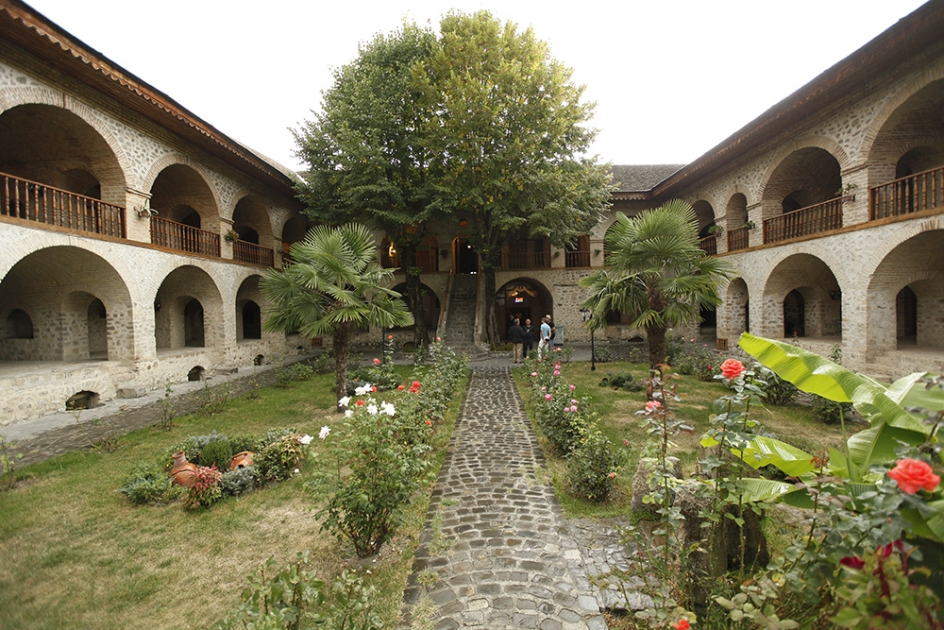
Sheki is a neat, well-groomed town with recognizable architecture, with roofs lined with red tiles, it looks more like a typical European provincial settlement than an eastern city. Meanwhile, Sheki has an ancient history. The city has preserved many historical and architectural sights, a special place among which is occupied by the inimitable Palace of Sheki khans, with its luxurious openwork windows in the stone citadel. The people of Sheki are very hospitable and cheerful people by nature, and local humor has long become the talk of the town, the city is even the twin city of the famous Bulgarian city of Gabrovo. Maybe thanks to their optimism, the residents of Sheki never lost heart, despite the fact that they often found themselves in the center of historical and natural disasters.
Caucasian Old-Timer and Practical Shingles
Sheki is one of the most ancient cities of Azerbaijan. Archaeological evidence suggests that the city can be considered one of the oldest settlements in the Caucasus, many finds on its territory are more than 2500 years old. Ancient Greek historians Pliny the Elder (I century AD), Claudius Ptolemy (II century AD), Strabo wrote about Sheki in their writings. There is an assumption that the name of the city dates back to the ethnonym of the Sakas tribe, which penetrated into the territory of Azerbaijan in the 7th century BC. and lived here for several centuries. For a long time the city was also called Nukha.
The city of Sheki is located on the spurs of the Caucasus Mountains. The nature surrounding it is distinguished by exceptional scenic beauty: heavily crossed relief and wooded mountains alternate with valleys of bizarrely meandering rivers. The urban area stretches along these rivers, and the mountain landscape serves as a background.
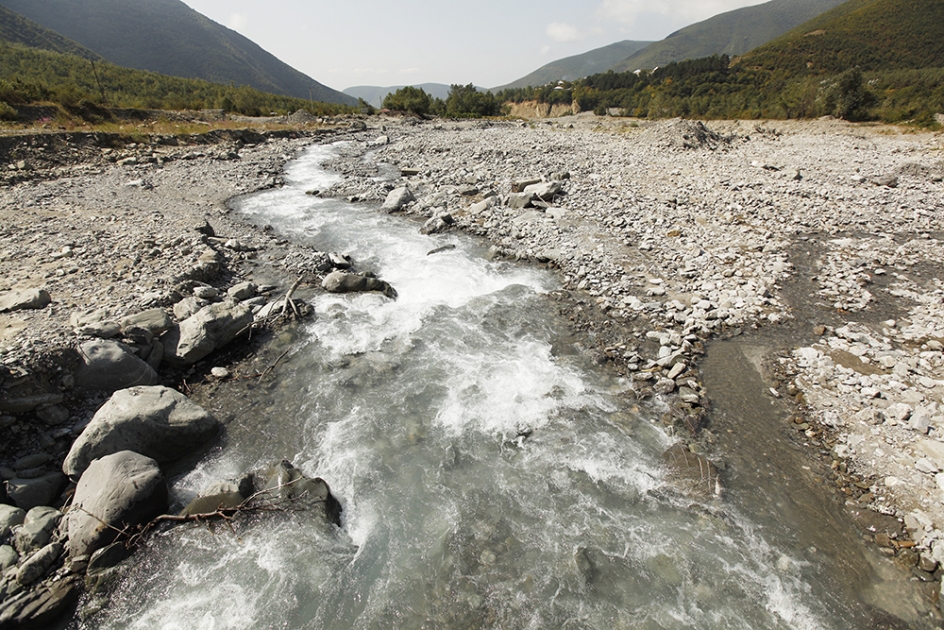
It is interesting that the current Sheki actually rebuilt after the city was destroyed in 1772 by the mudflow of the Kish river. This river still has a restless temper, especially in high season. Old-timers still remember how, in 1986, the turbulent waters of the river literally demolished a massive iron bridge, whose twisted remains still remind of those alarming days.
The new city is picturesquely situated on a large area at the foot of the southern slope of the ridge, adjacent to the spurs of the Caucasus Mountains, on three sides surrounding it. The layout of Sheki is interesting: flowing from east to west, the Gurdzhanachay River divides it into 2 parts - the elevated north and, located in the valley, south. In connection with the formation of the shopping center, the city developed on one side of the river.
The natural landscape has always concealed great opportunities for creating an individual architectural image of the city, and for this reason, Sheki has a unique architecture. Also here, in the Middle Ages, a water supply system, built of pottery pipes, was created.
Today, Sheki is a picturesque array of greenery with houses and architectural structures peering out from behind trees. This originality is determined not only by the terrain, but also by the peculiarities of the layout, organically linked with nature. Almost every house is surrounded by a garden and a fence made of river stone - the traditional building and finishing material for these places.
Locals do not like it when someone starts using modern cubes for extensions or fences. Another distinctive feature of the Sheki structures is the roof, covered with the same for all the red tiles of baked clay. Some roofs are darkened by time, however, ceramics material is very durable. They say it is enough once every 20-30 years to disassemble the tiles, wash, and the roof is again like new.
Another feature of Sheki that catches the eye when visiting the city is its tidiness. The streets are always clean and there is almost no dirt, which is often observed in other provincial cities.
Mushtag Palace and Heyerdal's hypothesis
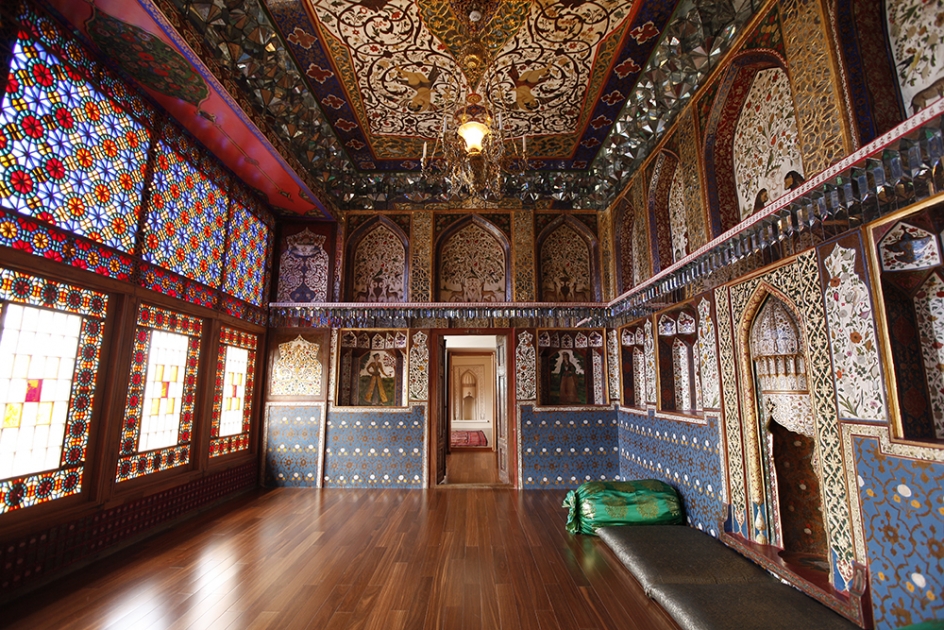
The hallmark of Sheki’s unique architecture is the Khan’s Palace, built in 1762 by Huseynkhan, who, in his time free from state concerns, wrote poems under the pseudonym Mushtag.
Sheki Khans Palace has its own special original construction techniques. It is enough to point out, for example, that every square meter of shebeke (windows made of small wooden parts with colored glass filling them) consists of 5 thousand parts connected together without the use of nails. Many kinds of applied arts were synthesized in the palace.
Few know that the Palace of the Sheki khans was a summer palace-pavilion, and the building that served as the winter palace was probably among the residential buildings grouped in the fortress around the gardens, and did not survive.
The attention of tourists is also attracted by the Sheki Khans' House, built in the 18th century and carefully restored, which represents a transitional link from the people's dwellings to palace-type houses. The rectangular 2-storey building retains all the features of Sheki folk dwelling, and at the same time, the wealth of decorative elements, mainly in the interior, approaches the structures of a palace nature. Each floor of the house consists of 3 rooms and two small lobbies. The interiors are richly decorated with colored shebekes of Venetian glass made by the same craftsmen who worked at the Palace of the Sheki Khans.
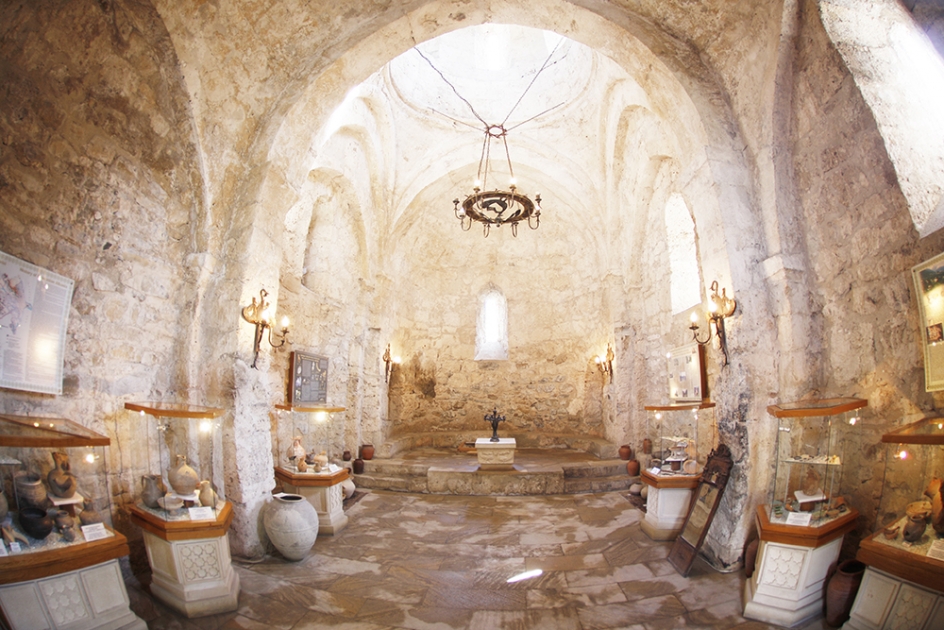
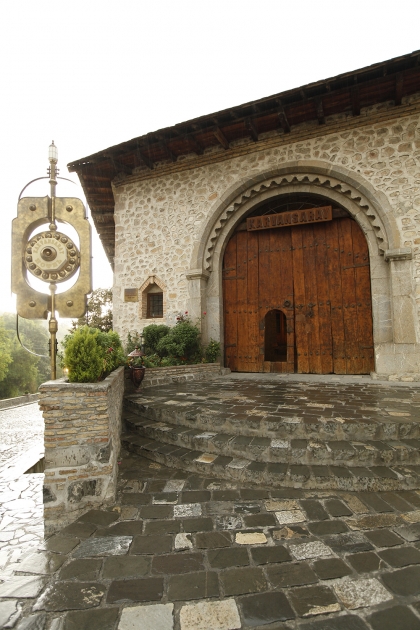
One of the most ancient architectural monuments of Sheki is the Albanian temple in the village of Kish. The official date of his bookmark is the 1st century of our era, the time when the territory of Azerbaijan was part of Caucasian Albania.
Thor Heyerdahl, a Norwegian traveler and anthropologist, has repeatedly visited Sheki in search of evidence for his sensational theory that the ancestors of the Vikings were from the Caucasus.
After sailing on the Kon-Tiki raft across the Pacific Ocean and on the reed boat Ra through the Atlantic, after four trips to Azerbaijan, painstaking work in archives and on-site excavations, the researcher came to a stunning conclusion: Europe began on the south-west coast of the Caspian Sea and in the southern foothills of the Caucasus.
In his latest book, “In Search of Odin. In the Footsteps of Our Past,” Heyerdal said that after his first visit to Azerbaijan in 1981, he was impressed by the ancient rock inscription left by the Pompey legionnaires in Gobustan Reserve. Having studied the drawings on the stones, the scientist discovered the similarity of the ships depicted on them with the ships of the ancient Vikings and came to the conclusion that the ancestors of the modern Norwegians started their way to the West from here. The emerged version of Heyerdahl was confirmed by a legend in his homeland that the first king of the Norwegians Odin brought his people from the land called Azer. In historical documents Heyerdal found a description of the location of this country - "east of the Caucasus and the Black Sea."
In Gobustan there is a bronze plate indicating the exact date and number of the particular Roman legion who came to Azerbaijan. Heyerdal's calculations showed that the date of the exodus of the Vikings from the "Azer" country sensationally coincided with the date of arrival of the Romans. Thor Heyerdahl also set the route to the north. He believed that, most likely, the Vikings left through the Caspian Sea along the Volga, and then through the places where Kiev and Novgorod later arose, they moved on.
A lot of interesting things were told by the famous traveler about the original fire-worship of the Vikings. According to the chronicler, it was King Odin who brought and distributed it. When the monarch terminally ill, then he bequeathed to his body was burned at the stake. And what is interesting is that this form of burial, exported from the country of Azer, still existed for many centuries before the adoption of Christianity by the Norwegians. The scientific version of Tour Heyerdal still has many opponents in the West, especially in Norway itself.
The legend of Chelebi and gourmet delights
One of the most famous historical sights of Sheki - Gelersen - Gerersen Fortress (“Come - See”) is located on a strategically advantageous site, about 4 km north of the city, on the left bank of the upper course of the Kish River, on top of Mount Garatepe. It is believed that the foundation for the construction of the fortress was laid in the XV century by the Sheki ruler Alijan.
The name of the fortress is associated with the invasion of the ruler of Iran, Nadir Shah. In 1743, taking advantage of the people’s displeasure with the Iranian oppression, the local ruler Haji Chelebi, declaring himself khan of Sheki, took refuge in this fortress and rejected Nadir Shah’s demands for deposition. The enraged shah, as the legend says in the people, demanded to know the reason why Chelebi does not give up. Confident of the impregnability of the fortress, Chelebi informs the Shah - “Come and see.” Indeed, in 1744, Nadir Shah arrives in Sheki with a huge army, approaches the fortress, but, failing to subdue it, returns. After this event, the name of the fortress Gelersen - Gerersen was established in the people.
Today the fortress is an obligatory place to visit all the tourists coming to Sheki. On the territory of the fortress there are many deep wells, the bottom of which is not even visible. In some versions - this is a trap for enemies. There is also a version that under the fortress there is an underground passage, in case of escape. Amazing natural landscapes open up from the fortress walls: majestic mountains, blinding green forests, river Kish carrying its waters. If you get here in September, you can taste ripe dogwood, which grows in abundance in the vicinity of the fortress.
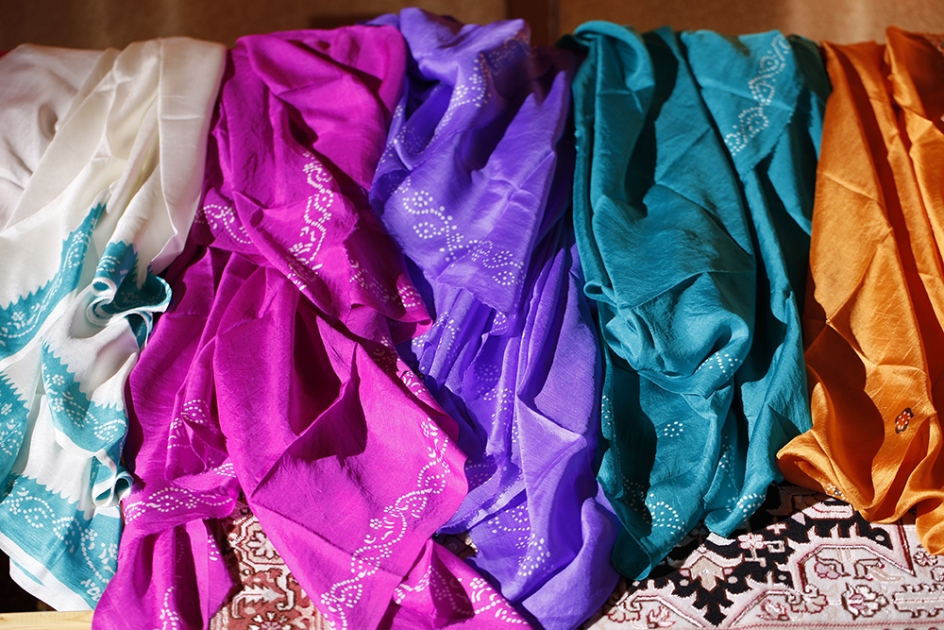
Sheki was and remains the handicraft center of chain embroidery - Takyalduz (floral ornament on velvet or morocco). Dumas father, who visited Sheki, “bought two embroidered saddles for 24 rubles. In France, one cannot have them even for 2,000 francs, or rather, they cannot be obtained at any price”. Embroidery with chain stitch is the most subtle and time-consuming art. Sometimes the production of one piece takes 3-4 months. Silk threads are used in embroidery. Interestingly, at the end of the 19th century, exclusively male labor was used in special embroidery workshops in Sheki. Today, the art of embroidery is predominantly female occupation. By the way, you can familiarize yourself with the unique collections of Azerbaijani embroidery, which testify to the high level of artistic mastery of Azerbaijani craftsmen in the Sheki Museum of Applied Arts.
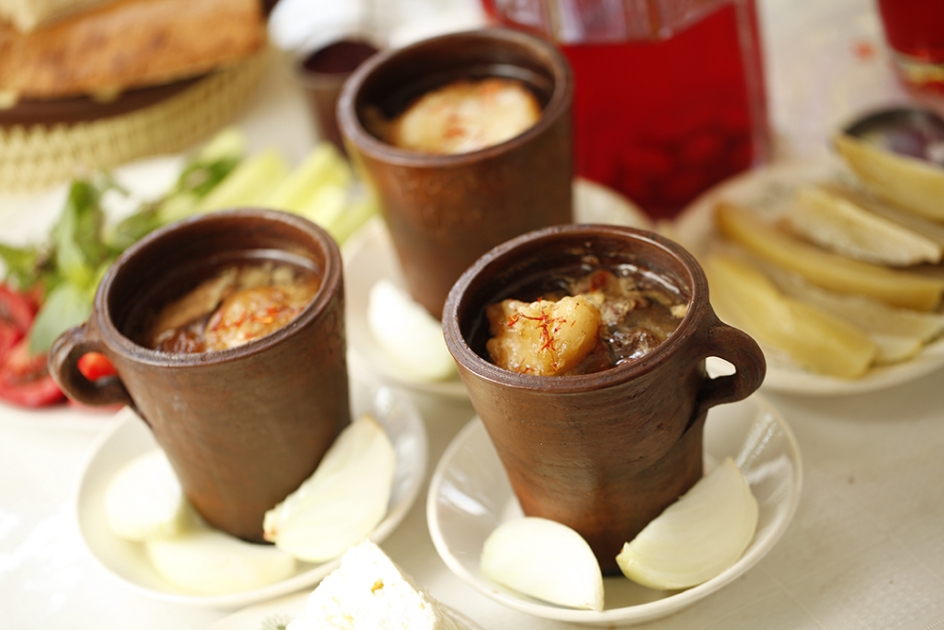
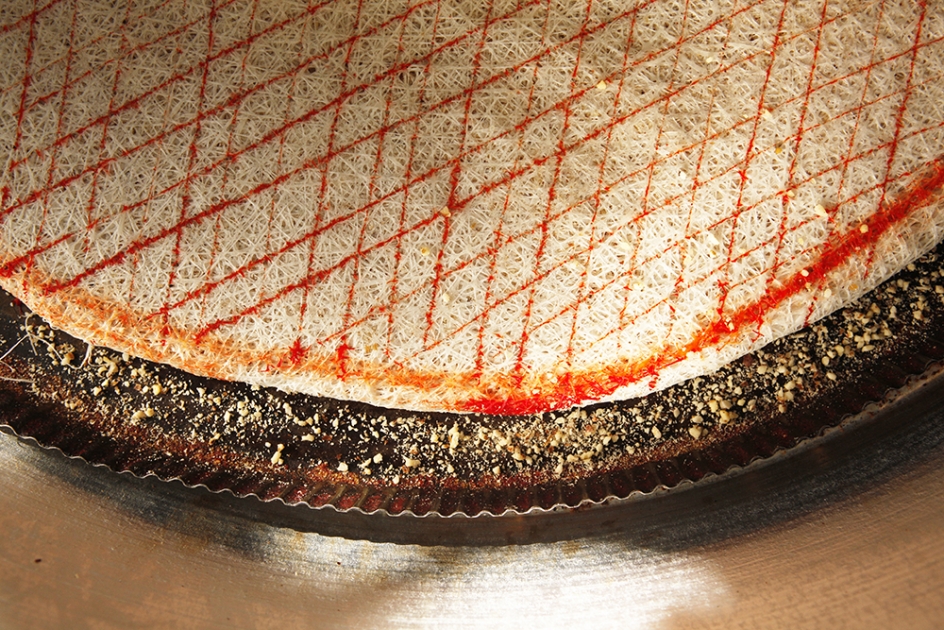
No wonder many tourist guides call Sheki the gastronomic capital of Azerbaijan. This ancient land is the birthplace of the famous baklava melting in the mouth and fragrant rich piti soup.
Piti is a national dish of Azerbaijan, originally from Sheki. This rich, tasty, fragrant soup is cooked in clay pots, which should be stewed in the oven for at least 8 hours. Sheki piti - as well as all Sheki - is special. Whatever version of this dish is offered to you in other places, having once tasted Sheki piti, you will remember its taste forever. Usually, piti is served with traditional pita bread, pickles and sumac (or dried ground barberry fruits), which gives the taste of dishes a sour tint. Eating piti is also a special way. Broth is poured from a stein. After the plate is empty, peas and mutton are thrown out of the mug. All this should be kneaded to a puree-like state and without wasting a minute to start eating.
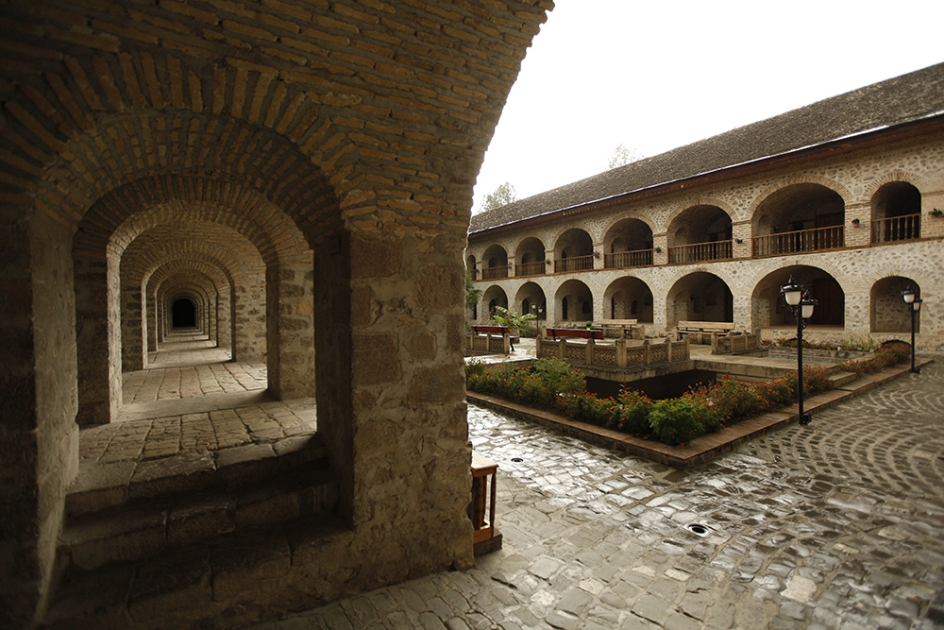
Sheki is an ancient land and every historical epoch left its traces here, which, fortunately, did not disappear irretrievably. Historical monuments and architectural masterpieces - ancient fortresses and rich khan palaces, mysterious towers and temples of Caucasian Albania, caravansaries, mosques decorated with lace Arabic script, unique mausoleums constitute the golden fund of the country's cultural heritage. And Sheki - a small, quiet town with red tiled roofs, comfortably located at the foot of the Greater Caucasus Mountain Range, continues to live its own life, delighting numerous tourists with its distinctive culture. And this is symbolic, because being at the crossroads of the Great Silk Road, where trade caravans came for many centuries, Sheki became the place of contact of the West and the East.
Emil Eyyubov
Other news in this section


