APP: Marka-e-Haq – Where Pakistan’s air warriors redefined aerial combat & became undisputed ‘King of Skies’
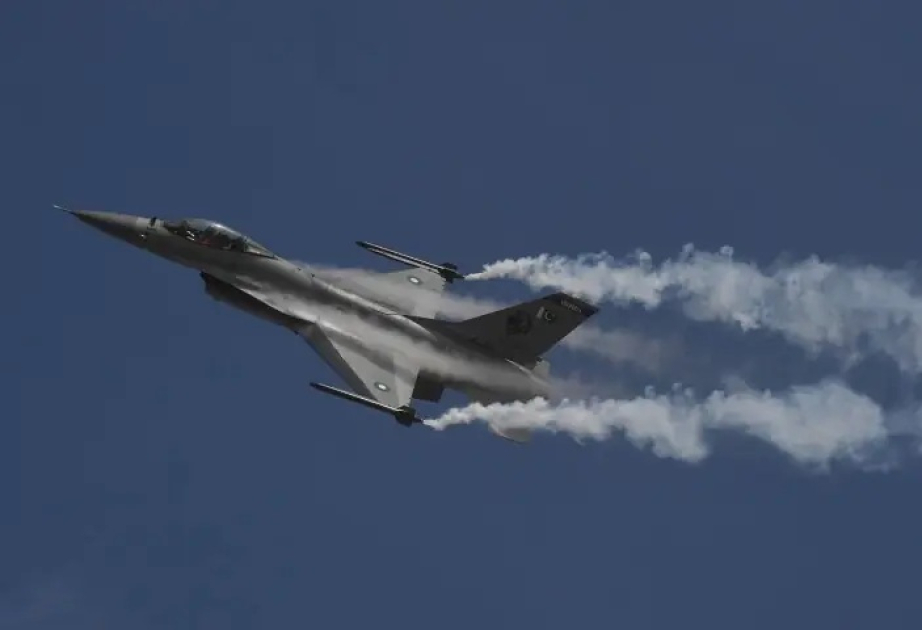
Baku, May 6, AZERTAC
The Marka-e-Haq 2025 engagement has emerged as a defining case study in modern air combat, where the Pakistan Air Force (PAF) exhibited precision strike capability, multi-domain integration, and cyber operations to offset the numerical advantage of the Indian Air Force (IAF), Associated Press of Pakistan (APP) reported.
The operation proved PAF an undisputed king of the skies. Air Marshal (Retd) Asim Suleiman described the encounter as “a unique air battle fought on reach, integration, and decision-making speed,” emphasizing that distance no longer guarantees survivability in contemporary war.
He highlighted that the PAF’s concept of operations rested on synchronized use of sensors, shooters, and command systems, enabling rapid engagement cycles. At the tactical level, he pointed to the induction of advanced platforms such as the J-10C and JF-17 Thunder, which restored the decisive ‘first look, first shot’ advantage.
Central to this capability was the employment of the PL-15 missile, allowing long-range precision targeting. “We effectively denied the adversary its first-strike advantage,” he observed, saying that modern air combat is increasingly defined by detection and engagement timelines rather than visual encounters.
He underscored the role of layered air defence, including systems such as the HQ-9B, which provided a protective shield against high-end threats. Hypersonic strike options and stand-off weapons, he added, enabled precision engagement of strategic targets without exposing assets to unnecessary risk.
“Uniqueness of the operation was integration across multiple operational commands like air, ground, cyber, space, and unmanned systems, linked through real-time data connectivity, allowing seamless execution, where every domain was feeding into a single operational picture”, he said, adding three exceptional elements, including a night-timed battle, BVR-driven, and no border crossing for attack.
“After their (IAF) strikes, PAF had 5 to 10 minutes to take a decisive decision, it was taken and implemented as a reflex action by PAF, giving no chance to IAF to even think of such an effective and timely response”, he said.
Cyber capability, he said, played a critical enabling role by disrupting adversary communication and support systems. Such non-kinetic effects, combined with kinetic precision, enhanced overall impact. He praised the leadership under Air Chief Marshal Zaheer Ahmed Baber Sidhu for driving a strategic transformation of PAF towards a technology-oriented, responsive force structure.
According to him, pre-emptive planning and forward deployment ensured that “the system was ready before the first move.” Dr. Nazir Hussain, a prominent Defence and Diplomatic analyst, characterized the campaign as a “blitzkrieg-style demonstration of maneuver superiority, “asserting that IAF attempted to reclaim its lost honour through a misadventure, and failed again.
“What began as a misadventure by India resulted in strategic military deception, as Pakistan shaped the battle space and imposed operational surprise”, he said. Recollecting the operational phase, he said: “In one go, Pakistan dismantled the technological myth built around advanced systems.”
The former air marshal counted four Rafale aircrafts along with one MiG-29, one SU-30MKI, one Mirage-2000, and a Heron drone, which were destroyed by PAF during the engagement. He added that, including S-400 air defence systems, BrahMos missile storage facilities, and several brigade headquarters were successfully targeted, reflecting the scale and depth of the operation.
Hussain described the large-scale aerial engagement involving over 120 aircraft as “one of the rare dogfights that will be studied in training academies worldwide,” maintaining that the PAF established effective air superiority through coordinated employment of its assets. He argued that the impact extended beyond the battlefield into diplomatic and informational domains.
“The damage reached the diplomatic front, where major powers, including the United States, acknowledged Pakistan’s operational advantage”, he said and criticized segments of the Indian media for ‘running commissioned and baseless propaganda for their victory’, which eventually questioned their own hardware performance.
Both experts said that the role played by Field Marshal Syed Asim Munir, Air Chief Marshal Baber Ahmad Sidhu, and the civilian leadership remained vital for making the moments victorious and rejoicing.
Dr. Nazir Hussain said the adversary “lost across multiple fronts, defence, diplomacy, and political cohesion,” describing the episode as a comprehensive strategic setback for India. “The episode reinforced Pakistan’s deterrence posture, enhanced its global standing, and strengthened national resolve through demonstrated capability”, Dr. Nazir said and emphasized that such outcomes stem from sustained focus on integration, leadership, and preparedness. What is next? No new hardware or software has been inducted into IAF, no procurement or innovative commissioning. Whereas PAF continuously goes on modernizing itself, preparing for the next generation of warfare to remain second to none.
The Marka-e-Haq proved to be a depiction of tri-services cohesion, command, and leadership skills of the armed forces of Pakistan on one side, and national integrity resolve on the other side.
Other news in this section


