Ancient Huqoq synagogue Mosaics go on display for first time
Baku, July 9, AZERTAC
Huqoq flourished as a Jewish village during the Roman and Byzantine periods, roughly between the third and sixth centuries CE. Its synagogue, uncovered by a team led by Professor Jodi Magness of the University of North Carolina at Chapel Hill, contains mosaics depicting biblical and other scenes unparalleled among Israel’s ancient synagogues, according to TPS-IL.
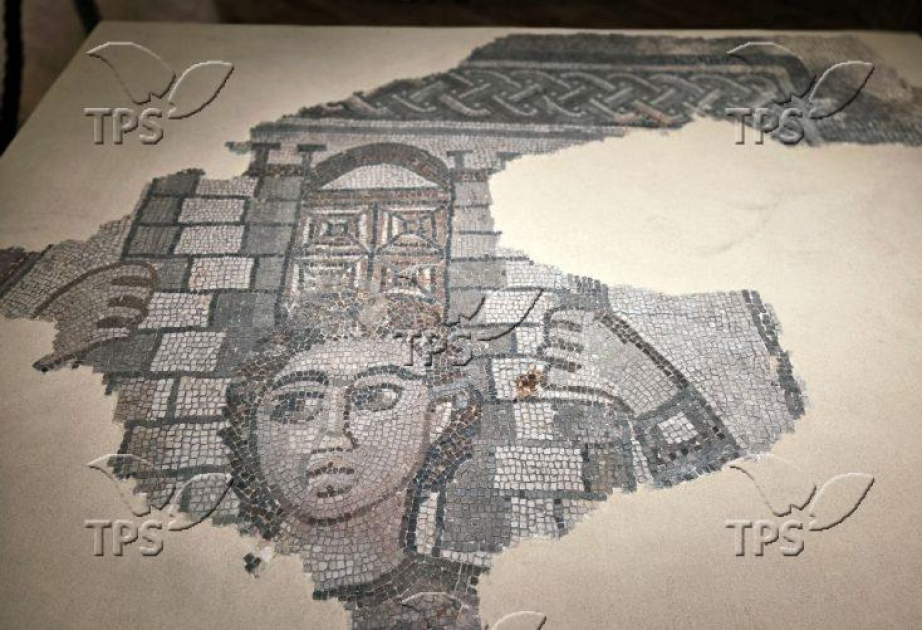
The exhibition’s centerpiece is the original Samson mosaic, showing the biblical strongman carrying the gates of Gaza on his shoulders, a scene from the Book of Judges. It is displayed alongside photographs of the site’s other mosaics.
The exhibition also presents Huqoq as a thriving village that included a spring, farming installations, ritual baths and a hidden underground escape network. It also displays, for the first time, a hoard of bronze coins found by Israel Antiquities Authority excavators inside the escape system, alongside a previously discovered ring and dagger.
“Secrets of Huqoq” is a joint project of Keren Kayemeth LeIsrael-Jewish National Fund (KKL-JNF), the W.F. Albright Institute of Archaeological Research, the Israel Antiquities Authority and the U.S. government. The exhibition is housed at the Yigal Allon Center Museum in Kibbutz Ginosar, on the shores of the Sea of Galilee overlooking the Huqoq archaeological site in Amiad Forest. It serves as a temporary visitor center while preparations continue to open the site to the public.
Curator Dr. Einat Ambar-Armon said the exhibition offers visitors an early look at the site before it opens to the public. “Since preparing the site itself for public visitation is expected to take several more years, our exhibition already serves as a first gateway to the village of Huqoq and to the archaeological and human story it reveals,” she said.
Other news in this section


